
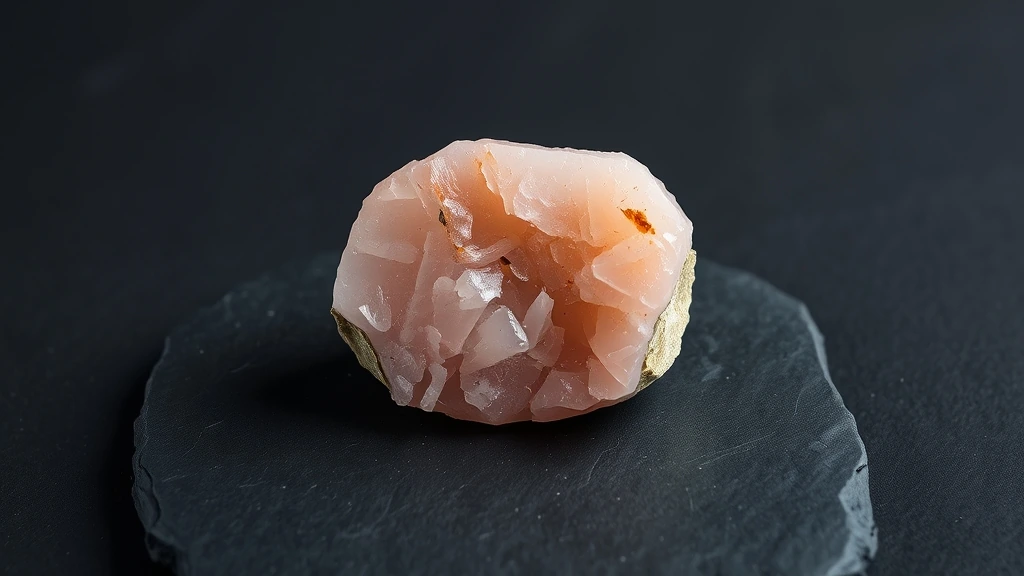
This stone ranks at 3.0 on the Mohs hardness scale, making it relatively soft and susceptible to surface abrasion. Its low hardness necessitates careful handling during cutting, polishing, and daily wear to preserve its aesthetic integrity. Unlike the delicate pink calcite, the Pink Pearl—a rare, soft variety of pearl—requires similarly gentle handling to preserve its luster and integrity.
Mangano calcite belongs to the Natural Mineral / Crystal parent group, specifically representing a chemically substituted variant of the ubiquitous carbonate mineral calcite. Geologically, it forms through the replacement or co-precipitation of manganese-rich fluids within existing calcite matrices. This process alters the optical and visual properties of the host mineral without changing its fundamental structural framework.
As a distinct mineral species, it is classified under the trigonal crystal system, sharing the same lattice geometry as pure calcite. The presence of manganese cations creates a unique chromophoric effect, distinguishing it visually from standard calcite varieties. This geological origin ensures it retains the calcite group characteristics while offering a rare color spectrum.
What is Mangano Calcite (pink Calcite) ? Geological Overview & Definition
Mangano calcite is defined as a manganese-bearing calcite variety where trace elements replace calcium within the crystal lattice. This substitution mechanism is responsible for the stone’s characteristic pink to salmon-pink coloration. The mineral typically forms in hydrothermal veins or as replacements in limestone deposits.
Its geological formation often occurs in association with other manganese oxides and silicates. The pink hue intensifies with higher concentrations of manganese ions within the structure. This makes it a sought-after specimen for collectors and gemologists alike.
Mangano Calcite (pink Calcite) Chemical Composition & Crystallographic Properties
The fundamental chemical formula remains CaCO₃, though manganese ions partially substitute for calcium cations. This substitution does not alter the basic stoichiometry but significantly impacts the optical properties. The trigonal crystal system dictates the rhombohedral habit commonly observed in these specimens.
The lattice structure maintains the calcite framework, allowing for birefringence and double refraction. Manganese acts as the primary chromophore, absorbing specific wavelengths of light to produce the pink color. This color center is stable under normal environmental conditions.
The mineral exhibits strong sensitivity to dilute hydrochloric acid, resulting in vigorous effervescence. This reaction confirms its carbonate nature and aids in field identification. Acid sensitivity is a critical factor for long-term preservation and cleaning protocols.
Thermal behavior shows that the stone is stable at room temperature but may undergo structural changes under extreme heat. The refractive index ranges from 1.486 to 1.658, contributing to its vitreous luster. Proper storage away from acidic substances is essential to maintain its integrity.
| Property | Specification |
|---|---|
| Mineral Group | Natural Mineral / Crystal |
| Chemical Formula | CaCO₃ |
| Mohs Hardness | 3.0 |
| Crystal System | Trigonal |
| Specific Gravity (Density) | 2.71 |
| Refractive Index | 1.486 – 1.658 |
| Color & Optical Properties | Natural Mangano Calcite (pink Calcite) Gemstone color spectrum and optical dispersion |
| Primary Mining Localities | Global primary localities |
| Water & Chemical Resistance | EXTREMELY SENSITIVE: Water Soluble / Moisture Sensitive! (Avoid liquids) |
| Chakra Alignment (Traditional) | Heart Chakra |
| Zodiac Affinity (Traditional) | Taurus, Cancer, Pisces |
| Symbolic Meaning (Traditional) | Emotional healing, unconditional love, and inner peace |
Mangano Calcite (pink Calcite) Varieties & Color Spectrum
Rose‑Manganese Calcite
Formed in low‑temperature hydrothermal veins where manganese‑rich fluids replace calcium in calcite, this variety displays a delicate rose‑pink hue that deepens with increased Mn²⁺ concentration. Fine, parallel growth‑striations and occasional fluid inclusions give it a silky luster, and specimens larger than 5 mm are considered rare among collectors.
Salmon‑Manganese Calcite
Typical of carbonate‑rich sedimentary basins, the salmon shade arises from a higher proportion of manganese substituting for calcium, producing a vivid salmon‑orange tone. Microscopic crystal twinning and occasional calcite‑dolomite intergrowths create a subtle chatoyancy, making it a favored material for cabochon cutting in the jewelry market.
Blush‑Manganese Calcite (Manganese‑Stained Calcite)
Occurring in metamorphic marbles of the Alpine region, this pink variant exhibits a blush pink coloration enhanced by thin Mn‑oxide rims along crystal edges. The stones often contain minute calcite‑quartz inclusions, which scatter light and give a soft glow; high‑quality pieces over 8 mm are exceptionally scarce.
Pink‑Manganese Calcite (Manganese‑Infused Calcite)
Found in the karstic caverns of the Yucatán Peninsula, the pink hue is uniform due to pervasive manganese diffusion, resulting in a uniform pastel pink appearance. The crystals are typically free of visible inclusions, but display a characteristic saw‑tooth fracture pattern, a diagnostic feature for provenance verification.
Coral‑Tinted Mangano Calcite
Extracted from the volcanic ash‑altered limestones of the Andes, this variety shows a coral‑red tint caused by trace iron‑manganese oxides. The mineral often incorporates microscopic feldspar lenses, creating a speckled effect that enhances its ornamental value; large, flawless specimens are among the most prized in the trade.
Pink‑Manganese Calcite “Imperial”
A trade name for the deep‑pink stones sourced from the Silesian Basin, the “Imperial” grade is distinguished by its intense magenta coloration and minimal internal fracturing. The presence of epidote inclusions imparts a subtle greenish edge, a hallmark of the region’s unique geochemical environment, and contributes to its high market demand.
Where is Mangano Calcite (pink Calcite) Found? Geological Mining & Extraction
Mangano calcite is most commonly hosted in carbonate-rich pegmatites and low‑grade metamorphic marbles where manganese-bearing fluids have percolated during diagenesis. The mineral precipitates as well‑formed rhombohedral crystals, often intergrown with dolomite and quartz, and is extracted through careful hand‑picking to preserve delicate crystal faces.
Principal mining districts include the Silesian Basin (Poland/Czech Republic), the Alpine marble quarries of northern Italy, and the Yucatán karst systems of Mexico. In each locale, small‑scale artisanal operations dominate, employing selective blasting and hydraulic washing to separate the pink calcite from surrounding host rock while minimizing damage to the prized color zones.
Historical Significance & Cultural Lore of Mangano Calcite (pink Calcite)
Ancient Egyptian artisans prized pink mangano calcite for its association with the goddess Hathor, embedding it in funerary amulets and inlaying it within royal jewelry. Archaeological excavations at Amarna have uncovered intaglio seals and beaded necklaces fashioned from this stone, indicating its high status in the New Kingdom.
In traditional Chinese medicine, the stone was believed to balance the heart meridian, and during the Ming dynasty it was ground into powder for use in ceremonial incense. Folklore across the Andes describes the coral‑tinted variety as a “tear of the mountain spirit,” thought to bring love and protection to those who wear it.
Where is Mangano Calcite (pink Calcite) Found? Geological Mining & Extraction
Mangano Calcite is most commonly extracted from manganese‑bearing carbonate deposits in the Urals of Russia, the Carpathians of Romania, and the Appalachian region of the United States. In these locales the stone occurs as tabular crystals embedded in dolomitic limestone, often associated with siderite and rhodochrosite veins that signal a manganese‑rich hydrothermal environment.
Mining is typically carried out by selective hand‑picking or low‑impact open‑pit methods to preserve the delicate pink crystals. After extraction, the ore is gently crushed, and the calcite is separated using gravity‑settling tables and hand‑sorting under UV light to highlight its characteristic fluorescence before being sent to lapidary workshops.
Historical Significance & Cultural Lore of Mangano Calcite (pink Calcite)
Ancient Greek texts reference pink calcite—then called “*manganite*”—as a decorative inlay for temple mosaics, prized for its soft hue that symbolized love and fertility. Archaeological digs in the Macedonian region have uncovered pink calcite beads dating to the 4th century BC, indicating its early use in personal adornment and trade across the Mediterranean.
In historical holistic lore, Mangano Calcite has long been revered as a gentle stone of compassion, associated with the heart center to promote unconditional love and inner peace, a practice that persists in modern crystal healing circles. Lapidary traditions historically described the pink mineral as a “heart-stone” capable of soothing emotional distress and fostering familial harmony.
Modern Uses & Jewelry Applications of Mangano Calcite (pink Calcite)
Due to its relatively low Mohs hardness of 3.0, this mineral is primarily fashioned into protective cabochons rather than high-faceted gems. Lapidaries often polish it into smooth, domed shapes to minimize the risk of chipping during daily wear. Its soft texture also makes it ideal for intricate ornamental carvings and decorative architectural elements.
- Cabochon Cutting: Polished into smooth, rounded stones for pendants and earrings.
- Ornamental Carvings: Used in sculptures and decorative boxes due to its ease of carving.
- Protective Settings: Typically set in bezel or prong settings that shield the soft surface.
Metaphysical Properties & Traditional Meaning of Mangano Calcite (pink Calcite)
According to historical traditions and metaphysical lore, this stone is revered as a powerful tool for emotional healing and inner peace. Practitioners believe it helps dissolve deep-seated emotional blocks and fosters a sense of unconditional love within the wearer. It is often used in meditation to promote calmness and balance.
The pink hue is specifically associated with the heart, encouraging compassion and self-acceptance. By aligning the wearer’s energy, it aims to restore harmony in personal relationships. This gentle stone is thought to soothe anxiety and encourage a positive outlook on life.
Which Chakra and Zodiac Signs Align with Mangano Calcite (pink Calcite) ?
In esoteric practice, Mangano Calcite is strictly aligned with the Heart Chakra. This connection stems from its association with love, empathy, and emotional well-being. It is believed to unblock this energy center, facilitating the free flow of affection and compassion.
Astrologically, this stone resonates strongly with the zodiac signs Taurus, Cancer, and Pisces. These earth and water signs are known for their emotional depth and sensitivity. The stone is thought to enhance their natural empathetic abilities and provide grounding stability.
How to Identify Real vs. Fake Mangano Calcite (pink Calcite)
Artificial imitations often use synthetic glass or dyed calcite to mimic the natural pink hues. Glass imitations typically lack the natural inclusions and subtle color variations found in genuine specimens. Dyed replicas may show color concentrated in fractures or surface cracks.
Practical At-Home Authenticity Tests
- Temperature Test (Thermal Feel): Genuine calcite feels cool to the touch initially but warms up quickly in your hand. Glass imitations often remain cool for a longer duration.
- Specific Gravity & Weight Test: With a density of 2.71, real stones feel lighter than glass of the same size. Glass is generally denser and feels heavier in the hand.
- Scratch & Hardness Test (Mohs Comparison): Since calcite rates 3.0 on the Mohs scale, a steel nail (hardness 5.5) will easily scratch it. Glass (hardness 5-6) will resist scratching from a nail.
- Microscopic & Loupe Inspection (Internal Inclusions): Use a 10x loupe to look for natural crystal lattice structures or fluid inclusions. Glass often contains tiny, spherical air bubbles that are not found in natural minerals.
Mangano Calcite (pink Calcite) Valuation Factors, Grading & Pricing
Color Saturation is the foremost driver of price. Deep, vivid pinks that are evenly distributed command premiums, while pastel or washed‑out hues are discounted. Gemologists also assess tone uniformity across the stone; any stray gray or white streaks reduce visual impact. High optical clarity and a bright, glassy luster further elevate market value.
Specimen Size & Weight influences price but interacts with cut quality. Larger stones above 5 ct are rare and fetch higher per‑carat rates, yet a poorly proportioned cut can negate that advantage. Buyers scrutinize tumbled polish and natural geometry; misaligned or uneven facets scatter light and diminish brilliance. The presence of a matrix or visible inclusions—especially dark mineral veins—lowers the grade unless they are artistically desirable.
Geographical Provenance Premium rewards stones from renowned localities such as the Himalayas or the Mexican Yucatán, where pink hues are historically prized. Provenance documentation can add 10‑20 % to wholesale prices and even more at the retail level. Market trends show steady growth, with online platforms driving modest price appreciation as collectors seek ethically sourced, responsibly mined specimens.
How to Clean and Care for Mangano Calcite (pink Calcite)
Clean your Mangano Calcite gently to preserve its delicate structure. dust gently with a dry, soft microfiber cloth (strictly avoid water exposure)and a soft, lint‑free cloth, wiping in circular motions to remove dust and fingerprints. Rinse briefly with clean lukewarm water, then pat dry; avoid prolonged soaking that can weaken the crystal lattice. Ultrasonic cleaners must be avoided, as the vibrations can cause micro‑fractures and compromise the stone’s integrity.
Cleansing and Recharging Mangano Calcite (pink Calcite) (Energetic Care)
For energetic renewal, employ smoke smudging with sage or palo santo, allowing the gentle vapor to pass over the stone for a few minutes. This dry method clears stagnant energy without exposing the mineral to moisture, respecting its water‑sensitive nature.
Alternatively, place the gem on a selenite charging plate or under full moonlight overnight. Both techniques infuse the crystal with subtle, high‑frequency vibrations, enhancing its reputed properties of emotional healing and unconditional love while keeping the stone safely dry.
Frequently Asked Questions About Mangano Calcite (pink Calcite)
Is Mangano Calcite safe to wear in the shower?
It is sensitive to water, so avoid prolonged soaking. While brief exposure to rain or splashes is generally harmless, extended immersion can weaken the stone’s structural integrity. Always remove jewelry before bathing to preserve its luster and prevent potential damage from moisture.
How should I clean my Mangano Calcite jewelry?
dust gently with a dry, soft microfiber cloth (strictly avoid water exposure). Avoid ultrasonic cleaners entirely, as their vibrations can cause structural fractures in this delicate mineral. A mild detergent solution and careful wiping will effectively remove oils and dust without risking harm to the crystal lattice.
What is the chemical composition of this pink ?
Its primary chemical formula is CaCO₃, identical to standard calcite. The distinctive pink hue arises from trace amounts of manganese impurities within the crystal structure. This substitution alters the optical properties while maintaining the fundamental trigonal crystal system characteristic of the calcite group.
Which zodiac signs are compatible with Mangano Calcite?
It is traditionally aligned with Taurus, Cancer, and Pisces. These earth and water signs resonate with the stone’s gentle energy, enhancing emotional stability and nurturing qualities. Wearing this gemstone may support personal growth for individuals born under these specific astrological influences.
Which chakra does Mangano Calcite activate?
It is primarily associated with the Heart Chakra. This connection supports themes of emotional healing, unconditional love, and inner peace. By balancing this energy center, the stone helps practitioners cultivate compassion and release deep-seated emotional blocks effectively.
How hard is Mangano Calcite on the Mohs scale?
It rates a 3.0 on the Mohs hardness scale. This relatively low hardness means the stone is susceptible to scratching by common minerals like quartz or topaz. Handle with care and store separately from harder gemstones to maintain its surface polish and aesthetic appeal.
What is the refractive index of this mineral?
The refractive index ranges from 1.486 to 1.658. This optical property determines how light bends through the crystal, influencing its brilliance and visual depth. Understanding these values helps gemologists distinguish it from other similar-looking pink stones during professional identification processes.
Can I use an ultrasonic cleaner on this stone?
No, you must avoid ultrasonic cleaners to prevent structural fractures. The intense vibrations can crack or shatter the delicate trigonal structure of the calcite. Stick to manual cleaning with a soft cloth and mild soap to ensure the longevity of your investment.