
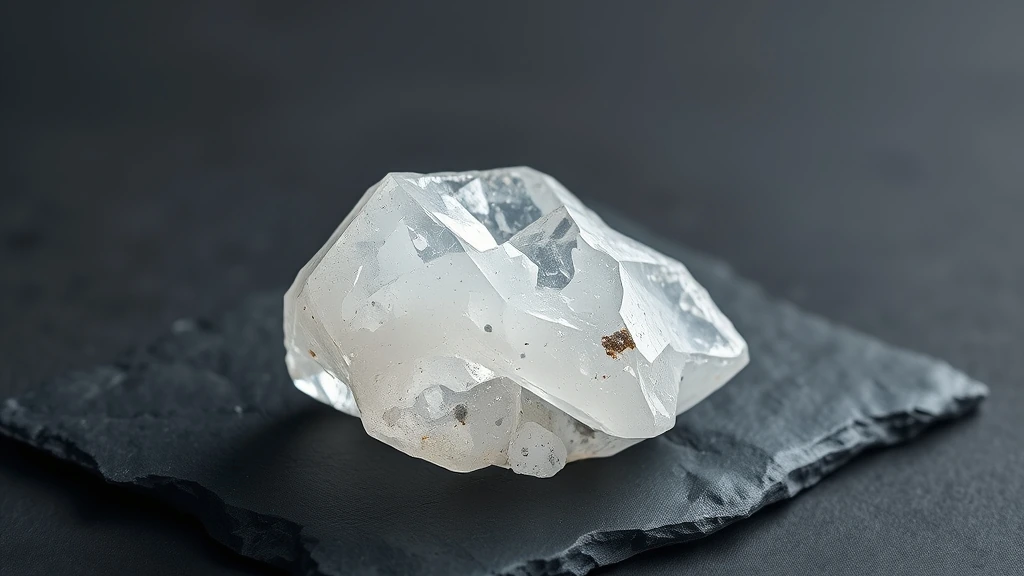
Prase Quartz belongs to the extensive Silicates supergroup, specifically classified within the Tectosilicates subclass. As a member of the Quartz Group, it shares the fundamental framework structure of silicon-oxygen tetrahedra. This geological lineage places it alongside common varieties like amethyst and citrine. Its formation occurs in hydrothermal veins, where trace impurities dictate its unique coloration. The mineral’s stability makes it a significant subject in gemological studies.
What is Prase Quartz? Geological Overview & Definition
Prase Quartz is distinguished by its pale to medium green coloration, which sets it apart from other quartz varieties. This hue is not derived from chromium, unlike emerald, but from lattice defects and trace inclusions. Geologists identify it as a cryptocrystalline or macrocrystalline form, depending on the specific specimen’s growth conditions. Its rarity stems from the specific geochemical environment required for its formation. In comparative mineralogical collections, practitioners and geologists frequently study Prasiolite Green Quartz alongside this crystal to appreciate their subtle energetic and structural differences.
The stone typically forms in hydrothermal veins within granite or metamorphic rocks. These environments provide the necessary pressure and temperature for silica saturation. The resulting crystals often exhibit a hexagonal prism habit, characteristic of the quartz family. Understanding its geological context helps distinguish natural prase from synthetic or dyed alternatives.
Prase Quartz Chemical Composition & Crystallographic Properties
Prase Quartz crystallizes in the Trigonal (Rhombohedral / Trapezohedral) system, a defining feature of the quartz group. Its lattice structure consists of a three-dimensional network of silicon and oxygen atoms. This arrangement creates a highly stable tectosilicate framework that resists chemical weathering. The structural integrity contributes to its consistent physical properties across global deposits. In comparative mineralogical collections, practitioners and geologists frequently study Tangerine Quartz alongside this crystal to appreciate their subtle energetic and structural differences.
The primary chromophore responsible for the green color is likely color centers within the lattice. These defects arise from radiation exposure or trace impurities during crystal growth. Unlike many colored gemstones, prase does not rely on heavy metal substitution for its hue. This mechanism ensures the color remains stable under normal lighting conditions. In comparative mineralogical collections, practitioners and geologists frequently study Brazilianite alongside this crystal to appreciate their subtle energetic and structural differences.
Thermal behavior of prase quartz is notable for its heat sensitivity. Prolonged exposure to high temperatures can cause the green color to fade or shift. This thermal instability requires careful handling during cutting and polishing processes. Gemologists recommend avoiding direct heat sources to preserve the stone’s aesthetic value and structural integrity.
| Property | Specification |
|---|---|
| Mineral Group | Silicates (Tectosilicates / Quartz Group) |
| Chemical Formula | SiO₂ (Silicon Dioxide) |
| Mohs Hardness | 7.0 |
| Crystal System | Trigonal (Rhombohedral / Trapezohedral) |
| Specific Gravity (Density) | 2.65 |
| Refractive Index | 1.544 – 1.553 |
| Color & Optical Properties | Natural Prase Quartz color spectrum and optical dispersion |
| Primary Mining Localities | Brazil, Madagascar, USA (Arkansas), Swiss Alps |
| Water & Chemical Resistance | High (Fully resistant to water and moisture) |
| Chakra Alignment (Traditional) | All Chakras (Universal Harmonizer) |
| Zodiac Affinity (Traditional) | All Zodiac Signs (Especially Leo and Aries) |
| Symbolic Meaning (Traditional) | Master energy amplifier, clarity, purification, and focus |
Prase Quartz Varieties & Color Spectrum
Prase quartz derives its distinctive green hue from trace amounts of chlorite or epidote inclusions within the silica lattice. This coloration is typically pale to medium green, distinguishing it from the deeper tones of emerald or the yellowish cast of citrine. The mineral maintains a Mohs hardness of 7.0, making it durable enough for everyday jewelry use while retaining a glassy luster.
Pale Prase
This variety exhibits a very light, almost translucent green shade that is highly sought after for its delicate aesthetic. The color is often uniform, resulting from minimal and evenly distributed chlorite particles suspended in the crystal structure. Pale prase is frequently found in large, clean crystals that are ideal for faceting into standard gem cuts. Its subtle appearance allows it to complement other gemstones without overwhelming the overall design.
Deep Green Prase
Darker specimens contain a higher concentration of chlorite inclusions, creating a richer, more saturated green color. These crystals often appear slightly opaque due to the density of the mineral impurities within the quartz matrix. Deep green prase is rarer than its pale counterparts and commands a higher market price for its intensity. The visual depth of these stones makes them particularly striking in cabochon cuts that emphasize their internal texture.
Prase with Inclusions
Some prase quartz crystals feature visible chlorite flakes or needle-like inclusions that create a unique internal landscape. These inclusions can form geometric patterns or cloud-like shapes, adding character to the stone’s appearance. While purists prefer clean stones, many collectors value these inclusions for their geological storytelling and natural beauty. The presence of these features often indicates a specific formation environment within the host rock.
Regional Trade Varieties
Commercially, prase is often categorized by its source region, with Brazilian and South African stones being particularly prominent. Brazilian prase is known for its clarity and consistent color, while South African specimens may exhibit more varied inclusions. These regional differences influence pricing and availability in the global gemstone market. Buyers often seek specific origins based on their preference for clarity or unique internal features.
Where is Prase Quartz Found? Geological Mining & Extraction
Prase quartz primarily forms in pegmatite veins, which are coarse-grained igneous rocks associated with the final stages of magma crystallization. These deposits often contain large crystals that are suitable for gem cutting, unlike the finer-grained quartz found in sedimentary rocks. The formation process involves the slow cooling of silica-rich fluids, allowing the incorporation of green chlorite minerals. This geological setting is crucial for producing the high-quality crystals preferred by gemologists.
Major mining regions include Brazil, particularly the Minas Gerais state, which has been a historic source of high-quality prase. South Africa also yields significant quantities, often from pegmatite bodies in the Witwatersrand Basin. Other notable locations include Madagascar and the United States, where smaller deposits contribute to the global supply. Extraction methods typically involve open-pit mining or underground shafts, depending on the depth and accessibility of the pegmatite veins.
Historical Significance & Cultural Lore of Prase Quartz
Ancient civilizations valued prase quartz for its perceived ability to promote clarity and purification, often incorporating it into ritualistic objects. Archaeological findings suggest that green quartz varieties were used in amulets and talismans to ward off negative energies. The stone’s association with the universal harmonizer concept reflects its broad appeal across different cultural traditions. These historical uses highlight the enduring human fascination with the stone’s color and metaphysical properties.
In more recent history, prase quartz has gained popularity in the modern metaphysical community as a master energy amplifier. Its association with all chakras makes it a versatile tool for meditation and spiritual practice. The stone’s gentle energy is believed to enhance focus and mental clarity, making it a favorite among practitioners. This contemporary interest has driven increased demand for high-quality prase quartz in the global gemstone market.
Modern Uses & Jewelry Applications of Prase Quartz
Prase quartz is prized for its vivid green hue and durability, making it a favorite in contemporary lapidary work. Artisans often employ precision faceting to highlight its natural brilliance, while cabochon cuts showcase the stone’s soothing color without distracting facets. Ornamental carving also thrives, producing decorative objects such as figurines, vases, and inlay panels that complement modern interior design.
- Faceted rings, pendants, and earrings emphasize sparkle and fire.
- Cabochon beads and brooches offer a smooth, polished surface ideal for setting in silver or gold.
- Carved plaques, chess pieces, and architectural accents display the stone’s translucency and rich hue.
Metaphysical Properties & Traditional Meaning of Prase Quartz
According to historical traditions and metaphysical lore, prase quartz functions as a master energy amplifier, intensifying intentions and fostering mental clarity. It is believed to purify the aura, dissolve negative patterns, and promote emotional balance, especially during periods of stress or decision‑making. Practitioners also attribute to it the power to focus spiritual insight, aiding meditation and inner vision.
Which Chakra and Zodiac Signs Align with Prase Quartz?
Prase quartz resonates with all chakras, acting as a universal harmonizer that can be placed on any energy center to restore equilibrium. Its broad vibrational range allows it to support root stability, heart compassion, and crown enlightenment alike, making it a versatile tool for holistic healing practices.
In astrology, prase quartz is associated with all zodiac signs, with a particular emphasis on Leo and Aries. These fire signs are said to benefit from the stone’s ability to sharpen focus, boost confidence, and channel creative fire, while the stone’s universal alignment also supports the traits of every other sign.
How to Identify Real vs. Fake Prase Quartz
Artificial imitations of prase quartz include colored glass, resin composites, and heat‑treated quartz that has been dyed to mimic the natural green shade. Synthetic versions may display uniform color without the subtle zoning typical of genuine material, and some low‑cost replicas lack the characteristic refractive index range of true quartz. Careful observation of optical and physical properties can usually reveal these differences.
Practical At-Home Authenticity Tests
- Temperature Test (Thermal Feel): Real quartz feels cool to the touch and retains that coolness longer than glass, which quickly warms to skin temperature.
- Specific Gravity & Weight Test: With a density of 2.65 g/cm³, genuine prase quartz feels heavier than glass of similar size; a simple water displacement test can confirm the specific gravity.
- Scratch & Hardness Test (Mohs Comparison): Quartz rates 7 on the Mohs scale; it will scratch glass (≈5.5) but be scratched by a steel file (≈6.5) or a diamond tip.
- Microscopic & Loupe Inspection (Internal Inclusions): Under 10× magnification, natural prase quartz shows microscopic rutile needles, feather‑like inclusions, or growth zoning, whereas synthetic glass appears flawless or shows uniform bubbles.
Prase Quartz Valuation Factors, Grading & Pricing
The primary driver of market value is color saturation. Deep, vivid green hues that appear uniform across the stone are prized, while pale or uneven tones reduce price. Collectors also consider the stone’s natural energetic luster, which enhances perceived vibrancy and desirability.
Crystal size & weight (grams) is the second key metric. Larger specimens that weigh more grams command higher prices, especially when the surface is polished to a high shine without excessive matrix inclusions. Raw, unpolished material is valued less than tumbled pieces that display a smooth, glassy finish, yet natural inclusions can add a unique character that some buyers seek.
The final factor is ethical sourcing & locality premium. Stones mined responsibly, with documented labor practices and minimal environmental impact, attract premium prices in both holistic and collector circles. Proven origins from renowned quartz districts, such as Brazil or Madagascar, can further elevate value, especially when accompanied by certification.
How to Clean and Care for Prase Quartz
Prase Quartz tolerates water well and can be safely cleaned with warm water and a mild soap solution. Gently immerse the stone or rinse it under a lukewarm stream, then use a soft brush or cloth to remove surface grime before rinsing again. The piece may also be placed in an ultrasonic cleaner for a thorough cleanse, provided it is not heavily fractured or cracked. After cleaning, pat the stone dry with a clean, lint‑free microfiber cloth and store it in a low‑humidity environment to maintain its brilliance.
Cleansing and Recharging Prase Quartz (Energetic Care)
For holistic maintenance, a brief session of herbal smudging with sage or cedar can clear lingering energetic residue without exposing the crystal to heat. Hold the stone a few inches above the smoke, allowing the gentle vapor to pass over its surface for a minute or two.
Alternatively, place the quartz on a selenite charging slab or expose it to soft moonlight for several hours, letting the subtle lunar energy revitalize its vibrational field. Avoid direct, intense sunlight or any form of heating, as excessive thermal stress can fracture the crystal lattice.
Frequently Asked Questions About Prase Quartz
Is prase quartz safe to wear in the shower or while swimming?
Yes, prase quartz is fully resistant to water and moisture. Its silicon dioxide composition makes it impervious to dissolution, so exposure to water, steam, or chlorine does not degrade the stone. Regular wear in wet environments is therefore safe, though prolonged contact with harsh chemicals should be avoided.
How should I clean prase quartz jewelry at home?
Clean prase quartz with warm water and a mild soap solution. Gently scrub with a soft brush, then rinse and pat dry with a lint‑free cloth. This method removes oils and residues without affecting the stone’s refractive index or surface luster.
Can I use an ultrasonic cleaner for prase quartz?
Ultrasonic cleaning is suitable for prase quartz unless the piece is heavily fractured. The gentle vibrations dislodge dirt from crevices while the stone’s hardness of 7 on the Mohs scale protects it from abrasion. Inspect for cracks before cleaning to prevent damage.
Does prase quartz have any specific zodiac associations?
Prase quartz aligns with all zodiac signs, especially Leo and Aries. In astrological practice, its universal harmonizer energy is believed to amplify the traits of fire signs, fostering confidence and leadership while supporting the broader zodiac spectrum.
Which chakras does prase quartz influence?
Prase quartz is said to balance all chakras as a universal harmonizer. Practitioners use it to promote clarity, purification, and focus throughout the body’s energy centers, making it a versatile tool for meditation and holistic healing.
What is the typical density of prase quartz, and why does it matter?
Prase quartz has a density of approximately 2.65 g/cm³. This relatively low density, combined with its trigonal crystal system, contributes to a comfortable weight in jewelry and aids gem cutters in achieving precise faceting without excessive strain.
How does the refractive index affect the appearance of prase quartz?
The refractive index ranges from 1.544 to 1.553, giving prase quartz its bright sparkle. Light entering the stone bends at these values, enhancing its greenish‑yellow hue and creating a vivid play of color that is prized in both gem and mineral collections.
Is prase quartz suitable for everyday wear despite its hardness?
With a Mohs hardness of 7.0, prase quartz is durable enough for daily use. While it resists scratches from most common materials, it can still be marked by harder substances like diamonds; careful handling and routine cleaning preserve its optical brilliance.