
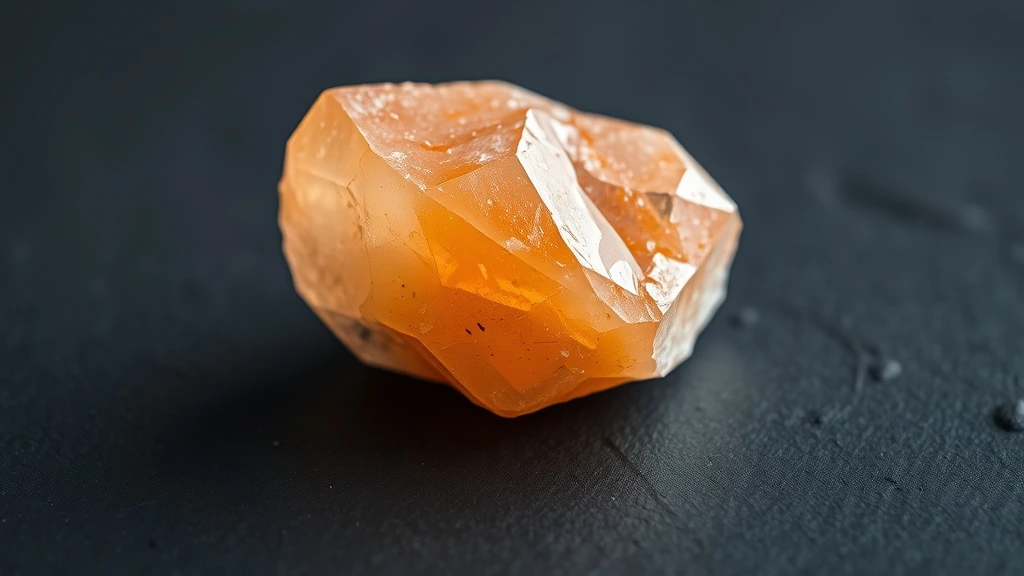
Tangerine Quartz belongs to the extensive Silicates supergroup, specifically within the Tectosilicates subclass. As a member of the Quartz Group, it shares the fundamental framework of corner-sharing silicon-oxygen tetrahedra. This structural arrangement provides the stone with exceptional chemical stability and mechanical resilience. Consequently, it resists weathering and maintains its luster under standard environmental conditions, making it a robust candidate for jewelry application.
What is Tangerine Quartz Gemstone? Geological Overview & Definition
Tangerine Quartz is defined by its distinctive orange to reddish-orange coloration, often resulting from iron impurities. It forms in hydrothermal veins where silica-rich fluids cool slowly within rock fractures. This geological process allows for the growth of well-formed crystals with high clarity. The stone’s vibrant hue distinguishes it from standard clear or smoky quartz varieties.
Mineralogists classify this gem as a variety of alpha-quartz, stable at surface temperatures. Its formation is frequently associated with granitic intrusions or metamorphic terrains. The trigonal crystal system dictates its characteristic hexagonal prism habit with pyramidal terminations. Understanding this origin helps gemologists assess authenticity and potential inclusions within the specimen.
Tangerine Quartz Gemstone Chemical Composition & Crystallographic Properties
The fundamental lattice structure of Tangerine Quartz is Trigonal (Rhombohedral / Trapezohedral), not hexagonal. This crystal system features a three-fold rotational symmetry axis, defining its geometric shape. The unit cell parameters reflect this specific symmetry, influencing how light interacts with the internal structure. Precise identification relies on measuring these crystallographic constants accurately.
Chemically, the stone consists of a rigid silicon-oxygen tetrahedral framework. Minor cation substitution of aluminum for silicon can occur, creating charge imbalances. These substitutions are often compensated by trace impurities like sodium or lithium. Such atomic-level variations subtly affect the stone’s electrical properties and internal stress distribution.
The orange coloration typically stems from chromophore color centers or iron inclusions. These defects absorb specific wavelengths of visible light, reflecting the warm spectrum. Unlike dyes, these natural color centers are stable under normal handling conditions. However, extreme heat can alter these centers, potentially shifting the hue or causing fractures.
Thermal behavior indicates that quartz undergoes a phase transition above 573°C. Below this threshold, it remains in the alpha-quartz form, which is stable for jewelry. The material exhibits low thermal conductivity, making it comfortable to wear. Acid sensitivity is minimal, as the silicon dioxide structure resists most common acids.
| Property | Specification |
|---|---|
| Mineral Group | Silicates (Tectosilicates / Quartz Group) |
| Chemical Formula | SiO₂ (Silicon Dioxide) |
| Mohs Hardness | 7.0 |
| Crystal System | Trigonal (Rhombohedral / Trapezohedral) |
| Specific Gravity (Density) | 2.65 |
| Refractive Index | 1.544 – 1.553 |
| Color & Optical Properties | Natural Tangerine Quartz Gemstone color spectrum and optical dispersion |
| Primary Mining Localities | Brazil, Madagascar, USA (Arkansas), Swiss Alps |
| Water & Chemical Resistance | High (Fully resistant to water and moisture) |
| Chakra Alignment (Traditional) | All Chakras (Universal Harmonizer) |
| Zodiac Affinity (Traditional) | All Zodiac Signs (Especially Leo and Aries) |
| Symbolic Meaning (Traditional) | Master energy amplifier, clarity, purification, and focus |
Quartz Varieties & Comprehensive Sub-Types
Amethyst
Amethyst forms in high‑temperature hydrothermal veins where silica‑rich fluids encounter iron‑bearing host rocks. The characteristic violet hue arises from Fe⁴⁺ (FeO₄)⁴⁻ color centers created by natural irradiation. Macrocrystalline crystals often display parallel banding and feather‑like inclusions, and the stone commands a premium in the global market as a crown‑chakra and third‑eye talisman.
Citrine
Citrine develops in similar pegmatitic environments but requires a distinct oxidation state of iron that yields golden‑yellow to amber tones. True natural citrine is rare; most gem‑quality material is heat‑treated amethyst, which reorganizes the Fe⁴⁺ centers into Fe³⁺ complexes. The resulting transparent crystals exhibit subtle growth zoning and are prized for their solar‑plexus prosperity associations.
Rose Quartz
Rose quartz crystallizes in low‑temperature, silica‑rich cavities where minute dumortierite‑like borosilicate fibers scatter light, imparting a soft pink to rose‑red coloration. The fibrous inclusions are often oriented in a radiating pattern, giving the stone a milky translucency prized in jewelry. Because of its consistent hue and heart‑chakra reputation, rose quartz enjoys steady demand in both ornamental and metaphysical markets.
Smoky Quartz
Smoky quartz originates in deep‑seated pegmatites where natural radioactive decay of aluminum‑oxygen complexes creates color centers that absorb violet‑blue light, producing a range from translucent brown to jet‑black. The stone’s uniform internal cloudiness and occasional parallel growth bands aid identification. Its grounding properties and relative abundance keep it popular among lapidary artisans and collectors alike.
Rutilated Quartz
Rutilated quartz forms when acicular rutile (TiO₂) needles infiltrate growing quartz crystals during slow cooling of silica‑rich fluids. The needles appear as golden, copper‑red, or black inclusions that intersect the host crystal at various angles, creating striking “star‑burst” effects. High‑clarity specimens with well‑distributed rutile are especially valuable for both decorative cabochons and metaphysical use.
Strawberry Quartz
Strawberry quartz is a clear or pale pink quartz matrix that incorporates red‑orange specks of lepidocrocite, hematite, or goethite during crystal growth. These iron‑oxide inclusions are typically microscopic platelets that give the stone a “strawberry‑seed” appearance. Though less common than other colored quartz, it is sought after for its unique aesthetic and heart‑chakra amplification.
Ametrine
Ametrine is a naturally zoned quartz that displays distinct amethyst (purple) and citrine (golden) sectors within a single crystal lattice. The zoning results from gradual changes in iron oxidation state as the crystal traverses temperature gradients in the Anahi mine, Bolivia. Because true ametrine is confined to this locality, gem‑quality stones command premium prices and are celebrated for dual‑chakra resonance.
Prasiolite (Green Quartz)
Prasiolite, or green quartz, is produced when iron‑bearing amethyst undergoes controlled heat treatment at 500–600 °C, converting Fe⁴⁺ centers to Fe³⁺ complexes that absorb red light and transmit green. The resulting crystals are typically transparent with a leek‑green hue and may exhibit faint growth banding. Though synthetic in origin, prasiolite is accepted in the market as a distinct variety prized for its soothing green energy.
Comparative Summary – Gemologists differentiate these quartz varieties primarily by color‑origin mechanisms (irradiation, oxidation, inclusion type) and by inclusion morphology observable under magnification. Refractive index and specific gravity remain constant (≈1.55, 2.65 g/cm³), so diagnostic emphasis falls on spectroscopic signatures, inclusion patterns, and, when relevant, provenance documentation.
Where is Tangerine Quartz Gemstone Found? Geological Mining & Extraction
Tangerine quartz occurs in silica‑rich pegmatite veins that intrude granitic batholiths, especially in the western United States, Brazil, and Madagascar. The stone’s vivid orange hue is produced by trace chromium (Cr³⁺) and iron impurities that substitute into the quartz lattice during late‑stage hydrothermal crystallization.
Mining is typically carried out by open‑pit or small‑scale shaft operations, where workers extract crystal‑bearing blocks from host pegmatite dikes. After extraction, the ore is crushed, washed, and sorted by hand to isolate the orange‑colored macrocrystals, which are then cut into cabochons or polished beads for the gem market.
Historical Significance & Cultural Lore of Tangerine Quartz Gemstone
Ancient Egyptian artisans prized orange quartz for its sun‑like brilliance, incorporating it into amulets and funerary jewelry that symbolized rebirth and vitality. Similar uses appear in pre‑Columbian Andean cultures, where tangerine quartz was set into ceremonial masks to invoke the fire element during solstice rites.
In medieval European alchemy, the stone was believed to amplify the philosopher’s fire, aiding practitioners in transmuting base metals. Modern metaphysical traditions continue this legacy, describing tangerine quartz as a universal harmonizer that energizes all chakras and aligns the zodiac signs Leo and Aries.
Modern Uses & Jewelry Applications of Tangerine Quartz Gemstone
Lapidaries value Tangerine Quartz for its warm, translucent hue, which enhances well in both faceted and polished forms. The stone’s Mohs hardness of 7.0 ensures durability for everyday wear, making it ideal for rings and pendants. Its clarity allows light to penetrate deeply, creating a vibrant internal glow that appeals to modern jewelry designers.
- Faceted Cuts: Standard brilliant and mixed cuts maximize brilliance and fire.
- Cabochons: Smooth, domed cuts highlight the stone’s soft, honey-like color saturation.
- Ornamental Carving: Larger specimens are often carved into beads, pendants, or decorative sculptures.
Metaphysical Properties & Traditional Meaning of Tangerine Quartz Gemstone
According to historical traditions and metaphysical lore, Tangerine Quartz is revered as a powerful master energy amplifier. Practitioners believe it facilitates deep purification and mental clarity, helping users release stagnant emotional patterns. This stone is often associated with the solar plexus, encouraging confidence and creative expression.
In spiritual contexts, the gemstone serves as a bridge between physical and energetic realms. It is thought to promote focus and intention-setting, allowing practitioners to align their thoughts with their actions. The warm orange tones symbolize vitality, joy, and the awakening of inner wisdom.
Which Chakra and Zodiac Signs Align with Tangerine Quartz Gemstone?
Tangerine Quartz is classified as a Universal Harmonizer, meaning it resonates with All Chakras simultaneously. This unique property allows it to balance the entire energetic system, from the root to the crown. It helps clear blockages across all centers, promoting holistic well-being and spiritual alignment.
Astrologically, the stone aligns with All Zodiac Signs, but it holds special significance for Leo and Aries. These fire signs benefit from its ability to amplify courage, creativity, and leadership qualities. The stone’s warm energy complements the fiery nature of these constellations, enhancing their natural charisma.
How to Identify Real vs. Fake Tangerine Quartz Gemstone
Distinguishing genuine Tangerine Quartz from imitations requires attention to subtle physical and optical characteristics. Common fakes include synthetic glass, which often lacks natural inclusions, and dyed replicas of lower-quality quartz. These alternatives may appear visually similar but differ significantly in density, thermal conductivity, and internal structure.
Practical At-Home Authenticity Tests
- Temperature Test (Thermal Feel): Genuine quartz feels cool to the touch initially and warms slowly. Glass imitations tend to warm up much faster due to lower thermal conductivity.
- Specific Gravity & Weight Test: Real quartz has a density of 2.65. It will feel heavier than glass of the same size, which typically has a lower specific gravity.
- Scratch & Hardness Test (Mohs Comparison): With a Mohs hardness of 7.0, genuine quartz can scratch glass (hardness 5.5). It will not be scratched by steel, but may be scratched by topaz or diamond.
- Microscopic & Loupe Inspection (Internal Inclusions): Use a 10x loupe to look for natural inclusions like fluid-filled fractures or mineral traces. Glass is usually perfectly clear or contains tiny bubbles, while dyed stones may show color concentration along cracks.
Tangerine Quartz Gemstone Valuation Factors, Grading & Pricing
Color Saturation is the foremost driver of price. Deep, vivid orange hues that cover the entire stone command premium rates, while pastel or uneven tones reduce value. Clarity and luster amplify the visual impact; a high‑shine surface with minimal cloudiness enhances market appeal. Collectors often grade color on a scale from “faint” to “intense,” with the latter fetching the highest bids.
Carat Weight influences price but interacts with cut quality. Larger stones are rarer, yet a well‑proportioned 2‑carat piece can be less valuable than a perfectly faceted 1.5‑carat gem. Symmetrical facets maximize light return, and any matrix or inclusions that disrupt transparency are deducted from the final price. Grading labs report weight to the nearest hundredth of a carat, ensuring transparent pricing.
Geographical Provenance Premium adds a regional surcharge for stones from renowned locales such as Brazil or Madagascar. Provenance is verified through trace element analysis and documented mining records, which can raise wholesale prices by 10‑20 %. Retail trends show steady growth, with online platforms driving a 5‑7 % annual increase in average selling price for certified tangerine quartz.
How to Clean and Care for Tangerine Quartz Gemstone
Easily cleaned with warm water and mild soap, tangerine quartz tolerates gentle agitation without surface damage. Submerge the stone for a few minutes, then use a soft brush to dislodge any residue, rinsing thoroughly with lukewarm water. The stone is fully resistant to water and moisture, so drying with a lint‑free cloth is sufficient.
Cleansing and Recharging Tangerine Quartz Gemstone (Energetic Care)
For energetic renewal, place the gemstone on a selenite charging plate for several hours; the neutral selenite will clear lingering vibrations without physical contact. Alternatively, expose the stone to moonlight on a clear night, allowing lunar energy to replenish its natural glow and amplify its metaphysical properties.
A second safe method is smoke smudging using white sage or palo santo; pass the stone through the rising smoke to dispel stagnant energy. Ensure the stone remains dry during the process, as tangerine quartz is not soluble and will not be affected by the brief exposure to aromatic vapors.
Frequently Asked Questions About Tangerine Quartz Gemstone
Is Tangerine Quartz safe to wear in the shower?
Yes, it is fully resistant to water and moisture. As a stable silicon dioxide mineral, it withstands daily exposure to steam and soap without degradation. You can confidently wear it during bathing, swimming, or rain, as its chemical structure remains intact under wet conditions.
Can I clean Tangerine Quartz in an ultrasonic cleaner?
Generally, yes, provided the stone is not heavily fractured. It cleans easily with warm water and mild soap, making it suitable for ultrasonic cleaning for most specimens. However, inspect for internal inclusions first, as intense vibrations may stress fragile, heavily fractured crystals.
Which zodiac signs are best aligned with this stone?
It resonates with all zodiac signs, especially Leo and Aries. While universally beneficial, its fiery energy particularly supports the confidence of Leo and the drive of Aries. This makes it a versatile accessory for anyone seeking enhanced personal power and creative vitality.
What chakras does Tangerine Quartz activate?
It acts as a universal harmonizer for all chakras. Unlike stones targeting specific energy centers, this gemstone balances the entire chakra system simultaneously. Its broad resonance promotes holistic alignment, making it effective for anyone seeking comprehensive energetic purification and focus.
What is the Mohs hardness of Tangerine Quartz?
It measures 7.0 on the Mohs scale. This high hardness makes it durable enough for everyday jewelry, resisting scratches from common materials like steel. However, it is still susceptible to damage from harder minerals like topaz or diamond, so store it separately.
What is the chemical composition of this gemstone?
It consists entirely of silicon dioxide (SiO₂). This pure quartz structure defines its physical properties, including its refractive index of 1.544 to 1.553. The orange hue typically arises from trace impurities or heat treatment within the stable trigonal crystal system.
How should I store Tangerine Quartz jewelry?
Store it in a soft pouch or separate compartment. Although hard, its trigonal crystal structure can chip if struck by harder objects. Keeping it away from diamonds or sapphires prevents surface abrasion, preserving its luster and structural integrity over time.
Is Tangerine Quartz a natural or treated stone?
It is a natural quartz variety, often heat-treated. While the base mineral is naturally occurring, many commercial pieces undergo heat treatment to enhance their orange color. This process is stable and does not compromise the stone’s durability or gemological value.