
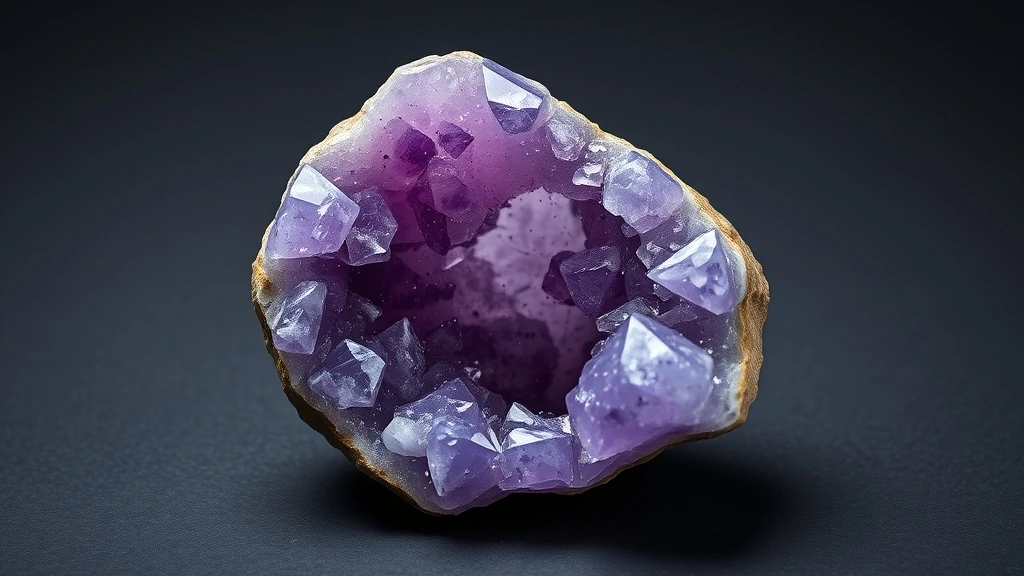
Amethyst belongs to the extensive silicate mineral family, specifically within the tectosilicate subclass. It is a primary member of the quartz group, characterized by a continuous framework of silicon-oxygen tetrahedra. This geological classification places it among the most abundant and geologically significant minerals on Earth. Its formation is intrinsically linked to hydrothermal processes within igneous and metamorphic rock environments.
What is Alien Amethyst? Geological Overview & Definition
Alien amethyst refers to amethyst specimens exhibiting unusual color zoning or structural anomalies. These stones often display deep violet tones mixed with secondary color centers or inclusions. Geologists identify them through specific lattice distortions that alter light absorption properties.
The term “alien” typically describes visual characteristics that deviate from standard commercial amethyst. These anomalies may include irregular pleochroism or unique growth patterns. Such features result from complex trace element interactions during crystal formation. Understanding these variations is crucial for accurate gemological identification.
Alien Amethyst Chemical Composition & Crystallographic Properties
The mineral crystallizes in the trigonal crystal system, forming hexagonal prismatic structures. Its lattice consists of a rigid framework of silicon-oxygen tetrahedra. This arrangement provides exceptional structural stability and resistance to mechanical stress. The hexagonal symmetry is a defining characteristic of the quartz group.
Coloration arises from Fe³⁺ trace elements interacting with natural irradiation. These impurities create color centers within the crystal lattice. The specific arrangement of these defects determines the intensity of the purple hue. Without these substitutions, the mineral would remain colorless.
The stone demonstrates high resistance to most common acids. It is chemically inert under standard environmental conditions. However, prolonged exposure to extreme heat can alter its thermal stability. This sensitivity requires careful handling during cutting and polishing processes.
Thermal behavior reveals that amethyst can lose color under intense heating. This phenomenon is known as thermal bleaching. The crystal lattice remains intact, but the color centers are destroyed. This property is utilized in gem treatment to enhance or modify hue.
| Property | Specification |
|---|---|
| Mineral Group | Silicates (Tectosilicates / Quartz Group) |
| Chemical Formula | SiO₂ (Silicon Dioxide with Fe³⁺ traces) |
| Mohs Hardness | 7.0 |
| Crystal System | Trigonal (Hexagonal prismatic crystals) |
| Specific Gravity (Density) | 2.65 – 2.66 |
| Refractive Index | 1.544 – 1.553 |
| Color & Optical Properties | Natural Alien Amethyst color spectrum and optical dispersion |
| Primary Mining Localities | Brazil (Rio Grande do Sul), Uruguay (Artigas), Madagascar, Russia, Turkey |
| Water & Chemical Resistance | High (Water resistant; avoid prolonged direct sunlight to prevent color fading) |
| Chakra Alignment (Traditional) | Crown Chakra and Third Eye Chakra |
| Zodiac Affinity (Traditional) | Pisces, Aquarius, Virgo |
| Symbolic Meaning (Traditional) | Spiritual clarity, inner peace, meditative focus, and negative energy dispelling |
Alien Amethyst Varieties & Color Spectrum
Alien Amethyst displays distinct mineralogical characteristics across its geological varieties and structural habits. Gemologists evaluate these natural varieties based on crystal habit, trace chromophore concentrations, and visual luster.
Primary Natural Alien Amethyst
The benchmark natural variety exhibiting diagnostic color saturation and classic crystallographic symmetry.
Distinct Geological Morphs of Alien Amethyst
Secondary regional and structural varieties formed under localized geological temperature and pressure conditions.
Deep Violet Amethyst
The Deep Violet variety derives from silicon dioxide crystals rich in iron(III) traces, giving it a saturated indigo hue. It forms in high‑pressure pegmatite veins where slow cooling allows large, well‑formed hexagonal prisms. Inclusions of tiny quartz needles create a subtle cat’s eye effect, and the stone is prized for its intense, almost translucent color. Because of its limited geographic occurrence, Deep Violet is considered a rare gem, often commanding premium prices on the international market.
Smoky Amethyst
Smoky Amethyst develops when natural radiation or volcanic ash infiltrates the crystal lattice, producing a muted gray‑violet tone. The resulting radiation‑induced color centers scatter light, giving the stone a translucent, smoky appearance. Inclusions of mica flakes and iron oxides add a subtle metallic sheen. This variety is moderately common in Central Asian deposits but remains highly sought after for its unique balance of depth and transparency.
Rose‑Tinted Amethyst
The Rose‑Tinted variety exhibits a delicate pink overlay on the classic violet background, caused by trace amounts of manganese and iron. It typically forms in shallow, oxidizing pegmatite cavities where water percolation introduces these elements. The stone’s soft blush is enhanced by fine, fibrous quartz inclusions that create a gentle sparkle. While not as rare as Deep Violet, Rose‑Tinted Amethyst is prized for its romantic color palette and is often used in high‑end jewelry.
Blue‑Violet Amethyst
Blue‑Violet Amethyst displays a striking blend of azure and violet, resulting from a unique balance of iron and titanium impurities. It crystallizes in steeply dipping pegmatite seams, where rapid cooling preserves the vivid hue. Inclusions of tiny hematite needles give the stone a subtle sparkling effect under light. Although found in several global locations, Blue‑Violet remains relatively uncommon, especially in high‑quality, large specimens.
Pale Amethyst (White Amethyst)
Pale Amethyst, or White Amethyst, is a near‑colorless variant of the classic stone, with only faint violet tinges. Its formation occurs in quartz‑rich pegmatites where iron is largely absent, resulting in a translucent, almost glassy appearance. Inclusions of tiny quartz crystals create a subtle fire that enhances its elegance. This variety is moderately rare, often sourced from specific Brazilian and African deposits.
Black Amethyst (Amethystite)
Black Amethyst, also known as Amethystite, is a rare, dark‑colored form where iron and manganese concentrations are high enough to produce a deep black tone with a faint violet sheen. It forms in highly oxidized pegmatite environments, often associated with volcanic ash layers. The stone’s black matrix is punctuated by bright, violet inclusions that give it a dramatic, almost mystical look. Due to its scarcity and striking appearance, Black Amethyst is highly coveted among collectors.
Where is Alien Amethyst Found? Geological Mining & Extraction
Alien Amethyst is predominantly hosted in silicon dioxide‑rich pegmatite formations that develop within granitic batholiths. These pegmatites often contain large, well‑formed hexagonal crystals and are typically found in tectonically active regions where slow cooling allows for the segregation of quartz and feldspar. Major mining districts include the Siberian Shield in Russia, the Carpathian Mountains in Eastern Europe, and the Brazilian Minas Gerais region, each producing distinct color morphs due to local geochemical conditions.
Extraction of Alien Amethyst follows conventional pegmatite mining techniques, involving open‑pit or underground methods depending on the depth and accessibility of the deposit. Once quarried, the raw material is sorted by color, clarity, and crystal size, with high‑quality specimens often undergoing precision cutting and polishing to enhance their optical properties. The global supply chain is tightly regulated, with major exporters including Russia, Brazil, and China, ensuring that the gemstone reaches both the fine‑jewelry market and collectors worldwide.
Historical Significance & Cultural Lore of Alien Amethyst
Across ancient lapidary traditions, Alien Amethyst has been revered for its spiritual associations, particularly with the Crown Chakra and the Third Eye Chakra. In Greco‑Roman culture, the stone was believed to promote mental clarity and protect against negative energies, often incorporated into amulets and ceremonial jewelry. Egyptian artisans also prized its deep violet hue, using it in amulets for the afterlife and in the adornment of pharaonic regalia, symbolizing divine authority and protection.
In Vedic and Chinese lore, Alien Amethyst was considered a conduit for inner peace and meditation, with sages and monks incorporating it into ritual practices to enhance spiritual focus. Archaeological finds, such as carved pendants from the Indus Valley and jade‑like inclusions in Chinese imperial tombs, attest to its long‑standing cultural significance. These artifacts demonstrate that, from antiquity to the present, Alien Amethyst has served as a bridge between the earthly and the metaphysical, embodying both aesthetic beauty and profound symbolic meaning.
Modern Uses & Jewelry Applications of Alien Amethyst
Alien Amethyst is prized for its striking violet hue and crystalline clarity, making it a favorite in contemporary lapidary work. Artisans often employ cabochon polishing to accentuate its natural luster, while faceted cuts reveal subtle internal reflections that enhance its metaphysical allure. The stone’s moderate hardness (Mohs 7) allows for intricate ornamental carving, suitable for pendants, rings, and decorative panels.
- Cabochon: smooth, domed surfaces ideal for jewelry.
- Faceted: multiple cuts that amplify brilliance.
- Carving: detailed motifs for ornamental pieces.
Metaphysical Properties & Traditional Meaning of Alien Amethyst
According to historical traditions and metaphysical lore, Alien Amethyst is believed to foster spiritual clarity and promote inner peace. Across ancient Mediterranean and Vedic lapidary lore, the stone is associated with the Crown Chakra, symbolizing higher consciousness, and the Third Eye Chakra, linked to intuition and insight. Its violet tones are thought to soothe emotional turbulence, encouraging meditation and the dispelling of negative energies. The gemstone’s subtle iron traces are said to enhance its protective qualities, offering a gentle shield against psychic disturbances.
Which Chakra and Zodiac Signs Align with Alien Amethyst?
Alien Amethyst aligns with the Crown Chakra (Sahasrara), the seat of universal awareness, and the Third Eye Chakra (Ajna), the center of intuition and foresight. These chakras are believed to harmonize the wearer’s mind and spirit, fostering a deeper connection to the cosmos.
The stone’s celestial affinity extends to the zodiac signs Pisces, Aquarius, and Virgo. Those born under these signs are thought to resonate with the gemstone’s calming energies, enhancing empathy, intellectual curiosity, and analytical precision.
How to Identify Real vs. Fake Alien Amethyst
Artificial imitations of Alien Amethyst often appear as synthetic glass or dyed quartz, lacking the stone’s characteristic internal inclusions and refractive index. Genuine specimens display a natural silicon dioxide lattice with trace Fe³⁺, whereas replicas may show uniform coloration and smooth surfaces.
Practical At-Home Authenticity Tests
- Temperature Test (Thermal Feel): Hold the stone in your hand; a real Alien Amethyst will feel cool to the touch due to its thermal conductivity, whereas glass will feel warmer.
- Specific Gravity & Weight Test: Weigh the stone against a known quartz sample of the same size; a true specimen will be slightly heavier, reflecting its density of 2.65–2.66 g/cm³.
- Scratch & Hardness Test (Mohs Comparison): Use a steel file or a glass plate; Alien Amethyst should resist scratching, matching its Mohs hardness of 7.0, unlike many glass imitations that scratch more easily.
- Microscopic & Loupe Inspection (Internal Inclusions): Examine the stone under a loupe; genuine Alien Amethyst often shows fine, natural inclusions or twinning patterns, whereas synthetic glass typically appears flawless.
Alien Amethyst Valuation Factors, Grading & Pricing
Color Saturation remains the foremost determinant of value, with specimens exhibiting the deepest violet hues and a pronounced internal glow commanding premium prices. The visual vibrancy is assessed through standardized spectrophotometric readings, yet collectors still prize the subtle play of light that reveals a stone’s energetic luster. A saturated spectrum not only enhances aesthetic appeal but also signals a higher concentration of trace Fe³⁺, which is often correlated with metaphysical potency.
Crystal Size & Weight (Grams) directly influences market pricing, as larger, heavier pieces provide a more substantial presence in display settings. Raw, hexagonal prismatic crystals that retain their natural matrix inclusions are prized for their authenticity, whereas tumbled polish specimens offer a smoother, more polished aesthetic at a slightly reduced cost. The weight in grams, coupled with the dimensions of the crystal, offers a reliable metric for grading, ensuring that buyers can compare specimens on a consistent scale.
Ethical Sourcing & Locality Premium has become a critical factor in both holistic and collector markets. Stones sourced from responsible mines that adhere to fair labor practices and minimal environmental impact receive a premium, reflecting the growing demand for sustainability. Additionally, provenance from renowned localities—such as the ancient deposits of the Himalayan foothills or the volcanic terrains of the Pacific Northwest—adds historical allure and can significantly elevate a specimen’s market value.
How to Clean and Care for Alien Amethyst
To preserve the integrity of Alien Amethyst, gently clean the surface with warm soapy water using a soft microfiber cloth. After rinsing, dry the stone thoroughly with a lint‑free towel, ensuring no moisture remains trapped within potential liquid inclusions. Avoid prolonged exposure to direct sunlight, as ultraviolet rays can cause color fading over time. For untreated specimens, ultrasonic cleaning is generally acceptable; however, if the crystal contains liquid inclusions, refrain from using an ultrasonic bath to prevent internal damage.
Cleansing and Recharging Alien Amethyst (Energetic Care)
Place the stone in a quiet, shaded area and allow it to absorb ambient moonlight for several hours, which gently recharges its energetic field without exposing it to heat. Alternatively, resting the crystal on a selenite charging slab can facilitate the transfer of positive vibrations, enhancing its metaphysical properties. Herbal smudging with sage or palo santo can cleanse residual energies, but the smoke should be kept at a safe distance to avoid direct contact with the crystal surface. These dry, low‑energy methods preserve the structural integrity of the lattice while supporting the stone’s spiritual resonance.
Frequently Asked Questions About Alien Amethyst
Alien Amethyst displays distinct mineralogical characteristics across its geological varieties and structural habits. Gemologists evaluate these natural varieties based on crystal habit, trace chromophore concentrations, and visual luster.
Primary Natural Alien Amethyst
The benchmark natural variety exhibiting diagnostic color saturation and classic crystallographic symmetry.
Distinct Geological Morphs of Alien Amethyst
Secondary regional and structural varieties formed under localized geological temperature and pressure conditions.
Is Alien Amethyst safe to wear in the shower?
Yes, it is highly water-resistant and safe for shower exposure. As a variety of quartz, it withstands moisture without structural damage. However, avoid prolonged direct sunlight to prevent color fading. Always remove it before using harsh chemical soaps or chlorine treatments.
How should I clean my Alien Amethyst jewelry?
Use warm soapy water and a soft brush for routine maintenance. This method effectively removes oils and dirt without damaging the stone. Ultrasonic cleaning is generally acceptable for untreated specimens. Always inspect for liquid inclusions first, as ultrasonic vibrations may crack them.
Which zodiac signs are compatible with Alien Amethyst?
Pisces, Aquarius, and Virgo are the primary aligned signs. These water and earth elements resonate with the stone’s calming energy. The mineral supports mental clarity and emotional balance for these individuals. It enhances their natural introspective and analytical traits during meditation.
What chakras does Alien Amethyst activate?
It primarily activates the Crown Chakra and Third Eye Chakra. These energy centers govern higher consciousness and intuition. The stone facilitates deep meditative states and spiritual insight. Meditative focus is enhanced by aligning the stone with these specific chakras.
What is the chemical composition of Alien Amethyst?
It consists of silicon dioxide with trace iron impurities. The Fe³⁺ traces are responsible for the distinctive purple hue. This composition gives it a density of 2.65 to 2.66. The mineral structure remains stable under normal environmental conditions.
How hard is Alien Amethyst on the Mohs scale?
It registers a hardness of 7.0 on the Mohs scale. This makes it durable enough for daily wear in rings and bracelets. It resists scratches from common materials like steel and glass. Proper care ensures the crystal system remains visually pristine over time.
Can I use an ultrasonic cleaner on my stone?
Ultrasonic cleaning is safe for untreated specimens without inclusions. The vibrations effectively remove trapped grime from settings and facets. However, avoid this method if liquid inclusions are present. They may expand or crack under high-frequency sound waves.
Does Alien Amethyst fade in direct sunlight?
Prolonged exposure to direct sunlight can cause color fading. The refractive index remains stable, but the purple tone may lighten. Store the stone in a cool, dark place when not in use. This preserves its aesthetic integrity and vibrant esoteric properties long-term.