
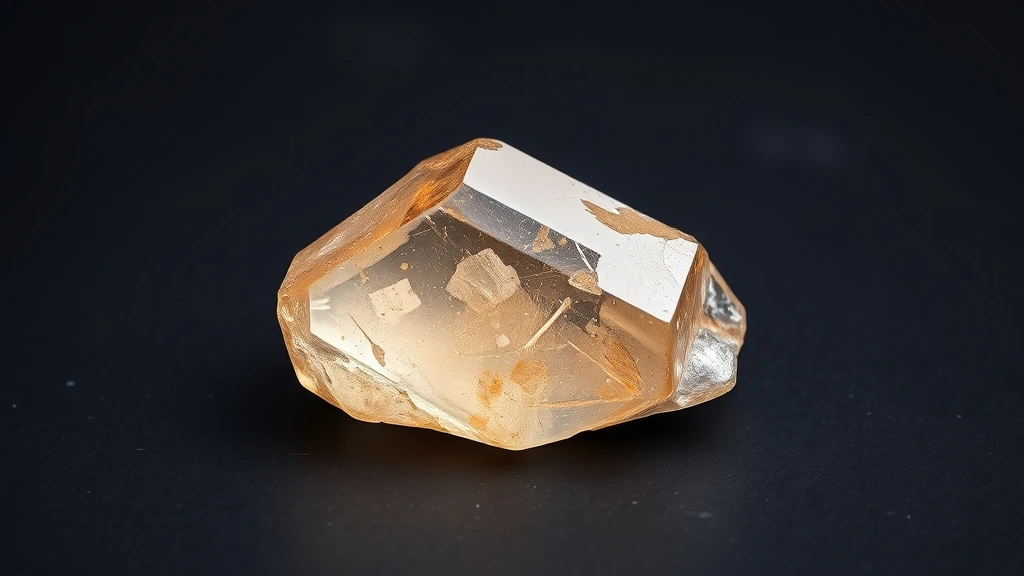
Topaz belongs to the nesosilicate subclass within the broader silicate mineral group. This classification reflects its isolated tetrahedral silicon-oxygen units, which are linked by aluminum cations. The mineral forms as an aluminum fluorosilicate, where fluorine and hydroxyl ions occupy specific crystallographic sites. This structural arrangement dictates its physical properties and optical behavior. Understanding this parent group is essential for accurate geological identification.
What is Champagne Topaz? Geological Overview & Definition
Champagne topaz derives its name from its subtle, wine-like coloration ranging from pale gold to light brown. This variety is distinct from the more saturated imperial topaz found in Brazil. It typically occurs in pegmatite and granitic igneous rocks. These host rocks provide the necessary chemical environment for crystal growth.
The stone is prized for its clarity and moderate rarity compared to other topaz varieties. Metamorphic alteration can also produce these crystals in specific geological settings. Lapidaries value champagne topaz for its balanced aesthetic and durability. It serves as an accessible entry point into the topaz family. In comparative mineralogical collections, practitioners and geologists frequently study Blue Topaz alongside this crystal to appreciate their subtle energetic and structural differences.
Champagne Topaz Chemical Composition & Crystallographic Properties
Topaz crystallizes in the orthorhombic system, forming prismatic crystals with distinct faces. The lattice structure features a specific arrangement of silicon and oxygen tetrahedra. This geometry contributes to its characteristic cleavage and fracture patterns. The crystal habit often displays striations along the length of the prism. In comparative mineralogical collections, practitioners and geologists frequently study Amber Calcite alongside this crystal to appreciate their subtle energetic and structural differences.
The chemical formula Al₂SiO₄(F,OH)₂ indicates a substitution between fluorine and hydroxyl ions. This cation-anion balance is critical for maintaining structural stability. Minor trace elements can influence the final coloration of the gem. The chromophore centers responsible for the champagne hue involve specific electronic transitions.
Thermal behavior reveals that topaz is generally stable under standard jewelry conditions. However, extreme heat can cause structural degradation or color alteration. The mineral exhibits no significant acid sensitivity under normal environmental exposure. Its refractive index ranges from 1.606 to 1.638, contributing to its brilliance.
| Property | Specification |
|---|---|
| Mineral Group | Silicates (Nesosilicates / Aluminum Fluorosilicate) |
| Chemical Formula | Al₂SiO₄(F,OH)₂ (Aluminum Fluorosilicate) |
| Mohs Hardness | 8.0 |
| Crystal System | Orthorhombic (Prismatic crystals) |
| Specific Gravity (Density) | 3.49 – 3.57 |
| Refractive Index | 1.606 – 1.638 |
| Color & Optical Properties | Natural Champagne Topaz color spectrum and optical dispersion |
| Primary Mining Localities | Brazil (Minas Gerais), Pakistan, Russia (Ural), Nigeria, Mexico |
| Water & Chemical Resistance | High (Safe in lukewarm water; avoid thermal shock and harsh chemicals) |
| Chakra Alignment (Traditional) | Throat Chakra and Solar Plexus Chakra |
| Zodiac Affinity (Traditional) | Sagittarius, Scorpio, Leo |
| Symbolic Meaning (Traditional) | Clarity, truth, self-realization, manifestation, and good fortune |
Champagne Topaz Varieties & Color Spectrum
Champagne topaz exhibits a nuanced palette ranging from pale straw to deep amber, primarily driven by trace impurities. The color zoning in these stones often reflects complex geological environments during crystal growth. Understanding these variations is essential for accurate grading and valuation in the gem trade.
Golden Champagne Topaz
This variety displays a warm, honeyed hue that mimics the appearance of fine vintage wine. It typically forms in pegmatite deposits where iron and manganese traces interact with the crystal lattice. The stone often exhibits high clarity, making it a preferred choice for classic jewelry settings.
Amber Champagne Topaz
Characterized by a rich, burnt-orange saturation, this morph is highly sought after for its depth. The color intensity stems from specific oxidation states of iron within the aluminum fluorosilicate structure. High-quality specimens display vivid fluorescence under ultraviolet light, enhancing their visual appeal.
Straw Champagne Topaz
As the palest expression of the champagne family, this variety features a delicate, light yellow tone. It is frequently found in Brazilian pegmatites alongside other light-colored topaz crystals. Its subtle elegance makes it ideal for delicate, minimalist jewelry designs that emphasize clarity.
Smoky Champagne Topaz
Distinguished by a darker, brownish-amber tone, this variety often contains minor inclusions. The smoky appearance results from natural irradiation or high concentrations of impurities during formation. While less common than golden types, it offers a unique, earthy aesthetic for collectors.
Imperial Champagne Topaz
Though often associated with pink hues, imperial topaz can present champagne tones with strong saturation. This rare variety originates from the Mina do Barro mine in Minas Gerais, Brazil. Its exceptional clarity and color make it one of the most valuable topaz types globally.
Where is Champagne Topaz Found? Geological Mining & Extraction
Champagne topaz primarily occurs in pegmatite veins within granitic intrusions, where slow cooling allows large crystals to form. These geological formations provide the necessary chemical environment for the development of distinct color morphs. The stability of the host rock is crucial for preserving crystal integrity during extraction.
Major commercial sources include Minas Gerais in Brazil and the Ural Mountains in Russia. Brazilian deposits remain the dominant global supplier, offering a wide range of champagne hues. Mining operations in these regions utilize careful hand-picking methods to minimize damage to the delicate prismatic crystals.
Historical Significance & Cultural Lore of Champagne Topaz
Ancient civilizations revered topaz for its perceived protective qualities and association with the sun. In Greco-Roman mythology, the stone was believed to enhance clarity of thought and prevent illness. Archaeological findings reveal topaz jewelry in tombs, indicating its status as a symbol of high social standing.
In Vedic traditions, topaz was linked to the sun god Surya, representing vitality and spiritual awakening. Chinese imperial records also document the use of topaz in ceremonial objects, signifying power and longevity. These cross-cultural narratives highlight the enduring appeal of topaz as a stone of truth and manifestation.
Modern Uses & Jewelry Applications of Champagne Topaz
Champagne topaz is prized for its warm, champagne‑colored hue that lends an elegant glow to both cabochon and faceted pieces. In lapidary work, the stone is often cut into polished cabochons for earrings, pendants, and brooches, where its subtle sheen enhances the design. Faceted cuts, typically brilliant or rose, accentuate the stone’s refractive index, creating a sparkling effect that rivals more expensive sapphires. Ornamental carving is also common, with artisans shaping the mineral into intricate motifs for decorative panels, reliquaries, and ceremonial objects.
- Cabochon cuts for earrings, pendants, and brooches
- Brilliant or rose faceted cuts for rings and statement jewelry
- Ornamental carving for panels, reliquaries, and ceremonial items
Carat, Quality Grades & Value Factors of Champagne Topaz
The commercial value of champagne topaz hinges on the 4Cs: *Color* ranges from pale yellow to deep amber; *Clarity* is typically free of visible inclusions, though minor internal lines may be present; *Cut* influences brilliance, with well‑proportioned facets maximizing light return; and *Carat weight* directly affects price, with larger stones commanding premium rates. In addition, the stone’s hardness of 8.0 on the Mohs scale ensures durability in everyday wear, making it suitable for rings and bracelets that endure daily abrasion.
Lapidary grading standards for champagne topaz are guided by the Gemological Institute of America’s (GIA) criteria, which assess transparency, color saturation, and surface polish. Stones with a high transparency and minimal surface blemishes receive higher grades, while those with noticeable inclusions or color zoning are downgraded. The combination of these factors determines the final market price, with top‑grade specimens often exceeding $200 per carat.
Zodiac and Astrological Lore of Champagne Topaz
Champagne topaz is traditionally associated with the Sagittarius, Scorpio, and Leo zodiac signs, symbolizing courage, passion, and leadership. In ancient astrological lore, the stone was believed to amplify the wearer’s solar plexus energy, fostering confidence and personal power.
Across early archaeological records, this gemstone was prized by cultures that valued its warm glow and symbolic resonance. In Vedic traditions, it was linked to the *Solar Plexus Chakra*, while in Greco‑Roman lapidary practices, it was used to adorn ceremonial objects that celebrated the sun’s life‑giving force.
How to Identify Real vs. Fake Champagne Topaz
Artificial imitations of champagne topaz often appear as dyed glass or synthetic fluorosilicate. These replicas typically lack the natural thermal conductivity and specific gravity of genuine stones, and they may exhibit uniform color or a glassy luster that betrays their origin.
Practical At-Home Authenticity Tests
- Temperature Test (Thermal Feel): Hold the stone in your hand; a real topaz feels noticeably cooler than glass due to its higher thermal conductivity.
- Specific Gravity & Weight Test: Weigh the stone against a known weight; genuine topaz has a specific gravity of 3.49–3.57, making it denser than most glass replicas.
- Scratch & Hardness Test (Mohs Comparison): Compare the stone to a standard 8.0 hardness material; a real topaz will resist scratching by a steel file but will be scratched by a diamond.
- Microscopic & Loupe Inspection (Internal Inclusions): Examine under a loupe for natural inclusions or growth lines; synthetic versions often show uniform texture or artificial inclusions.
Champagne Topaz Valuation Factors, Grading & Pricing
Color saturation is the foremost driver of market price, with a vivid, buttery‑gold hue commanding the highest premiums. Uniform hue across the stone and a bright, glassy luster signal superior quality, while any zoning or dull patches reduce value. Buyers also scrutinize optical clarity; inclusions that scatter light lower the perceived brilliance and thus the price.
Carat weight interacts directly with visual impact, yet larger stones only fetch premium if they retain flawless facet symmetry. The 4Cs—cut, color, clarity, and carat—are applied rigorously, with a well‑proportioned cut enhancing sparkle and revealing the stone’s natural fire. A top‑grade Champagne Topaz typically exhibits a balanced proportion, minimal inclusions, and a weight that justifies its rarity.
Geographical provenance adds a distinct premium, especially when the gem originates from historically renowned locales such as Brazil or Sri Lanka. Certified origin reports from reputable gemological laboratories substantiate authenticity and can lift market value by 10‑20 %. Current trends show steady demand among collectors, with prices rising modestly as supply tightens and demand for ethically sourced stones grows.
How to Clean and Care for Champagne Topaz
Champagne Topaz possesses perfect basal cleavage, making it vulnerable to fracture under harsh mechanical action. Ultrasonic and steam cleaning must be strictly avoided; instead, gently wash the gem in lukewarm water mixed with a mild soap, using a soft, lint‑free cloth to remove surface grime. Rinse briefly in clean lukewarm water and pat dry with another soft cloth, ensuring no sudden temperature changes that could induce thermal shock.
Store the stone in a padded compartment away from harder minerals, and avoid exposure to strong chemicals such as acids or chlorine, which can etch the surface. When not in use, keep the topaz in a low‑humidity environment to prevent any potential moisture‑related stress, even though the mineral itself is not hygroscopic. Regular gentle cleaning preserves its brilliance and maintains the structural integrity essential for long‑term enjoyment.
Cleansing and Recharging Champagne Topaz (Energetic Care)
For holistic maintenance, a brief session of herbal smudging with sage or cedar can clear lingering energetic residues without introducing moisture. Pass the stone through the smoke for no more than a few seconds, then gently tap it on a wooden surface to release any absorbed negativity.
Moonlight exposure offers a subtle, non‑thermal recharge; place the topaz on a soft cloth outdoors during a clear night for one to two hours, allowing lunar energy to revitalize its vibrational field. Alternatively, resting the gem on a clean selenite slab for a similar duration can harmonize its frequencies, providing a gentle, heat‑free method of energetic renewal.
Frequently Asked Questions About Champagne Topaz
Champagne Topaz displays distinct mineralogical characteristics across its geological varieties and structural habits. Gemologists evaluate these natural varieties based on crystal habit, trace chromophore concentrations, and visual luster.
Primary Natural Champagne Topaz
The benchmark natural variety exhibiting diagnostic color saturation and classic crystallographic symmetry.
Distinct Geological Morphs of Champagne Topaz
Secondary regional and structural varieties formed under localized geological temperature and pressure conditions.
Is champagne topaz safe to wear in the shower?
Yes, it is water‑resistant in lukewarm conditions. Champagne topaz tolerates gentle exposure to water, but sudden temperature changes or harsh detergents can cause surface clouding. Keep the stone away from hot water, steam baths, and chemical cleaners to preserve its brilliance and structural integrity.
How should I clean my champagne topaz jewelry?
Use warm soapy water and a soft, lint‑free cloth. Because the gem has perfect basal cleavage, abrasive or ultrasonic methods can split the crystal. Gently wipe the surface, rinse with clean lukewarm water, and pat dry; this maintains its optical clarity without risking damage.
Can I use an ultrasonic cleaner on champagne topaz?
No, ultrasonic cleaning must be avoided. The stone’s cleavage planes are vulnerable to vibration, which can cause microscopic fractures. Stick to manual cleaning with mild soap and a soft cloth to keep the refractive index and luster intact.
What is the typical hardness of champagne topaz?
It rates 8 on the Mohs scale. This hardness makes it suitable for daily wear, yet it is still softer than corundum or diamond. Protect the gem from scratches by storing it separately and avoiding contact with harder minerals such as sapphire or ruby.
Which zodiac signs are associated with champagne topaz?
Sagittarius, Scorpio, and Leo are the aligned signs. In astrological tradition, these fire and water signs are believed to benefit from the stone’s energizing properties. Wearing champagne topaz is thought to amplify confidence, clarity, and personal truth for individuals born under these signs.
Which chakras does champagne topaz influence?
It resonates with the Throat Chakra and Solar Plexus Chakra. The gemstone is said to aid communication, self‑expression, and personal power. Aligning the stone with these energy centers can support manifestation, self‑realization, and a sense of inner confidence.
How dense is champagne topaz compared with other gemstones?
Its specific gravity ranges from 3.49 to 3.57. This density places it between quartz (2.65) and garnet (3.5‑4.3), giving it a satisfying heft in the hand. The relatively high density contributes to the stone’s durability and feel of luxury.
What crystal system does champagne topaz belong to?
It crystallizes in the orthorhombic system, forming prismatic crystals. This structure produces well‑defined facets that enhance its brilliance and dispersion. Understanding its orthorhombic symmetry helps gem cutters maximize the stone’s color saturation and overall visual impact.