
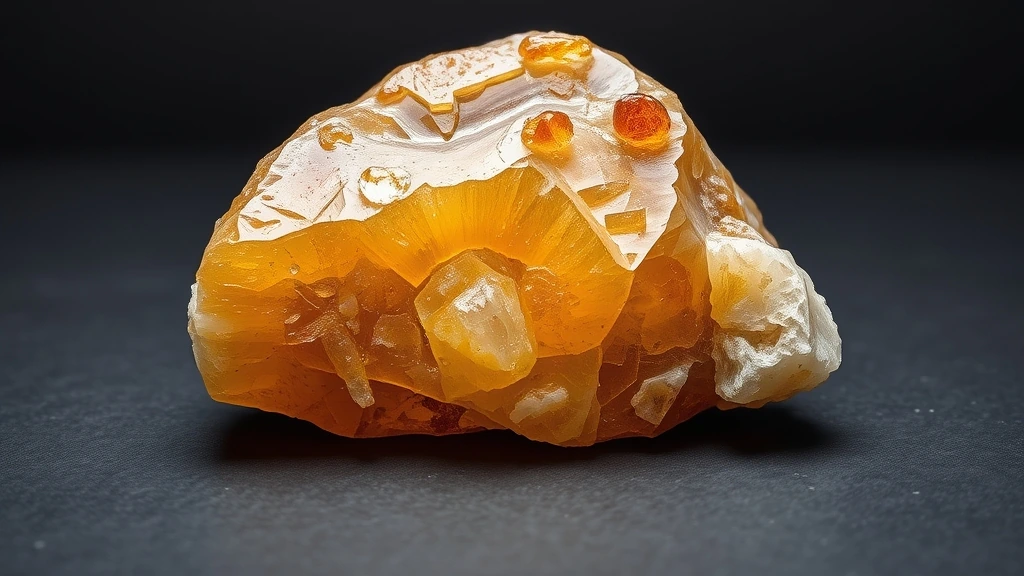
Amber calcite belongs to the carbonate mineral group, specifically classified as a natural crystal rather than an organic aggregate. Unlike true amber, which is fossilized resin, this stone forms through inorganic precipitation processes. Its geological identity is defined by the trigonal crystal system, distinguishing it from other calcite varieties. The warm coloration results from specific chromophore centers within the lattice, offering a unique aesthetic appeal.
What is Amber Calcite? Geological Overview & Definition
Amber calcite is a distinct variety of calcite characterized by its translucent, amber-to-brown coloration. It forms primarily in metamorphic and sedimentary environments where calcium-rich fluids precipitate over geological time. The stone’s appearance often mimics organic amber, yet it remains a purely inorganic mineral formation.
Geologically, this mineral occurs in veins, nodules, or massive aggregates within limestone and marble deposits. Its formation is closely tied to hydrothermal activity and diagenetic processes. The presence of trace elements like iron or manganese influences its specific hue. Understanding its origin helps distinguish it from synthetic imitations or organic resins.
Amber Calcite Chemical Composition & Crystallographic Properties
The fundamental building block of amber calcite is the calcium carbonate (CaCO₃) unit cell. It crystallizes within the trigonal system, exhibiting a rhombohedral lattice structure. This specific arrangement dictates its optical properties, including birefringence and pleochroism. The lattice allows for the substitution of calcium ions with other cations.
Cation substitution by trace metals like iron or manganese creates the characteristic amber tones. These chromophore centers absorb specific wavelengths of visible light, resulting in the warm color spectrum. The mineral’s acid sensitivity is a key diagnostic feature, as it reacts vigorously with dilute hydrochloric acid. This effervescence confirms its carbonate composition.
Thermal behavior reveals that amber calcite is thermally stable under normal conditions. However, extreme heat can cause structural degradation or color alteration. The refractive index ranges from 1.486 to 1.658, contributing to its glassy luster. Proper handling is essential to prevent thermal shock or chemical damage.
| Property | Specification |
|---|---|
| Mineral Group | Natural Mineral / Crystal |
| Chemical Formula | CaCO₃ |
| Mohs Hardness | 3.0 |
| Crystal System | Trigonal |
| Specific Gravity (Density) | 2.71 |
| Refractive Index | 1.486 – 1.658 |
| Color & Optical Properties | Natural Amber Calcite color spectrum and optical dispersion |
| Primary Mining Localities | Global primary localities |
| Water & Chemical Resistance | EXTREMELY SENSITIVE: Water Soluble / Moisture Sensitive! (Avoid liquids) |
| Chakra Alignment (Traditional) | Heart Chakra, Third Eye Chakra |
| Zodiac Affinity (Traditional) | Taurus, Leo |
| Symbolic Meaning (Traditional) | Emotional warmth, spiritual protection, and ancestral wisdom |
Amber Calcite Varieties & Color Spectrum
Amber calcite presents a fascinating spectrum of warm, resinous hues that distinguish it from standard white or pink calcite. The most prized specimens exhibit a deep, translucent honey tone that mimics the appearance of fossilized tree resin. This specific coloration arises from trace impurities within the CaCO₃ lattice structure during crystallization.
Golden Honey Calcite
This variety features a rich, saturated amber glow that is highly sought after in the lapidary market. It typically forms in thick, blocky crystals with excellent clarity and minimal internal fractures. The refractive index of these stones creates a soft, warm luminescence under natural light.
Geologically, golden honey calcite often occurs in association with quartz and fluorite in hydrothermal veins. Its rarity stems from the precise chemical conditions required to achieve such deep, uniform coloration. Collectors value these pieces for their ability to capture and diffuse light beautifully.
Citrine-Tinted Calcite
Distinct from true citrine quartz, this calcite variety displays a pale, lemon-yellow to light orange palette. It frequently contains tiny, suspended mineral inclusions that add texture to the otherwise smooth surface. These stones are generally more abundant than their darker amber counterparts.
The formation of citrine-tinted calcite is linked to specific iron oxide traces within the crystal matrix. While less rare, high-clarity specimens with vivid color saturation are still considered premium quality. They are often cut into cabochons to enhance their gentle, sunny aesthetic appeal.
Opalescent Amber Calcite
This rare morph exhibits a subtle, iridescent play-of-color that shifts between warm amber and soft violet tones. The optical effect is caused by microscopic internal structures that diffract light as it passes through the stone. Such specimens are highly valued by gemologists for their unique visual properties.
Opalescent amber calcite is exceptionally difficult to find in large, clean crystal sizes. The trigonal crystal system allows for these complex optical phenomena when growth conditions are highly specific. Most market examples are small, making large faceted gems extremely uncommon.
Smoky Amber Calcite
Characterized by a dark, brownish-amber hue, this variety resembles smoky quartz in its tonal depth. It often displays a more opaque quality compared to the transparent golden varieties. The color intensity can range from light tan to deep, chocolate-like brown.
Smoky amber calcite frequently contains visible mineral inclusions such as pyrite or mica flakes. These inclusions provide a rugged, earthy character that appeals to collectors of raw mineral specimens. Its Mohs hardness of 3.0 requires careful handling to prevent surface abrasion.
Where is Amber Calcite Found? Geological Mining & Extraction
Amber calcite primarily forms in hydrothermal veins and marble deposits where calcium carbonate precipitates from mineral-rich fluids. These geological settings often host associated minerals like quartz, fluorite, and barite, creating complex mineral assemblages. The slow cooling of these fluids allows for the development of large, well-formed crystals.
Major global sources include regions in Mexico, the United States, and various parts of Europe. Mexican deposits, particularly in the state of Querétaro, are renowned for producing high-quality, colorful calcite varieties. Extraction methods typically involve careful hand-picking to preserve the integrity of the delicate crystal structures.
Historical Significance & Cultural Lore of Amber Calcite
In ancient Greco-Roman traditions, calcite was often confused with or compared to amber due to its warm, resinous appearance. Pliny the Elder documented various calcite varieties, noting their use in early optical experiments and decorative arts. These stones were valued for their ability to split light, a phenomenon that fascinated early natural philosophers.
Across Vedic and Chinese historical records, warm-toned calcite was associated with clarity of mind and spiritual insight. Archaeological findings suggest that polished calcite beads were used in ceremonial contexts to symbolize purity and connection to ancestral wisdom. The stone’s gentle warmth was believed to facilitate meditation and emotional balance in ancient practices.
Modern Uses & Jewelry Applications of Amber Calcite
Amber calcite is primarily valued for its warm, translucent aesthetic, making it a favored material for cabochon cutting in artisanal jewelry. Its Mohs hardness of 3.0 necessitates careful handling to prevent chipping during polishing and setting. Lapidaries often select stones with minimal internal fractures to maximize clarity and luster.
- Cabochon Rings: Smooth, domed cuts highlight the stone’s internal color zoning and translucency.
- Pendants and Earrings: Lightweight settings accommodate the mineral’s moderate specific gravity and delicate structure.
- Ornamental Carvings: Skilled artisans sculpt small figurines or decorative inlays, leveraging the stone’s ease of carving.
- Beaded Jewelry: Uniformly sized beads are strung into necklaces, showcasing the natural amber-hued calcite tones.
Metaphysical Uses & Origins of Amber Calcite
In historical lapidary traditions, amber calcite has been associated with emotional warmth and the stabilization of the spirit. Practitioners often use the stone in meditation to foster a sense of ancestral connection and inner peace. Its geological formation over millions of years is believed to imbue the mineral with deep, enduring energy.
Architectural and decorative arts have long incorporated calcite varieties for their soft, glowing appearance. In grounding practices, the stone is placed near the body to anchor the mind and reduce anxiety. This usage aligns with universal metaphysical lore that values calcite for its ability to clear energetic blockages.
Which Chakra and Zodiac Signs Align with Amber Calcite?
Amber calcite is canonically aligned with the Heart Chakra, promoting emotional balance and compassion. It also resonates with the Third Eye Chakra, enhancing intuition and spiritual insight. This dual alignment makes it a versatile tool for holistic practitioners seeking emotional and mental clarity.
Astrologically, the stone is associated with Taurus and Leo. For Taurus, it reinforces stability and sensory appreciation, while for Leo, it amplifies creative confidence and warmth. These zodiac connections reflect the mineral’s inherent qualities of resilience and radiant energy.
How to Identify Real vs. Fake Amber Calcite
Artificial imitations of amber calcite are common, including synthetic glass and dyed calcite replicas. These fakes often lack the natural inclusions and subtle color variations found in genuine specimens. Understanding the differences in physical properties is essential for accurate identification.
Practical At-Home Authenticity Tests
- Temperature Test (Thermal Feel): Genuine calcite feels cool to the touch initially but warms quickly in the palm, whereas glass remains consistently cool.
- Specific Gravity & Weight Test: Real amber calcite has a density of 2.71, feeling slightly lighter than glass of the same size.
- Scratch & Hardness Test (Mohs Comparison): With a Mohs hardness of 3.0, the stone can be scratched by a copper coin or fingernail, unlike harder glass imitations.
- Microscopic & Loupe Inspection (Internal Inclusions): A 10x loupe reveals natural internal fractures and color zoning in real stones, while fakes often show bubbles or uniform dye patterns.
Amber Calcite Valuation Factors, Grading & Pricing
The color variations of amber calcite dominate its market appeal, ranging from honey‑gold translucency to deeper amber hues with occasional reddish undertones. Natural texture, including subtle banding and occasional veining, adds depth and distinguishes genuine specimens from treated stones. Collectors prize specimens that display uniform coloration without artificial staining, as these retain higher aesthetic and monetary value.
Specimen mass and size are critical in pricing, with larger blocks measured in grams or kilograms commanding premium rates due to their rarity and display potential. Carving craftsmanship that respects the mineral’s inherent fragility can enhance value, especially when the piece maintains structural block integrity and showcases gentle light diffusion. Heavy, well‑preserved pieces that allow soft illumination are especially sought after in ornamental and wellness markets.
The geographical origin and authenticity of amber calcite heavily influence market trends, as deposits from historically documented locales carry provenance prestige. Verified sources from recognized mining districts assure buyers of natural formation and deter synthetic imitations. Wholesale demand spikes when authentic specimens enter the wellness sector, where they are marketed for their reputed energetic properties and decorative allure.
How to Clean and Care for Amber Calcite
Water and moisture dissolve or damage this mineral. Never wash with water or liquid soap; clean strictly with a dry soft microfiber cloth. Ultrasonic cleaning is strictly forbidden, and the specimen should be stored in a low‑humidity environment away from any liquids.
Cleansing and Recharging Amber Calcite (Energetic Care)
A gentle herbal smudging ritual, using sage or palo santo, can clear stagnant energy without introducing moisture; pass the smoke lightly over the stone while keeping it dry. Alternatively, placing the specimen under soft moonlight for several hours allows natural lunar energy to refresh its vibrational field without heat exposure.
Resting amber calcite on a clean selenite charging slab provides a non‑thermal method to harmonize its energetic properties, as selenite is known to transmit subtle frequencies. Ensure the slab is dry and the surrounding area remains free of humidity, allowing the mineral to absorb ambient energy while preserving its crystal lattice.
Frequently Asked Questions About Amber Calcite
Amber Calcite displays distinct mineralogical characteristics across its geological varieties and structural habits. Gemologists evaluate these natural varieties based on crystal habit, trace chromophore concentrations, and visual luster.
Primary Natural Amber Calcite
The benchmark natural variety exhibiting diagnostic color saturation and classic crystallographic symmetry.
Distinct Geological Morphs of Amber Calcite
Secondary regional and structural varieties formed under localized geological temperature and pressure conditions.
Is amber calcite safe to wear in the shower?
No, it should never be exposed to water. Amber calcite is extremely moisture‑sensitive; water dissolves its surface and can cause irreversible clouding. Even brief contact with steam or rain can weaken the crystal lattice, so it is best kept dry at all times.
How should I clean my amber calcite jewelry?
Clean only with a dry, soft microfiber cloth. Because the mineral is water‑soluble, any liquid—including mild soap—will damage its translucency. Gently dust the stone with a lint‑free cloth or a soft brush to remove debris without risking dissolution.
Can I use an ultrasonic cleaner on amber calcite?
Ultrasonic cleaning is strictly forbidden for this stone. The high‑frequency vibrations combined with moisture can erode the crystal structure, leading to pitting and loss of brilliance. Stick to manual dry cleaning methods to preserve its natural luster.
Which zodiac signs are associated with amber calcite?
Amber calcite aligns with Taurus and Leo. In astrological gem lore, these signs are believed to benefit from the stone’s grounding and energizing properties, enhancing confidence for Taurus and amplifying creative fire for Leo while resonating with the stone’s warm amber hue.
What chakras does amber calcite activate?
It is linked to the Heart Chakra and the Third Eye Chakra. The stone’s gentle amber glow is said to promote emotional warmth and intuitive insight, supporting heart‑centered compassion and the expansion of inner vision in meditation practices.
Is amber calcite a hard suitable for daily wear?
Its Mohs hardness is 3.0, making it relatively soft. While beautiful, the stone can scratch easily against harder materials. Wear it in settings that protect the surface, such as pendants or earrings, and avoid activities that could cause impact or abrasion.
Does amber calcite have any therapeutic properties?
It is reputed to convey emotional warmth and ancestral wisdom. Practitioners claim the stone helps soothe feelings of isolation, fostering a sense of connection to heritage. These esoteric keywords reflect its use in holistic healing and meditation circles.
Can amber calcite be set in rings without risk of damage?
Ring settings pose a higher risk due to frequent contact and potential moisture exposure. Because the mineral is water‑soluble and relatively soft, it is better suited for pendants or brooches where contact with skin moisture is minimized, preserving its clarity and color.