
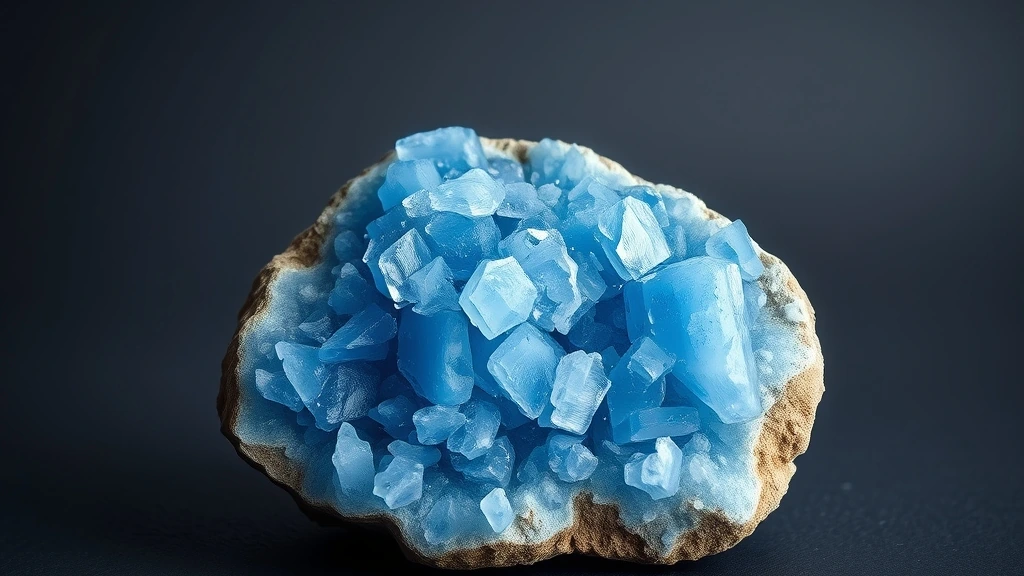
Caribbean Blue Calcite belongs to the Natural Mineral / Crystal group, specifically within the carbonate mineral family. This stone forms through the precipitation of calcium carbonate in specific hydrothermal environments. Its geological identity is defined by trace impurities rather than a distinct new chemical species. The mineral occurs in both crystalline and massive aggregates, often found in association with other carbonate rocks.
What is Caribbean Blue Calcite? Geological Overview & Definition
Caribbean Blue Calcite is a color variant of the common mineral calcite, primarily found in specific sedimentary and metamorphic deposits. The blue coloration results from trace element substitution within the crystal lattice, often involving manganese or iron ions. These impurities interact with light to produce the characteristic azure tones observed in high-quality specimens. While Caribbean Blue Calcite’s serene azure hues calm the mind, the complementary Chocolate Calcite offers a rich, grounding counterpoint that balances the same mineral’s energetic properties.
Geologically, this stone forms in environments where calcium-rich fluids interact with host rocks under specific pressure and temperature conditions. The crystal habit typically displays rhombohedral shapes, though massive nodular forms are also common. Understanding its formation helps distinguish genuine specimens from dyed or synthetic imitations in the gem market. Geologically, this stone forms in environments where calcium‑rich fluids interact with host rocks under specific pressure and temperature conditions, a process that also gives rise to the similarly intriguing Cherry Tanzurine.
Caribbean Blue Calcite Chemical Composition & Crystallographic Properties
The primary chemical composition is calcium carbonate (CaCO₃), following the standard stoichiometry of the calcite mineral group. The crystal structure is Trigonal, characterized by a hexagonal close-packed arrangement of carbonate ions. This lattice allows for specific cleavage planes that define the mineral’s physical behavior.
Color centers arise from cation substitution, where trace metals replace calcium ions within the lattice. These impurities create electronic transitions that absorb specific wavelengths of visible light, resulting in the blue hue. The acid sensitivity of calcite is high, as it reacts vigorously with dilute hydrochloric acid to release carbon dioxide.
Thermal behavior indicates stability up to moderate temperatures, though prolonged heating can alter color centers. The refractive index varies slightly depending on the concentration of chromophores and crystal orientation. Proper handling is essential to prevent etching or color fading due to environmental exposure.
| Property | Specification |
|---|---|
| Mineral Group | Natural Mineral / Crystal |
| Chemical Formula | CaCO₃ |
| Mohs Hardness | 6.5 – 7.0 |
| Crystal System | Trigonal |
| Specific Gravity (Density) | 2.71 |
| Refractive Index | 1.486 – 1.658 |
| Color & Optical Properties | Natural Caribbean Blue Calcite color spectrum and optical dispersion |
| Primary Mining Localities | Global primary localities |
| Water & Chemical Resistance | EXTREMELY SENSITIVE: Water Soluble / Moisture Sensitive! (Avoid liquids) |
| Chakra Alignment (Traditional) | Throat Chakra, Heart Chakra |
| Zodiac Affinity (Traditional) | Pisces, Cancer |
| Symbolic Meaning (Traditional) | Emotional balance, clear communication, and spiritual purification |
Caribbean Blue Calcite Varieties & Color Spectrum
Caribbean Blue Calcite displays distinct mineralogical characteristics across its geological varieties and structural habits. Gemologists evaluate these natural varieties based on crystal habit, trace chromophore concentrations, and visual luster.
Primary Natural Caribbean Blue Calcite
The benchmark natural variety exhibiting diagnostic color saturation and classic crystallographic symmetry.
Distinct Geological Morphs of Caribbean Blue Calcite
Secondary regional and structural varieties formed under localized geological temperature and pressure conditions.
Classic Caribbean Blue
This primary variety exhibits a translucent, sky-blue hue derived from trace impurities within the calcite crystal lattice. The color intensity varies based on the specific concentration of manganese or iron oxides present during formation. High-quality specimens display exceptional clarity, allowing light to penetrate deeply and enhance the vibrant azure tone.
Deep Ocean Blue
Characterized by a richer, darker saturation, this morph often contains higher levels of trace element inclusions that absorb shorter wavelengths of light. Geologically, these crystals form in slower-cooling environments, resulting in larger, more robust hexagonal prisms. Collectors prize this variety for its intense depth and the way it mimics the color of tropical waters.
Pale Sky Blue
Appearing as a delicate, almost ethereal tint, this variety is highly sought after for its subtle elegance and high transparency. The low impurity content allows for maximum light refraction, creating a soft, glowing appearance in natural daylight. It is commonly found in smaller crystal clusters, making it ideal for intricate lapidary work.
Green-Blue Bicolor
This rare transitional variety features a distinct gradient where blue tones merge with pale green hues at the crystal edges. The color shift is caused by varying concentrations of manganese and iron throughout the crystal growth zones. Such bicolor specimens are geologically significant as they document fluctuating chemical conditions in the host solution.
White Calcite with Blue Veins
While primarily white, this variety contains striking blue veins or patches formed by localized fluid inclusions. These fluid inclusions trap mineral-rich water, creating internal color bands that contrast sharply with the clear host stone. It is less common than the solid blue varieties and often displays a complex, marbled visual texture.
Where is Caribbean Blue Calcite Found? Geological Mining & Extraction
Caribbean Blue Calcite primarily forms in hydrothermal veins and contact metamorphic zones where hot mineral-rich fluids interact with limestone. These geological settings allow for the slow precipitation of calcium carbonate, resulting in the large, well-formed crystals characteristic of the species. The presence of specific trace metals in the hydrothermal fluid dictates the final blue coloration of the stone.
Major commercial deposits are located in regions with extensive carbonate rock formations, including parts of Central America and the Caribbean basin. Mining operations typically involve careful extraction from shallow veins to preserve the integrity of the large crystal clusters. The geological stability of these host rocks ensures that the calcite remains relatively free from severe fracturing during the extraction process.
Historical Significance & Cultural Lore of Caribbean Blue Calcite
Ancient civilizations revered calcite for its optical properties, often using it as a lens to magnify objects or enhance visual clarity. In Greco-Roman antiquity, the stone was associated with clarity of thought and was frequently carved into intaglio seals for official documentation. Egyptian artisans also utilized calcite for decorative inlays, valuing its lustrous surface and ease of carving compared to harder gemstones.
Throughout historical metaphysical lore, the stone was believed to facilitate emotional balance and clear communication, aligning with its association with the throat chakra. Vedic texts reference similar carbonate minerals as aids for spiritual purification and mental focus during meditation. These cross-cultural traditions highlight the enduring human fascination with the stone’s unique optical and energetic qualities.
Modern Uses & Jewelry Applications of Caribbean Blue Calcite
Lapidaries primarily utilize Caribbean Blue Calcite for cabochon cutting due to its translucent to transparent quality and soft luster. The stone’s gentle blue hues make it ideal for pendants, earrings, and beads that emphasize color over brilliance. Faceting is rare because the material often contains internal fractures that reduce optical clarity.
- Cabochon Polishing: Smooth, domed surfaces highlight the stone’s translucency and subtle internal color zoning.
- Carved Ornaments: Skilled carvers shape the mineral into intricate figurines, leveraging its moderate hardness for detailed work.
- Beaded Jewelry: Uniformly sized beads are popular in artisanal necklaces, showcasing the stone’s calming aesthetic appeal.
Metaphysical Properties & Traditional Meaning of Caribbean Blue Calcite
According to historical traditions and metaphysical lore, this mineral is revered for its ability to foster emotional balance and spiritual purification. Ancient Mediterranean and Vedic texts often associated blue-hued calcite with the flow of water and the clarity of thought. Practitioners believe the stone acts as a conduit for higher consciousness, aiding in meditation and introspection.
In contemporary crystal healing, Caribbean Blue Calcite is linked to the Throat Chakra and Heart Chakra. It is said to enhance clear communication while simultaneously soothing emotional turbulence. This dual alignment supports the integration of truth and compassion in personal expression.
Which Chakra and Zodiac Signs Align with Caribbean Blue Calcite?
The stone is canonically aligned with the Throat Chakra (Vishuddha) and the Heart Chakra (Anahata). The Throat Chakra governs self-expression and truth, while the Heart Chakra centers on love and emotional healing. Together, these energy centers facilitate a harmonious dialogue between inner feelings and outward communication.
Astrologically, Caribbean Blue Calcite resonates most strongly with Pisces and Cancer. Both are water signs characterized by deep intuition and emotional sensitivity. The stone’s gentle energy is believed to amplify their natural empathetic abilities while providing necessary emotional grounding.
How to Identify Real vs. Fake Caribbean Blue Calcite
Artificial imitations of Caribbean Blue Calcite frequently involve dyed white calcite, synthetic glass, or plastic composites. These fakes often display unnatural color saturation or uniformity that lacks the subtle variations found in natural specimens. Understanding the physical properties of the genuine mineral is essential for distinguishing authentic stones from manufactured replicas.
Practical At-Home Authenticity Tests
- Temperature Test (Thermal Feel): Genuine calcite feels cool to the touch initially but warms up quickly in the hand. Glass imitations tend to remain cooler for a longer duration due to different thermal conductivity.
- Specific Gravity & Weight Test: Natural calcite has a specific gravity of approximately 2.71. It should feel heavier than plastic or lightweight glass substitutes of the same size.
- Scratch & Hardness Test (Mohs Comparison): Calcite rates a 3 on the Mohs scale. A steel nail (hardness 5.5) will easily scratch the surface, whereas glass (hardness 5-6) may resist scratching from the same tool.
- Microscopic & Loupe Inspection (Internal Inclusions): Use a 10x loupe to examine the stone. Natural calcite often contains tiny mineral inclusions or growth lines. Glass imitations may show circular bubbles or swirls, while dyed stones show color concentrated in fractures.
Caribbean Blue Calcite Valuation Factors, Grading & Pricing
The foremost determinant of market value is color saturation. Deep, uniform turquoise hues that evoke a clear Caribbean sea command premium prices, while pale or uneven tones are discounted. Collectors also prize a natural, luminous luster that reflects light without artificial enhancement, as it signals minimal treatment and authentic mineral integrity.
Next, crystal size & weight (grams) drive pricing tiers. Larger, well‑formed specimens measured in grams fetch higher rates, especially when the stone retains its natural matrix and shows no fractures. Raw blocks are valued differently from tumbled, polished pieces; a smooth polish that reveals the stone’s intrinsic glow can add a noticeable premium, whereas heavy inclusions may lower the price.
Finally, ethical sourcing & locality premium influences both holistic and collector markets. Stones mined responsibly in Caribbean regions, with documented provenance and fair‑trade practices, attract buyers willing to pay extra for environmental stewardship and cultural respect. Transparency about mining conditions and community benefits often translates into a higher perceived value and stronger market demand.
How to Clean and Care for Caribbean Blue Calcite
Water and moisture dissolve or damage this mineral. Never wash with water or liquid soap; clean strictly with a dry soft microfiber cloth. Gently dust the surface to remove dust, then store the piece in a low‑humidity environment, preferably in a sealed display case or a breathable fabric pouch. Ultrasonic cleaning is strictly forbidden, as vibration combined with any moisture can fracture the crystal lattice and accelerate dissolution.
Cleansing and Recharging Caribbean Blue Calcite (Energetic Care)
For energetic maintenance, place the stone in a gentle stream of herbal smudging smoke, allowing the aromatic vapors to pass over the surface without contact with moisture. This method clears stagnant energy while preserving the mineral’s physical integrity, and a brief session of five to ten minutes is sufficient for most specimens.
Alternatively, expose the calcite to soft moonlight or rest it on a clean selenite charging slab overnight. Moonlight offers a non‑thermal, low‑energy environment that re‑energizes the stone without heat, while selenite’s own lattice can safely transfer subtle vibrational frequencies. Both practices should be performed in a dry setting, ensuring the crystal remains free of any condensation or humidity.
Frequently Asked Questions About Caribbean Blue Calcite
Caribbean Blue Calcite displays distinct mineralogical characteristics across its geological varieties and structural habits. Gemologists evaluate these natural varieties based on crystal habit, trace chromophore concentrations, and visual luster.
Primary Natural Caribbean Blue Calcite
The benchmark natural variety exhibiting diagnostic color saturation and classic crystallographic symmetry.
Distinct Geological Morphs of Caribbean Blue Calcite
Secondary regional and structural varieties formed under localized geological temperature and pressure conditions.
Is Caribbean Blue Calcite safe to wear in water or the shower?
No – it is extremely water‑sensitive and will dissolve or become damaged on contact with moisture. Because the mineral is water soluble, exposure to rain, swimming pools, or even humid environments can cause surface pitting or complete loss of material, so it should be removed before any contact with liquids.
How should I clean a Caribbean Blue Calcite pendant?
Clean only with a dry, soft microfiber cloth; avoid any liquids. Moisture, even from a damp cloth, can dissolve the crystal’s surface, so gently dust or polish the stone using a lint‑free microfiber. A soft brush may be used for crevices, but never apply water or soap.
Can I use an ultrasonic cleaner on Caribbean Blue Calcite jewelry?
Never – ultrasonic cleaning is strictly forbidden for this stone. The high‑frequency vibrations combined with any residual moisture will erode the calcite lattice, leading to irreversible damage. Stick to dry‑cloth methods to preserve the stone’s clarity and color.
What zodiac signs are associated with Caribbean Blue Calcite?
The stone is linked to Pisces and Cancer. In astrological tradition, these water signs are thought to benefit from the stone’s calming energy, which aligns with their emotional nature and supports intuitive insight during planetary transits.
Which chakras does Caribbean Blue Calcite balance?
It resonates with the Throat Chakra and the Heart Chakra. By stimulating these energy centers, the mineral is believed to promote clear communication and emotional harmony, aiding those who seek to express feelings authentically while maintaining compassionate connections.
Does Caribbean Blue Calcite have any known healing properties?
It is reputed to aid emotional balance, clear communication, and spiritual purification. Practitioners suggest placing the stone on the throat or heart area during meditation to encourage inner calm and to release stagnant emotions, fostering a sense of mental clarity.
Is Caribbean Blue Calcite suitable for everyday wear despite its softness?
Its Mohs hardness of 6.5–7.0 makes it reasonably durable, but care is essential. While it can withstand light impact, the stone’s moisture sensitivity means it should be removed during activities that involve sweat or humidity, and stored separately from harder gemstones to avoid scratches.
Can I set Caribbean Blue Calcite in a ring that will be exposed to daily wear?
Yes, provided the setting protects the stone from moisture and impact. Choose a bezel or protective claw setting that shields the facets, and remember to clean the piece only with a dry microfiber cloth. Regular inspection will ensure the stone remains intact and free of moisture‑related damage.