
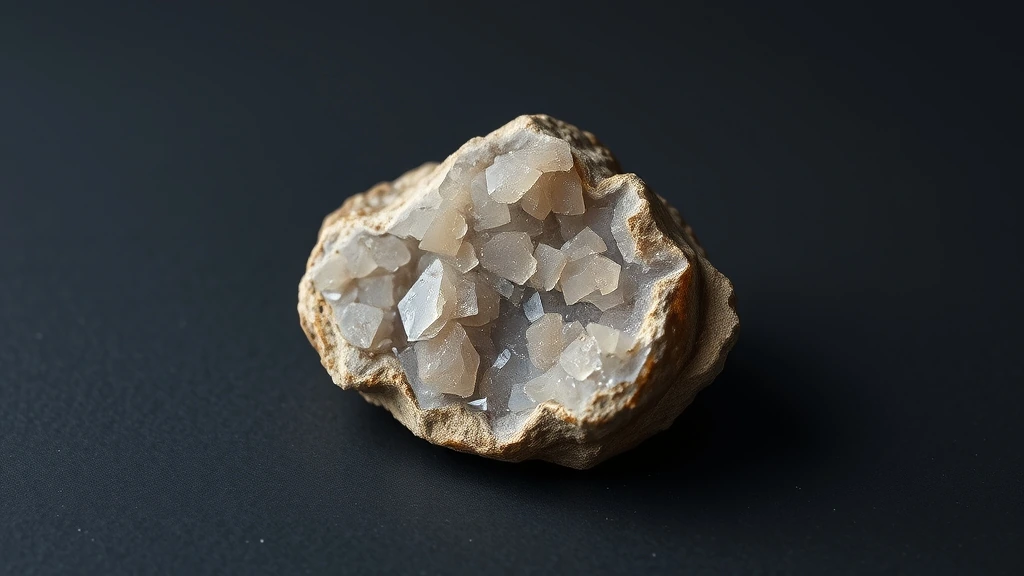
Chocolate calcite belongs to the broader calcite mineral group, which is one of the most abundant minerals on Earth. It forms through the precipitation of calcium carbonate from aqueous solutions in various geological environments. As a natural crystal, it displays distinct optical and physical properties unique to its trigonal lattice structure.
What is Chocolate Calcite? Geological Overview & Definition
Chocolate calcite is a specific color variant of the common mineral calcite. Its brown coloration typically results from trace impurities or structural defects within the crystal lattice. Geologists classify it under the carbonate mineral family, which plays a crucial role in sedimentary rock formation. In comparative mineralogical collections, practitioners and geologists frequently study Chinese Bladed Calcite alongside this crystal to appreciate their subtle energetic and structural differences.
This mineral often occurs in massive, banded, or crystalline forms within limestone and dolomite deposits. The brownish tint can vary from light tan to deep chocolate, depending on the specific chemical inclusions. Understanding its origin helps distinguish it from other brown minerals like smoky quartz or brown tourmaline.
Chocolate Calcite Chemical Composition & Crystallographic Properties
The fundamental chemical formula for chocolate calcite is CaCO₃, representing a precise stoichiometric ratio of calcium to carbonate. It crystallizes in the trigonal crystal system, which dictates its characteristic rhombohedral or scalenohedral habit. This lattice structure is responsible for the mineral’s unique optical properties, including birefringence. In comparative mineralogical collections, practitioners and geologists frequently study Blue Calcite alongside this crystal to appreciate their subtle energetic and structural differences.
The trigonal lattice allows for specific cation substitution patterns, though calcium remains the dominant cation. Minor substitutions by magnesium or iron can influence the crystal’s stability and color intensity. The mineral’s acid sensitivity is a key diagnostic feature, as it reacts vigorously with dilute hydrochloric acid.
Color in chocolate calcite arises from chromophore centers or trace elemental inclusions within the lattice. These defects absorb specific wavelengths of light, resulting in the observed brown hue. Thermal behavior remains stable at room temperature, but high heat can cause structural degradation.
The refractive index ranges from 1.486 to 1.658, indicating significant optical anisotropy. This property enables the mineral to split light into two rays, a phenomenon known as double refraction. Such optical characteristics are essential for gemological identification and quality assessment.
| Property | Specification |
|---|---|
| Mineral Group | Natural Mineral / Crystal |
| Chemical Formula | CaCO₃ |
| Mohs Hardness | 3.0 |
| Crystal System | Trigonal |
| Specific Gravity (Density) | 2.71 |
| Refractive Index | 1.486 – 1.658 |
| Color & Optical Properties | Natural Chocolate Calcite color spectrum and optical dispersion |
| Primary Mining Localities | Global primary localities |
| Water & Chemical Resistance | EXTREMELY SENSITIVE: Water Soluble / Moisture Sensitive! (Avoid liquids) |
| Chakra Alignment (Traditional) | Root Chakra, Sacral Chakra |
| Zodiac Affinity (Traditional) | Taurus, Virgo, Capricorn |
| Symbolic Meaning (Traditional) | Grounding, stability, and emotional balance |
Chocolate Calcite Varieties & Color Spectrum
Chocolate calcite represents a distinct chromatic variation within the broader calcite mineral family, defined by its warm, earthy brown hues. This specific coloration arises from trace impurities rather than the pure calcium carbonate structure. Understanding these variations is essential for accurate gemological identification and valuation.
Classic Chocolate Brown
The most common morph exhibits a deep, uniform mahogany brown tone reminiscent of dark cocoa. These specimens typically form in large, hexagonal rhombohedral crystals with high internal clarity. The color saturation remains consistent throughout the lattice, distinguishing it from lighter tawny variants.
Tawny Amber Calcite
This lighter variety displays a translucent amber-brown hue that glows warmly under direct light. It often contains minor ferrous iron inclusions that scatter light, creating a subtle honey-like appearance. Tawny specimens are frequently cut into cabochons to maximize their internal luster and transparency.
Rust-Streaked Calcite
Characterized by visible hematite or limonite veining, this variety features a mottled brown appearance. The iron oxide inclusions create a rustic, textured visual signature that appeals to collectors of raw minerals. These specimens are rarer due to the specific hydrothermal conditions required for such inclusions.
Caramel Translucent
High-quality caramel-colored calcite offers exceptional transparency with a golden-brown tint. This variety is prized for its ability to transmit light, revealing intricate internal cleavage patterns. Its rarity stems from the delicate balance of impurities that produce this specific warm glow.
Where is Chocolate Calcite Found? Geological Mining & Extraction
Chocolate calcite primarily forms within metamorphic limestone and dolomite deposits subjected to regional tectonic pressure. These geological environments facilitate the recrystallization of calcium carbonate, trapping iron-rich fluids that impart the characteristic brown coloration. The mineral often coexists with quartz and feldspar in these stable crustal settings.
Major extraction sites include the Dolomites in Italy and specific karst regions in China. Mining operations focus on large, clear crystal clusters suitable for lapidary work. Sustainable extraction practices are increasingly critical to preserve the structural integrity of these delicate trigonal crystals.
Historical Significance & Cultural Lore of Chocolate Calcite
Ancient civilizations valued calcite for its optical properties, using it in early lens-making and architectural applications. In Greco-Roman contexts, clear calcite was employed to create primitive magnifying tools for scholarly and artistic purposes. The brown varieties, however, were often overlooked in favor of transparent forms, limiting their historical documentation.
Across Vedic traditions, earth-toned stones were associated with stability and connection to the terrestrial plane. Archaeological records indicate that brown calcite fragments were occasionally incorporated into ritualistic jewelry in Mesoamerican cultures. These artifacts suggest a symbolic link between the stone’s color and the fertile soil, reinforcing its grounding metaphysical reputation.
Modern Uses & Jewelry Applications of Chocolate Calcite
Chocolate calcite is frequently fashioned into cabochon pendants that showcase its warm, earthy hue, while skilled lapidaries also produce modestly faceted stones for rings and earrings. Its relatively low Mohs hardness of 3 necessitates protective settings, often in silver or gold bezels, to prevent scratching. Artisans also carve ornamental plaques, beads, and small figurines for decorative interiors, capitalising on the stone’s translucency and smooth polish.
- Cabochon pendants and lock‑sets for necklaces
- Small, shallow facets for rings and earrings
- Carved beads, mini‑statues, and decorative tiles
Metaphysical Properties & Traditional Meaning of Chocolate Calcite
According to historical traditions and metaphysical lore, chocolate calcite is revered for its grounding energy, fostering stability and emotional balance in the wearer. Across ancient Mediterranean lapidary records, the stone was linked to the earth element, aiding in the release of suppressed feelings and promoting a calm, centered mindset. In Vedic-inspired gemstone practices, it is thought to harmonise the Root and Sacral chakras, supporting personal security and creative flow.
Which Chakra and Zodiac Signs Align with Chocolate Calcite?
The stone resonates most strongly with the Root Chakra, anchoring one’s physical presence and enhancing feelings of safety. It also activates the Sacral Chakra, encouraging emotional expression and nurturing creative vitality. Together, these energy centres are believed to create a balanced foundation for personal growth.
In astrological correspondence, chocolate calcite aligns exclusively with the earth‑signs Taurus, Virgo, and Capricorn. Practitioners claim the stone amplifies these signs’ innate practicality, perseverance, and grounded nature, reinforcing their connection to material stability and purposeful ambition.
How to Identify Real vs. Fake Chocolate Calcite
Artificial imitations of chocolate calcite include dyed quartz, synthetic glass, and resin composites that mimic its chocolate‑brown coloration. These substitutes often lack the stone’s characteristic specific gravity and may feel unnaturally slick or overly heavy. Synthetic versions may also display uniform clarity without the subtle internal striations typical of natural calcite.
Practical At-Home Authenticity Tests
- Temperature Test (Thermal Feel): Natural calcite feels cool to the touch and retains that coolness longer than glass or plastic, which quickly equilibrates to ambient temperature.
- Specific Gravity & Weight Test: Using a simple water displacement method, genuine chocolate calcite will have a density around 2.71 g/cm³, making it noticeably heavier than dyed quartz of similar size.
- Scratch & Hardness Test (Mohs Comparison): A steel nail (hardness ~5.5) will easily scratch chocolate calcite, whereas glass (hardness ~5.5) may leave a faint mark; a lack of any scratch suggests a harder synthetic material.
- Microscopic & Loupe Inspection (Internal Inclusions): Under 10× magnification, natural chocolate calcite reveals fine, irregular growth lines or minute voids, while synthetic glass appears uniformly clear with no internal fractures.
Chocolate Calcite Valuation Factors, Grading & Pricing
Color saturation remains the foremost determinant of value, with deeper, more uniform chocolate hues commanding premium prices. The visual vibrancy of the stone, coupled with its natural energetic luster, signals a well‑formed crystal lattice and enhances its metaphysical appeal. Collectors often seek specimens that exhibit a rich, unbroken shade, as this indicates minimal weathering and superior internal cohesion.
Crystal size and weight, measured in grams, directly influence market pricing. Larger, well‑polished tumbled specimens are prized for their heft and display quality, while raw fragments are valued by mass and dimensional integrity. Natural matrix inclusions, such as embedded calcite veins or subtle fissures, add character and can increase desirability when they accentuate the stone’s inherent beauty.
Ethical sourcing and locality premium play a critical role in contemporary valuation. Stones extracted from responsibly managed deposits, with transparent supply chains, attract higher prices in both holistic and collector markets. Provenance from renowned calcite localities—such as the limestone formations of the Appalachian region or the karst caves of the Balkans—adds historical significance and can justify a premium over generic sources.
How to Clean and Care for Chocolate Calcite
Because chocolate calcite is highly water‑soluble, moisture exposure will dissolve or damage the crystal lattice. Never wash the stone with water, liquid soap, or any damp cloth. Instead, gently dust the specimen using a completely dry, soft microfiber cloth or a camel‑hair brush. Store the mineral in a low‑humidity environment, away from liquids and direct moisture. Ultrasonic cleaning is strictly forbidden, as vibration can introduce micro‑cracks that compromise structural integrity.
Cleansing and Recharging Chocolate Calcite (Energetic Care)
For energetic renewal, place the stone in a quiet space and allow gentle moonlight to bathe it for several hours. The soft, diffuse lunar illumination recharges the crystal’s subtle vibrational energy without imposing heat or direct sunlight.
Alternatively, rest the calcite on a selenite charging slab during the night, ensuring the surfaces remain dry and undisturbed. Herbal smudging with sage or palo santo can be performed nearby, but the stone itself should never be exposed to smoke or heat, as thermal stress may alter its internal lattice and diminish its metaphysical properties.
Frequently Asked Questions About Chocolate Calcite
Chocolate Calcite displays distinct mineralogical characteristics across its geological varieties and structural habits. Gemologists evaluate these natural varieties based on crystal habit, trace chromophore concentrations, and visual luster.
Primary Natural Chocolate Calcite
The benchmark natural variety exhibiting diagnostic color saturation and classic crystallographic symmetry.
Distinct Geological Morphs of Chocolate Calcite
Secondary regional and structural varieties formed under localized geological temperature and pressure conditions.
What is chocolate calcite and how does it differ from regular calcite?
Chocolate calcite is a brown‑hued variety of the mineral calcite (CaCO₃). It shares the same trigonal crystal system, Mohs hardness of 3, and density of 2.71 g/cm³, but its distinctive chocolate‑brown coloration results from trace iron or organic inclusions, setting it apart visually from clear or white calcite.
Is chocolate calcite safe to wear in water or the shower?
No – chocolate calcite is EXTREMELY SENSITIVE: water soluble and moisture‑sensitive. Exposure to rain, swimming, or showering can cause the surface to dissolve or develop cloudiness, compromising both its appearance and structural integrity. Always remove jewelry before any contact with liquids.
How should I clean chocolate calcite jewelry?
Clean chocolate calcite only with a dry, soft microfiber cloth or a gentle brush. Because moisture dissolves the mineral, avoid any liquid, even mild soap solutions. Dust removal should be performed in a low‑humidity environment to preserve the stone’s optical clarity.
Can I use an ultrasonic cleaner on chocolate calcite?
Ultrasonic cleaning is strictly forbidden for chocolate calcite. The high‑frequency vibrations combined with moisture will erode the crystal lattice, leading to surface pitting and loss of the prized chocolate hue. Manual dry cleaning remains the only safe method.
Which zodiac signs are associated with chocolate calcite?
Chocolate calcite aligns with Taurus, Virgo, and Capricorn. In astrological gem lore, these earth signs are believed to benefit from the stone’s grounding energy, enhancing stability and practical decision‑making. The mineral’s earthy tone reinforces this connection.
Which chakras does chocolate calcite support?
The stone resonates with the Root Chakra and the Sacral Chakra. It is thought to promote grounding and emotional balance, helping wearers feel more secure and creatively expressive. Placement on the lower abdomen or base of the spine is traditionally recommended.
Is chocolate calcite suitable for everyday wear despite its softness?
With a Mohs hardness of 3, chocolate calcite is relatively soft and prone to scratches. It can be worn daily if protected by a sturdy setting and kept away from hard impacts. Regular inspection and gentle handling help maintain its luster over time.
Does chocolate calcite have any notable metaphysical properties?
Yes, it is linked to grounding, stability, and emotional balance. Practitioners claim the stone assists in releasing fear and fostering a sense of security, especially for those under the influence of the earth‑sign zodiac energies. Meditation with the stone is said to amplify these effects.