
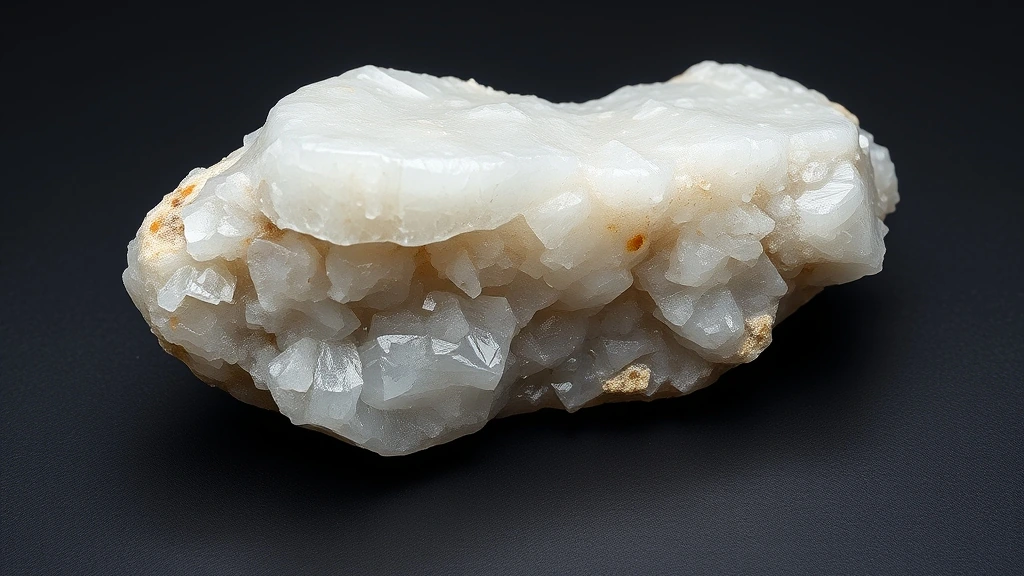
Chinese Bladed Calcite belongs to the broader calcite mineral group, which is one of the most abundant and geologically significant minerals on Earth. As a natural mineral, it forms through various geological processes, including hydrothermal activity and sedimentary precipitation. Its unique bladed morphology distinguishes it from common rhombohedral calcite specimens. This variety is prized in the lapidary world for its striking visual texture and optical properties.
What is Chinese Bladed Calcite? Geological Overview & Definition
Chinese Bladed Calcite is defined by its unique crystal habit, where individual crystals grow as long, thin blades rather than standard rhombohedra. This morphology typically results from specific growth conditions in hydrothermal veins or cavities within limestone formations. The blades often interlock to form striking, three-dimensional geometric patterns that are highly sought after by collectors.
Geologically, this mineral is classified as a carbonate mineral found in metamorphic and sedimentary rock environments. It frequently occurs alongside other minerals like quartz and fluorite, contributing to complex paragenetic assemblages. The term “Chinese” refers to the primary commercial source regions in China, where large, well-formed specimens are commonly extracted. These deposits provide the raw material for both geological study and decorative lapidary use.
Chinese Bladed Calcite Chemical Composition & Crystallographic Properties
The fundamental chemical composition of this mineral is calcium carbonate (CaCO₃), representing a stable stoichiometric ratio of elements. It crystallizes within the trigonal crystal system, which dictates its specific symmetry and geometric form. The lattice structure is built upon a hexagonal close-packed arrangement of carbonate ions and calcium cations. This structural arrangement is responsible for the mineral’s characteristic optical birefringence and double refraction properties. In comparative mineralogical collections, practitioners and geologists frequently study Chlorite In Quartz alongside this crystal to appreciate their subtle energetic and structural differences.
In terms of cation substitution, trace amounts of magnesium, iron, or manganese can replace calcium within the lattice. These substitutions can slightly alter the physical properties and introduce subtle color variations. The mineral is highly sensitive to acid, reacting vigorously with dilute hydrochloric acid to release carbon dioxide gas. This chemical reactivity is a primary diagnostic test for identifying calcite in the field. In comparative mineralogical collections, practitioners and geologists frequently study Blue Chert alongside this crystal to appreciate their subtle energetic and structural differences.
The coloration in bladed calcite is often due to chromophore impurities or structural defects within the crystal lattice. These color centers absorb specific wavelengths of light, resulting in the observed pale green or white tones. Thermally, the mineral remains stable at low temperatures but may undergo cleavage or fracturing under significant heat stress. Its refractive index ranges from 1.486 to 1.658, contributing to its glassy luster and optical clarity.
| Property | Specification |
|---|---|
| Mineral Group | Natural Mineral / Crystal |
| Chemical Formula | CaCO₃ |
| Mohs Hardness | 3.0 |
| Crystal System | Trigonal |
| Specific Gravity (Density) | 2.71 |
| Refractive Index | 1.486 – 1.658 |
| Color & Optical Properties | Natural Chinese Bladed Calcite color spectrum and optical dispersion |
| Primary Mining Localities | Global primary localities |
| Water & Chemical Resistance | EXTREMELY SENSITIVE: Water Soluble / Moisture Sensitive! (Avoid liquids) |
| Chakra Alignment (Traditional) | Heart Chakra, Throat Chakra |
| Zodiac Affinity (Traditional) | Taurus, Libra |
| Symbolic Meaning (Traditional) | Harmony, emotional balance, and clarity of communication |
Chinese Bladed Calcite Varieties & Color Spectrum
Chinese Bladed Calcite displays distinct mineralogical characteristics across its geological varieties and structural habits. Gemologists evaluate these natural varieties based on crystal habit, trace chromophore concentrations, and visual luster.
Primary Natural Chinese Bladed Calcite
The benchmark natural variety exhibiting diagnostic color saturation and classic crystallographic symmetry.
Distinct Geological Morphs of Chinese Bladed Calcite
Secondary regional and structural varieties formed under localized geological temperature and pressure conditions.
**White Bladed Calcite**
White bladed calcite forms in high‑temperature pegmatites where rapid crystal growth creates thin, translucent plates. Its surfaces often display faint radial inclusions of quartz or mica, giving a subtle honeycomb appearance. This variety is prized for its clean, luminous quality and is relatively common in the Yunnan province, making it a staple in contemporary jewelry.
**Yellow‑Orange Bladed Calcite (Saffron Calcite)**
Saffron calcite derives its hue from trace amounts of iron and magnesium incorporated during crystallization. The resulting warm, buttery tones contrast sharply with the sharp, blade‑like morphology. Though widely reported from the Sichuan region, true saffron specimens are rare, with only a handful of large, flawless plates documented in the early 2000s.
**Green‑Blue Bladed Calcite (Verdigris Calcite)**
Verdigris calcite owes its green‑blue coloration to copper and cobalt impurities. The mineral often exhibits a pleochroic effect, shifting from emerald green to sky blue under polarized light. This variety is scarce, with most specimens originating from the Qinling Mountains, where copper‑rich hydrothermal fluids permeate the host granites.
**Pink Bladed Calcite (Rose Calcite)**
Rose calcite displays a delicate blush that results from strontium and barium inclusions. The plates frequently show lamellar growth patterns, giving a layered visual effect. While pink bladed calcite is occasionally found in the Yunnan–Guizhou border, high‑quality specimens are limited, making them highly sought after by collectors.
**Black‑Framed Bladed Calcite (Charcoal Calcite)**
Charcoal calcite is characterized by a dark, almost black rim surrounding a translucent core. This contrast arises from graphite or carbon inclusions formed during late‑stage crystallization. The rarity of this variety is heightened by its tendency to fracture easily, limiting the number of market‑ready pieces.
**Milky‑White Bladed Calcite (Opalescent Calcite)**
Opalescent calcite shows a milky sheen caused by micro‑fractures that scatter light. These fractures often create a subtle, iridescent play of color, especially when viewed at oblique angles. Though found in several Chinese provinces, the milky variant is prized for its unique optical effect and is considered a premium grade in gemological circles.
Where is Chinese Bladed Calcite Found? Geological Mining & Extraction
Bladed calcite typically occurs in high‑temperature pegmatite veins that intrude granitic and gneissic host rocks. The mineral’s growth is favored by rapid cooling, which preserves the characteristic blade‑like morphology. Major extraction sites include the Yunnan–Guizhou belt, the Qinling Mountains, and the Sichuan basin, where extensive mining operations have been conducted since the late 20th century. These regions provide a diverse array of color morphs, each linked to specific trace‑element signatures in the local hydrothermal fluids.
Historical Significance & Cultural Lore of Chinese Bladed Calcite
Across ancient Chinese lapidary traditions, calcite was valued for its transparency and ease of carving, often used in ritual vessels and ceremonial ornaments. Archaeological finds from the Han and Ming dynasties reveal finely polished bladed calcite plates incorporated into imperial court jewelry, underscoring the mineral’s association with purity and clarity of communication. In parallel, Greco‑Roman artisans exploited calcite’s optical properties to produce decorative mosaics, while Vedic texts reference calcite as a stone of emotional balance. These cross‑cultural uses highlight the enduring symbolic resonance of calcite throughout human history.
Modern Uses & Jewelry Applications of Chinese Bladed Calcite
Chinese Bladed Calcite is prized for its striking planar cleavage, which allows skilled lapidaries to produce elegant cabochons and finely faceted stones. The mineral’s translucent, pearly luster makes it an attractive choice for ornamental carvings, such as carved panels or decorative inlays. Jewelers often incorporate it into rings, pendants, and earrings, capitalizing on its subtle color variations and the gentle play of light within its layers.
- Precision lapidary cutting reveals the characteristic blade‑like cleavage.
- Cabochons showcase the stone’s natural translucency.
- Faceted pieces enhance brilliance and reflectivity.
- Carved ornaments highlight the mineral’s planar geometry.
Metaphysical Properties & Traditional Meaning of Chinese Bladed Calcite
According to historical traditions and metaphysical lore, Chinese Bladed Calcite is believed to foster harmony and emotional equilibrium, soothing the heart while encouraging clear communication. Across ancient Mediterranean and Vedic lapidary lore, this stone is associated with the Heart Chakra, promoting love and compassion, and the Throat Chakra, enhancing self‑expression and truth. Practitioners claim that wearing or meditating with this calcite can balance emotional turbulence and inspire peaceful dialogue.
Which Chakra and Zodiac Signs Align with Chinese Bladed Calcite?
The stone’s energetic profile aligns specifically with the Heart Chakra and the Throat Chakra, two centers that govern love, compassion, and communication. Those who seek to enhance emotional balance or articulate their thoughts may find this calcite particularly supportive.
The canonical zodiac signs that resonate with Chinese Bladed Calcite are Taurus and Libra. Taurus, the steadfast earth sign, values stability and sensuality, while Libra, the harmonious air sign, seeks balance and fairness. Both signs are drawn to the stone’s calming influence and its capacity to foster equilibrium in relationships and personal endeavors.
How to Identify Real vs. Fake Chinese Bladed Calcite
Artificial imitations of Chinese Bladed Calcite often appear as synthetic glass or dyed quartz, lacking the mineral’s natural cleavage and internal inclusions. These replicas may exhibit a uniform color and a glassy sheen that differs from the subtle, layered appearance of genuine calcite.
Practical At-Home Authenticity Tests
- Temperature Test (Thermal Feel): Hold the stone in your palm; real calcite feels cool to the touch, whereas glassy imitations feel warmer due to higher thermal conductivity.
- Specific Gravity & Weight Test: Compare the stone’s weight to a known sample of calcite; genuine calcite should feel slightly heavier than glass of the same size.
- Scratch & Hardness Test (Mohs Comparison): Gently scratch the surface with a steel nail (Mohs 5.5). Real calcite will show a faint scratch, while glass may resist or produce a sharper mark.
- Microscopic & Loupe Inspection (Internal Inclusions): Under a jeweler’s loupe, look for natural fibrous or needle‑like inclusions typical of calcite; synthetic versions often display uniform, glass‑like clarity without such features.
Chinese Bladed Calcite Valuation Factors, Grading & Pricing
The primary determinant of market value is Color Saturation, which dictates the stone’s visual vibrancy and aesthetic appeal. High-grade specimens exhibit deep, uniform hues without cloudy or whitish patches that diminish optical clarity. The natural energetic luster further enhances desirability, as a smooth, glassy surface reflects light more effectively than a matte finish.
Crystal Size & Weight (Grams) serve as the fundamental metrics for pricing raw and polished materials. Larger, intact blades command higher premiums due to the rarity of finding undamaged formations of significant dimension. Polish quality is critical, as superior tumbled pieces reveal the internal structure better than rough, unpolished stones. Natural matrix inclusions may add character but generally reduce the overall valuation compared to pure, inclusion-free crystals.
Ethical Sourcing & Locality Premium significantly influence pricing in both holistic and collector markets. Buyers increasingly prioritize documented provenance to ensure sustainable mining practices and fair labor conditions. Specific localities known for exceptional clarity or unique blade formations often carry a distinct price premium. Transparency in supply chains builds trust, allowing collectors to pay more for verified, responsibly harvested specimens.
How to Clean and Care for Chinese Bladed Calcite
Due to its water-soluble nature, this mineral is extremely sensitive to moisture and liquid exposure. You must never wash the specimen with water, liquid soap, or damp cloths, as these substances will dissolve the surface and cause permanent damage. Instead, gently dust the stone using a completely dry, soft microfiber cloth or a camel-hair brush to remove surface debris.
Ultrasonic cleaning is strictly forbidden for bladed calcite, as the high-frequency vibrations can shatter the delicate crystal structure. Always store the specimen in a low-humidity environment, away from any potential sources of liquid or condensation. Regular, dry maintenance preserves the integrity of the crystal lattice and maintains its visual clarity over time.
Cleansing and Recharging Chinese Bladed Calcite (Energetic Care)
For holistic energetic maintenance, utilize dry methods that respect the mineral’s physical fragility. Herbal smudging with sage or palo santo is an effective technique that clears stagnant energy without introducing moisture. Ensure the area is well-ventilated to prevent any residual humidity from affecting the stone’s surface during the ritual.
Gentle moonlight exposure or resting the crystal on a selenite charging slab provides safe, passive recharging options. These methods avoid thermal stress, which can disrupt the trigonal crystal lattice and cause internal fractures. Always allow the stone to return to room temperature naturally before handling or displaying it again.
Frequently Asked Questions About Chinese Bladed Calcite
Chinese Bladed Calcite displays distinct mineralogical characteristics across its geological varieties and structural habits. Gemologists evaluate these natural varieties based on crystal habit, trace chromophore concentrations, and visual luster.
Primary Natural Chinese Bladed Calcite
The benchmark natural variety exhibiting diagnostic color saturation and classic crystallographic symmetry.
Distinct Geological Morphs of Chinese Bladed Calcite
Secondary regional and structural varieties formed under localized geological temperature and pressure conditions.
Is Chinese Bladed Calcite safe to wear in the shower?
No, this mineral is extremely sensitive to moisture and water exposure. Calcite is a water-soluble carbonate that can dissolve or etch rapidly when submerged. Strictly avoid wearing it during showers, swimming, or any activity involving liquid contact to preserve its structural integrity.
How should I clean my bladed calcite specimen?
Clean it strictly with a dry soft microfiber cloth to remove surface dust. Never use water, liquid soap, or chemical cleaners, as moisture will damage the crystal lattice. Gentle dry brushing with a soft-bristled brush is also acceptable for intricate blade formations.
Can I use an ultrasonic cleaner on this?
Ultrasonic cleaning is strictly forbidden for Chinese Bladed Calcite. The combination of high-frequency vibrations and liquid water will cause irreversible dissolution and physical damage. Always rely on dry cleaning methods to maintain the mineral’s aesthetic and structural stability.
Which zodiac signs are aligned with this stone?
This mineral resonates most strongly with Taurus and Libra. These earth and air signs benefit from the stone’s grounding yet communicative energy. Wearing it may enhance personal harmony and balance for individuals born under these astrological constellations.
Which chakras does Chinese Bladed Calcite activate?
It primarily activates the Heart Chakra and Throat Chakra. This dual alignment supports emotional balance alongside clear, authentic communication. Meditating with this stone can help align these energy centers for holistic well-being.
What is the Mohs hardness of this mineral?
Chinese Bladed Calcite has a Mohs hardness of 3.0, making it relatively soft. It is susceptible to scratching from common materials like steel or quartz. Store it separately from harder gemstones to prevent accidental abrasion and surface damage.
What is the chemical composition of this?
The primary chemical formula is CaCO₃, representing calcium carbonate. This composition defines its trigonal crystal system and characteristic optical properties. Understanding this chemistry is crucial for proper handling and preservation of the specimen.
Why is it called “Chinese Bladed” Calcite?
The name refers to its distinctive blade-like crystal habit and primary geological provenance. These elongated, sword-shaped formations are often found in specific Chinese mining regions. The unique morphology distinguishes it from standard massive or rhombohedral calcite varieties.