
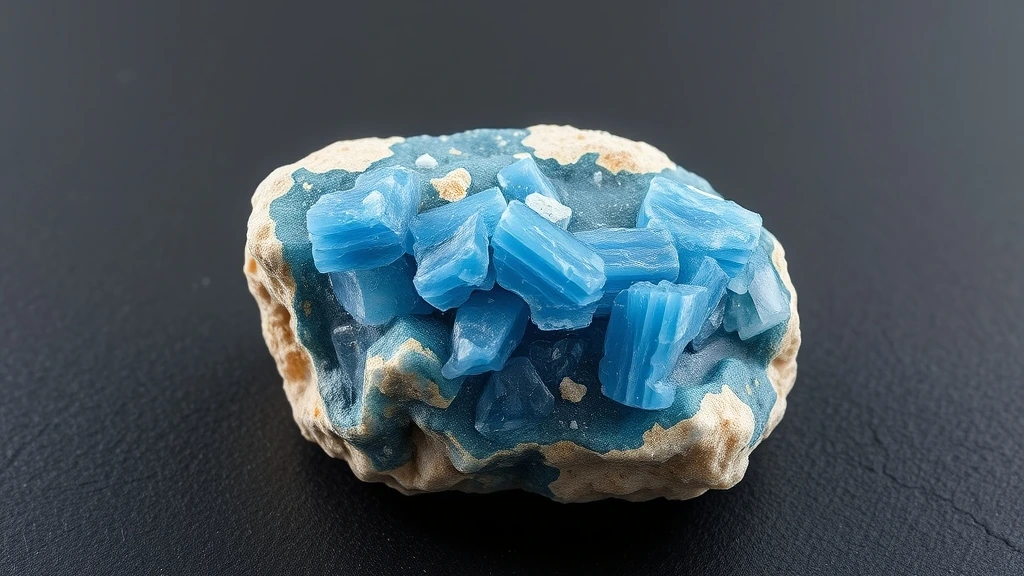
Blue chert belongs to the natural mineral / crystal group, representing an aggregated, cryptocrystalline variety of quartz. Though it lacks the large, well‑formed crystals of its macrocrystalline counterpart, its fine‑grained structure records the same silica framework. Throughout geological time, siliceous sediments compacted, recrystallized, and occasionally incorporated trace elements that impart the characteristic blue coloration, positioning the stone within the broader quartz family.
What is Blue Chert? Geological Overview & Definition
Blue chert is a cryptocrystalline silica rock formed from the diagenesis of siliceous ooze, volcanic ash, or biogenic silica. Its micro‑granular texture is too fine to resolve individual quartz crystals with the naked eye, yet each grain retains the trigonal symmetry of quartz. In comparative mineralogical collections, practitioners and geologists frequently study Flint alongside this crystal to appreciate their subtle energetic and structural differences.
Historically, blue chert has been prized in tool‑making and ornamental contexts across cultures, from prehistoric flint knappers to early maritime societies that valued its durability and striking hue. The stone’s color is not due to pigments but to trace transition‑metal ions and structural defects that absorb specific wavelengths of light.
Blue Chert Chemical Composition & Crystallographic Properties
At the molecular level, blue chert is composed of silicon dioxide (SiO₂) arranged in a trigonal lattice identical to that of quartz. The framework consists of SiO₄ tetrahedra linked by shared oxygen atoms, producing a continuous three‑dimensional network that confers its high hardness.
Because it is an aggregate, minor cation substitution—often Fe³⁺, Mn²⁺, or Ti⁴⁺—occurs within the silica lattice, creating color centers that generate the blue hue. These substituents do not alter the overall stoichiometry but introduce localized electronic states that interact with visible light.
Blue chert is acid‑sensitive; exposure to dilute hydrochloric acid can dissolve surface silica, revealing a frosted texture. However, its dense microcrystalline fabric provides greater resistance than more porous siliceous rocks.
Thermally, the material remains stable up to about 573 °C, the quartz α‑β transition temperature, after which the trigonal lattice transforms to a hexagonal arrangement. This reversible phase change can affect optical properties but does not compromise the stone’s structural integrity under typical gem‑cutting conditions.
| Property | Specification |
|---|---|
| Mineral Group | Natural Mineral / Crystal |
| Chemical Formula | SiO₂ |
| Mohs Hardness | 6.5 – 7.0 |
| Crystal System | Trigonal |
| Specific Gravity (Density) | 2.60 – 2.65 |
| Refractive Index | 1.530 – 1.543 |
| Color & Optical Properties | Natural Blue Chert color spectrum and optical dispersion |
| Primary Mining Localities | Global primary localities |
| Water & Chemical Resistance | High (Safe for gentle water washing) |
| Chakra Alignment (Traditional) | Throat Chakra, Heart Chakra |
| Zodiac Affinity (Traditional) | Cancer, Libra |
| Symbolic Meaning (Traditional) | Emotional balance, communication, and inner peace |
Blue Chert Varieties & Color Spectrum
Blue Chert displays distinct mineralogical characteristics across its geological varieties and structural habits. Gemologists evaluate these natural varieties based on crystal habit, trace chromophore concentrations, and visual luster.
Primary Natural Blue Chert
The benchmark natural variety exhibiting diagnostic color saturation and classic crystallographic symmetry.
Distinct Geological Morphs of Blue Chert
Secondary regional and structural varieties formed under localized geological temperature and pressure conditions.
Azure Banding Chert
Formed in shallow marine silica‑rich sediments, Azure Banding Chert displays thin, parallel laminae of deep‑blue to turquoise hues. Microscopic microcrystalline quartz intergrowths and occasional fossil fragments create a subtle iridescence. This variety is most common in the Ordovician limestones of the Appalachian Basin and is considered moderately rare among collectors.
Cobalt‑Veined Chert
Cobalt‑Veined Chert originates in volcanic ash layers where trace cobalt substitutes into the silica lattice, producing striking dark‑blue veins against a lighter gray matrix. The veins often contain minute pyrite inclusions that add a metallic sparkle. Found primarily in the Precambrian shields of Canada’s Labrador region, its vivid contrast makes it a prized specimen for high‑end lapidary work.
Indigo Flint Chert
Developed under high‑pressure conditions within deep‑sea turbidite deposits, Indigo Flint Chert exhibits a uniform, almost velvety indigo coloration with occasional specks of chalcedony. The stone’s dense microstructure yields a high Mohs hardness of 6.5‑7, allowing precise faceting. Its principal sources are the Silurian strata of the Welsh Cambrian coast, where it is relatively scarce and highly sought after.
Turquoise‑Mottled Chert
Turquoise‑Mottled Chert forms in carbonate platforms where silica precipitates around organic debris, creating a mottled pattern of pale turquoise and creamy white. The presence of calcite and occasional fossilized algae imparts a subtle translucency. This variety is abundant in the Triassic formations of the Italian Alps, yet high‑quality, uniformly colored pieces remain limited in the market.
Sapphire‑Sheen Chert
Sapphire‑Sheen Chert develops in metamorphic zones where silica recrystallizes under low‑grade greenschist facies conditions, producing a glossy, sapphire‑like sheen. Minute inclusions of rutile needles generate internal chatoyancy, enhancing its visual depth. Primary deposits occur in the Dalradian Supergroup of Scotland, where the stone is considered a niche collector’s item due to its distinctive luster.
Where is Blue Chert Found? Geological Mining & Extraction
Blue chert typically occurs within siliceous sedimentary sequences that have undergone diagenetic silicification, often interbedded with limestone or dolostone. In many locales, the stone is extracted from open‑pit quarries where natural weathering has exposed the chert layers, allowing selective removal of the most vivid color bands.
Major extraction regions include the Appalachian Plateau of the United States, the Canadian Shield of Labrador, and the Alpine belts of Italy and Switzerland. In each area, miners employ diamond‑tipped saws and hydraulic splitters to separate the dense chert nodules from surrounding carbonate host rock, preserving the integrity of the prized blue hues.
Historical Significance & Cultural Lore of Blue Chert
Across ancient lapidary traditions, blue chert was fashioned into beads, amulets, and ceremonial blades, valued for its durability and deep hue. Egyptian artisans incorporated it into funerary jewelry during the New Kingdom, believing the stone facilitated safe passage to the afterlife, while Greco‑Roman writers praised its “storm‑blue” brilliance in decorative mosaics.
In early Chinese texts, blue chert—referred to as “qing shí”—was associated with the Throat Chakra and used in meditative objects to promote clear communication. Vedic literature cites the stone’s calming energy as a means to balance emotions, aligning with the zodiac signs Cancer and Libra, and it continues to be revered in modern metaphysical practices for fostering inner peace.
Modern Uses & Jewelry Applications of Blue Chert
Blue chert is prized for its subtle blue‑gray hue and fine grain, making it suitable for a variety of ornamental and functional uses. In lapidary work, it is often cut into cabochons or lightly faceted to enhance its natural luster while preserving structural integrity. The stone is also fashioned into small beads, pendants, and brooches, and occasionally carved into decorative panels for interior design.
- Cabochon polish for earrings and pendants
- Lightly faceted brooches and cufflinks
- Intricate carving for architectural accents
Metaphysical Properties & Traditional Meaning of Blue Chert
According to historical traditions and metaphysical lore, blue chert is believed to balance emotional energy and foster clear communication. Across ancient Mediterranean and Vedic lapidary lore, the stone is associated with the Throat Chakra, encouraging honest expression, and the Heart Chakra, promoting compassion and emotional equilibrium. Practitioners claim that wearing or meditating with blue chert can calm anxiety, enhance intuition, and support inner peace. The stone’s cool blue tone is thought to reflect the calmness of water, symbolizing fluidity and adaptability in emotional states.
Which Chakra and Zodiac Signs Align with Blue Chert?
Blue chert aligns with the Throat Chakra, the energy center governing communication and self‑expression. This alignment encourages the wearer to speak truthfully and listen deeply, fostering harmonious relationships.
The stone also resonates with the Heart Chakra, the locus of love, empathy, and emotional balance. Its gentle vibration is said to soothe the heart, allowing compassion to flow freely.
How to Identify Real vs. Fake Blue Chert
Artificial imitations of blue chert often appear as dyed glass, polymer composites, or synthetic quartz. These replicas may lack the natural micro‑fracture patterns and subtle color gradients typical of genuine blue chert. A careful visual inspection and basic physical tests can help distinguish authentic stone from counterfeit.
Practical At-Home Authenticity Tests
- Temperature Test (Thermal Feel): Hold the stone in your palm; genuine chert feels cool to the touch, whereas glass or polymer often warms quickly.
- Specific Gravity & Weight Test: Compare the stone’s weight to a known quartz sample of the same size; chert’s density is slightly lower, giving it a lighter feel.
- Scratch & Hardness Test (Mohs Comparison): Use a reference mineral of known hardness (e.g., quartz at 7). Genuine blue chert should resist scratching by a lower‑hardness tool but be scratched by a harder one.
- Microscopic & Loupe Inspection (Internal Inclusions): Under magnification, real blue chert shows fine, natural inclusions and micro‑fractures; synthetic versions often display uniform, artificial patterns.
Blue Chert Valuation Factors, Grading & Pricing
The market first gauges color saturation, noting how deep the azure hue runs through the microcrystalline matrix. A vivid, uniform blue that resists fading commands higher prices, while mottled or washed-out tones are discounted. Collectors also prize a subtle internal luster that catches light without artificial enhancement.
Next, crystal size & weight (grams) dominate pricing calculations. Larger, dense pieces measured in grams fetch premium rates, especially when the surface is expertly tumbled to a high polish that reveals the stone’s natural sheen. Specimens with visible matrix inclusions may be valued lower unless the inclusions add a distinctive pattern prized by niche collectors.
Finally, ethical sourcing & locality premium influences both holistic and collector markets. Blue chert extracted from regions with transparent mining practices and fair‑trade certifications commands a surcharge, reflecting consumer demand for responsibly obtained gemstones. Provenance from historically significant sites can further elevate value, as provenance adds cultural narrative to the mineral.
How to Clean and Care for Blue Chert
Gentle cleaning of blue chert is best performed with warm soapy water and a soft cloth, taking care to avoid abrasive motions that could scratch the polished surface. Rinse briefly with clean lukewarm water, then pat dry with a lint‑free microfiber towel. Ultrasonic cleaners should be avoided, as the rapid vibrations can create micro‑fractures in the delicate microcrystalline framework.
Cleansing and Recharging Blue Chert (Energetic Care)
For energetic maintenance, a brief session of herbal smudging—using sage or cedar—can be passed over the stone, allowing the aromatic smoke to clear stagnant vibrations without introducing moisture. Follow this with a short exposure to gentle moonlight, placing the chert on a windowsill after sunset for twenty to thirty minutes to absorb lunar energy.
Alternatively, resting the specimen on a clean selenite charging slab for a few hours provides a non‑thermal method to reset its subtle electromagnetic field. The selenite’s own lattice transfers a calming resonance, supporting the stone’s traditional associations with emotional balance and clear communication.
Frequently Asked Questions About Blue Chert
Blue Chert displays distinct mineralogical characteristics across its geological varieties and structural habits. Gemologists evaluate these natural varieties based on crystal habit, trace chromophore concentrations, and visual luster.
Primary Natural Blue Chert
The benchmark natural variety exhibiting diagnostic color saturation and classic crystallographic symmetry.
Distinct Geological Morphs of Blue Chert
Secondary regional and structural varieties formed under localized geological temperature and pressure conditions.
What is the chemical composition of blue chert?
Blue chert is a form of quartz with the chemical formula SiO₂. This silica-rich mineral forms through the replacement of limestone or dolomite by silica, creating a dense, durable stone that can display a range of blue hues depending on trace impurities and microfractures. The trigonal crystal system gives it a characteristic crystalline structure that is often visible under magnification.
Is blue chert safe to wear in the shower?
Yes, blue chert is water‑resistant and can be safely washed in a shower. Its high resistance to moisture allows gentle water washing without risk of damage. However, prolonged exposure to harsh chemicals or high temperatures should be avoided to preserve surface polish and avoid potential microfracture stress.
How should I clean my blue chert jewelry?
Use warm soapy water and a soft cloth, avoiding ultrasonic cleaners. Gently wipe the stone with a microfiber cloth after each use to remove oils and debris. Ultrasonic cleaning can induce microfractures in the quartz structure, leading to surface damage or reduced clarity.
Can I use ultrasonic cleaning on blue chert?
No, ultrasonic cleaning should be avoided for blue chert. The vibrations can create microfractures in the quartz lattice, compromising the stone’s structural integrity. Stick to manual cleaning methods for the safest maintenance.
What zodiac signs are associated with blue chert?
Blue chert is linked to the zodiac signs Cancer and Libra. In astrological traditions, these signs are believed to resonate with the stone’s calming blue tones and its ability to foster emotional balance and harmonious communication.
Which chakras does blue chert correspond to?
Blue chert aligns with the Throat Chakra and the Heart Chakra. These energy centers are associated with communication, emotional expression, and compassion, reflecting the stone’s soothing blue hue and its historical use in meditation and healing practices.
Does blue chert contain any harmful elements?
Blue chert is typically free of toxic elements and is safe for everyday wear. Its composition of pure silica (SiO₂) means it does not contain heavy metals or other hazardous substances commonly found in some gemstones, making it suitable for long‑term use in jewelry.
How durable is blue chert compared to other quartz varieties?
Blue chert has a Mohs hardness of 6.5–7.0, making it moderately hard and suitable for daily wear. While not as hard as synthetic quartz or diamond, it is more resistant to scratching than softer minerals like calcite. Its trigonal crystal structure provides a balance between durability and aesthetic appeal.