
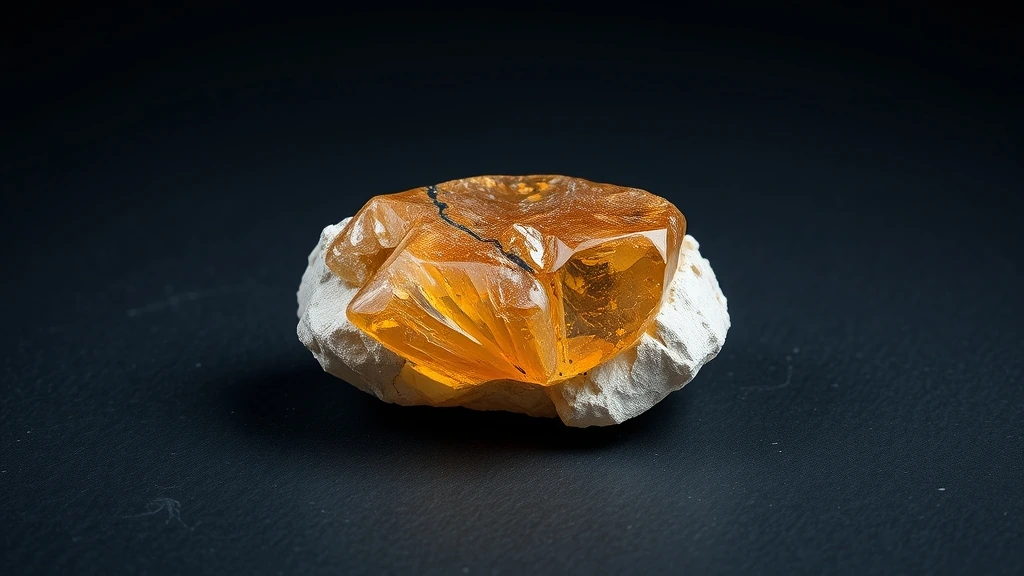
Imperial Topaz belongs to the silicate family, specifically the nesosilicates, where isolated SiO₄ tetrahedra are linked by aluminum and fluorine atoms. Its orthorhombic, prismatic crystal habit develops in high‑temperature granitic pegmatites and hydrothermal veins, often forming elongated, barrel‑shaped crystals. The gemstone’s vivid color spectrum—from pale yellow to deep orange—originates from trace impurities and crystal‑field effects, while its durability stems from a tightly packed lattice.
What is Imperial Topaz? Geological Overview & Definition
Imperial Topaz is the most prized variety of the mineral topaz, distinguished by its warm, golden coloration that sets it apart from the common colorless or blue‑tinted forms. It occurs primarily in alluvial deposits and pegmatitic veins across Brazil, Russia, Pakistan, and Nigeria, where slow cooling allows well‑formed orthorhombic crystals to develop. In comparative mineralogical collections, practitioners and geologists frequently study Cherry Tanzurine alongside this crystal to appreciate their subtle energetic and structural differences.
Across ancient lapidary traditions, the stone was prized for its brilliance and rarity, often reserved for royalty and ceremonial regalia. Its name “imperial” reflects this historic association with power, wealth, and the celestial symbolism of the sun. In comparative mineralogical collections, practitioners and geologists frequently study Champagne Topaz alongside this crystal to appreciate their subtle energetic and structural differences.
Imperial Topaz Chemical Composition & Crystallographic Properties
The definitive formula Al₂SiO₄(F,OH)₂ places Imperial Topaz within the orthorhombic (prismatic) crystal system, characterized by three mutually perpendicular axes of unequal length. Its unit cell comprises a robust framework of SiO₄ tetrahedra linked by Al³⁺ cations, with fluorine and hydroxyl groups occupying the interstitial sites.
Cation substitution is limited; however, trace amounts of Fe³⁺, Cr³⁺, or Mn²⁺ can replace aluminum, creating color‑center chromophores that absorb specific wavelengths and produce the stone’s golden hues. These impurities are responsible for the subtle variations from pale citrine to deep amber.
Topaz is chemically stable but exhibits sensitivity to strong acids, which can leach fluorine and hydroxyl groups, potentially altering its refractive index and luster. In laboratory settings, exposure to hydrofluoric acid must be strictly controlled to avoid lattice degradation.
Thermally, Imperial Topaz expands anisotropically; heating above 400 °C can induce a reversible change in color intensity, while temperatures exceeding 600 °C may cause phase transitions that alter its crystal symmetry. Controlled heat treatment is sometimes employed to enhance color, but excessive heat can lead to cracking due to differential expansion along the orthorhombic axes.
| Property | Specification |
|---|---|
| Mineral Group | Silicates (Nesosilicates / Aluminum Fluorosilicate) |
| Chemical Formula | Al₂SiO₄(F,OH)₂ (Aluminum Fluorosilicate) |
| Mohs Hardness | 8.0 |
| Crystal System | Orthorhombic (Prismatic crystals) |
| Specific Gravity (Density) | 3.49 – 3.57 |
| Refractive Index | 1.606 – 1.638 |
| Color & Optical Properties | Natural Imperial Topaz color spectrum and optical dispersion |
| Primary Mining Localities | Brazil (Minas Gerais), Pakistan, Russia (Ural), Nigeria, Mexico |
| Water & Chemical Resistance | High (Safe in lukewarm water; avoid thermal shock and harsh chemicals) |
| Chakra Alignment (Traditional) | Throat Chakra and Solar Plexus Chakra |
| Zodiac Affinity (Traditional) | Sagittarius, Scorpio, Leo |
| Symbolic Meaning (Traditional) | Clarity, truth, self-realization, manifestation, and good fortune |
Imperial Topaz Varieties & Color Spectrum
Imperial Topaz displays distinct mineralogical characteristics across its geological varieties and structural habits. Gemologists evaluate these natural varieties based on crystal habit, trace chromophore concentrations, and visual luster.
Primary Natural Imperial Topaz
The benchmark natural variety exhibiting diagnostic color saturation and classic crystallographic symmetry.
Distinct Geological Morphs of Imperial Topaz
Secondary regional and structural varieties formed under localized geological temperature and pressure conditions.
Imperial Topaz (Yellow–Orange)
The most celebrated variety, Imperial Topaz, displays a vivid yellow‑orange hue that intensifies with heat treatment. It forms in orthorhombic pegmatites where fluorine and hydroxyl ions substitute for oxygen, creating a distinctive color center. Inclusions of tiny quartz or mica needles give a subtle flame effect, while the gemstone’s high refractive index (1.606–1.638) enhances brilliance. Imperial Topaz is prized worldwide, yet its finest specimens are exceptionally rare, commanding premium prices.
Imperial Topaz (Blue‑Green)
This rare color variant derives from trace amounts of barium and strontium during crystallization, yielding a muted blue‑green tone. It is typically found in the same pegmatitic environments as its yellow counterpart but requires a delicate balance of temperature and pressure to lock in the hue. Inclusions of feldspar give a subtle lattice pattern, and the gemstone’s mohs hardness of 8.0 ensures durability. Blue‑green Imperial Topaz is scarce, often sought by collectors for its understated elegance.
Imperial Topaz (Pink‑Orange)
A less common but striking variety, Pink‑Orange Imperial Topaz, owes its blush tint to iron and titanium impurities. The color is uneven, with a warm pale pink center that fades toward the edges, creating a natural gradient. Inclusions of amphibole give a faint, honeycomb texture, while the crystal’s orthorhombic symmetry remains intact. Due to its limited supply, Pink‑Orange Imperial Topaz is highly coveted among high‑end jewelers.
Imperial Topaz (White‑Yellow)
White‑Yellow Imperial Topaz exhibits a translucent, almost milky appearance with a subtle yellow undertone. The gemstone’s light color results from minimal trace elements, allowing for a high transparency that enhances its sparkle. Inclusions are rare, often limited to minute quartz flakes, giving the stone a clean, pristine look. Although less dramatic than its orange or blue variants, White‑Yellow Imperial Topaz remains a prized choice for understated luxury.
Imperial Topaz (Mosaic)
Mosaic Imperial Topaz is a composite of multiple color zones—yellow, orange, and sometimes pink—within a single crystal. The mosaic pattern arises from layered growth during crystallization, where varying chemical environments produce distinct color bands. Inclusions of mica and quartz are common, adding a subtle texture to the surface. The rarity of true mosaic specimens makes them highly sought after by connoisseurs and collectors alike.
Imperial Topaz (Black‑Orange)
The Black‑Orange variety features a deep, almost black background with bright orange flecks. This contrast results from high concentrations of iron and magnesium during formation, creating a dramatic visual effect. Inclusions of feldspar and quartz give a speckled appearance, while the stone’s density (3.49–3.57) remains within typical ranges. Black‑Orange Imperial Topaz is exceptionally rare, often reserved for high‑profile commissions.
Where is Imperial Topaz Found? Geological Mining & Extraction
Imperial Topaz crystallizes in orthorhombic pegmatites that form within granitic intrusions. These pegmatites are rich in fluorine, hydroxyl, and trace elements such as barium, strontium, and iron, which dictate the gemstone’s color and clarity. The primary extraction sites are located in the Kashmir Valley of India, the Karakoram region of Pakistan, and the Sikkim state of India, where the geological conditions favor the growth of large, well‑formed crystals.
Mining operations in these regions employ a combination of open‑pit and underground techniques, depending on the depth and stability of the pegmatite veins. Once extracted, the raw stones undergo careful sorting, cutting, and heat treatment to enhance color and reduce inclusions. The resulting Imperial Topaz is then graded by international gemological laboratories for quality and authenticity before entering the global market.
Historical Significance & Cultural Lore of Imperial Topaz
Across ancient Greco‑Roman lapidary traditions, Imperial Topaz was revered for its luminous warmth and believed to bestow clarity and truth upon its wearer. Archaeological findings in the Indus Valley and Mohenjo‑Daro indicate that early traders valued the gemstone for its ornamental and symbolic qualities, often setting it in royal regalia. In Egyptian tombs, fragments of Imperial Topaz were associated with the Solar Plexus Chakra, symbolizing protection and vitality.
In Chinese lore, Imperial Topaz was linked to the Sagittarius constellation, thought to grant manifestation and good fortune to those who possessed it. Vedic texts reference the stone’s association with the Throat Chakra, emphasizing its role in communication and self‑expression. These cross‑cultural narratives underscore the gemstone’s enduring appeal as a symbol of power, wisdom, and spiritual insight.
Modern Uses & Jewelry Applications of Imperial Topaz
Imperial topaz is prized for its exceptional brilliance and durability, making it a staple in high-end jewelry design. Lapidaries typically cut these stones into faceted gems to maximize their high refractive index, which creates intense fire and sparkle. The stone’s hardness ensures it withstands daily wear in rings and pendants without significant abrasion.
- Faceted Cuts: Standard brilliant and mixed cuts are used to enhance the stone’s optical performance.
- Cabochons: Rarely used due to the stone’s transparency, but occasionally cut for opalescent varieties.
- Ornamental Carving: Large, clean crystals may be carved into decorative objects, though this is less common than faceting.
- Jewelry Settings: Often set in gold or platinum to complement its warm, imperial hues.
Carat, Quality Grades & Value Factors of Imperial Topaz
The value of imperial topaz is primarily driven by its color saturation and clarity. The most coveted shades are deep orange to reddish-orange, often referred to as “sherry” or “imperial” hues. Stones with minimal inclusions and high transparency command premium prices, as clarity directly impacts the stone’s brilliance. Color zoning is a common feature, and lapidaries must carefully orient the stone to display the most vibrant hues.
In terms of carat weight, larger stones are exponentially more valuable due to the rarity of clean, large crystals. The 4Cs framework is adapted for topaz, with color being the dominant factor, followed by clarity and cut. Durability is another key attribute, with a Mohs hardness of 8.0 making it suitable for everyday jewelry. Proper cutting is essential to avoid cleavage planes, which can cause the stone to fracture if struck.
Zodiac and Astrological Lore of Imperial Topaz
In historical metaphysical lore, imperial topaz is associated with clarity, truth, and self-realization. It is traditionally linked to the Throat Chakra and Solar Plexus Chakra, symbolizing communication and personal power. Ancient cultures believed the stone could enhance mental focus and bring good fortune to its wearer.
Astrologically, imperial topaz is considered an affinity stone for Sagittarius, Scorpio, and Leo. These zodiac signs are thought to benefit from the stone’s energy, which is said to boost confidence and manifestation. The warm hues of the gem are believed to resonate with the fiery and dynamic nature of these signs.
How to Identify Real vs. Fake Imperial Topaz
Imperial topaz is frequently imitated due to its high market value and distinctive color. Common fakes include synthetic glass, dyed quartz, and colorless topaz treated with irradiation. These imitations often lack the natural inclusions and specific gravity of genuine stones. Understanding the differences is crucial for buyers to avoid purchasing counterfeit gems.
Practical At-Home Authenticity Tests
- Temperature Test (Thermal Feel): Genuine topaz feels cool to the touch initially but warms up quickly in the hand, whereas glass imitations may feel warmer or retain heat differently.
- Specific Gravity & Weight Test: Imperial topaz has a density of 3.49 – 3.57, making it feel heavier than glass or quartz of the same size. A professional scale can confirm this weight difference.
- Scratch & Hardness Test (Mohs Comparison): With a Mohs hardness of 8.0, topaz can scratch quartz (7.0) but will be scratched by corundum (9.0). This test should be performed carefully on a non-visible area.
- Microscopic & Loupe Inspection (Internal Inclusions): Use a 10x loupe to look for natural inclusions, such as fluid-filled cavities or color zoning. Glass imitations often contain bubble inclusions, which are a clear sign of artificial origin.
Imperial Topaz Valuation Factors, Grading & Pricing
Color Saturation remains the single most critical determinant of value in the imperial topaz market. The rarest and most coveted specimens exhibit a deep, uniform orange to reddish-orange hue, often described as “sherry” or “cognac.” Gemologists prioritize stones with exceptional optical clarity, as even minor inclusions can significantly diminish the stone’s luster and overall brilliance.
Carat Weight directly influences pricing, with larger, high-quality imperial topazes commanding substantial premiums due to their extreme rarity. Lapidary grading standards assess facet symmetry and cut quality, ensuring the stone maximizes its natural fire and dispersion. Adherence to the 4Cs framework helps buyers distinguish between commercially viable gems and exceptional collector-grade specimens.
Geographical Provenance Premium plays a significant role in certified gem market value trends. Stones originating from the historic Ouro Preto mines in Brazil often carry higher valuations due to their documented lineage. Reputable certification from institutions like GIA or AGS further stabilizes market confidence and ensures accurate valuation for high-end transactions.
How to Clean and Care for Imperial Topaz
Imperial topaz possesses perfect basal cleavage, making it susceptible to sudden fractures under mechanical stress. Consequently, ultrasonic and steam cleaning methods must be strictly avoided to prevent catastrophic damage to the crystal structure. Instead, immerse the gem in lukewarm water with a mild, phosphate-free soap for a brief period.
Gently agitate the stone with a soft-bristled toothbrush to remove accumulated oils and dust from facet junctions. Afterward, rinse thoroughly under running lukewarm water and dry immediately with a lint-free microfiber cloth. Store the gem in a padded jewelry box to protect it from thermal shock and physical abrasion during daily wear.
Cleansing and Recharging Imperial Topaz (Energetic Care)
For holistic energetic maintenance, practitioners often employ dry methods that respect the mineral’s physical integrity. Herbal smudging with sage or palo santo is a common technique, allowing the smoke to gently pass over the stone without direct contact. This ritual is believed to clear stagnant energy while preserving the gem’s structural stability and optical properties.
Alternatively, placing the imperial topaz on a selenite charging slab under gentle moonlight offers a passive recharging method. This approach avoids the thermal risks associated with direct sunlight or artificial heat sources, which can destabilize the crystal lattice. Such practices align with traditional metaphysical lore, emphasizing balance and clarity without compromising the stone’s geological formation.
Frequently Asked Questions About Imperial Topaz
Imperial Topaz displays distinct mineralogical characteristics across its geological varieties and structural habits. Gemologists evaluate these natural varieties based on crystal habit, trace chromophore concentrations, and visual luster.
Primary Natural Imperial Topaz
The benchmark natural variety exhibiting diagnostic color saturation and classic crystallographic symmetry.
Distinct Geological Morphs of Imperial Topaz
Secondary regional and structural varieties formed under localized geological temperature and pressure conditions.
What is the chemical composition of Imperial Topaz?
Imperial Topaz is an aluminum fluorosilicate with the formula Al₂SiO₄(F,OH)₂. Its unique orange hue stems from trace iron impurities within the crystal lattice. This specific mineralogical structure distinguishes it from other topaz varieties and defines its gemological identity.
How hard is Imperial Topaz on the Mohs scale?
It ranks 8.0 on the Mohs hardness scale, making it quite durable for daily jewelry wear. This robustness allows it to resist scratches from common materials like steel or glass. However, its perfect basal cleavage means it can still shatter if struck sharply.
Can I wear Imperial Topaz in the shower?
Yes, it is safe in lukewarm water for brief periods during showering. You must avoid thermal shock from sudden temperature changes, which can fracture the stone. Additionally, harsh soaps or chemical residues should be rinsed off immediately to preserve the surface luster.
Is ultrasonic cleaning safe for Imperial Topaz?
No, ultrasonic and steam cleaning must be strictly avoided due to its perfect basal cleavage. These methods can induce internal stress and cause catastrophic splitting. Instead, use warm soapy water and a soft cloth for gentle, manual cleaning to maintain integrity.
Which zodiac signs are aligned with Imperial Topaz?
It is traditionally associated with Sagittarius, Scorpio, and Leo. These signs are believed to resonate with the stone’s energetic properties. Wearing this gemstone is thought to enhance confidence and clarity for individuals born under these specific astrological signs.
Which chakras does Imperial Topaz activate?
It primarily activates the Throat Chakra and Solar Plexus Chakra. These energy centers govern communication, self-expression, and personal power. The stone is used in meditation to balance these specific chakras, promoting clarity and truth in expression.
What is the refractive index of Imperial Topaz?
Its refractive index ranges from 1.606 to 1.638, contributing to its brilliant luster. This optical property allows light to bend effectively within the stone. Combined with its specific gravity, it helps gemologists distinguish topaz from similar-looking minerals like spinel.
Why is Imperial Topaz considered a rare?
True Imperial Topaz is scarce because it forms only in specific geological conditions. The orange to pinkish-orange color is highly sought after by collectors. Its limited global provenance and high demand drive its value significantly above that of common blue or yellow topaz varieties.