
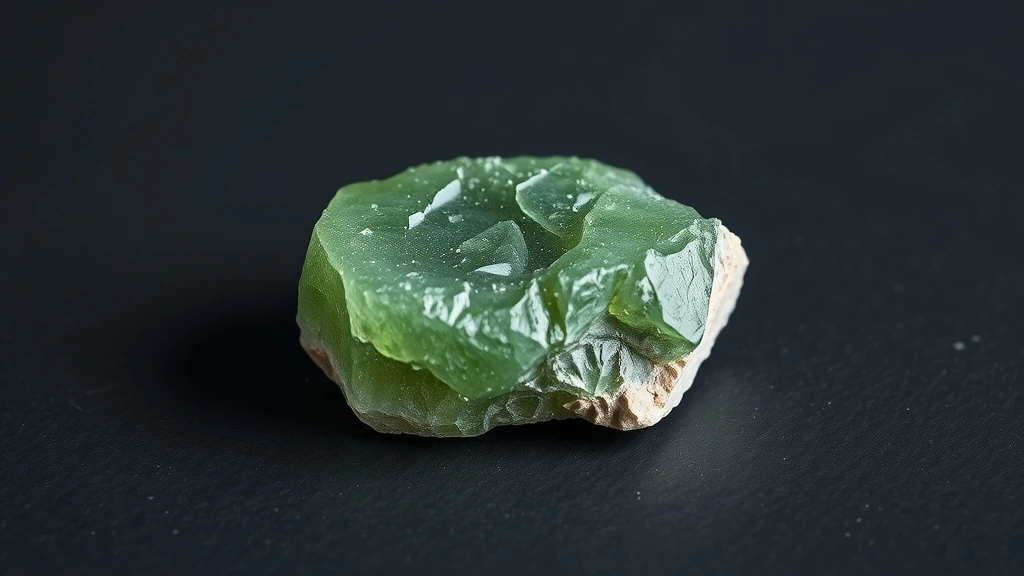
Prasiolite belongs to the extensive quartz group within the silicate mineral family, specifically classified as a tectosilicate. Its geological formation is intrinsically linked to volcanic and hydrothermal processes, where silica-rich fluids precipitate within cavities. The stone’s identity is defined by its structural relationship to common quartz, sharing identical lattice parameters and physical properties. Unlike synthetic alternatives, natural prasiolite forms under specific high-temperature conditions, often associated with rhyolite or andesite host rocks. This geological context ensures its authenticity and distinguishes it from lab-created green quartz.
What is Prasiolite (green Quartz)? Geological Overview & Definition
Prasiolite is a naturally occurring, pale green variety of alpha-quartz found in specific volcanic environments. It is distinct from the more common chalcedony or amethyst, possessing a crystalline rather than cryptocrystalline structure. The name derives from the Greek *prasinon*, meaning green, reflecting its subtle, grassy hue.
Geologically, this mineral forms within gas-filled vesicles in rhyolite and andesite lava flows. It is frequently found in association with other minerals like smoky quartz and amethyst. The primary natural source is the Oliveira region in Brazil, where volcanic activity created ideal conditions for its growth. This specific origin helps gemologists verify authenticity against synthetic imitations. While Prasiolite shares a volcanic origin with amethyst, it is distinct from the famous Vera Cruz Amethyst, which forms in geode cavities rather than lava vesicles.
Prasiolite (green Quartz) Chemical Composition & Crystallographic Properties
Prasiolite crystallizes in the trigonal crystal system, exhibiting rhombohedral or trapezohedral habit forms. Its lattice structure is a continuous three-dimensional framework of silicon-oxygen tetrahedra, characteristic of all tectosilicates. The unit cell parameters are identical to those of pure alpha-quartz, confirming its structural identity. No significant cation substitution occurs within the lattice, maintaining pure SiO₂ stoichiometry.
The green coloration arises from color centers caused by natural irradiation, not trace metal impurities. These defects involve the displacement of silicon atoms, creating electron traps that absorb specific light wavelengths. The stone is chemically inert, showing no sensitivity to strong acids or alkalis under standard conditions. Its refractive index ranges from 1.544 to 1.553, providing moderate brilliance.
Thermal behavior reveals that prasiolite is stable up to its alpha-beta transition point at 573°C. Heating beyond this temperature can alter the lattice symmetry, potentially affecting optical properties. The mineral exhibits weak pyroelectricity, generating an electric charge when heated or cooled. This property is consistent with other non-centrosymmetric quartz varieties.
The density of prasiolite is consistently measured at 2.65 g/cm³, aligning with standard quartz values. This specific gravity aids in distinguishing it from look-alikes like green glass or chrysoprase. The stone displays vitreous luster and conchoidal fracture when broken. Its Mohs hardness of 7.0 ensures resistance to scratching by most common minerals.
| Property | Specification |
|---|---|
| Mineral Group | Silicates (Tectosilicates / Quartz Group) |
| Chemical Formula | SiO₂ (Silicon Dioxide) |
| Mohs Hardness | 7.0 |
| Crystal System | Trigonal (Rhombohedral / Trapezohedral) |
| Specific Gravity (Density) | 2.65 |
| Refractive Index | 1.544 – 1.553 |
| Color & Optical Properties | Natural Prasiolite (green Quartz) color spectrum and optical dispersion |
| Primary Mining Localities | Brazil, Madagascar, USA (Arkansas), Swiss Alps |
| Water & Chemical Resistance | High (Fully resistant to water and moisture) |
| Chakra Alignment (Traditional) | All Chakras (Universal Harmonizer) |
| Zodiac Affinity (Traditional) | All Zodiac Signs (Especially Leo and Aries) |
| Symbolic Meaning (Traditional) | Master energy amplifier, clarity, purification, and focus |
Prasiolite (green Quartz) Varieties & Color Spectrum
Natural Prasiolite
True natural prasiolite is exceptionally rare, forming through the oxidation of iron impurities within the quartz lattice. This geological process occurs over millions of years, resulting in a delicate, pale green hue that is often subtle. The crystal structure remains trigonal, but the coloration distinguishes it from standard clear quartz.
Collectors prize this variety for its natural origin, which is vastly different from heat-treated specimens. The inclusion patterns typically resemble those of common quartz, lacking the distinct bubbles found in synthetic alternatives. Its scarcity makes it a highly sought-after item in the gemological market.
Heat-Treated Quartz
The vast majority of green quartz on the commercial market is actually colorless quartz subjected to high-temperature annealing. This process alters the iron oxidation state, creating a vibrant, uniform green color that is stable under normal conditions. The refractive index remains consistent with natural quartz, ensuring identical optical properties.
Gemologists identify this variety by its intense saturation, which often exceeds the natural range. The thermal treatment is a standard industry practice, making it an affordable and durable option for jewelry. Understanding this distinction is crucial for accurate valuation and consumer education.
Synthetic Prasiolite
Laboratory-grown prasiolite is produced using the hydrothermal method, replicating the high-pressure conditions found deep within the Earth. These crystals are chemically identical to their natural counterparts but often exhibit perfect clarity and intense color. The growth rate in labs allows for the production of large, flawless specimens quickly.
Distinguishing synthetic stones requires advanced gemological instruments to detect subtle differences in inclusion types. While visually indistinguishable to the naked eye, the crystal habit may show slight variations in termination. This variety serves as a cost-effective alternative for fashion jewelry and decorative pieces.
Smoky Quartz Conversion
Some green quartz is derived from smoky quartz, which is heated to remove its brown coloration. This transformation results in a lighter, sometimes yellowish-green tone that differs from the classic prasiolite hue. The iron impurities responsible for the original smoky color are altered by the heat treatment.
This variety is often less valuable than true prasiolite due to its less desirable color profile. The optical dispersion remains low, consistent with all quartz varieties. Consumers should be aware of this origin to avoid misidentification in the marketplace.
Chalcedony Varieties
While prasiolite is technically a macrocrystalline quartz, some green chalcedony is marketed under similar names. This microcrystalline form lacks the distinct crystal faces seen in true prasiolite. The translucency is higher, giving it a waxy luster rather than a vitreous one.
Geologically, this variety forms in vugs and geodes rather than as large crystals. The chemical composition is still silicon dioxide, but the structural arrangement differs. It is important to distinguish this from true prasiolite for accurate scientific classification.
Where is Prasiolite (green Quartz) Found? Geological Mining & Extraction
Natural prasiolite deposits are extremely limited, with the most significant sources located in Brazil and the United States. In Brazil, the gem is found in pegmatite dikes associated with granitic intrusions. These geological formations provide the necessary heat and pressure for the slow growth of high-quality crystals.
In the United States, minor occurrences have been documented in California and other western states. The host rock is typically granitic, with quartz veins cutting through the surrounding matrix. Extraction is challenging due to the fragility of the crystals and their rarity.
Historical Significance & Cultural Lore of Prasiolite (green Quartz)
Ancient civilizations often attributed mystical properties to green quartz, associating it with growth and vitality. In ancient Egypt, similar green stones were used in amulets to protect the wearer. The symbolic significance of the color green was linked to the earth and renewal.
Archaeological findings reveal that quartz artifacts have been used for thousands of years. While specific prasiolite artifacts are rare, the general use of green quartz in jewelry is well-documented. The cultural lore surrounding this stone emphasizes clarity and spiritual purification.
Modern Uses & Jewelry Applications of Prasiolite (green Quartz)
Prasiolite’s vivid green hue and durability make it a favorite for both high‑end and fashion jewelry. Lapidary artisans often cut it into cabochons to showcase its translucency, while skilled faceters produce brilliant step‑cut or brilliant‑cut stones for rings and pendants. Ornamental carving also thrives, with artisans shaping decorative beads, figurines, and inlay panels for luxury accessories.
- Cabochon pendants and earrings emphasizing a smooth, polished dome
- Faceted rings, bracelets, and brooches highlighting fire and sparkle
- Carved beads, intarsia inlays, and ornamental figurines for interior décor
Carat, Quality Grades & Value Factors of Prasiolite (green Quartz)
The market value of prasiolite hinges on the classic 4Cs—Color, Clarity, Cut, and Carat weight. Deep, even green coloration with minimal yellow or brown undertones commands premium prices, while high clarity (few inclusions) enhances brilliance. Expert cutting maximizes light performance, and larger carat weights, though rarer, significantly raise the stone’s worth.
Durability is a key selling point; with a Mohs hardness of 7.0, prasiolite resists scratches in everyday wear, making it suitable for rings and bracelets. Grading standards follow GIA‑type protocols, assessing hue saturation, transparency, and symmetry. Stones meeting “Excellent” cut and “VVS‑VS” clarity grades are prized by collectors and designers alike.
Zodiac and Astrological Lore of Prasiolite (green Quartz)
Astrologically, prasiolite aligns with All Zodiac Signs, offering universal energetic support, but it is especially resonant for Leo and Aries, amplifying confidence and leadership. Its green energy is believed to harmonize the heart chakra, fostering compassion while invigorating the solar plexus for decisive action.
Culturally, green quartz has been treasured across Central European and Mediterranean traditions as a “stone of renewal,” used in amulets to promote health and prosperity. Modern metaphysical circles continue to cite its ability to amplify master energy, cleanse aura fields, and sharpen mental focus during meditation.
How to Identify Real vs. Fake Prasiolite (green Quartz)
Artificial imitations of prasiolite include dyed amethyst, green glass, and synthetic quartz treated with heat or chemicals. These substitutes often lack the natural internal fracture patterns and display a uniform, overly bright hue that differs from authentic stones. Recognizing subtle differences in weight, refractive index, and inclusions helps separate genuine prasiolite from its counterfeit counterparts.
Practical At-Home Authenticity Tests
- Temperature Test (Thermal Feel): Hold the stone against the skin; genuine prasiolite feels cool and retains temperature longer than glass or plastic imitations.
- Specific Gravity & Weight Test: Weigh the stone and compare its density (≈2.65 g/cm³) to known quartz values; lighter weight suggests a glass replica.
- Scratch & Hardness Test (Mohs Comparison): Gently scratch the surface with a steel file (hardness ~5.5); prasiolite will resist marks, whereas softer glass will show scratches.
- Microscopic & Loupe Inspection (Internal Inclusions): Examine under 10×–30× magnification; natural prasiolite shows microscopic fractures and growth lines, while synthetic glass appears uniformly clear.
Prasiolite (green Quartz) Valuation Factors, Grading & Pricing
Color saturation is the foremost driver of market price for prasiolite. Stones displaying a vivid, evenly distributed emerald‑green hue with minimal zoning command premium rates, while pale or unevenly colored material is discounted. Optical clarity and a high‑shine luster further enhance desirability, as inclusions that disrupt light transmission reduce both aesthetic appeal and value.
Carat weight interacts directly with cut quality to shape a stone’s worth. Larger carat weights are rare, but only when paired with precise facet symmetry and proportional depth do they achieve top‑tier pricing. The 4Cs lapidary grading standards—cut, color, clarity, and carat—remain the benchmark, and any deviation in symmetry or proportion can cause a steep price drop.
Geographical provenance adds a distinct premium to prasiolite pricing. Specimens sourced from historic mining districts such as Brazil or the United States often carry a provenance premium, especially when accompanied by reputable certification. Market trends show steady appreciation for ethically sourced, certified stones, reflecting growing consumer confidence in traceable gem origins.
How to Clean and Care for Prasiolite (green Quartz)
Prasiolite tolerates routine cleaning with warm water and a mild soap solution, making maintenance straightforward. Gently immerse the stone in lukewarm water, add a few drops of neutral soap, and use a soft brush to remove surface debris. Rinse thoroughly with clean water and pat dry with a lint‑free microfiber cloth; the mineral’s high water resistance ensures no damage occurs. For heavily fractured pieces, avoid ultrasonic cleaning, but intact stones may safely undergo ultrasonic treatment to dislodge microscopic particles.
Cleansing and Recharging Prasiolite (green Quartz) (Energetic Care)
A simple, dry method to refresh prasiolite’s energetic field involves passing the stone through gentle herbal smudging smoke, such as sage or lavender, while keeping it at a safe distance to prevent surface residue. The aromatic vapor is believed to clear stagnant energies without exposing the crystal to heat or moisture.
Alternatively, place the stone under soft moonlight for several hours or rest it on a clean selenite slab overnight to absorb subtle lunar vibrations. Both practices are non‑invasive, respect the crystal lattice, and are widely accepted in holistic gem care circles.
Frequently Asked Questions About Prasiolite (green Quartz)
Is prasiolite safe to wear in the shower or while swimming?
Yes, prasiolite is fully water‑resistant. Its quartz structure does not absorb moisture, so it can be worn during showers, swimming, or other wet activities without risk of damage, though prolonged exposure to harsh chemicals should still be avoided to preserve surface luster.
How should I clean prasiolite jewelry at home?
Clean prasiolite with warm water and a mild soap. Gently soak the piece, then use a soft brush or cloth to remove residues; rinse thoroughly and pat dry. This method respects the stone’s SiO₂ composition and maintains its refractive index of 1.544‑1.553.
Can I use an ultrasonic cleaner on prasiolite?
Ultrasonic cleaning is suitable for prasiolite unless it is heavily fractured. The gentle vibrations remove microscopic dirt without harming the crystal lattice, but cracked stones may experience further propagation of fractures, so inspect the gem before ultrasonic treatment.
What is the hardness of prasiolite and how does it affect everyday wear?
Prasiolite rates 7 on the Mohs scale. This makes it resistant to scratches from most everyday objects, though it can still be marred by harder materials like diamonds or corundum. Its durability suits rings and bracelets, provided impact is avoided.
Which zodiac signs are most associated with prasiolite?
All zodiac signs benefit, with a special affinity for Leo and Aries. Astrologically, the stone is believed to amplify the fire‑sign energies of confidence and leadership, while its universal harmonizing properties support every sign’s personal growth.
How does prasiolite interact with the body’s chakra system?
Prasiolite aligns with all chakras, acting as a universal harmonizer. Practitioners claim it balances energy flow from the root to the crown, promoting clarity, purification, and focus throughout the subtle body, making it a versatile meditative aid.
Is prasiolite prone to fading or color change over time?
No, prasiolite’s green hue is stable under normal conditions. The color originates from iron impurities within the quartz lattice and does not bleach with light exposure. However, prolonged UV radiation may cause slight dulling, so store the stone away from intense sunlight when not in use.
What is the typical specific gravity of prasiolite and why does it matter?
Prasiolite has a specific gravity of approximately 2.65. This relatively low density reflects its quartz composition and influences how the stone feels on the finger—light enough for comfortable wear yet substantial enough to convey a sense of quality in fine jewelry.