
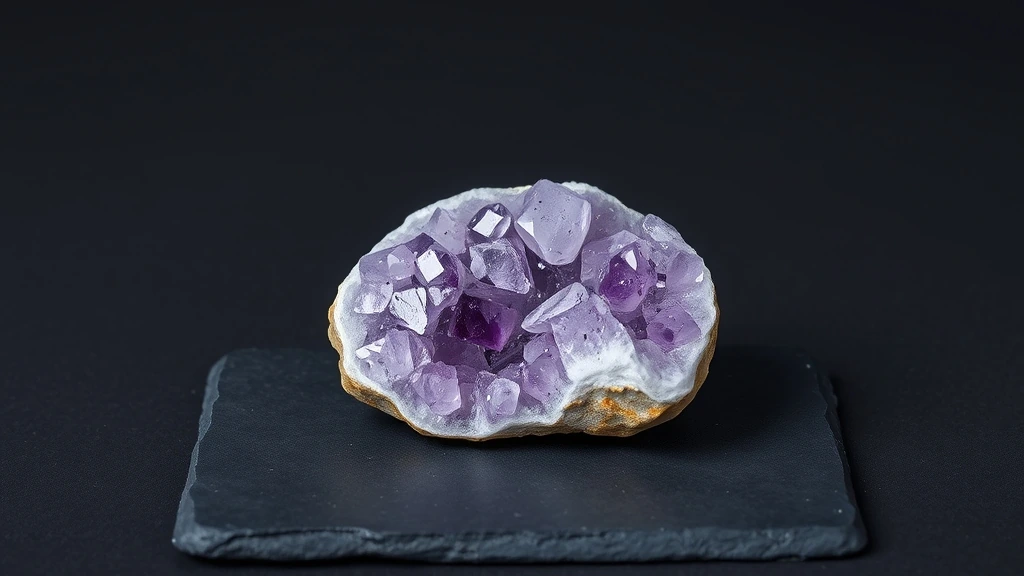
Vera Cruz Amethyst belongs to the silicate mineral family, specifically within the tectosilicate subclass. This classification defines its framework structure, where silicon and oxygen atoms form a continuous three-dimensional network. As a member of the quartz group, it shares fundamental crystallographic properties with other silica polymorphs. This geological lineage dictates its physical resilience and optical characteristics. The stone’s formation is intrinsically linked to hydrothermal processes in volcanic rock cavities.
What is Vera Cruz Amethyst? Geological Overview & Definition
Vera Cruz Amethyst is a premium variety of amethyst sourced from the Pachuca district in Hidalgo, Mexico. It is renowned for its deep, saturated violet to purple coloration, which often lacks the common red or blue overtones found in other deposits. This specific hue results from unique irradiation conditions during its geological formation. While Vera Cruz Amethyst is prized for its naturally occurring deep violet saturation, collectors often pair it with Sun Aura Quartz to balance the stone’s intense spiritual energy with the latter’s warm, solar-powered vibrancy.
The stone forms within geodes of rhyolitic volcanic rock, creating large, well-formed crystals. Its hexagonal prismatic habit is frequently visible in high-quality specimens. Collectors value these stones for their clarity and intense chromatic depth. The Vera Cruz origin remains a benchmark for color quality in the global gem market. While the deep violet hues of Vera Cruz Amethyst dominate the market, collectors seeking a softer, pastel alternative often turn to the delicate inclusions found in Pink Tourmaline In Quartz.
Vera Cruz Amethyst Chemical Composition & Crystallographic Properties
The mineral crystallizes in the trigonal crystal system, exhibiting hexagonal prismatic shapes with pyramidal terminations. Its lattice structure consists of a rigid silicon-oxygen tetrahedral framework. This arrangement provides the stone with its characteristic isotropic optical properties. The trigonal symmetry is a defining feature of the quartz group.
Coloration arises from chromophore centers created by iron (Fe³⁺) impurities. Natural irradiation displaces oxygen atoms, forming color centers that absorb specific light wavelengths. This process yields the signature violet hue without altering the base SiO₂ composition. The iron traces are essential for developing the gem’s value.
The stone demonstrates high chemical stability and resistance to most acids. It does not dissolve in standard laboratory reagents, ensuring long-term preservation. However, extreme heat can cause thermal bleaching, fading the color permanently. Proper storage away from intense heat sources is recommended for collectors.
Optical measurements reveal a refractive index between 1.544 and 1.553. The specific gravity ranges from 2.65 to 2.66, aiding in identification. These physical constants remain consistent across all quartz varieties. Precise measurement confirms the mineral’s identity in gemological analysis.
| Property | Specification |
|---|---|
| Mineral Group | Silicates (Tectosilicates / Quartz Group) |
| Chemical Formula | SiO₂ (Silicon Dioxide with Fe³⁺ traces) |
| Mohs Hardness | 7.0 |
| Crystal System | Trigonal (Hexagonal prismatic crystals) |
| Specific Gravity (Density) | 2.65 – 2.66 |
| Refractive Index | 1.544 – 1.553 |
| Color & Optical Properties | Natural Vera Cruz Amethyst color spectrum and optical dispersion |
| Primary Mining Localities | Brazil (Rio Grande do Sul), Uruguay (Artigas), Madagascar, Russia, Turkey |
| Water & Chemical Resistance | High (Water resistant; avoid prolonged direct sunlight to prevent color fading) |
| Chakra Alignment (Traditional) | Crown Chakra and Third Eye Chakra |
| Zodiac Affinity (Traditional) | Pisces, Aquarius, Virgo |
| Symbolic Meaning (Traditional) | Spiritual clarity, inner peace, meditative focus, and negative energy dispelling |
Vera Cruz Amethyst Varieties & Color Spectrum
Vera Cruz Amethyst displays distinct mineralogical characteristics across its geological varieties and structural habits. Gemologists evaluate these natural varieties based on crystal habit, trace chromophore concentrations, and visual luster.
Primary Natural Vera Cruz Amethyst
The benchmark natural variety exhibiting diagnostic color saturation and classic crystallographic symmetry.
Distinct Geological Morphs of Vera Cruz Amethyst
Secondary regional and structural varieties formed under localized geological temperature and pressure conditions.
Classic Deep‑Violet Amethyst
Formed in silica‑rich pegmatitic veins, this variety acquires its intense violet hue from trace Fe³⁺ substituting for Al³⁺ in the quartz lattice. Crystal clusters often display striated growth bands and occasional rutile needle inclusions that create a subtle asterism. While abundant in the Veracruz region, the deepest, most saturated stones are rarer and command premium prices.
Lavender‑Sheened Amethyst
Lavender shades arise when iron oxidation is partially inhibited, yielding a softer, pastel violet that can shift toward lilac under different lighting. These stones typically grow in secondary cavities where hydrothermal fluids cool slowly, allowing well‑developed hexagonal prisms to form. Their gentle hue makes them popular in high‑end jewelry, yet large, flawless pieces remain scarce.
Green‑Tinted Amethyst (Prasiolite‑Like)
Occasionally, localized reducing conditions cause Fe³⁺ to reduce to Fe²⁺, imparting a pale greenish‑blue tint reminiscent of prasiolite. Such morphs are confined to the peripheral zones of the Veracruz pegmatites, where fluid composition fluctuates. The rarity of this color shift, combined with its delicate translucency, makes it a collector’s curiosity.
Heat‑Altered “Saffron” Amethyst
Natural exposure to low‑grade geothermal gradients can partially de‑colorize the violet, producing a warm, golden‑saffron tone without artificial treatment. These stones retain the original crystal habit but exhibit microscopic Fe‑oxide inclusions that scatter light, enhancing the honeyed appearance. Because true heat‑altered specimens are uncommon, they are highly sought after by connoisseurs.
Veined “Cataract” Amethyst
In some deposits, intersecting quartz veins create parallel, white‑to‑gray banding that cuts through the violet matrix, reminiscent of cataract formations. The bands result from episodic silica influxes rich in calcite or feldspar, interrupting amethyst growth. While visually striking, the veining often reduces clarity, limiting the variety to artistic and ornamental uses.
Cut‑Stone “Ceylon” Trade Amethyst
Historically exported under the moniker “Ceylon Amethyst,” these stones are selected for their uniform color saturation and minimal inclusions, catering to the global market. Though not a distinct geological type, the trade name reflects a long‑standing commercial route that favored Veracruz material for its consistent optical uniformity. High‑grade “Ceylon” pieces remain in demand for classic cabochon settings.
Where is Vera Cruz Amethyst Found? Geological Mining & Extraction
Vera Cruz amethyst occurs primarily within mid‑ to late‑stage granitic pegmatites that intrude the Sierra Madre Oriental’s metamorphic basement. The host rocks are rich in quartz, feldspar, and mica, providing the silica‑saturated environment essential for Fe³⁺ incorporation during crystal growth. Open‑pit and underground operations target the steeply dipping veins where amethyst crystals reach up to several centimeters.
Extraction focuses on the San Juan and Coatepec districts, where miners employ selective hand‑sorting to preserve the delicate hexagonal prisms. After removal, the ore undergoes gentle crushing and water‑based washing to separate amethyst from accompanying feldspar and mica, minimizing damage to the prized color‑bearing inclusions.
Historical Significance & Cultural Lore of Vera Cruz Amethyst
Across ancient lapidary traditions, amethyst was prized for its purported ability to prevent intoxication, a belief documented in Greco‑Roman texts where the stone adorned drinking vessels. Egyptian tomb reliefs depict amethyst beads in royal necklaces, indicating its role as a status symbol and protective talisman against evil spirits.
In Vedic astrology, the violet hue aligns with the Sahasrara (Crown) chakra, fostering spiritual clarity and meditation. Chinese imperial courts prized Veracruz amethyst for its inner peace qualities, incorporating it into ceremonial seals. Throughout these cultures, the stone’s association with negative‑energy dispelling reinforced its enduring metaphysical reputation.
Modern Uses & Jewelry Applications of Vera Cruz Amethyst
Vera Cruz amethyst is prized for its deep violet hue and consistent trigonal crystal habit, making it ideal for both cabochon and faceted settings. Skilled lapidaries often shape the stone into smooth domes that showcase its silky luster, while precision faceting highlights its modest refractive index (1.544‑1.553). Ornamental carvings—such as prayer beads, small figurines, and decorative inlays—also benefit from the stone’s durability (Mohs 7) and relatively low density (2.65‑2.66 g/cm³).
- Cabochon pendants and earrings emphasizing the stone’s color depth
- Faceted rings and brooches that exploit its sparkle and brilliance
- Carved amulets, beads, and inlays for ceremonial or decorative objects
Metaphysical Properties & Traditional Meaning of Vera Cruz Amethyst
According to historical traditions and metaphysical lore, Vera Cruz amethyst has long symbolized spiritual clarity and the soothing of turbulent emotions. Across ancient Mediterranean and Vedic lapidary records, the stone was believed to calm the mind, foster inner peace, and protect the wearer from negative influences. Its violet resonance is said to enhance meditative focus, encouraging a sense of calm that supports both personal reflection and communal harmony.
Which Chakra and Zodiac Signs Align with Vera Cruz Amethyst?
In contemporary esoteric practice, Vera Cruz amethyst is linked to the Crown Chakra (Sahasrara), which governs higher consciousness and universal connection, and the Third Eye Chakra (Ajna), the seat of intuition and inner vision. Activation of these energy centers is thought to amplify mental clarity, deepen meditation, and promote a sense of oneness with the cosmos.
Astrologically, the stone is expressly aligned with the zodiac signs Pisces, Aquarius, and Virgo. Pisces benefits from its calming influence on emotional tides, Aquarius draws on its visionary qualities for innovative thought, and Virgo finds support for analytical precision and inner balance. No other zodiac affiliations are traditionally recognized for this variety.
How to Identify Real vs. Fake Vera Cruz Amethyst
Artificial imitations of Vera Cruz amethyst include low‑cost glass, synthetic quartz, and dyed quartz that mimic the stone’s violet tone. These substitutes often lack the subtle internal striations and natural inclusions characteristic of genuine amethyst, and they may feel noticeably lighter or display a uniform, glassy surface. Careful visual and tactile examination can usually separate authentic material from its counterfeit counterparts.
Practical At-Home Authenticity Tests
- Temperature Test (Thermal Feel): Genuine amethyst feels cool to the touch and retains that coolness longer than glass, which quickly warms to skin temperature.
- Specific Gravity & Weight Test: With a density of 2.65‑2.66 g/cm³, real amethyst feels heavier than glass of the same size; a simple water displacement test can confirm the specific gravity.
- Scratch & Hardness Test (Mohs Comparison): Using a steel file (Mohs 5.5) will leave a faint mark on glass but not on authentic amethyst, which resists scratches up to Mohs 7.
- Microscopic & Loupe Inspection (Internal Inclusions): Under 10× magnification, natural amethyst shows fine, hair‑like inclusions or gas bubbles, whereas synthetic glass appears uniformly clear and free of such features.
Vera Cruz Amethyst Valuation Factors, Grading & Pricing
The foremost driver of market value is color saturation. Deep, vivid violet hues that transition smoothly from the base to the apex of the crystal command premium prices, while pale or uneven tones reduce desirability. Collectors also prize a natural energetic luster that appears to glow from within, a quality that distinguishes high‑grade specimens from treated or faded material.
Next, crystal size & weight (grams) plays a decisive role. Larger, well‑formed prisms that weigh several grams command higher prices, especially when presented in raw form that showcases natural terminations. Tumbled pieces with a high‑polish finish can also fetch strong bids, but any visible matrix inclusions or fractures will be deducted from the final valuation.
Finally, ethical sourcing & locality premium influences both holistic and collector markets. Stones mined in the historic Veracruz region of Mexico, where traditional extraction methods respect local ecosystems, are often marketed as “origin‑verified” and attract a surcharge. Buyers increasingly demand transparent provenance documentation, rewarding miners who adhere to fair‑trade practices and community stewardship.
How to Clean and Care for Vera Cruz Amethyst
Cleaning Vera Cruz Amethyst is straightforward because the mineral is water‑resistant. Gently wash the stone in warm soapy water, using a soft brush or cloth to remove surface grime, then rinse with lukewarm water and pat dry with a lint‑free microfiber towel. Ultrasonic cleaning may be employed for untreated pieces, but it should be avoided if the crystal contains visible liquid inclusions, as vibration could cause fissuring. Store the gemstone in a low‑humidity environment, away from prolonged direct sunlight, to preserve its vibrant hue.
Cleansing and Recharging Vera Cruz Amethyst (Energetic Care)
For energetic maintenance, a brief session of herbal smudging with sage or cedar can clear residual negative impressions without exposing the stone to heat. Hold the amethyst in the gentle plume of smoke for no more than a minute, allowing the aromatic vapors to permeate the lattice and restore its metaphysical clarity.
Alternatively, place the specimen on a clean selenite slab under the soft glow of moonlight for several hours. The neutral selenite surface and lunar illumination are believed to recharge the crystal’s vibrational field, enhancing its spiritual clarity and inner peace attributes without risking thermal damage.
Frequently Asked Questions About Vera Cruz Amethyst
Vera Cruz Amethyst displays distinct mineralogical characteristics across its geological varieties and structural habits. Gemologists evaluate these natural varieties based on crystal habit, trace chromophore concentrations, and visual luster.
Primary Natural Vera Cruz Amethyst
The benchmark natural variety exhibiting diagnostic color saturation and classic crystallographic symmetry.
Distinct Geological Morphs of Vera Cruz Amethyst
Secondary regional and structural varieties formed under localized geological temperature and pressure conditions.
What is the chemical composition of Vera Cruz Amethyst?
Vera Cruz Amethyst is a form of quartz with the chemical formula SiO₂, containing trace amounts of Fe³⁺. The iron impurities give the stone its characteristic violet hue, while the silicon dioxide matrix provides the typical hardness and clarity of quartz. This composition also contributes to its durability and resistance to weathering.
How hard is Vera Cruz Amethyst on the Mohs scale?
It rates 7.0 on the Mohs hardness scale. This makes it comparable to other quartz varieties, allowing it to withstand everyday wear and handling. Its hardness also protects against scratches from common household items, ensuring long‑term visual appeal.
Is Vera Cruz Amethyst safe to wear in the shower or near water?
Yes, it is highly water‑resistant; avoid prolonged direct sunlight to prevent color fading. The stone’s quartz structure does not dissolve in water, making it suitable for daily wear. However, extended exposure to harsh sunlight can cause slight bleaching of the violet tones over time.
Can I clean Vera Cruz Amethyst with an ultrasonic cleaner?
Yes, it can be cleaned with warm soapy water, and ultrasonic cleaning is generally acceptable for untreated specimens, but avoid if liquid inclusions are present. Ultrasonic waves help remove surface grime without damaging the crystal. If the stone contains internal fluid pockets, the pressure could cause fractures, so a gentle wash is safer.
Which zodiac signs are associated with Vera Cruz Amethyst?
The stone is linked to Pisces, Aquarius, and Virgo. These signs are believed to resonate with the amethyst’s calming energy and its ability to enhance intuition and spiritual insight. The association is rooted in ancient astrological traditions that connect gemstones to celestial influences.
Which chakras does Vera Cruz Amethyst influence?
It is aligned with the Crown Chakra and the Third Eye Chakra. These energy centers are linked to higher consciousness, spiritual clarity, and inner vision. Wearing or meditating with the stone is thought to support mental focus and transcendental awareness.
Does Vera Cruz Amethyst contain any harmful inclusions or treatments?
It is a natural, untreated quartz with no known harmful inclusions. The stone’s purity ensures it is safe for use in jewelry and meditation practices. Any minor inclusions are typically harmless and may even add unique visual interest to the crystal.
How should I store Vera Cruz Amethyst to maintain its color and clarity?
Store it in a cool, dry place away from direct sunlight and in a soft pouch or lined jewelry box. Light exposure can gradually fade the violet tones, while moisture and temperature fluctuations may promote surface oxidation. Proper storage preserves the stone’s natural beauty and energetic properties.