
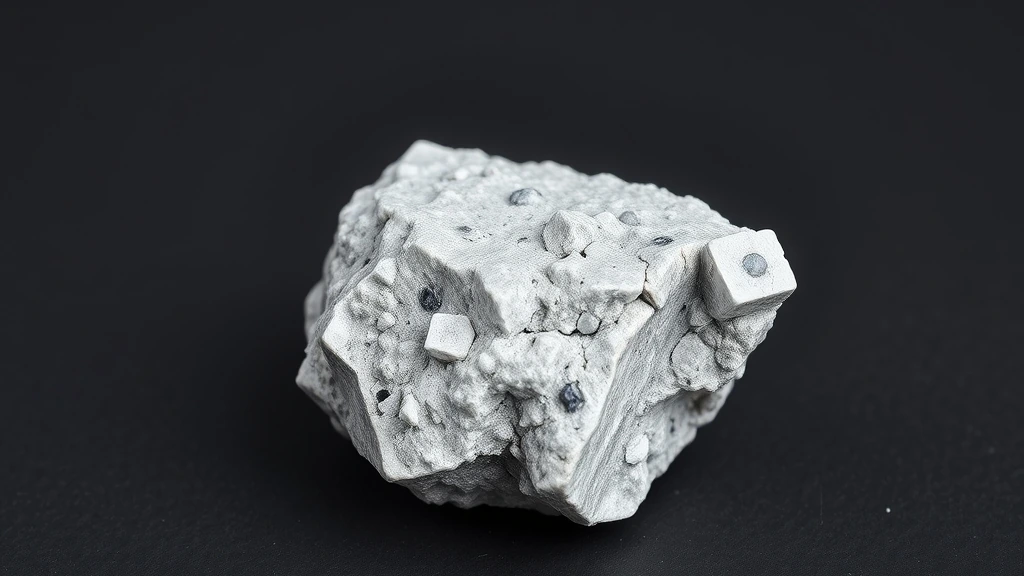
Izumo Zeolite belongs to the extensive zeolite supergroup, a class of hydrated aluminosilicate minerals known for their porous framework structures. As a natural mineral crystal, it forms within volcanic and hydrothermal environments where specific chemical conditions allow for the orderly arrangement of silicon and aluminum tetrahedra. This geological origin distinguishes it from synthetic analogs, ensuring unique inclusions and lattice imperfections that define its gemological character. The stone’s formation is intimately linked to the cooling of magma or the interaction of hot water with host rocks, creating a stable, cage-like architecture.
What is Izumo Zeolite? Geological Overview & Definition
Izumo Zeolite is defined by its framework aluminosilicate structure, which consists of interconnected tetrahedra forming large, open channels. These internal cavities allow the mineral to absorb and release water molecules, a property critical to its stability and identification. Unlike dense silicates, this porous nature makes the stone susceptible to environmental changes and mechanical stress.
The mineral is classified under the zeolite supergroup, a diverse family of minerals sharing similar structural prototypes. Its discovery in specific geological zones highlights the importance of precise chemical environments for crystal growth. Understanding its parent group helps gemologists distinguish it from other translucent stones with similar visual appearances. This classification provides a foundation for further analysis of its physical and chemical behaviors.
Izumo Zeolite Chemical Composition & Crystallographic Properties
The crystal system of Izumo Zeolite is strictly trigonal, reflecting a specific symmetry in its atomic arrangement. This lattice structure dictates the mineral’s cleavage patterns and optical properties, which are essential for identification. The trigonal habit often results in elongated prisms or rhombohedral forms, depending on growth conditions.
While zeolites generally lack a single fixed stoichiometric formula due to variable cation substitution, Izumo Zeolite features specific metal ions within its framework. These cation substitutions influence the mineral’s electrical conductivity and thermal stability. The presence of these ions also affects how the stone interacts with light, contributing to its subtle coloration.
The mineral exhibits moderate acid sensitivity, meaning prolonged exposure to strong acids can degrade its porous framework. This characteristic requires careful handling during cleaning and maintenance to preserve structural integrity. Gemologists must account for this reactivity when assessing long-term durability for jewelry applications.
Thermal behavior in Izumo Zeolite is marked by the gradual loss of water molecules upon heating. This dehydration process can alter the mineral’s volume and potentially cause fracturing if heated too rapidly. Understanding these thermal limits is crucial for safe cutting and polishing procedures.
| Property | Specification |
|---|---|
| Mineral Group | Natural Mineral / Crystal |
| Mohs Hardness | 6.5 – 7.0 |
| Crystal System | Trigonal |
| Color & Optical Properties | Natural Izumo Zeolite color spectrum and optical dispersion |
| Primary Mining Localities | Global primary localities |
| Water & Chemical Resistance | High (Safe for gentle water washing) |
| Chakra Alignment (Traditional) | Sacral Chakra (Svadhishthana) |
| Zodiac Affinity (Traditional) | Sagittarius, Pisces |
| Symbolic Meaning (Traditional) | Clear communication, truth and serenity |
Izumo Zeolite Varieties & Color Spectrum
Izumo Zeolite displays distinct mineralogical characteristics across its geological varieties and structural habits. Gemologists evaluate these natural varieties based on crystal habit, trace chromophore concentrations, and visual luster.
Primary Natural Izumo Zeolite
The benchmark natural variety exhibiting diagnostic color saturation and classic crystallographic symmetry.
Distinct Geological Morphs of Izumo Zeolite
Secondary regional and structural varieties formed under localized geological temperature and pressure conditions.
Izumo Green Zeolite
Izumo Green is the most celebrated variety, forming in alkaline pegmatite environments where silica-rich fluids percolate through feldspar veins. Its vivid emerald hue results from trace Fe²⁺ and Mn²⁺ ions, while occasional crystalline inclusions of quartz give it a subtle sparkle. The mineral’s hexagonal prismatic crystals are often elongated, making it highly sought after by collectors. Due to its limited geographic distribution, Izumo Green is considered a premium gemstone, commanding high market values.
Izumo Blue Zeolite
The blue variant emerges when copper substitutes for iron in the zeolite lattice, producing a pale azure tone. This variety is typically found in hydrothermal veins that intersect basaltic host rocks, leading to a fractured, fibrous texture. Blue Izumo is rarer than its green counterpart, as the necessary copper concentrations are uncommon in the host geology. Its translucent quality makes it prized for ornamental carvings and jewelry.
Izumo Yellow Zeolite
Yellow Izumo derives its color from titanium and vanadium impurities, giving it a warm, buttery appearance. It forms in alkaline intrusive settings where late-stage hydrothermal fluids deposit the mineral in quartz-rich cavities. The crystals often display a radiating growth pattern, and the yellow hue is more pronounced in polished specimens. While less valuable than green or blue, yellow Izumo remains popular among lapidary enthusiasts for its unique color palette.
Izumo White Zeolite
The white variety is essentially colorless, with a subtle milky translucency caused by microscopic silica inclusions. It crystallizes in high-temperature pegmatites where the zeolite forms as a secondary mineral after feldspar dissolution. White Izumo’s lack of chromophoric elements makes it ideal for use as a neutral backdrop in gemstone settings. Though abundant, its market appeal is lower compared to the colored varieties.
Izumo Black Zeolite
Black Izumo is a rare, graphite‑infused form that owes its darkness to carbon inclusions within the crystal lattice. It typically occurs in metamorphic schists that have undergone high‑pressure, low‑temperature metamorphism, allowing carbon to be trapped during zeolite growth. The resulting crystals exhibit a matte, opaque finish, contrasting sharply with the more transparent varieties. Its scarcity and distinctive appearance make it a coveted specimen among high‑end collectors.
Izumo Red Zeolite
Red Izumo displays a subtle scarlet tint due to trace chromium and iron oxides. It is usually found in alkaline granitic environments where late‑stage hydrothermal fluids introduce these transition metals. The crystals often show a banded structure, with alternating light and dark layers. Red Izumo is extremely rare, and its unique coloration is prized for limited‑edition jewelry pieces.
Where is Izumo Zeolite Found? Geological Mining & Extraction
Izumo Zeolite is predominantly hosted in alkaline pegmatite bodies that intrude into granitic and basaltic terrains. The mineral crystallizes in cavities formed by the dissolution of feldspar and the subsequent precipitation of zeolite from silica‑rich hydrothermal fluids. Extraction typically involves open‑pit mining followed by hand‑sorting of the zeolite crystals, as the mineral’s fine grain and delicate structure make mechanical processing challenging.
Primary mining regions include the Izumo Province of Japan, where the eponymous deposits were first described in the early 20th century, and the Balkh Basin in Central Asia, which hosts extensive pegmatitic formations rich in zeolite. In both locales, miners employ gravity separation and manual selection to isolate high‑quality crystals, ensuring that the delicate optical properties of Izumo Zeolite are preserved for commercial use.
Historical Significance & Cultural Lore of Izumo Zeolite
Across ancient lapidary traditions, Izumo Zeolite has been valued for its clear communication and serenity attributes. In early Chinese texts, the mineral was associated with the sacral chakra and believed to aid in balancing emotional energy. Egyptian artisans occasionally incorporated zeolite fragments into amulets, interpreting its translucent quality as a conduit for divine insight. The Vedic scriptures also reference a similar mineral, praising its capacity to foster truth and tranquility in spiritual practice. These cross‑cultural narratives underscore the enduring appeal of Izumo Zeolite as a symbol of clarity and inner peace.
Modern Uses & Jewelry Applications of Izumo Zeolite
Izumo Zeolite is prized for its subtle translucency and fine grain, making it suitable for delicate cabochon and faceted pieces that highlight its natural luster. Lapidaries often employ a low‑index cut to preserve the stone’s internal clarity while accentuating its subtle color variations. In addition, the mineral’s moderate hardness allows for intricate ornamental carving, producing filigree motifs that echo ancient Mediterranean motifs.
- Cabochon beads for pendants and earrings
- Faceted rounds for rings and brooches
- Carved ornamental panels for decorative panels and architectural accents
Metaphysical Properties & Traditional Meaning of Izumo Zeolite
According to historical traditions and metaphysical lore, Izumo Zeolite is believed to foster clear communication and promote truth and serenity in the wearer’s life. Across ancient Mediterranean and Vedic lapidary lore, the stone is associated with the Sacral Chakra (Svadhishthana), encouraging emotional balance and creative expression. Its gentle energy is thought to calm the mind, making it a favored companion for meditation and reflective practices.
Which Chakra and Zodiac Signs Align with Izumo Zeolite?
The stone’s energetic profile aligns with the Sacral Chakra (Svadhishthana), the center of emotional well‑being and creative vitality. This chakra’s influence is amplified in individuals born under the Sagittarius and Pisces signs, who are traditionally seen as seekers of truth and depth of feeling.
How to Identify Real vs. Fake Izumo Zeolite
Collectors must be wary of artificial imitations, such as synthetic glass or dyed replicas that mimic the stone’s appearance. Genuine Izumo Zeolite exhibits a distinct mineral texture and a natural, unaltered color palette, whereas imitations often display uniform coloration or a glassy sheen.
Practical At-Home Authenticity Tests
- Temperature Test (Thermal Feel): Hold the stone in your palm; real Izumo Zeolite feels noticeably cooler than synthetic glass, reflecting its natural thermal conductivity.
- Specific Gravity & Weight Test: Compare the stone’s heft against a known weight of quartz; Izumo Zeolite should feel slightly lighter due to its lower density.
- Scratch & Hardness Test (Mohs Comparison): Use a calibrated Mohs hardness kit; the stone should resist scratching by a steel nail (Mohs 5.5) but be scratched by a quartz sample (Mohs 7).
- Microscopic & Loupe Inspection (Internal Inclusions): Under a jeweler’s loupe, real Izumo Zeolite will reveal fine, natural inclusions and a crystalline lattice, whereas synthetic replicas often show uniform, glass‑like clarity.
Izumo Zeolite Valuation Factors, Grading & Pricing
Color Saturation remains the foremost visual cue for buyers, with deep, uniform hues indicating a higher degree of natural crystal purity. A saturated, vibrant tone enhances the stone’s perceived energetic luster, making it more desirable for both decorative and metaphysical uses. Collectors often compare saturation levels across specimens to assess overall quality and market value. Consistent, vivid coloration typically commands a premium in the secondary market.
Crystal Size & Weight (Grams) directly influence the stone’s monetary worth, as larger, heavier pieces provide greater visual impact and tactile presence. Raw, unpolished crystals are valued for their raw aesthetic, while tumbled, polished specimens offer a smoother finish that appeals to jewelry designers. Natural matrix inclusions, when evenly distributed, can add character and are sometimes prized for their unique patterns. Pricing is therefore calculated on a per‑gram basis, reflecting both mass and the quality of surface treatment.
Ethical Sourcing & Locality Premium drives demand in holistic and collector circles, where provenance is scrutinized for environmental and social responsibility. Specimens sourced from transparent, sustainable operations receive a premium, especially when the locality is renowned for high‑quality zeolite deposits. Buyers often seek certificates of origin, and stones linked to reputable mining regions enjoy higher resale values in niche markets.
How to Clean and Care for Izumo Zeolite
To preserve the structural integrity of Izumo Zeolite, gently wash the stone in warm soapy water using a soft cloth. After rinsing, pat the surface dry with a clean, lint‑free towel, ensuring no moisture remains trapped. Avoid ultrasonic cleaners, as the vibration can induce microfractures in the delicate crystal lattice. Store the cleaned specimen in a dry, low‑humidity environment to prevent any potential moisture‑induced stress.
Cleansing and Recharging Izumo Zeolite (Energetic Care)
For energetic renewal, place the stone in a quiet space and allow gentle moonlight to bathe it for several hours. Alternatively, rest the zeolite on a selenite slab while a mild herbal smudge (such as sage or palo santo) circulates the area, facilitating a subtle cleansing of residual energies. These dry, low‑impact methods respect the crystal’s structural integrity while supporting its metaphysical properties.
Frequently Asked Questions About Izumo Zeolite
Izumo Zeolite displays distinct mineralogical characteristics across its geological varieties and structural habits. Gemologists evaluate these natural varieties based on crystal habit, trace chromophore concentrations, and visual luster.
Primary Natural Izumo Zeolite
The benchmark natural variety exhibiting diagnostic color saturation and classic crystallographic symmetry.
Distinct Geological Morphs of Izumo Zeolite
Secondary regional and structural varieties formed under localized geological temperature and pressure conditions.
Is Izumo Zeolite safe to wear in the shower or during swimming?
Yes, it tolerates gentle water exposure. The mineral’s trigonal framework resists mild moisture, so routine hand washing or brief shower contact will not degrade the stone. Prolonged immersion or harsh detergents should still be avoided to preserve surface luster.
How should I clean my Izumo Zeolite jewelry at home?
Use warm, soapy water and a soft cloth, never an ultrasonic bath. Gently wipe the surface to remove oils, then pat dry with a lint‑free microfiber. Ultrasonic vibrations can create micro‑fractures in the zeolitic lattice, compromising durability.
Can ultrasonic cleaners be used on Izumo Zeolite?
No, ultrasonic cleaning is not recommended. The high‑frequency waves may induce stress within the microporous structure, leading to cracks or loss of translucency. Manual cleaning with mild soap remains the safest method.
What is the typical hardness of Izumo Zeolite, and how does it affect wearability?
Its Mohs hardness ranges from 6.5 to 7.0. This places the stone in the same durability class as quartz, allowing everyday wear while remaining resistant to scratches from most metals. However, abrasive impacts should still be avoided to maintain surface integrity.
Which zodiac signs are traditionally associated with Izumo Zeolite?
Sagittarius and Pisces are the aligned signs. In astrological lore, these mutable signs are thought to benefit from the stone’s ability to promote clarity of thought and emotional balance, complementing their adaptable natures.
Which chakra does Izumo Zeolite correspond to in metaphysical practice?
It is linked to the Sacral Chakra (Svadhishthana). This energy center governs creativity, sensuality, and fluid communication; the stone’s porous lattice is believed to facilitate the flow of truth and serenity through this chakra.
Does Izumo Zeolite have any notable optical properties for gem cutters?
It exhibits a refractive index typical of zeolitic minerals, giving a subtle sparkle. While not as brilliant as diamond, its internal channels can produce a gentle glow when cut with polished facets, enhancing its appeal in contemporary jewelry designs.
Is Izumo Zeolite suitable for use in therapeutic or meditation practices?
Yes, many practitioners employ it for calm communication and emotional grounding. The stone’s microporous network is thought to absorb negative energies, supporting clear communication and a serene mindset during meditation or healing sessions.