
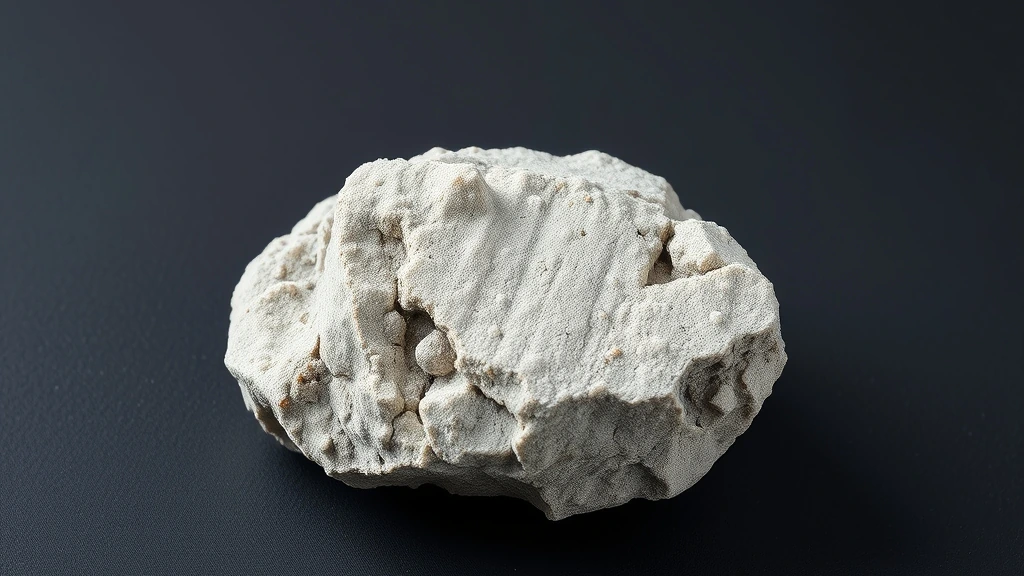
Zeolite belongs to the broader class of natural minerals and is often found as a fine‑grained, fibrous aggregate in volcanic tuffs and sedimentary rocks. The mineral group is characterized by a porous framework that can host water molecules and exchangeable cations, giving it unique physical and chemical properties. Its geological occurrence spans volcanic ash deposits, sedimentary basins, and hydrothermal veins worldwide, reflecting its versatile formation environments. In comparative mineralogical collections, practitioners and geologists frequently study Clinoptilolite Zeolite alongside this crystal to appreciate their subtle energetic and structural differences.
What is Zeolite? Geological Overview & Definition
Zeolite is a family of hydrated aluminosilicate minerals that crystallize in the triclinic, monoclinic, or tetragonal systems, depending on the specific species. The framework is built from corner‑sharing SiO₄ and AlO₄ tetrahedra, creating a network of channels and cavities. These voids can accommodate water molecules and exchangeable cations such as Na⁺, Ca²⁺, and K⁺, which are responsible for many of the mineral’s distinctive properties. Zeolites are commonly formed through the alteration of volcanic glass or the diagenesis of sedimentary rocks under low‑temperature, high‑pressure conditions.
Zeolite Chemical Composition & Crystallographic Properties
The general chemical formula for zeolites can be expressed as (Na, Ca, K)₂-₃Al₂Si₃O₁₀·nH₂O, where the exact cation composition varies with the species. The crystal lattice is highly flexible, allowing for cation substitution that modifies the charge balance and pore size. This flexibility also renders zeolites acid‑sensitive; exposure to strong acids can collapse the framework and release the trapped water. The presence of transition metals such as Mn²⁺ or Fe²⁺ introduces chromophore color centers, giving rise to the mineral’s diverse hues. Thermal treatment above 200 °C typically drives off water, causing a loss of crystallinity and a shift toward a denser, less porous structure. The combination of a porous framework, variable cation content, and thermal sensitivity makes zeolite a valuable material in catalysis, adsorption, and geological studies.
| Property | Specification |
|---|---|
| Mineral Group | Natural Mineral / Crystal |
| Chemical Formula | Mn |
| Mohs Hardness | 3.5 – 5.5 |
| Crystal System | Triclinic, Monoclinic, or Tetragonal (varies by species) |
| Specific Gravity (Density) | 1.9 – 2.4 |
| Refractive Index | 1.47 – 1.54 |
| Color & Optical Properties | Natural Zeolite color spectrum and optical dispersion |
| Primary Mining Localities | Global primary localities |
| Water & Chemical Resistance | Sensitive (Avoid prolonged water soaking) |
| Chakra Alignment (Traditional) | Crown Chakra, Heart Chakra |
| Zodiac Affinity (Traditional) | Virgo, Aquarius |
| Symbolic Meaning (Traditional) | Mental clarity, emotional detoxification, and spiritual purification |
Zeolite Varieties & Color Spectrum
Zeolite displays distinct mineralogical characteristics across its geological varieties and structural habits. Gemologists evaluate these natural varieties based on crystal habit, trace chromophore concentrations, and visual luster.
Primary Natural Zeolite
The benchmark natural variety exhibiting diagnostic color saturation and classic crystallographic symmetry.
Distinct Geological Morphs of Zeolite
Secondary regional and structural varieties formed under localized geological temperature and pressure conditions.
Analcime
Analcime forms in low‑temperature volcanic tuffs and alkaline lacustrine sediments, where silica‑rich fluids precipitate its triclinic framework. Crystals are typically white to pale gray, occasionally showing a faint greenish tint from iron inclusions. Its fine‑grained habit and modest hardness (3.5‑4) make it a common collector’s specimen, though high‑purity transparent material is relatively scarce.
Chabazite
Chabazite crystallizes in the monoclinic system within basaltic cavities and zeolitic veins, often displaying a bright orange to reddish hue due to manganese and iron oxides. The mineral’s distinctive cage‑like structure can trap fluid inclusions that produce a subtle sparkle under light. Large, well‑formed crystals are prized in the market, especially those from the volcanic fields of Italy and the United States.
Stilbite
Stilbite develops in the monoclinic to tetragonal transition zones of hydrothermal veins, where alkaline groundwater interacts with volcanic ash. Its blue‑green to yellow coloration arises from trace copper and iron, while a characteristic “fibrous” habit gives it a silky luster. High‑clarity specimens from the Carpathians and the Pacific Northwest command premium prices due to their rarity.
Heulandite
Heulandite is a tetragonal zeolite that fills the cavities of rhyolitic tuffs and basaltic lava flows, often exhibiting pale pink, white, or colorless crystals. The mineral’s well‑defined orthorhombic prisms can contain microscopic quartz or calcite inclusions that enhance its visual depth. Large, inclusion‑free crystals from the Czech Republic and Japan are especially sought after by collectors.
Phillipsite
Phillipsite occurs in sedimentary evaporite deposits and alkaline lake beds, where it adopts a monoclinic symmetry. Its yellow to brown tones are intensified by organic matter trapped during formation, giving each stone a unique mottled appearance. Rare, transparent crystals from the Great Rift Valley are prized for both scientific study and ornamental use.
Clinoptilolite
Clinoptilolite is the most abundant zeolite, forming in volcanic ash layers and marine tuffaceous sediments worldwide. It typically appears white to light gray, but iron staining can produce greenish‑blue shades. While common, exceptionally large, well‑cleaved crystals from the United States and Iceland are considered premium material for industrial and metaphysical markets.
Where is Zeolite Found? Geological Mining & Extraction
Zeolite deposits are hosted primarily in volcanic tuffs, basaltic lava flows, and alkaline lake sediments, where circulating hydrothermal fluids precipitate the framework silicates. The minerals fill vesicles, fractures, and diagenetic cavities, often intergrown with quartz, calcite, or feldspar, creating composite ore bodies that require careful separation.
Major extraction zones include the Icelandic basalt fields, the Carpathian Basin of Romania, the western United States (Oregon, Nevada), and the volcanic provinces of Japan. Mining methods range from open‑pit quarrying of tuffaceous horizons to selective underground extraction of vein‑filled cavities, followed by crushing, sieving, and flotation to isolate the zeolitic fractions.
Historical Significance & Cultural Lore of Zeolite
Across ancient lapidary traditions, zeolite was valued for its absorptive properties and was ground into powders for Egyptian embalming rituals, where it helped desiccate organic tissue. Greco‑Roman writers such as Pliny the Elder described “zeolites” as stones that “drink water,” attributing them to medicinal detoxification and wound cleansing.
In Vedic and early Chinese texts, zeolite’s porous lattice was linked to spiritual purification, with scholars noting its ability to filter impurities as a metaphor for mental clarity. Artifacts from the Indus Valley and Han dynasty tombs contain zeolite beads, suggesting its use in amulets intended to promote emotional detoxification and protect the wearer’s Crown and Heart Chakras.
Modern Uses & Jewelry Applications of Zeolite
Zeolite’s porous framework lends itself to delicate lapidary work, allowing artisans to shape it into smooth cabochons or modestly faceted stones that showcase its subtle luster. Because the mineral’s hardness ranges from 3.5 to 5.5, careful polishing is essential to avoid chipping during setting. Designers often incorporate zeolite into ornamental carvings, pendants, and beaded necklaces that highlight its natural translucency.
- Cabochon pendants with polished convex surfaces
- Low‑cut faceted earrings for a soft sparkle
- Carved cameos and intaglios for vintage‑style brooches
- Beaded strands where zeolite beads alternate with quartz or agate
Metaphysical Properties & Traditional Meaning of Zeolite
According to historical traditions and metaphysical lore, zeolite is celebrated for its mental clarity and its ability to facilitate emotional detoxification. Across ancient Mediterranean lapidary records, the stone was placed in temples to purify the air, symbolizing spiritual purification that extends to the wearer’s aura. Vedic texts describe zeolite as a grounding element that steadies the mind, while early European alchemists linked its porous nature to the removal of negative energies.
Which Chakra and Zodiac Signs Align with Zeolite?
In contemporary crystal practice, zeolite resonates most strongly with the Crown Chakra, supporting higher‑mind awareness and intuitive insight. It also vibrates with the Heart Chakra, encouraging compassionate openness and emotional balance. These dual alignments make the stone a bridge between intellect and feeling, suitable for meditation and heart‑centered healing.
Astrologically, zeolite is associated with Virgo and Aquarius. Virgo’s analytical precision mirrors zeolite’s capacity for mental clarity, while Aquarius’ visionary spirit reflects the stone’s role in spiritual purification. Practitioners often place zeolite on the body during Virgo‑season rituals or Aquarius‑aligned meditations to amplify these qualities.
How to Identify Real vs. Fake Zeolite
Artificial imitations of zeolite include dyed natural stones, synthetic glass, and resin composites that mimic its porous texture. These substitutes often lack the mineral’s characteristic low density and distinctive fracture patterns, making visual and tactile inspection crucial. Recognizing genuine zeolite requires a combination of sensory observation and simple physical tests.
Practical At-Home Authenticity Tests
- Temperature Test (Thermal Feel): Real zeolite feels cool to the touch and retains that coolness longer than glass or plastic, which quickly equilibrate to ambient temperature.
- Specific Gravity & Weight Test: Genuine zeolite is lightweight, typically 1.9–2.4 g/cm³; a heftier stone may indicate a denser glass or resin replica.
- Scratch & Hardness Test (Mohs Comparison): Using a steel file (hardness ~5.5), a genuine zeolite will show minor scratches, whereas harder glass will resist damage.
- Microscopic & Loupe Inspection (Internal Inclusions): Under 10× magnification, natural zeolite reveals fine, irregular pores and micro‑fractures, while synthetic glass appears uniformly smooth and bubble‑free.
Zeolite Valuation Factors, Grading & Pricing
Color Saturation drives market appeal, with deep, uniform hues of green, white, or pink commanding premium prices. Collectors prize stones that display a vivid, natural energetic luster free of surface dullness, as this indicates minimal alteration and high visual impact. Subtle banding or zoning can enhance perceived richness when the overall tone remains intense.
Crystal Size & Weight (Grams) is the next decisive metric, where larger, heavier specimens fetch higher bids. Raw zeolite fetched at the quarry is valued lower than tumbled, polished pieces that reveal a smooth, glassy surface, yet natural matrix inclusions are welcomed for their authenticity. Buyers compare gram weight to overall dimensions, rewarding stones that balance heft with structural integrity.
Ethical Sourcing & Locality Premium increasingly shape collector demand, especially for zeolite from renowned volcanic deposits in Iceland or the United States. Transparent provenance and fair‑trade mining practices add a moral premium, while regional rarity—such as zeolite from the historic volcanic fields of Italy—can elevate price beyond pure aesthetic considerations. Market reports show that responsibly sourced stones often achieve a 10‑20 % price uplift.
How to Clean and Care for Zeolite
Wipe the specimen briefly with a lightly dampened cloth, then dry it immediately with a soft, dry microfiber towel to prevent moisture absorption. Avoid prolonged soaking, as zeolite’s porous framework can weaken when exposed to water for extended periods. Ultrasonic cleaners must be eschewed, since the high‑frequency vibrations can cause micro‑fractures in the delicate crystal lattice.
Cleansing and Recharging Zeolite (Energetic Care)
For energetic maintenance, gently smudge the stone with a bundle of dried sage or cedar, allowing the aromatic smoke to pass over the surface without saturating it. This dry method is favored across ancient lapidary traditions for clearing lingering energetic residues while preserving the mineral’s structural integrity.
Alternatively, place zeolite on a clean selenite slab or expose it to soft moonlight for several hours, letting lunar energy replenish its vibrational field. Resting the stone in a low‑humidity, dark drawer overnight also supports subtle re‑charging, aligning with holistic practices that avoid heat or intense sunlight which could damage the crystal framework.
Frequently Asked Questions About Zeolite
Zeolite displays distinct mineralogical characteristics across its geological varieties and structural habits. Gemologists evaluate these natural varieties based on crystal habit, trace chromophore concentrations, and visual luster.
Primary Natural Zeolite
The benchmark natural variety exhibiting diagnostic color saturation and classic crystallographic symmetry.
Distinct Geological Morphs of Zeolite
Secondary regional and structural varieties formed under localized geological temperature and pressure conditions.
Is zeolite safe to wear in the shower?
Zeolite is water-sensitive and should not be worn in the shower. Prolonged exposure to moisture can compromise the mineral’s internal structure. The porous nature of the crystal allows water to penetrate, potentially causing swelling or surface degradation over time. Always remove jewelry before bathing to preserve its integrity.
How should I clean my zeolite jewelry?
Wipe briefly with a damp cloth and dry immediately. Avoid using ultrasonic cleaners, as the vibrations can cause structural fractures within the delicate lattice. A soft, dry microfiber cloth is ideal for routine dusting. Never submerge the stone in water or use harsh chemical cleaners that might damage its surface.
What is the chemical composition of zeolite?
Zeolites are hydrated aluminum silicates with a complex framework structure. The general formula is Mn[AlnSio3n]·xH2O, where M represents cations like sodium or potassium. This open framework contains water molecules and ions, giving the mineral its unique ability to exchange cations and adsorb gases.
Which zodiac signs are aligned with zeolite?
Virgo and Aquarius are the primary zodiac signs associated with zeolite. These earth and air signs resonate with the stone’s energy of mental clarity and purification. Wearing zeolite may help enhance analytical thinking for Virgo and humanitarian ideals for Aquarius. It supports a balanced approach to logic and emotion.
Which chakras does zeolite activate?
Zeolite primarily activates the Crown Chakra and Heart Chakra. The Crown connection supports spiritual insight and higher consciousness, while the Heart link promotes emotional detoxification. This dual alignment helps clear mental fog and fosters compassionate understanding. It bridges the gap between spiritual awareness and emotional healing.
What is the Mohs hardness of zeolite?
Zeolite typically ranges from 3.5 to 5.5 on the Mohs scale. This moderate hardness makes it susceptible to scratching from harder minerals like quartz or topaz. Care must be taken during storage to prevent surface abrasions. Its relatively soft nature requires gentle handling to maintain a polished appearance.
Can I use an ultrasonic cleaner on zeolite?
No, you must avoid ultrasonic cleaners for zeolite. The intense vibrations can induce structural fractures within the crystal lattice. Instead, use a soft brush to remove loose debris. A brief wipe with a damp cloth is sufficient for surface cleaning. Always ensure the stone is dried thoroughly afterward.
What is the crystal system of zeolite?
Zeolite crystals form in triclinic, monoclinic, or tetragonal systems. The specific system depends on the individual species within the zeolite group. This variety results in diverse geometric shapes and lattice arrangements. Understanding this diversity is crucial for accurate identification and valuation.