
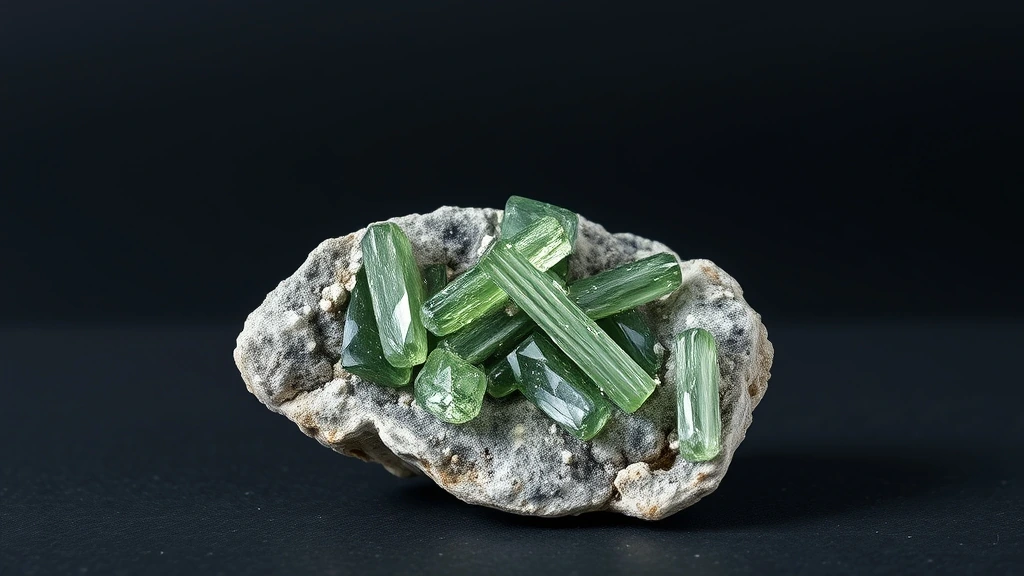
Heulandite belongs to the zeolite family, a group of hydrated aluminosilicates that form in low‑temperature hydrothermal environments. As a Natural Mineral / Crystal, it crystallizes in the monoclinic system and can exhibit several space groups, reflecting subtle variations in its framework. Its porous lattice readily absorbs water, influencing both its density and its response to heat and acids.
What is Heulandite Gemstone? Geological Overview & Definition
Heulandite is a framework silicate composed of interconnected SiO₄ tetrahedra that create open channels occupied by water molecules and exchangeable cations. These channels give the mineral its characteristic zeolitic behavior, including reversible dehydration and adsorption of gases.
In gemological contexts, heulandite is prized for its subtle coloration and distinctive crystal habit, often forming elongated, prismatic aggregates that display a gentle luster. While not as hard as quartz, its unique internal structure can produce intriguing optical effects when cut as cabochons.
Heulandite Gemstone Chemical Composition & Crystallographic Properties
The true crystal system of heulandite is monoclinic, yet it exhibits more than one space group (commonly P2₁/m or C2/m), reflecting slight distortions in its framework caused by varying cation content. This flexibility allows Na⁺, K⁺, Ca²⁺, and occasionally Ba²⁺ to substitute within the channels, subtly altering physical properties.
Its lattice is built from SiO₄ tetrahedra linked by AlO₄ units, creating a three‑dimensional network with large cavities. These cavities host water molecules that can be expelled upon heating, a process known as dehydration, which may cause a temporary change in refractive index and a faint loss of luster.
Heulandite’s acid sensitivity stems from the weak Si–O–Al bonds in the framework; dilute acids can leach exchangeable cations, leading to surface etching and color fading. However, the mineral is relatively stable under neutral pH conditions, making it suitable for display in controlled environments.
Color in heulandite arises from chromophore centers where trace transition metals (e.g., Fe³⁺, Mn²⁺) replace Al³⁺ in the lattice, producing pink, orange, or green hues. Thermal treatment can modify these centers, sometimes enhancing color intensity, but excessive heat may collapse the zeolitic channels, permanently altering the stone’s appearance.
| Property | Specification |
|---|---|
| Mineral Group | Natural Mineral / Crystal |
| Chemical Formula | CaAl₂Si₃O₁₀·3H₂O |
| Mohs Hardness | 3.0 – 4.0 |
| Crystal System | Monoclinic |
| Specific Gravity (Density) | 2.20 – 2.25 |
| Refractive Index | 1.480 – 1.500 |
| Color & Optical Properties | Natural Heulandite Gemstone color spectrum and optical dispersion |
| Primary Mining Localities | Global primary localities |
| Water & Chemical Resistance | High (Safe for gentle water washing) |
| Chakra Alignment (Traditional) | Heart Chakra |
| Zodiac Affinity (Traditional) | Virgo |
| Symbolic Meaning (Traditional) | Clarity of thought, mental balance, and grounding |
Heulandite Gemstone Varieties & Color Spectrum
Heulandite presents a diverse range of visual characteristics, primarily driven by trace element substitutions within its crystal lattice. The most common natural specimens exhibit a pale green to light blue hue, resulting from iron impurities. These colors are typically soft and pastel, lacking the intense saturation found in other silicate minerals.
Pale Green Heulandite
This variety is the most frequently encountered form in commercial mineral collections, often found in hydrothermal veins. The green tint arises from minor iron oxide inclusions dispersed throughout the monoclinic structure. Specimens usually display a glassy to pearly luster with distinct cleavage planes.
Light Blue Heulandite
Rare blue morphs occur when specific copper traces substitute for silicon in the tetrahedral sites. These crystals often form delicate prismatic habits with a translucent quality. The color intensity varies significantly based on the concentration of the copper dopant.
Colorless Heulandite
Pure, uncolored crystals represent the chemically ideal form of the mineral, devoid of significant impurities. These specimens are highly valued for their clarity and optical transparency in mineralogical studies. They often exhibit a high degree of crystal perfection with sharp edges.
White Heulandite
White varieties typically result from fine-grained aggregates or the presence of clay mineral inclusions. This form is less transparent and often appears opalescent or milky to the naked eye. It is commonly associated with zeolite-rich volcanic environments where rapid cooling occurred.
Where is Heulandite Gemstone Found? Geological Mining & Extraction
Heulandite primarily forms in cavities of basaltic rocks and igneous intrusions where silica-rich fluids cool slowly. It frequently co-occurs with other zeolites like chabazite and phillipsite in these geological settings. The mineral crystallizes in open vugs and amygdaloidal structures within volcanic flows.
Major deposits are located in Italy, Germany, and the United States, particularly in California and New Jersey. Extraction involves careful hand-picking from rock matrices to preserve delicate crystal formations. Commercial mining is limited due to the mineral’s low hardness and fragile nature.
Historical Significance & Cultural Lore of Heulandite
While not widely used in ancient jewelry due to its fragility, heulandite has been recognized in mineralogical collections since the 19th century. Early scientists valued it for its role in understanding zeolite crystallography and structural chemistry. It served as a key reference mineral in the development of X-ray diffraction techniques.
In modern esoteric traditions, it is associated with the Heart Chakra and mental clarity. Practitioners believe it promotes emotional balance and grounding during meditation. This spiritual attribution remains a niche aspect of its contemporary cultural significance.
Modern Uses & Jewelry Applications of Heulandite Gemstone
Due to its relatively low Mohs hardness of 3.5–4, Heulandite is rarely cut into high-faceted gems for daily wear. Instead, lapidaries typically polish it into smooth cabochons to showcase its delicate color and translucency without risking fracture. This mineral is also popular in ornamental carving, where its soft texture allows for intricate detailing in decorative objects.
- Cabochon Cutting: Ideal for pendants and earrings where the stone’s gentle luster is the primary aesthetic feature.
- Ornamental Carvings: Frequently used in small sculptures or inlays due to its ease of carving with standard tools.
- Collector’s Pieces: Often displayed in mineral cabinets rather than worn, preserving its structural integrity.
- Limited Faceting: Only suitable for very small, low-profile settings that minimize mechanical stress on the crystal.
Safety & Mineral Profile of Heulandite
Safe handling and physical stability
Heulandite is a member of the zeolite group and is chemically composed of hydrated aluminosilicate. The mineral is soft (Mohs 2–3) and easily scratched or crushed, so it is best stored in a padded display case rather than worn as jewelry. It does not contain significant amounts of toxic heavy metals, but fine dust can become airborne during cutting or polishing and may irritate the respiratory tract; therefore, work in a well‑ventilated area or with a dust mask is recommended. Heulandite is stable under normal laboratory conditions, but prolonged exposure to strong acids or bases can alter its crystal structure. Because of its fragility and the potential for dust inhalation, it is treated as a collector display mineral rather than a suitable material for jewelry.
Scientific, educational, and mineralogical significance
Heulandite serves as an important reference material for the study of zeolite frameworks and ion‑exchange properties. Its well‑defined cavities make it a model system for adsorption and catalytic research. In museum collections, heulandite specimens illustrate the diversity of zeolite minerals and provide a visual example of the relationship between crystal habit and geological environment. Educationally, it is frequently used in classroom demonstrations of crystal growth, hydration, and the effects of pressure and temperature on mineral stability.
Mineralogical Group and Planetary Lore of Heulandite
Heulandite was first described in the early 19th century by the English mineralogist John Henry Heuland and named in his honor. The mineral was initially found in the Boulder Clay of the United Kingdom, where it occurs as small, translucent crystals in sedimentary limestone. Historically, early mineralogists classified it within the broader zeolite family, noting its characteristic columnar and fibrous habits.
According to early lapidary texts, heulandite was sometimes associated with the planet Venus due to its translucent, glass‑like appearance, though no definitive planetary symbolism has persisted in modern mineralogy. In contemporary classification, heulandite is grouped with other zeolites such as clinoptilolite and mordenite, and it is valued for its role in illustrating the structural diversity of aluminosilicate frameworks.
How to Identify Real vs. Fake Heulandite Gemstone
Artificial imitations of Heulandite often include synthetic glass, dyed quartz, or other low-hardness minerals treated to mimic its appearance. These fakes may lack the natural inclusions and subtle color variations found in genuine specimens. Synthetic glass is particularly common because it is inexpensive and can be molded into various shapes.
Practical At-Home Authenticity Tests
- Temperature Test (Thermal Feel): Genuine Heulandite feels cool to the touch initially but warms up quickly in your hand, whereas glass imitations may retain their temperature longer or feel uniformly cold.
- Specific Gravity & Weight Test: Compare the stone’s weight to a similarly sized piece of known mineral; Heulandite has a distinct density that may feel lighter or heavier than glass or quartz imitations.
- Scratch & Hardness Test (Mohs Comparison): Using a steel knife (Mohs 5.5), attempt to scratch the stone; genuine Heulandite (Mohs 3.5–4) will be scratched, while harder fakes like quartz will not.
- Microscopic & Loupe Inspection (Internal Inclusions): Examine the stone under a 10x loupe for natural inclusions or crystal structures; synthetic glass often contains tiny bubbles or swirls that are absent in natural minerals.
Heulandite Gemstone Valuation Factors, Grading & Pricing
Color Saturation serves as the primary determinant for high-grade specimens, where deep, uniform hues command significant premiums. Tone uniformity across the crystal face ensures visual consistency, enhancing the stone’s overall aesthetic appeal. Furthermore, optical clarity and a distinct vitreous luster are critical for distinguishing gem-quality material from common mineral specimens.
Carat Weight influences value, though larger, well-formed crystals are rarer and thus more desirable in the collector market. Facet symmetry is essential for polished stones, as precise cuts maximize light reflection and structural integrity. Additionally, the presence of matrix or inclusions can either detract from value or add unique character, depending on the specific market segment.
Geographical Provenance Premium significantly impacts pricing, with stones from renowned localities often fetching higher wholesale and retail rates. Current market trends show steady demand for ethically sourced materials with documented origin certificates. Investors should monitor auction results to gauge shifting valuations for rare monoclinic specimens in the global gem trade.
How to Clean and Care for Heulandite Gemstone
Due to its low Mohs Hardness of 3.5–4, heulandite requires gentle handling to prevent surface abrasion and structural damage. Always use warm soapy water and a soft cloth to remove dust and oils from the crystal surface. This mild method effectively cleans the stone without compromising its delicate lattice structure or natural luster.
It is strictly advised to avoid ultrasonic cleaners, as high-frequency vibrations can cause internal fractures or shatter the mineral. Similarly, steam cleaning should be avoided to prevent potential thermal shock or chemical alteration. Store your heulandite separately from harder gems to protect it from accidental scratching during daily wear or display.
Cleansing and Recharging Heulandite Gemstone (Energetic Care)
For energetic maintenance, use smoke smudging with sage or palo santo to clear stagnant energy without physical contact. This dry method respects the mineral’s solubility and structural fragility, ensuring no moisture penetrates the crystal lattice. Gently waft the smoke around the stone to promote mental balance and clarity of thought.
Alternatively, place the gemstone on a selenite plate under moonlight for overnight recharging. This passive technique aligns with the stone’s association with the Heart Chakra and Virgo zodiac energy. Ensure the environment is dry to prevent any accidental moisture exposure that could weaken the mineral structure.
Frequently Asked Questions About Heulandite Gemstone
Is heulandite safe to wear in the shower or during swimming?
Yes, heulandite tolerates gentle water exposure. Its crystal structure is relatively water‑resistant, so routine activities like showering or swimming are fine as long as you rinse it with warm, soapy water afterward and dry it gently. Avoid prolonged submersion in hot or chlorinated water to preserve surface luster.
Can I clean heulandite with an ultrasonic cleaner?
No, ultrasonic cleaning is not recommended for heulandite. The rapid vibrations can cause micro‑fractures in the delicate monoclinic framework. Instead, use warm soapy water and a soft cloth, gently polishing the surface to remove dirt without stressing the crystal lattice.
What is the Mohs hardness of heulandite, and how does it affect everyday wear?
Heulandite rates 3.5–4 on the Mohs scale. This relatively soft rating means it can scratch against harder gemstones or metals, so store it separately and avoid contact with steel tools. Nevertheless, with careful handling, it remains suitable for pendants and earrings that are not subjected to heavy impact.
Which zodiac sign is most closely associated with heulandite?
Heulandite is aligned with the zodiac sign Virgo. Virgo’s analytical nature resonates with the stone’s reputed ability to promote clarity of thought and mental organization, making it a popular talisman for those born under this earth sign.
Which chakra does heulandite activate, and what benefits does it offer?
Heulandite works with the Heart Chakra. By stimulating this energy center, the stone is believed to foster emotional balance, compassion, and a sense of grounding, helping wearers feel more centered in relationships and personal growth.
How should I store heulandite to prevent damage?
Store heulandite separately in a soft pouch or lined drawer. Because of its modest hardness and potential for cleavage, keeping it away from harder gemstones and metal jewelry reduces the risk of scratches or accidental fractures during storage.
Does heulandite exhibit any notable optical properties?
Heulandite displays a modest refractive index typical of zeolite minerals. While it lacks the high brilliance of quartz, its subtle translucency and occasional internal striations give it a gentle glow that enhances its meditative appeal in jewelry.
Is heulandite suitable for use in jewelry settings that involve heat, such as soldering?
Heulandite should not be exposed to high temperatures during jewelry fabrication. The mineral can lose structural integrity when heated, leading to cracks or discoloration. Opt for low‑temperature setting techniques or have a professional jeweler work with the stone using heat‑free methods.