
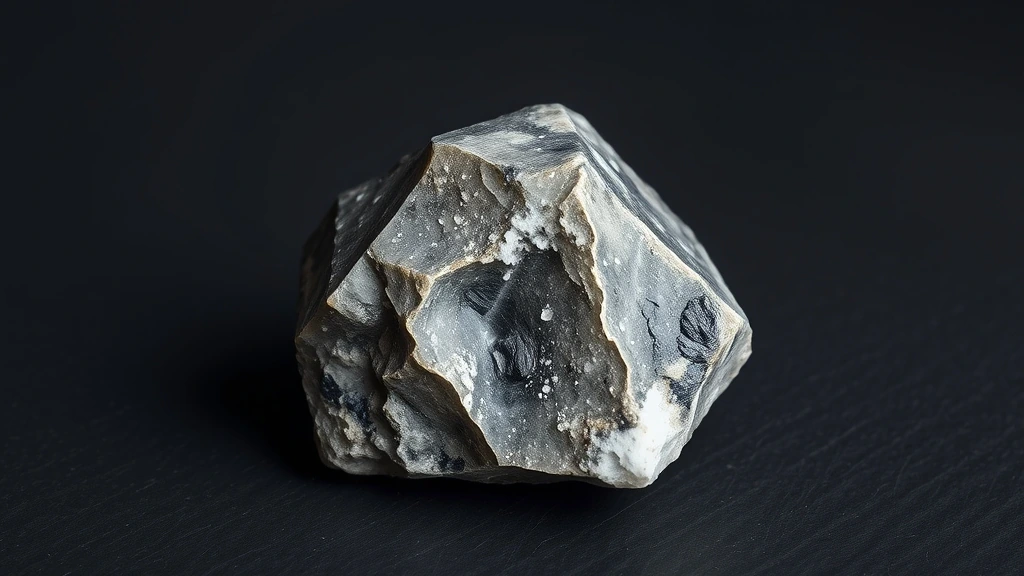
Natrolite belongs to the zeolite group, a family of hydrated aluminosilicates that crystallize in the orthorhombic crystal system. As a natural mineral / crystal, it forms well‑defined prismatic crystals in volcanic tuffs and sedimentary basins, often occurring alongside other zeolites such as stilbite and heulandite. Its low density (≈ 2.25 g cm⁻³) and modest refractive index (1.480–1.490) give it a subtle sparkle that appeals to collectors and metaphysical practitioners alike.
What is Natrolite Gemstone? Geological Overview & Definition
Natrolite is a hydrated sodium‑aluminum silicate that precipitates from low‑temperature hydrothermal fluids within volcanic ash layers. The mineral typically appears as transparent to translucent crystals, ranging from colorless to pale green, and is prized for its delicate luster and rarity in gem‑cut form.
In the zeolite family, natrolite’s framework consists of interconnected SiO₄ and AlO₄ tetrahedra that create channels capable of hosting water molecules and exchangeable cations. This open‑framework structure imparts the mineral’s characteristic acid sensitivity, causing it to dissolve in strong acids—a key diagnostic property for gemologists.
Natrolite Gemstone Chemical Composition & Crystallographic Properties
Natrolite’s orthorhombic crystal system yields elongated, prismatic crystals that often terminate in sharp points. Its unit cell parameters reflect three mutually perpendicular axes of unequal length, a hallmark of orthorhombic symmetry that distinguishes it from triclinic or hexagonal zeolites.
The chemical formula Na₂Al₂Si₃O₁₀·2H₂O reveals two sodium cations balancing the charge of the aluminosilicate framework, while two water molecules occupy the channel voids. Minor cation substitution (e.g., K⁺ or Ca²⁺) can occur, subtly altering density and refractive index without disrupting the overall structure.
Color in natrolite arises from trace chromophore ions such as Fe³⁺ or Mn²⁺ occupying framework sites, producing its characteristic pale green to yellow shades. These color centers are weak, so the stone often appears nearly colorless, enhancing its translucency in faceted gems.
Thermally, natrolite loses its structural water near 150 °C, leading to a reversible collapse of the zeolitic channels. This dehydration can cause a slight change in optical properties and a modest increase in hardness, a factor gem cutters must consider when annealing or setting the stone.
| Property | Specification |
|---|---|
| Mineral Group | Natural Mineral / Crystal |
| Chemical Formula | Na₂Al₂Si₃O₁₀·2H₂O |
| Mohs Hardness | 5–6 |
| Crystal System | orthorhombic crystal system |
| Specific Gravity (Density) | 2.25 |
| Refractive Index | 1.480 – 1.490 |
| Color & Optical Properties | Natural Natrolite Gemstone color spectrum and optical dispersion |
| Primary Mining Localities | Global primary localities |
| Water & Chemical Resistance | High (Safe for gentle water washing) |
| Chakra Alignment (Traditional) | Heart Chakra |
| Zodiac Affinity (Traditional) | Taurus, Libra |
| Symbolic Meaning (Traditional) | Emotional healing, inner peace, and serenity |
Natrolite Gemstone Varieties & Color Spectrum
Natrolite presents a diverse range of visual characteristics, primarily driven by trace element substitutions within its crystal lattice. The most common form is the colorless to white variety, which exhibits high transparency and a distinct vitreous luster. This pure form is highly valued for its clarity and ability to transmit light effectively.
Colorless White Natrolite
This variety forms in silica-rich pegmatite environments where sodium and aluminum concentrations are stable. It typically lacks significant chromophores, resulting in a pristine, glassy appearance. Inclusions are rare, making high-grade specimens suitable for faceting.
Pale Blue Natrolite
A rare hue caused by trace amounts of cobalt or iron impurities during crystallization. This subtle blue tint is often found in deposits associated with volcanic activity. The color is generally uniform, enhancing its appeal in cabochon cuts.
Milky White Natrolite
Characterized by a translucent to opaque body due to microscopic fluid inclusions or micro-cracks. This variety often displays a soft, waxy sheen rather than a sharp glassy luster. It is the most abundant form, commonly used in bead production.
Greenish-White Natrolite
This morph results from minor chromium or nickel contamination in the host rock. The greenish tinge is usually faint, visible only under direct sunlight. Such specimens are less common than white varieties but offer unique aesthetic appeal.
Where is Natrolite Gemstone Found? Geological Mining & Extraction
Natrolite primarily occurs in alkaline igneous rocks and associated pegmatite dikes formed during late-stage magmatic cooling. It frequently coexists with minerals like nepheline and sodalite in these specific geological settings. These environments provide the necessary chemical balance for stable crystal growth.
Major commercial deposits are located in Canada, Russia, and the United States. In Canada, the Lac du Bonnet region yields high-quality specimens with excellent clarity. Russian deposits in the Khibiny Massif are renowned for producing large, well-formed crystals.
Historical Significance & Cultural Lore of Natrolite Gemstone
Historically, natrolite was first described in 1812 by the German mineralogist Hermann von Buch. Early collectors valued it for its orthorhombic crystal habit and optical properties rather than gemological use. It gained prominence in the 19th century as a specimen mineral for scientific study.
In modern metaphysical practices, natrolite is linked to emotional healing and inner peace. It is associated with the Heart Chakra, promoting serenity and balance. This cultural lore has increased its popularity among crystal therapists and spiritual practitioners today.
Modern Uses & Jewelry Applications of Natrolite Gemstone
Natrolite’s orthorhombic habit and modest Mohs hardness of 5–6 make it suitable for delicate lapidary work, though it is less common than tougher stones. Artisans typically cut it into smooth cabochons to showcase its silky luster, while limited faceting is attempted for high‑clarity specimens. In addition to jewelry, natrolite is prized for ornamental carving, often appearing as small figurines or decorative inlays.
- Cabochon pendants and earrings emphasizing the stone’s translucence
- Limited faceted beads for specialty beadwork
- Carved miniatures for mineral collections and display cases
Safety & Mineral Profile of Natrolite Gemstone
When handling natrolite, wear gloves and eye protection because the mineral can release fine silica dust if cut or polished aggressively. Its chemical formula Na₂Al₂Si₃O₁₀·2H₂O indicates a hydrated silicate that may dehydrate under prolonged heat, so avoid exposure to high temperatures. Identification relies on its orthorhombic crystal system, low density (2.25 g/cm³), and refractive index (1.480‑1.490); these parameters differentiate it from look‑alikes such as zeolites or glass.
Although historic lore occasionally links natrolite to emotional healing and the Heart Chakra, reputable gemological sources stress that it is primarily a collector mineral valued for scientific study and specimen display, not for crystal‑healing practices.
Mineralogical Group and Planetary Lore of Natrolite Gemstone
Natrolite belongs to the zeolite group, a family of hydrated aluminosilicates known for their porous frameworks and ion‑exchange properties. Within this group, it is classified alongside minerals such as thomsonite and stilbite, sharing similar crystal habits but distinguished by its unique sodium‑rich composition.
In traditional planetary symbolism, natrolite is associated with Venus, reflecting its alignment with the Heart Chakra and the zodiac signs Taurus and Libra. This connection is rooted in ancient astrological texts that linked the stone’s soothing coloration to the planet’s themes of love and harmony, though such associations remain cultural rather than scientific.
How to Identify Real vs. Fake Natrolite Gemstone
Artificial imitations of natrolite often consist of dyed quartz, synthetic glass, or resin composites that mimic its milky translucency. These substitutes lack the characteristic orthorhombic cleavage and the specific gravity of true natrolite, and they may feel heavier or exhibit a uniform, bubble‑free interior under magnification.
Practical At-Home Authenticity Tests
- Temperature Test (Thermal Feel): Natural natrolite feels cool to the touch and retains that coolness longer than glass or plastic, which quickly equilibrate to ambient temperature.
- Specific Gravity & Weight Test: Weigh the stone and compare its density to the expected 2.25 g/cm³; a noticeably heavier or lighter feel suggests a counterfeit material.
- Scratch & Hardness Test (Mohs Comparison): Use a steel file (hardness ~5.5) or a copper coin (hardness ~3). Natrolite should resist scratching from the coin but may show a light scratch from the file, confirming its 5–6 hardness range.
- Microscopic & Loupe Inspection (Internal Inclusions): Examine the stone under 10×–30× magnification; authentic natrolite displays fine, parallel striations and occasional tiny water droplets, whereas glass imitations appear uniformly clear with no natural inclusions.
Natrolite Gemstone Valuation Factors, Grading & Pricing
Market valuation begins with assessing Color Saturation and overall tone uniformity across the specimen. High-grade material displays a consistent, pale blue to white hue without zoning. Additionally, optical clarity and a distinct vitreous luster significantly enhance the stone’s visual appeal.
The Carat Weight of a faceted natrolite directly influences its final market price. Facet symmetry must be precise to maximize light return and structural integrity. Furthermore, the presence of matrix or internal inclusions can either detract from value or add unique geological character.
Geographical Provenance Premium often dictates the wholesale and retail value of rare specimens. Stones from historically significant deposits command higher prices due to collector demand. Current market trends show steady appreciation for high-clarity, large-crystal natrolite varieties.
How to Clean and Care for Natrolite Gemstone
To maintain the stone’s integrity, use warm soapy water and a soft cloth for gentle cleaning. This method effectively removes surface oils and dust without causing damage. Always ensure the water is lukewarm to avoid thermal shock to the crystal structure.
It is critical to avoid ultrasonic cleaners as they can induce structural fractures. The orthorhombic crystal system makes natrolite susceptible to vibration-induced stress. Dry brushing with a soft-bristled brush is a safe alternative for routine maintenance.
Cleansing and Recharging Natrolite Gemstone (Energetic Care)
For energetic cleansing, use smoke smudging with sage or palo santo to clear negative vibrations. This dry method respects the mineral’s solubility and physical fragility. Allow the smoke to pass gently over the stone for several minutes.
To recharge the gemstone, place it on a selenite plate under moonlight. This practice aligns with its heart chakra associations and promotes serenity. Avoid direct sunlight to prevent potential color fading over extended periods.
Frequently Asked Questions About Natrolite Gemstone
What is the chemical composition of natrolite?
Natrolite is a sodium aluminum silicate hydrate with the formula Na₂Al₂Si₃O₁₀·2H₂O. This specific molecular structure defines its identity within the zeolite mineral group. Understanding this composition helps collectors distinguish it from visually similar minerals. The presence of water molecules is critical to its stability.
How hard is natrolite on the Mohs scale?
Natrolite registers between 5 and 6 on the Mohs hardness scale. This moderate durability makes it suitable for jewelry pieces that avoid heavy impact. However, it is softer than quartz and requires careful handling. Scratches can occur easily against harder gemstones or metals.
Is natrolite safe to wear in the shower?
Yes, natrolite has high water resistance and is safe for gentle washing. You can rinse it under lukewarm water without fear of immediate dissolution. However, prolonged soaking in hot water should be avoided. Always pat the stone dry with a soft cloth after exposure.
Can I use an ultrasonic cleaner on natrolite?
No, you must avoid ultrasonic cleaners to prevent structural fractures. The high-frequency vibrations can damage the delicate internal lattice of this zeolite. Instead, use warm soapy water and a soft cloth for cleaning. This gentle method preserves the stone’s integrity and luster effectively.
Which zodiac signs align with natrolite energy?
Natrolite is traditionally associated with Taurus and Libra. These earth and air signs resonate with the stone’s stabilizing properties. Wearing it may enhance personal harmony and emotional balance. Many practitioners recommend it for grounding and peaceful meditation practices.
Which chakra does natrolite primarily activate?
Natrolite is specifically aligned with the Heart Chakra. This connection supports emotional healing, inner peace, and serenity. It helps open the heart center to love and compassion. Regular meditation with the stone can enhance these beneficial energetic effects.
What is the crystal system of natrolite?
Natrolite crystallizes in the orthorhombic crystal system. This structure often produces elongated, columnar prisms with distinct terminations. The geometry influences how light interacts with the stone’s facets. Recognizing this shape helps identify authentic specimens in the field.
How should I store natrolite safely?
Store natrolite in a soft pouch or separate compartment to prevent scratches. Its moderate hardness means it can be damaged by harder gems. Keep it away from direct sunlight to maintain its color stability. Proper storage ensures the stone remains pristine for years.