
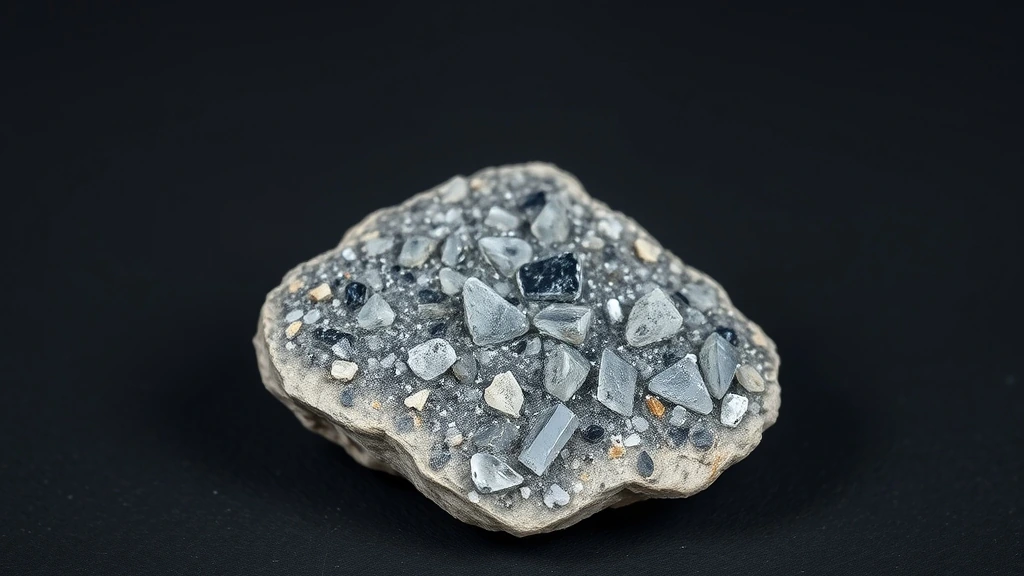
Mesolite belongs to the zeolite family, a group of natural minerals characterized by their porous, cage-like structures. As a Natural Mineral / Crystal, it forms in the cavities of volcanic rocks like basalt. This geological origin distinguishes it from synthetic zeolites, which are manufactured for industrial adsorption. Its formation is intimately linked to hydrothermal alteration processes in subaerial environments.
What is Mesolite ? Geological Overview & Definition
Mesolite is a secondary mineral that precipitates from silica-rich fluids within vesicles of basaltic lava flows. It typically occurs in fibrous radiating aggregates or as distinct prismatic crystals. This unique growth habit gives the stone its characteristic “silk” or “satin” appearance when cut. In comparative mineralogical collections, practitioners and geologists frequently study Analcime alongside this crystal to appreciate their subtle energetic and structural differences.
The name derives from the Greek words for “middle” and “stone,” reflecting its intermediate hardness and opacity. Unlike quartz, mesolite is a hydrated aluminosilicate with significant water content in its structure. This makes it softer and more susceptible to environmental changes than silicate gemstones.
Mesolite Chemical Composition & Crystallographic Properties
Mesolite crystallizes in the Orthorhombic crystal system, featuring a complex framework of silicon and aluminum tetrahedra. The unit cell contains large cavities that house water molecules and sodium cations. This specific arrangement creates the distinct optical properties observed in gemological analysis. This intricate framework structure is shared with Chabazite, another zeolite mineral that exhibits similar cavity-based properties but distincts itself through its unique cubic symmetry and optical behavior.
The chemical formula NaAlSi₂O₆·H₂O indicates a 1:1 ratio of aluminum to silicon in the framework. Sodium ions balance the negative charge generated by aluminum substitution. This stoichiometry is critical for maintaining the structural integrity of the zeolite cage.
Color variations arise from chromophore impurities, such as iron or manganese, rather than the base structure. Pure mesolite is typically colorless or white, but trace elements introduce green or blue hues. These color centers are essential for its gemological appeal and market value.
Thermal behavior is limited due to the presence of structural water, which can be lost upon heating. This dehydration alters the crystal lattice, potentially causing physical damage or color shifts. Therefore, mesolite requires careful handling to preserve its hydrated state and aesthetic qualities.
| Property | Specification |
|---|---|
| Mineral Group | Natural Mineral / Crystal |
| Chemical Formula | NaAlSi₂O₆·H₂O |
| Mohs Hardness | 5 |
| Crystal System | Orthorhombic |
| Specific Gravity (Density) | 2.26 |
| Refractive Index | nα = 1.505 nβ = 1.505 nγ = 1.505 |
| Color & Optical Properties | Natural Mesolite Gemstone color spectrum and optical dispersion |
| Primary Mining Localities | Global primary localities |
| Water & Chemical Resistance | High (Safe for gentle water washing) |
| Chakra Alignment (Traditional) | Heart Chakra, Crown Chakra |
| Zodiac Affinity (Traditional) | Pisces, Cancer |
| Symbolic Meaning (Traditional) | Emotional balance, spiritual clarity, and gentle protection |
Mesolite Varieties & Color Spectrum
Mesolite exhibits a distinct orthorhombic crystal system, often forming in hollow cavities known as geodes. Its color palette ranges from pale blue to deep violet, influenced by trace impurities. The stone’s refractive index is isotropic, giving it a uniform luster across all axes.
Blue Mesolite
This variety displays a serene, sky-blue hue caused by trace elements within the NaAlSi₂O₆·H₂O structure. It typically forms as delicate, needle-like crystals inside basaltic vesicles. Blue mesolite is prized for its clarity and soft, ethereal appearance.
Violet Mesolite
Violet specimens exhibit a rich purple tone, often associated with higher concentrations of specific trace metals. These crystals frequently appear in dense clusters, creating a striking visual texture. This morph is rarer than blue varieties and commands higher market value.
Green Mesolite
Green mesolite is less common, featuring a subtle sage or mint coloration. This hue results from unique geological conditions during the crystal growth phase. It is often found in smaller, more intricate formations than its blue counterparts.
Colorless Mesolite
Transparent or colorless mesolite reveals the pure silicate framework without chromophoric interference. It is highly valued by collectors for its clarity and structural perfection. This variety is often used in high-end lapidary work to showcase form.
Where is Mesolite Found? Geological Mining & Extraction
Mesolite primarily forms in basaltic lava flows within vesicles, rather than in traditional pegmatites. The most significant deposits are located in the United States, particularly in New Mexico and California. These regions provide the ideal alkaline conditions necessary for large crystal development.
Extraction involves carefully excavating volcanic rocks to preserve the delicate crystal clusters. Mining operations focus on identifying geodes with high-quality, intact formations. The low Mohs hardness of five requires gentle handling to prevent fracturing during removal.
Historical Significance & Cultural Lore of Mesolite
Mesolite has been valued since ancient times for its perceived spiritual clarity and emotional balancing properties. Archaeological evidence suggests its use in ceremonial contexts by indigenous cultures in the Americas. These artifacts often feature the stone alongside other volcanic minerals.
In modern esoteric traditions, mesolite is linked to the Heart Chakra and Crown Chakra. It is believed to promote gentle protection and emotional harmony for individuals. This enduring cultural significance continues to drive its popularity in metaphysical markets.
Modern Uses & Jewelry Applications of Mesolite
Mesolite is most often fashioned into cabochon or modestly faceted pieces, capitalizing on its silky luster rather than high brilliance. Lapidary artisans cut the mineral in low‑angle styles to avoid fracture, then polish it to a smooth, glass‑like finish. Because of its modest Mohs hardness of 5, it is best suited for earrings, pendants, and ornamental carvings rather than rings that endure heavy wear.
- Cabochon pendants – showcase the stone’s translucent glow.
- Faceted beads – used in delicate necklaces or bracelets.
- Ornamental carvings – small figurines, intarsia, or inlay work for decorative objects.
Safety & Mineral Profile of Mesolite
Handling mesolite poses no special health hazards; the mineral is chemically stable and does not release toxic gases under normal conditions. When cleaning, use mild soap and a soft brush; avoid acids, which can dissolve the hydrated silica framework. Although historically cited in esoteric lore for emotional balance, it is primarily a collector’s mineral valued for scientific study and display, not for crystal‑healing practices.
Mineralogical Group and Planetary Lore of Mesolite
Mesolite belongs to the zeolite group, a family of hydrated aluminosilicates that form in low‑temperature hydrothermal environments. Its orthorhombic crystals often appear as slender, radiating aggregates, making it a favorite specimen for mineral cabinets and educational collections.
In traditional planetary symbolism, mesolite has been linked to the Moon, reflecting its gentle, calming energy and its association with the Heart and Crown Chakras. While some cultures attribute it with “spiritual clarity,” modern gemology treats these claims as cultural folklore, not scientific fact.
How to Identify Real vs. Fake Mesolite
Artificial imitations of mesolite include dyed quartz, synthetic glass, and resin composites that mimic its milky translucency. These substitutes lack the mineral’s characteristic orthorhombic habit and specific gravity, and they often display bubble inclusions or uneven coloration. Careful testing can quickly separate genuine specimens from such replicas.
Practical At-Home Authenticity Tests
- Temperature Test (Thermal Feel): Real mesolite feels cool to the touch and retains that coolness longer than glass or plastic, which quickly warm to skin temperature.
- Specific Gravity & Weight Test: With a density of 2.26 g/cm³, genuine mesolite feels noticeably heavier than a similarly sized piece of glass (≈2.5 g/cm³) or resin (≈1.1 g/cm³). A simple water‑displacement test can confirm this.
- Scratch & Hardness Test (Mohs Comparison): Using a steel nail (hardness ~5.5) or a quartz point (hardness 7), a genuine mesolite will be scratched by the nail but not by quartz. Glass (hardness ~5.5) may produce a similar mark, so combine with other tests.
- Microscopic & Loupe Inspection (Internal Inclusions): Under 10×–30× magnification, authentic mesolite shows fine, parallel striations and occasional tiny water‑filled cavities, whereas synthetic glass displays uniform bubbles or a flawless interior.
These straightforward checks help collectors and jewelers verify mesolite’s authenticity without specialized equipment.
Mesolite Valuation Factors, Grading & Pricing
Color Saturation is the foremost driver of price. Deep, vivid blues or greens command premiums, while pastel hues are less sought after. Uniform tone across the stone enhances visual impact, and a high‑shine luster signals excellent surface polish. Any zoning or faded patches will lower the market value.
Specimen Dimensions & Matrix Intactness influences price but only when paired with good cut quality. Larger mesolite pieces are rare, yet a well‑proportioned stone with precise crystal cluster integrity can outshine a heavier, poorly cut specimen. Inclusions or a visible matrix reduce clarity and therefore diminish the per‑carat rate, especially in transparent grades.
Geographical Provenance Premium adds a niche surcharge for stones from classic locales such as Turkey or the United States. Collectors often pay more for documented origin, believing it reflects superior crystal formation. Wholesale prices typically range from $30–$70 per specimen, while retail listings can reach $120–$250 per specimen for premium, provenance‑verified pieces.
How to Clean and Care for Mesolite
Use warm soapy water and a soft cloth to gently remove surface dirt. Rinse briefly with lukewarm water, then pat dry with a lint‑free microfiber towel. Avoid ultrasonic cleaners; the vibration can cause micro‑fractures in mesolite’s orthorhombic lattice, compromising structural integrity.
Cleansing and Recharging Mesolite (Energetic Care)
For energetic renewal, place the stone in the smoke of white sage or cedar; the gentle cleansing clears lingering negative imprints without moisture exposure. Allow the smoke to drift over the gem for a few minutes, then set it aside to air‑dry.
Alternatively, recharge mesolite by exposing it to natural moonlight or laying it on a selenite charging plate overnight. Both methods respect the mineral’s water sensitivity while restoring its emotional balance and spiritual clarity.
Frequently Asked Questions About Mesolite
What is the chemical composition of mesolite?
Mesolite is a hydrated sodium aluminum silicate zeolite mineral. Its specific chemical formula is NaAlSi₂O₆·H₂O, defining its unique structural identity. This composition places it firmly within the zeolite group, characterized by open-framework structures that allow for molecular sieving properties.
How hard is mesolite on the Mohs scale?
Mesolite measures 5 on the Mohs hardness scale. This moderate hardness makes it suitable for jewelry but requires care against scratches. You should avoid wearing it alongside harder gemstones like quartz or topaz to prevent surface abrasion and potential damage.
Is mesolite safe to wear in the shower?
Mesolite is sensitive to water and should not be soaked. Prolonged exposure to moisture can compromise its structural integrity over time. It is best to remove the stone before showering or swimming to maintain its aesthetic and physical stability.
Can I clean mesolite in an ultrasonic cleaner?
No, you must avoid ultrasonic cleaners for mesolite. The high-frequency vibrations can cause structural fractures within the delicate crystal lattice. Instead, gently clean the stone using warm soapy water and a soft cloth to preserve its integrity.
Which zodiac signs are aligned with mesolite?
Mesolite is primarily associated with Pisces and Cancer. These water signs resonate deeply with the stone’s gentle and protective energy. Wearing mesolite can enhance emotional balance and spiritual clarity for individuals born under these specific astrological signs.
Which chakras does mesolite activate?
Mesolite aligns with the Heart and Crown Chakras. This dual connection supports both emotional healing and higher spiritual awareness. It facilitates a bridge between the physical heart and the crown, promoting emotional balance and spiritual clarity.
What is the crystal system of mesolite?
Mesolite crystallizes in the Orthorhombic system. This geometric arrangement results in distinct, often prismatic crystal habits. Understanding this crystal system helps gemologists identify the mineral and assess its natural formation patterns accurately.
What is the refractive index of mesolite?
Mesolite has a refractive index of 1.505. This optical property indicates how light travels through the mineral, affecting its luster and brilliance. The consistent refractive index across all axes confirms its isotropic optical behavior in standard gemological testing.