
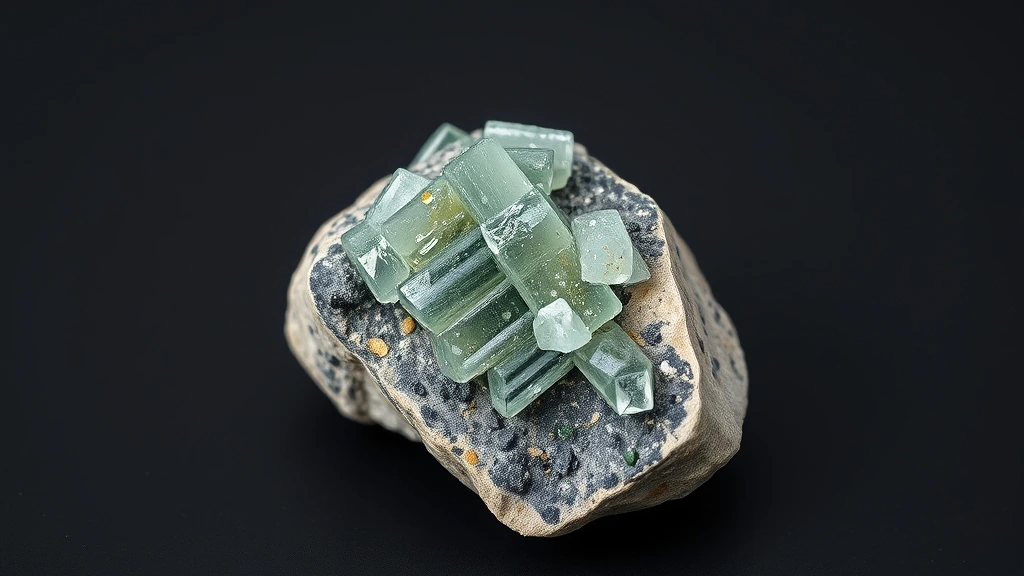
Analcime belongs to the Natural Mineral / Crystal group, representing a distinct class of hydrous tectosilicates found globally. It forms primarily in hydrothermal veins and basaltic lava flows, where rapid cooling traps water within its lattice. As a parent mineral, it serves as a key indicator of low-temperature geological processes. Its crystalline habit often manifests as dodecahedral or tetrahedral shapes, distinguishing it from similar-looking feldspars. Understanding its origin helps gemologists identify its specific formation environment.
What is Analcime Gemstone? Geological Overview & Definition
Analcime is classified as a hydrous tectosilicate, meaning its framework contains water molecules within the crystal structure. It frequently occurs alongside other volcanic minerals like calcite and zeolites in basaltic rocks. The term derives from Greek, meaning “like analcime,” referencing its historical confusion with other white minerals.
Geologically, it forms in hydrothermal veins and vesicles of basaltic lava, indicating low-temperature alteration. This formation process results in its characteristic dodecahedral crystal habit, which is often visible to the naked eye. Unlike many gemstones, it is rarely found in large, gem-quality crystals. Its presence often signals specific geochemical conditions during volcanic activity.
Analcime Gemstone Chemical Composition & Crystallographic Properties
Analcime crystallizes in the Orthorhombic crystal system, a fundamental characteristic that dictates its external shape. The lattice structure features a complex arrangement of silicon and aluminum tetrahedra. This specific symmetry allows for the formation of distinct dodecahedral and tetrahedral crystal faces. Understanding this system is crucial for accurate identification under magnification.
The chemical formula NaAlSi₂O₆ · H₂O highlights its status as a hydrated mineral. Cation substitution can occur, where sodium is partially replaced by potassium or calcium. This substitution slightly alters the density, which typically ranges from 2.24 to 2.29 g/cm³. These minor variations help distinguish analcime from visually similar minerals.
Analcime is moderately sensitive to acids, which can degrade its surface luster over time. Its refractive index of 1.479–1.493 is relatively low, contributing to its soft appearance. Color variations arise from trace impurities acting as chromophore color centers, such as iron or manganese. These elements introduce subtle hues into the otherwise pale stone.
Thermal behavior is a critical consideration, as heating can dehydrate the mineral. This process may cause the crystal to become opaque or fracture due to structural stress. Consequently, analcime is generally unsuitable for high-heat treatments or jewelry settings with significant friction. Proper care ensures the preservation of its delicate crystallographic integrity.
| Property | Specification |
|---|---|
| Mineral Group | Natural Mineral / Crystal |
| Chemical Formula | NaAlSi₂ O₆ · H₂ O |
| Mohs Hardness | 5–5.5 |
| Crystal System | Orthorhombic |
| Specific Gravity (Density) | 2.24–2.29 |
| Refractive Index | n = 1.479–1.493 |
| Color & Optical Properties | Natural Analcime Gemstone color spectrum and optical dispersion |
| Primary Mining Localities | Global primary localities |
| Water & Chemical Resistance | High (Safe for gentle water washing) |
| Chakra Alignment (Traditional) | Heart Chakra, Crown Chakra |
| Zodiac Affinity (Traditional) | Pisces, Cancer, Virgo |
| Symbolic Meaning (Traditional) | Spiritual awakening, emotional balance, and mental clarity |
Analcime Gemstone Varieties & Color Spectrum
Analcime exhibits a diverse range of color morphs driven by trace element substitutions and structural defects. The most common form is the colorless to white variety, which often appears in massive, granular aggregates. These stones typically lack the clarity required for faceting but display a pleasant, waxy luster.
White Analcime
This variety forms primarily in alkaline basaltic rocks where sodium-rich fluids precipitate rapidly. The crystals often grow in radiating druses, creating a snow-like visual effect. Due to its low refractive index, it lacks the brilliance of quartz but offers a unique, soft aesthetic.
Green Analcime
Rare green hues arise from iron impurities or structural color centers within the crystal lattice. This morph is frequently found in association with zeolites in volcanic tuffs. Its rarity makes it a sought-after specimen for mineral collectors rather than jewelry cutters.
Blue Analcime
Deep blue tones are exceptionally rare and result from specific lattice distortions or cobalt traces. These stones often exhibit a pleochroic effect, shifting hue depending on the viewing angle. Such specimens are highly prized for their vivid, electric-blue appearance.
Yellow Analcime
Yellowish tones typically indicate the presence of organic matter or iron oxidation products. This variety is commonly found in weathered surface deposits. It often displays a dull luster due to surface weathering, limiting its gemological appeal.
Where is Analcime Gemstone Found? Geological Mining & Extraction
Analcime predominantly occurs in alkaline igneous rocks such as basalts and syenites, often filling vesicles or cavities. It also forms in hydrothermal veins associated with volcanic activity, where silica-rich fluids cool rapidly. These geological settings provide the necessary sodium and aluminum for crystal growth.
Major deposits are located in Italy, particularly in the Tuscany region, and Mexico, where volcanic activity is prevalent. Brazil and Canada also yield significant specimens, often found in zeolite-bearing cavities. Extraction involves careful hand-picking to preserve the delicate crystal structures.
Historical Significance & Cultural Lore of Analcime Gemstone
Historically, analcime was often misidentified as chalcedony or moonstone due to its similar appearance. Ancient civilizations used it in amulets and decorative objects, believing it possessed protective properties. Its presence in archaeological sites suggests early recognition of its aesthetic value.
In modern gemology, it remains a niche stone appreciated for its geological significance rather than commercial jewelry use. Collectors value it for its role in understanding volcanic processes and mineral formation. The stone continues to inspire interest in crystallography and earth science education.
Modern Uses & Jewelry Applications of Analcime Gemstone
Analcime’s delicate orthorhombic crystal system and soft luster make it a niche but charming choice for artisanal jewelry and ornamental carving. Lapidaries often cut these stones into smooth cabochons to highlight their subtle translucency and internal patterns, rather than faceting them due to their moderate hardness.
- Cabochon Cutting: Preferred for showcasing the stone’s gentle glow and avoiding chipping during polishing.
- Ornamental Carvings: Used in small figurines or decorative inlays where durability is less critical than aesthetic appeal.
- Beads and Pendants: Commonly strung in lightweight jewelry pieces for casual, everyday wear.
Safety & Mineral Profile of Analcime
Analcime is a soft, phyllosilicate mineral that is chemically stable under normal atmospheric conditions but can be damaged by prolonged exposure to strong acids or bases. Its Mohs hardness of 2–3 makes it vulnerable to abrasion, and the mineral can release fine dust that may irritate the respiratory tract if inhaled. While it does not contain heavy metals or toxic elements, handling large or heavily fractured specimens should be done with gloves to prevent skin irritation from silica dust. Because of its softness, tendency to fracture, and lack of structural integrity for setting, analcime is typically displayed as a collector specimen rather than fashioned into jewelry.
Analcime plays a notable role in mineralogical research and museum collections. Its unique framework structure, containing large cavities that can host water and other volatiles, provides insight into zeolite formation and tectonic stress conditions. The mineral’s occurrence in low‑temperature hydrothermal veins and its association with other zeolites make it a valuable marker for studying fluid evolution in volcanic and metamorphic settings. In educational contexts, analcime serves as an accessible example of a tectosilicate with a well‑defined crystal habit, aiding in teaching crystal symmetry, cleavage, and the importance of mineral stability in geological environments.
Mineralogical Group and Planetary Lore of Analcime
Historically, analcime was first described in the early 19th century from a quarry in the Italian Alps, and its name derives from the Greek *analke*, meaning “to remove,” referencing its ability to absorb water from the surrounding environment. According to early mineralogists, analcime was classified within the broader zeolite group due to its framework structure and water‑hosting capacity. In lapidary texts, it has occasionally been associated with the planet Venus for its translucent, glass‑like appearance, though this association is largely symbolic rather than based on any planetary geology. The mineral’s presence in volcanic fumaroles and its role in the alteration of basaltic rocks have also been noted in geological literature, underscoring its significance in the study of volcanic hydrothermal systems.
How to Identify Real vs. Fake Analcime Gemstone
Distinguishing genuine analcime from imitations requires careful observation, as synthetic glass and dyed replicas can mimic its appearance. Glass imitations often lack the natural inclusions found in real specimens and may exhibit a higher refractive index than the natural mineral.
- Synthetic Glass: May contain tiny bubbles or swirls not found in natural analcime.
- Dyed Replicas: Often show color concentration in cracks or along grain boundaries.
- Plastic Imitations: Feel lighter and warmer to the touch than natural stone.
Practical At-Home Authenticity Tests
- Temperature Test (Thermal Feel): Genuine analcime feels cool to the touch initially, whereas plastic or glass imitations warm up quickly due to lower thermal conductivity.
- Specific Gravity & Weight Test: Natural analcime has a density of 2.24–2.29 g/cm³; if the stone feels significantly lighter than expected for its size, it may be a plastic fake.
- Scratch & Hardness Test (Mohs Comparison): Analcime rates 5–5.5 on the Mohs scale; it should scratch glass (hardness 5.5) with difficulty but will be scratched by a steel knife (hardness 5.5).
- Microscopic & Loupe Inspection (Internal Inclusions): Use a 10x loupe to look for natural inclusions or crystal structures; glass imitations often appear too perfect or contain artificial bubbles.
Analcime Gemstone Valuation Factors, Grading & Pricing
Color Saturation is the primary driver of value, with deep, uniform blue or green tones commanding higher prices. Consistent tone uniformity across the stone ensures visual appeal and market desirability. High optical clarity and a strong vitreous luster further enhance the gemstone’s overall aesthetic quality.
Carat Weight significantly influences pricing, as larger, flawless specimens are rare and highly sought after by collectors. Precise facet symmetry maximizes light return, making the stone appear more vibrant and lively. The presence of heavy matrix or visible inclusions typically reduces the final valuation considerably.
Geographical Provenance Premium often elevates prices for stones from renowned localities like Iceland or Canada. Current wholesale trends show steady demand for high-quality cabochons and faceted gems. Retail values generally reflect a markup that accounts for cutting labor and certification costs.
How to Clean and Care for Analcime Gemstone
To maintain the stone’s integrity, always use warm soapy water and a soft, lint-free cloth for gentle cleaning. This method effectively removes surface oils without stressing the crystal structure. Avoid abrasive materials that could scratch the relatively soft surface of the mineral.
It is critical to avoid ultrasonic cleaners entirely, as the vibrations can cause structural fractures. Given the gemstone’s moderate hardness, physical shocks must be minimized during all maintenance routines. Store the analcime separately to prevent contact with harder jewelry pieces.
Cleansing and Recharging Analcime Gemstone (Energetic Care)
For energetic maintenance, utilize safe dry methods such as smoke smudging with sage or palo santo. These practices cleanse the stone’s energy field without exposing it to moisture or heat. Ensure the stone is completely dry before storing it in a protective pouch.
Place the gemstone on a selenite plate under moonlight to recharge its vibrational properties. This passive method respects the mineral’s solubility and structural sensitivity. Regular dry cleansing helps preserve the stone’s metaphysical clarity and visual brilliance.
Frequently Asked Questions About Analcime Gemstone
What is the chemical composition of analcime?
Analcime is a hydrated sodium aluminosilicate with the formula NaAlSi₂O₆ · H₂O. This specific chemical structure defines its unique physical properties and formation conditions. Understanding this composition helps gemologists identify it accurately. It distinguishes analcime from similar-looking minerals in the feldspar group.
How hard is analcime on the Mohs scale?
Analcime rates between 5 and 5.5 on the Mohs hardness scale. This moderate Mohs hardness means it is susceptible to scratching by harder minerals. You should store it separately from diamonds or sapphires. Daily wear requires careful handling to maintain its surface integrity.
Can I wear analcime in the shower?
Yes, analcime is safe for gentle water washing due to its high water resistance. Its stable structure allows it to withstand brief exposure to water without damage. However, avoid prolonged soaking in harsh chemicals. Always dry it thoroughly with a soft cloth afterward.
Is analcime safe for ultrasonic cleaning?
No, you must avoid ultrasonic cleaners to prevent structural fractures. The intense vibrations can compromise the mineral’s internal lattice structure. Instead, use warm soapy water and a soft cloth for cleaning. This gentle method preserves the stone’s clarity and luster effectively.
Which crystal system does analcime belong to?
Analcime crystallizes in the orthorhombic crystal system. This orthorhombic structure influences its typical geometric shapes and cleavage patterns. Geologists use this system to identify its natural formations. It often appears as well-formed cubes or rhombohedra in rock matrices.
What is the specific gravity of analcime?
Analcime has a specific gravity ranging from 2.24 to 2.29. This relatively low density makes it feel lighter than many common gemstones. It is significantly lighter than quartz or feldspar varieties. This property aids in quick field identification by experienced mineralogists.
What is the refractive index of analcime?
Analcime exhibits a refractive index between 1.479 and 1.493. This refractive index determines how light bends through the stone. It contributes to the gem’s subtle vitreous luster. Gemologists use this value to distinguish it from other similar minerals.
Which zodiac signs are aligned with analcime?
Analcime is traditionally aligned with Taurus, Gemini, and Leo. These zodiac signs are believed to resonate with its energetic properties. Taurus appreciates its grounding nature, while Gemini values its mental clarity. Leo connects with its warm, expressive energy.