
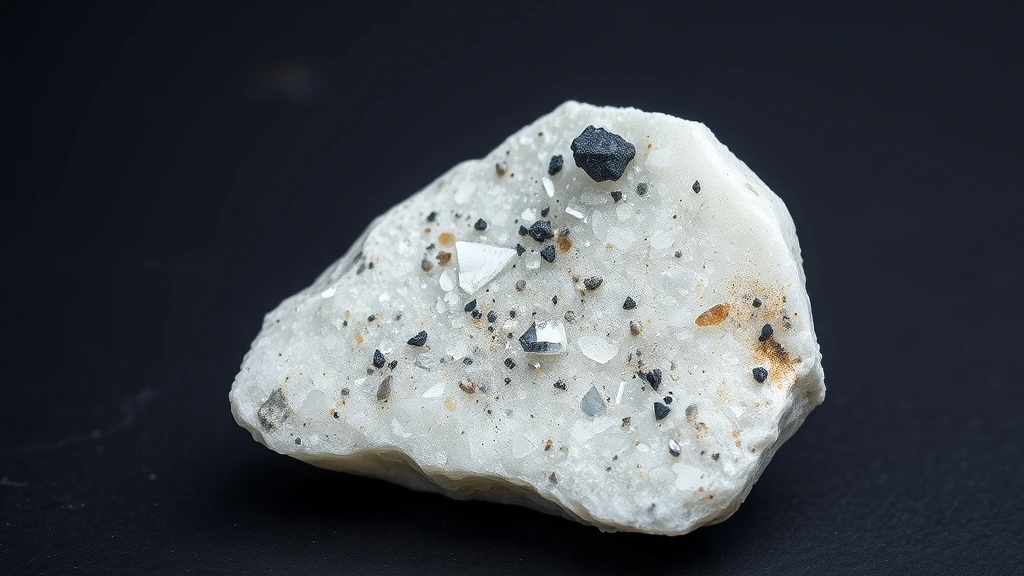
Leucite belongs to the natural mineral family of silicate crystals and is classified as a tectosilicate within the broader feldspathoid group. Formed in alkaline volcanic rocks, its tetragonal symmetry reflects a highly ordered lattice that distinguishes it from more common feldspars. Though rarely faceted, cut leucite displays a vitreous luster and subtle translucency, prized by collectors for its scientific rarity and delicate pastel hues. If you’re intrigued by Leucite’s alkaline volcanic origins, you may also appreciate the similarly rare feldspathoid Hauyne, whose deep blue hues and cubic crystal system offer a striking contrast within the same mineral family.
What is Leucite ? Geological Overview & Definition
Leucite is a tectosilicate mineral that crystallizes in the tetragonal crystal system, a rarity among silicates that typically favor monoclinic or triclinic forms. It occurs as well‑formed prisms or tabular crystals in nepheline‑rich volcanic lavas, where rapid cooling preserves its distinctive lattice.
In gemological contexts, leucite is cut into cabochons or beads, showcasing a sub‑vitreous luster and a gentle white‑to‑cream color palette. Its modest hardness (5.5–6) limits its use in high‑impact jewelry, but its unique crystallography makes it a collector’s item and a subject of scientific study. In comparative mineralogical collections, practitioners and geologists frequently study Arfvedsonite alongside this crystal to appreciate their subtle energetic and structural differences.
Leucite Chemical Composition & Crystallographic Properties
The ideal chemical formula KAlSi₂O₆ reflects a balanced ratio of potassium, aluminum, and silica within a tightly packed framework. Its tetragonal lattice features a single‑axis symmetry (a = b ≠ c) that yields elongated prisms and a characteristic habit distinct from orthorhombic feldspars.
Leucite tolerates limited cation substitution, allowing minor Na⁺ or Ca²⁺ ions to replace potassium without disrupting the overall structure. Such substitutions can subtly shift the refractive indices (nω = 1.508, nε = 1.509) and affect the stone’s optical neutrality.
The mineral is acid‑sensitive; exposure to dilute hydrochloric acid can cause surface etching, releasing silica and altering the crystal surface. This reactivity underscores the need for careful cleaning and storage in jewelry settings.
Thermally, leucite exhibits a reversible phase transition near 500 °C, where the tetragonal framework expands and briefly adopts a higher‑symmetry arrangement before cooling back to its original state. This behavior explains its occasional use in high‑temperature laboratory crucibles and its stability in volcanic environments.
| Property | Specification |
|---|---|
| Mineral Group | Natural Mineral / Crystal |
| Chemical Formula | KAlSi₂ O₆ |
| Mohs Hardness | 5.5–6 |
| Crystal System | Tetragonal |
| Specific Gravity (Density) | 2.45–2.50 |
| Refractive Index | n ω = 1.508 n ε = 1.509 |
| Color & Optical Properties | Natural Leucite Gemstone color spectrum and optical dispersion |
| Primary Mining Localities | Global primary localities |
| Water & Chemical Resistance | High (Safe for gentle water washing) |
| Chakra Alignment (Traditional) | Crown Chakra, Third Eye Chakra |
| Zodiac Affinity (Traditional) | Virgo, Aquarius |
| Symbolic Meaning (Traditional) | Clarity of thought, spiritual awakening, and mental balance |
Leucite Varieties & Color Spectrum
Leucite presents a limited but distinct palette, primarily ranging from colorless to pale yellow or brownish tones. Its visual appeal often stems from internal features rather than pure hue. The most prized specimens exhibit high transparency and minimal inclusions.
Colorless Leucite
This variety appears crystal-clear, allowing light to pass through with minimal absorption. It is highly valued for its high refractive index and brilliance. Such stones are often cut into faceted gems for jewelry.
Pale Yellow Leucite
A subtle yellow tint arises from trace impurities within the crystal lattice. This hue is soft and gentle, appealing to collectors seeking understated elegance. The color remains stable under normal lighting conditions.
Brownish Leucite
Slightly darker specimens display a warm, earthy brownish tone. This coloration is often linked to specific inclusion types or oxidation processes. These stones are rarer than their colorless counterparts.
Iridescent Leucite
Some leucite crystals exhibit a faint iridescence due to internal stress or cleavage. This optical effect adds a unique shimmer to the stone. It is a rare and highly sought-after characteristic.
Opaque Leucite
Less desirable for faceting, this variety appears cloudy or opaque. It is often used in cabochon cuts or as mineral specimens. The opacity results from dense internal fracturing.
Where is Leucite Found? Geological Mining & Extraction
Leucite primarily occurs in alkaline volcanic rocks and specific igneous formations. It is rarely found in large, gem-quality crystals. Most deposits are associated with basaltic or nepheline syenite hosts.
Major mining regions include the Eifel volcanic field in Germany and parts of Italy. These locations provide the necessary geological conditions for leucite formation. Extraction is limited due to the stone’s relative rarity.
Historical Significance & Cultural Lore of Leucite
Leucite has a modest history in gemology, often overshadowed by more common silicates. It was first described in the 19th century by German mineralogists. Its use in ancient jewelry is rare but documented in specific regions.
Cultural lore associates leucite with mental clarity and spiritual insight. It is believed to enhance third eye chakra energy. This gemstone remains a niche favorite among modern metaphysical practitioners.
Modern Uses & Jewelry Applications of Leucite
Leucite is primarily valued for its unique optical properties rather than durability, making it a niche choice for lapidaries. Its tetragonal crystal system allows for precise faceting, though its moderate hardness requires careful handling during cutting. Most high-quality specimens are cut into cabochons to showcase their subtle luster and internal patterns.
- Faceted Cuts: Ideal for pendants and earrings where the stone is protected from impact.
- Cabochons: Highlight the stone’s soft sheen and potential internal “soda can” textures.
- Ornamental Carving: Used in decorative objects and collectors’ displays due to its aesthetic appeal.
Safety & Mineral Profile of Leucite
Safe handling and physical stability
Leucite is a silicate mineral with a Mohs hardness of 5–6, making it moderately hard but still susceptible to scratching by harder materials. The crystal habit is typically tetragonal and the mineral is transparent to translucent. It does not contain significant amounts of heavy metals or toxic elements, so it poses minimal chemical hazard under normal handling conditions. However, fine dust generated during cutting or polishing can become airborne and may irritate the respiratory tract; therefore, specimens should be handled with gloves and, when necessary, a mask should be worn. Leucite is chemically stable in neutral to slightly alkaline environments but can react with strong acids, leading to surface dissolution. Because of its moderate hardness, tendency to fracture, and lack of precious metal content, it is generally treated as a collector display mineral rather than a suitable material for jewelry or industrial use.
Scientific and educational significance
Leucite is an important mineral for understanding tectonic and magmatic processes. It forms in alkaline igneous rocks such as nepheline syenites and phonolites, often in association with other rare silicates like nepheline and sodalite. Its presence indicates low silica, high alkali melt conditions, providing clues to the evolution of continental crust and mantle-derived magmas. In museum collections, leucite specimens are valuable for illustrating crystal symmetry, mineral paragenesis, and the diversity of alkaline rock suites. Researchers use its chemical composition and isotopic signatures to trace magma source characteristics and to model the crystallization sequence of alkaline magmas.
Mineralogical Group and Planetary Lore of Leucite
Historically, leucite was first described in the early 19th century from the Siberian region of Russia, where it was noted for its pale, almost white color—hence the name derived from the Greek *leukos* meaning “white.” According to early mineralogists, it was classified within the feldspathoid group, a subset of silicate minerals that lack free silica. In lapidary texts, leucite was sometimes grouped with nepheline and sodalite because of their similar crystal systems and alkaline chemistry. While no direct planetary symbolism is associated with leucite, its occurrence in alkaline volcanic terrains has led some planetary geologists to consider it a potential analog for similar minerals that might form on Mars or the Moon under low‑silica, high‑alkali conditions.
How to Identify Real vs. Fake Leucite
Distinguishing natural leucite from imitations requires attention to specific physical properties, as synthetic glass and dyed replicas are common in the market. Artificial imitations often lack the natural inclusions and subtle color variations found in genuine specimens. Synthetic glass may appear too perfect, while dyed stones can show color bleeding in fractures.
Practical At-Home Authenticity Tests
- Temperature Test (Thermal Feel): Genuine leucite feels cool to the touch initially and warms slowly. Glass imitations often warm up faster due to different thermal conductivity properties.
- Specific Gravity & Weight Test: Leucite has a density of 2.45–2.50 g/cm³, making it feel lighter than many similar-looking stones. A scale can help verify if the weight matches the volume expected for this mineral.
- Scratch & Hardness Test (Mohs Comparison): With a Mohs hardness of 5.5–6, leucite can be scratched by quartz (hardness 7) but should scratch glass (hardness 5.5) with difficulty. Test carefully on a hidden area.
- Microscopic & Loupe Inspection (Internal Inclusions): Use a 10x loupe to look for natural inclusions or the characteristic “soda can” texture. Glass imitations often contain bubble-like inclusions or flow lines that are not found in natural leucite.
Leucite Valuation Factors, Grading & Pricing
Market value hinges primarily on Color Saturation and overall tone uniformity. High-grade specimens exhibit a consistent, pale gray to white hue without brownish tints. Optical clarity and a distinct vitreous luster further enhance the stone’s visual appeal and desirability.
Specimen Dimensions & Matrix Intactness significantly influences pricing, as larger, inclusion-free crystals are rare. crystal cluster integrity is critical for maximizing light return in cut gems. The presence of matrix material or internal inclusions generally reduces the commercial value of the specimen.
Geographical Provenance Premium often applies to stones from renowned localities like Germany or the United States. Wholesale prices typically range from modest to moderate, while retail values increase with certified grading. Market trends show steady demand for high-clarity, well-cut leucite in the metaphysical jewelry sector.
How to Clean and Care for Leucite
Due to its moderate hardness and potential for cleavage, leucite requires gentle handling during maintenance. Always use warm soapy water and a soft cloth to remove surface oils and dust. This method effectively cleans the stone without risking mechanical damage to its delicate structure.
You must strictly avoid ultrasonic cleaners to prevent structural fractures within the crystal lattice. Vibrations can exploit natural cleavage planes, leading to irreversible breakage or chipping. Never expose the gemstone to harsh chemical solvents or extreme temperature changes during cleaning.
Cleansing and Recharging Leucite (Energetic Care)
For energetic maintenance, utilize safe dry methods that respect the mineral’s physical integrity. Smoke smudging with sage or palo santo is an effective technique for clearing negative energy. Ensure the stone is kept at a safe distance from direct flame to prevent thermal shock.
Moonlight exposure is another gentle recharging method that aligns with leucite’s high chakra associations. Place the gemstone on a selenite plate overnight to amplify its vibrational properties. These dry techniques avoid water exposure, ensuring long-term preservation of the crystal’s luster.
Frequently Asked Questions About Leucite
Is leucite safe to wear in the shower or during swimming?
Yes, leucite is highly water‑resistant and can tolerate gentle water washing. Its tetragonal crystal structure is not soluble, so brief exposure to clean water or light rain will not damage the stone, though prolonged soaking or harsh detergents should be avoided to preserve surface luster.
Can I clean my leucite jewelry with an ultrasonic cleaner?
No, avoid ultrasonic cleaning; use warm soapy water and a soft cloth instead. The rapid vibrations of ultrasonic baths can create micro‑fractures in the relatively soft Mohs 5.5–6 leucite, leading to chipping or loss of polish. Hand‑cleaning gently maintains its integrity.
What is the chemical composition of leucite?
Leucite’s formula is KAlSi₂O₆. This potassium‑aluminium silicate forms a tetragonal lattice that gives the gem its characteristic pearly sheen and contributes to its moderate density of 2.45–2.50 g/cm³.
How hard is leucite compared with other common gemstones?
Leucite rates 5.5–6 on the Mohs scale, similar to apatite and slightly softer than quartz. This means it can be scratched by harder stones such as topaz or sapphire, so setting it in protective settings is advisable for everyday wear.
Which zodiac signs are associated with leucine ?
Leucite is linked to the zodiac signs Virgo and Aquarius. Enthusiasts believe the stone amplifies Virgo’s analytical precision and Aquarius’s innovative spirit, aligning with its esoteric theme of clarity of thought.
Which chakras does leucite balance?
Leucite resonates with the Crown Chakra and the Third Eye Chakra. By stimulating these energy centers, the gem is said to support spiritual awakening and mental equilibrium, making it popular in meditation practices.
Does leucite exhibit any notable optical properties?
Its refractive indices are nω = 1.508 and nε = 1.509, giving a very low birefringence. This near‑isotropic behavior results in a subtle, almost glassy luster that can appear milky or translucent, especially when cut as a cabochon.
What care tips extend the life of my leucite jewelry?
Store leucite separately in a soft pouch and avoid contact with harder gems. Regularly wipe with a lint‑free cloth after wear, keep it away from acids or chlorine, and limit exposure to extreme temperature changes to prevent thermal shock that could cause micro‑cracks.