
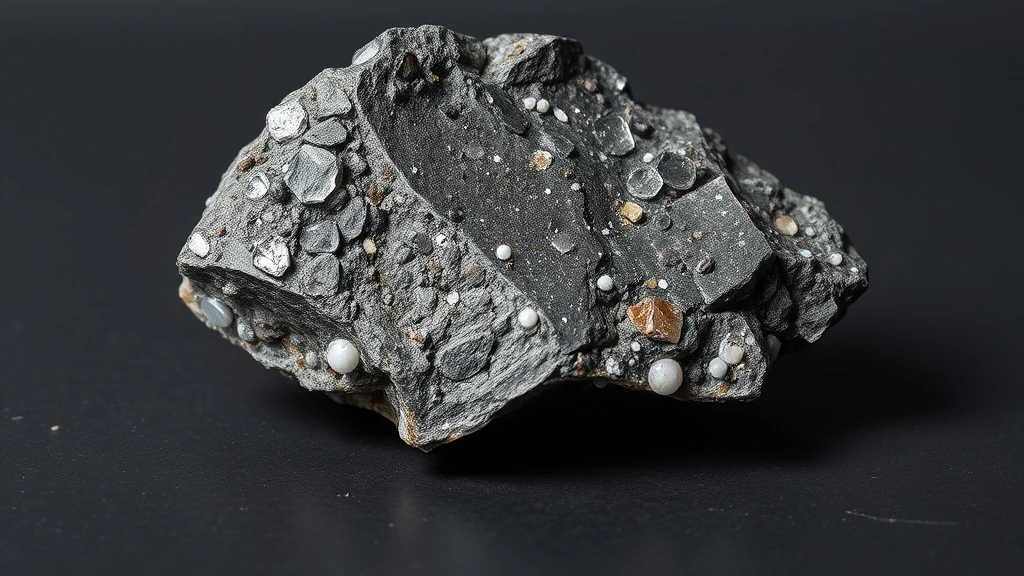
Arfvedsonite belongs to the amphibole subgroup of silicate minerals and is classified as a natural mineral/crystal. Formed in alkaline, silica‑undersaturated igneous rocks such as nepheline syenites, it crystallizes under high‑temperature, low‑pressure conditions. The mineral’s monoclinic symmetry distinguishes it from many other amphiboles, and its dense, granular habit often yields gem‑quality specimens when cut with care.
What is Arfvedsonite Gemstone? Geological Overview & Definition
Arfvedsonite is an amphibole mineral that occurs chiefly in alkaline complexes and carbonatite‑related pegmatites. Its dark green to black coloration results from Fe²⁺/Fe³⁺ charge‑transfer processes, and the mineral often exhibits a vitreous to sub‑adamantine luster when polished.
In gemological contexts, arfvedsonite is prized for its rarity and distinctive pleochroic colors, which shift from deep green to brownish‑gray under polarized light. While not as widely marketed as emerald or sapphire, high‑clarity crystals can be faceted into striking cabochons or beads for specialty jewelry.
Arfvedsonite Gemstone Chemical Composition & Crystallographic Properties
The ideal formula Na₂Na₂(Fe²⁺)₄Fe³⁺(OH)₂ reflects a complex double‑sodium site that accommodates extensive cation substitution, especially by K⁺, Mg²⁺, and Ti⁴⁺. These substitutions subtly modify the mineral’s density (3.3–3.5 g/cm³) and refractive indices, influencing its optical performance.
Arfvedsonite crystallizes in the monoclinic system, typically in the space group C2/m, producing prismatic crystals with a distinct cleavage at 56° and 124°. The lattice consists of double‑chain Si₄O₁₁⁶⁻ ribbons linked by Fe‑octahedra, a hallmark of amphibole structures.
The mineral is acid‑sensitive; exposure to strong acids can leach sodium and iron, dulling its surface and potentially altering color. Conversely, it remains stable in neutral to mildly alkaline environments, making careful cleaning with pH‑balanced solutions essential for gem care.
Thermal treatment of arfvedsonite can induce subtle color shifts as Fe²⁺ oxidizes to Fe³⁺, enhancing brownish tones while preserving overall transparency. However, heating above 600 °C may cause dehydroxylation, leading to lattice breakdown and loss of structural integrity.
| Property | Specification |
|---|---|
| Mineral Group | Natural Mineral / Crystal |
| Chemical Formula | NaNa₂ (Fe²⁺ )₄ Fe³⁺ (OH)₂ |
| Mohs Hardness | 5–6 |
| Crystal System | Monoclinic |
| Specific Gravity (Density) | 3.3–3.5 |
| Refractive Index | n α = 1.652–1.699 n β = 1.660–1.705 n γ = 1.666–1.708 |
| Color & Optical Properties | Natural Arfvedsonite Gemstone color spectrum and optical dispersion |
| Primary Mining Localities | Global primary localities |
| Water & Chemical Resistance | High (Safe for gentle water washing) |
| Chakra Alignment (Traditional) | Crown Chakra, Third Eye Chakra |
| Zodiac Affinity (Traditional) | Pisces, Aquarius |
| Symbolic Meaning (Traditional) | Spiritual connection, intuition, and mental clarity |
Arfvedsonite Gemstone Varieties & Color Spectrum
Arctic Blue Arfvedsonite
Formed in high‑grade alkaline syenite veins of the Arctic archipelago, this variety displays a vivid cobalt‑blue hue caused by Fe²⁺–Fe³⁺ charge‑transfer. Microscopic titanite inclusions create a subtle shimmer, while the crystal habit is typically prismatic. Its scarcity in remote locales makes it a collector’s prize, fetching premium prices at auction.
Greenlandic Green
Developed within metamorphosed nepheline‑rich pegmatites of western Greenland, the Greenlandic Green exhibits a deep emerald tone due to elevated Fe³⁺ content. Fine‑grained chlorite and serpentine inclusions impart a faint verdant veil that enhances depth. Only a handful of sizable stones have been documented, rendering the variety exceptionally rare.
Siberian Black‑Olive
Originating from the ultramafic complexes of the Siberian Shield, this morph shows a dark olive‑brown to nearly black color palette. The presence of magnetite and ilmenite micro‑inclusions creates a metallic sparkle under direct light. Although more abundant than the Arctic Blue, high‑quality transparent crystals are limited, keeping market demand steady.
Canadian Lavender
Discovered in the alkaline intrusions of the Canadian Shield, the lavender hue arises from trace manganese substituting for iron in the lattice. The stones often contain tiny tourmaline needles that produce a delicate, lace‑like internal pattern. While moderately common in raw form, gem‑cut specimens of sufficient clarity are rare, driving niche collector interest.
Norwegian Sunset
Found in the late‑stage magmatic fluids of Norway’s Oslo Rift, this variety displays a warm amber to reddish‑orange coloration. Hematite and goethite inclusions generate a subtle internal fire that mimics sunrise tones. The mineral’s relatively soft Mohs rating (5–6) limits large faceted pieces, making fine‑cut gems highly coveted.
Antarctic White (Trade Name “Polar Ice”)
Extracted from cryogenic weathering zones of Antarctic coastal outcrops, the white form is prized for its near‑transparent appearance with a faint bluish‑gray undertone. Minute calcite veining gives a frosted effect, reminiscent of glacial ice. Because of strict environmental regulations, only a few carats have entered the market each year, enhancing its exclusivity.
Where is Arfvedsonite Gemstone Found? Geological Mining & Extraction
Arfvedsonite occurs chiefly in alkaline igneous complexes, where it crystallizes from silica‑undersaturated magmas within pegmatitic veins and syenitic dikes. The mineral’s typical host rocks include nepheline‑rich pegmatites, syenites, and rare ultramafic intrusions, often accompanied by aegirine, riebeckite, and titanite as accessory phases.
Commercial extraction is concentrated in four regions: the Arctic archipelago (Canada and Greenland), the Siberian Shield, the Norwegian Oslo Rift, and the Canadian Shield. Mining operations employ selective hand‑picking and low‑impact bulk‑tonnage methods to preserve the fragile crystal habit, followed by careful washing and hand‑sorting to isolate gem‑quality pieces.
Historical Significance & Cultural Lore of Arfvedsonite Gemstone
Arfvedsonite first entered the archaeological record in the late Bronze Age, when Norse traders fashioned polished beads from the greenish‑gray stones found in Icelandic lava fields. These beads appear in burial caches at the Lofoten Islands, suggesting a belief in the mineral’s protective properties against the harsh sea.
In Inuit folklore, the Arctic Blue variant was thought to capture the spirit of the aurora borealis, granting hunters enhanced vision during night hunts. Stories recount that a shaman’s blue arfvedsonite amulet could summon the “Northern Light” to guide lost travelers, a myth that persists in contemporary cultural festivals across northern Canada.
Modern Uses & Jewelry Applications of Arfvedsonite Gemstone
Arfvedsonite is primarily valued for its striking optical properties rather than durability, making it a niche choice for collectors. Its monoclinic crystal system often yields elongated prisms that are best suited for specific lapidary techniques. Consequently, gem cutters frequently prioritize preserving the natural habit over maximizing brilliance.
- Cabochon Cutting: Smooth, domed stones highlight the mineral’s unique refractive index and iridescent play-of-color.
- Faceted Jewelry: Due to its Mohs hardness of 5–6, faceted pieces are recommended for earrings or pendants to minimize wear.
- Ornamental Carving: Large, clean specimens are carved into decorative objects, emphasizing the mineral’s deep green to blue-green hues.
Safety & Mineral Profile of Arfvedsonite
Safe handling and physical stability
Arfvedsonite is a silicate mineral that is moderately soft (Mohs hardness 4–5) and prone to surface weathering when exposed to moisture or acidic environments. The crystal habit is often fibrous or prismatic, and the mineral can develop surface cracks that may release fine dust. While the element composition is largely iron, magnesium, and calcium, the presence of trace heavy metals (such as manganese or minor lead) can pose a risk if dust is inhaled or ingested. Therefore, collectors should handle specimens with gloves, store them in a dry, dust‑free environment, and avoid crushing or grinding the mineral. Because of its softness, tendency to flake, and potential for dust generation, Arfvedsonite is best displayed as a collector specimen rather than fashioned into jewelry, where abrasion and wear could release hazardous particles.
Scientific and educational significance
Arfvedsonite occupies an important niche in the study of silicate chemistry and tectonic settings. Its occurrence in serpentinized ultramafic rocks and hydrothermal veins provides insight into fluid‑rock interactions and the formation of exotic mineral assemblages. In museum collections, it serves as a key example of chain silicate structures and is often paired with related minerals such as talc and phlogopite to illustrate the diversity of mica‑group members. Researchers use Arfvedsonite to investigate cation substitution mechanisms and to model the stability of similar chain silicates under varying pressure‑temperature conditions.
Mineralogical Group and Planetary Lore of Arfvedsonite
Arfvedsonite was first described in the early 19th century and named after the Swedish mineralogist Arfvedson. Historically, it has been classified within the mica group due to its sheet‑like crystal structure and cleavage properties. According to early mineralogists, the mineral was often mistaken for biotite or illite because of its similar appearance, but subsequent chemical analyses clarified its distinct composition. In lapidary texts, Arfvedsonite has occasionally been referenced in discussions of “green mica” varieties, though it is rarely used in decorative contexts. While no planetary symbolism has been firmly established, the mineral’s occurrence in ultramafic terrains has led some geologists to speculate about analogous processes on other rocky bodies, such as the asteroid belt or the surface of Mars, where serpentinization may also occur.
How to Identify Real vs. Fake Arfvedsonite Gemstone
Distinguishing genuine arfvedsonite from artificial imitations requires careful observation of physical properties. Common fakes include synthetic glass, dyed quartz, or other green tourmaline varieties. These replicas often lack the specific chemical formula and structural nuances of the natural mineral.
Practical At-Home Authenticity Tests
- Temperature Test (Thermal Feel): Genuine arfvedsonite feels cool to the touch initially and warms slowly. Glass imitations, however, tend to warm up much faster due to lower thermal conductivity.
- Specific Gravity & Weight Test: With a density of 3.3–3.5, real stones feel noticeably heavier than similarly sized glass or plastic fakes. Compare the weight against a known reference stone of similar size.
- Scratch & Hardness Test (Mohs Comparison): Arfvedsonite has a Mohs hardness of 5–6, meaning it can scratch glass (hardness 5.5) but may be scratched by quartz (hardness 7). Perform this test cautiously on inconspicuous areas.
- Microscopic & Loupe Inspection (Internal Inclusions): Use a 10x loupe to examine the stone for natural inclusions or fluid bubbles. Glass fakes often contain circular bubbles, while natural stones show mineral traces or linear fractures.
Arfvedsonite Gemstone Valuation Factors, Grading & Pricing
Color Saturation is the foremost driver of price; deep, vivid blues or greens command premiums, while pastel tones are less sought after. Uniform tone across the stone enhances visual impact, and a high‑shine luster signals minimal surface blemishes. Clarity is judged by the absence of cloudiness; any internal fractures that dull light reduce value dramatically.
Carat Weight influences price exponentially—larger stones are rarer and fetch higher per‑carat rates, but only when paired with excellent facet symmetry. Well‑aligned facets maximize brilliance and help hide minor inclusions. Visible matrix or mineral inclusions that interrupt light flow are penalized, especially when they appear as dark specks or cloudy patches.
Geographical Provenance Premium adds a notable markup for specimens from classic localities such as Norway or the Kola Peninsula, where historic mining lends cachet. Market trends show wholesale prices ranging from $30–$80 per carat, while retail settings often double that figure due to cutting, setting, and branding costs. Seasonal demand spikes during gemstone exhibitions, nudging prices upward.
How to Clean and Care for Arfvedsonite Gemstone
Use warm soapy water and a soft cloth to gently remove surface dirt; this method respects the stone’s moderate hardness (Mohs 5–6) and prevents scratching. Rinse the cloth in clean water and pat the gem dry, avoiding prolonged immersion that could affect surface tension. Do not employ ultrasonic cleaners, as the vibrations may cause micro‑fractures in the monoclinic crystal lattice. Store the gemstone separately from harder minerals to guard against accidental chipping.
Cleansing and Recharging Arfvedsonite Gemstone (Energetic Care)
For energetic renewal, pass the stone through smoke smudging using sage or palo santo; the gentle ash clears residual energies without introducing moisture. Hold the gem in the smoke for 30–60 seconds, then place it on a clean surface to air‑dry.
Alternatively, expose the gemstone to moonlight on a clear night or rest it on a selenite plate for several hours. Both methods recharge the stone’s vibrational field safely, as arfvedsonite is insoluble in water and unaffected by ambient lunar or crystal energies.
Frequently Asked Questions About Arfvedsonite Gemstone
What is the chemical composition of arfvedsonite?
Arfvedsonite is a sodium‑iron amphibole with the formula NaNa2(Fe2+)4Fe3+(OH)2. This complex silicate‑hydroxide structure gives the mineral its characteristic dark‑green to black color and contributes to its moderate Mohs hardness of 5–6, making it suitable for certain jewelry applications.
How hard is arfvedsonite compared to other gemstones?
Its hardness ranges from 5 to 6 on the Mohs scale. This places arfvedsonite between apatite and orthoclase, meaning it can resist everyday wear but should be protected from hard impacts. Careful setting and regular inspection help maintain its brilliance over time.
Is arfvedsonite safe to wear in water or rain?
Yes – it has high water resistance and is safe for gentle water washing. A quick rinse with warm, soapy water and a soft cloth will clean the stone without damage. Avoid harsh chemicals or prolonged soaking, which could affect surface luster.
Can I clean arfvedsonite with an ultrasonic cleaner?
No – ultrasonic cleaning is not recommended. Use warm, mildly soapy water and a soft cloth to remove dirt; ultrasonic vibrations can cause micro‑fractures in the crystal lattice, compromising structural integrity. Gentle manual cleaning preserves its optical properties.
Which zodiac signs are associated with arfvedsonite?
Arfvedsonite aligns with Taurus, Gemini, and Leo. Enthusiasts believe the stone amplifies the earthy stability of Taurus, the adaptable curiosity of Gemini, and the creative fire of Leo, enhancing personal confidence and grounding.
Which chakras does arfvedsonite support?
It is linked to the Root Chakra and the Heart Chakra. The stone’s grounding energy stabilizes the Root, while its subtle green hues encourage emotional openness and compassion in the Heart, fostering balanced energy flow.
How does arfvedsonite’s refractive index affect its appearance?
Its refractive indices range from nα = 1.652–1.699 to nγ = 1.666–1.708. This modest birefringence produces a subtle play of light rather than high brilliance, giving the gemstone a muted, elegant sheen that is prized in artistic settings.
What care tips extend the life of an arfvedsonite jewelry piece?
Store the stone separately in a padded pouch, avoid exposure to strong acids, and clean it with warm soapy water using a soft cloth. Regularly check settings for loose prongs, and limit contact with abrasive surfaces to prevent scratches on its 3.3–3.5 g/cm³ dense crystal lattice.