
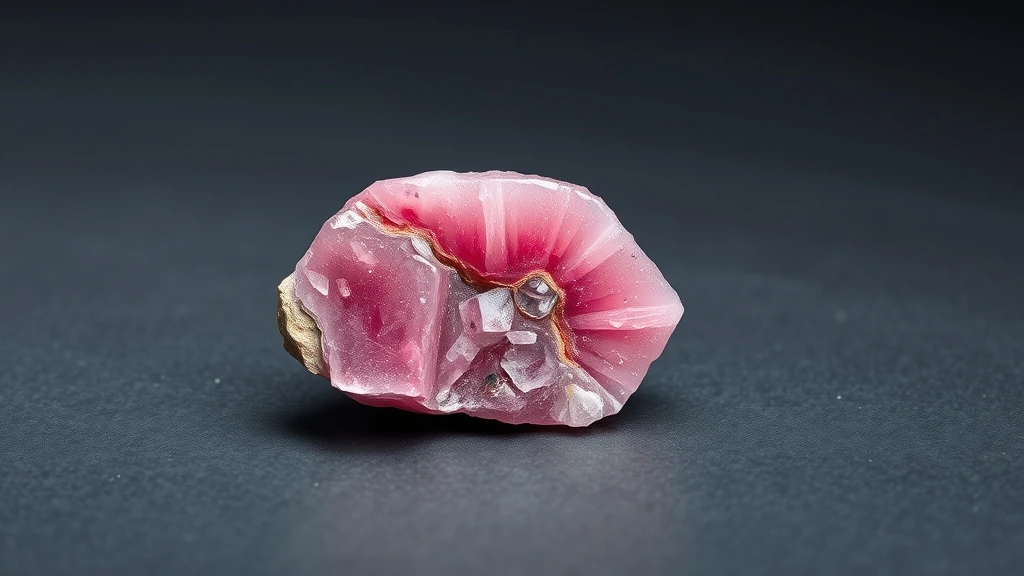
Pink tourmaline belongs to the natural mineral/crystal category and is classified within the cyclosilicate tourmaline series. Its structure is built from six-membered SiO₄ rings that polymerize into elongated trigonal prisms, producing the elongated, often columnar crystals prized by collectors. The mineral forms in granitic pegmatites, metamorphic schists, and lithium‑rich hydrothermal veins, where temperature and fluid composition dictate the pink chromophore intensity.
What is Pink Tourmaline? Geological Overview & Definition
Pink tourmaline is a trigonal cyclosilicate whose crystal lattice consists of interlocking rings of SiO₄ tetrahedra linked by BO₃ triangles and AlO₆ octahedra. The mineral’s habit ranges from prismatic to tabular crystals, frequently exhibiting striated faces that reflect its internal symmetry.
In geological settings, pink tourmaline occurs as isolated crystals or as aggregates within lithium‑bearing pegmatites and metamorphic schists. Its formation requires fluorine‑rich fluids, which facilitate the incorporation of trace transition metals that act as color centers, imparting the stone’s signature pink to rose shades.
Pink Tourmaline Chemical Composition & Crystallographic Properties
The tourmaline group lacks a single fixed formula; pink tourmaline’s idealized composition is expressed as (Na,Ca)(Mg,Fe²⁺,Li,Al)₃Al₆(BO₃)₃Si₆O₁₈(OH,F)₄, reflecting extensive cation substitution among Na⁺, Ca²⁺, Mg²⁺, Fe²⁺, Li⁺, and Al³⁺. This solid‑solution behavior allows minute variations that control hue and physical properties.
Its trigonal crystal system (space group R3m) yields a three‑fold rotational axis parallel to the crystal’s length, producing the characteristic elongated prisms. The lattice parameters display a pronounced c‑axis elongation, which influences cleavage and fracture patterns observed in hand specimens.
Color in pink tourmaline arises from Mn²⁺ and Fe³⁺ occupying octahedral sites, creating charge‑transfer transitions that absorb specific wavelengths and transmit pink light. The presence of fluorine versus hydroxyl in the structural channels can subtly shift hue intensity, a factor gem cutters exploit for optimal coloration.
Thermally, pink tourmaline is stable up to ~600 °C before undergoing dehydroxylation; heating can cause irreversible loss of the pink chromophore as Mn²⁺ oxidizes to Mn³⁺, dulling the color. Acid exposure, particularly to strong HCl, may leach surface fluorine and alter the refractive index, underscoring the need for careful handling in both lapidary and laboratory contexts.
| Property | Specification |
|---|---|
| Mineral Group | Natural Mineral / Crystal |
| Mohs Hardness | 6.5 – 7.0 |
| Crystal System | Trigonal |
| Color & Optical Properties | Natural Pink Tourmaline color spectrum and optical dispersion |
| Primary Mining Localities | Global primary localities |
| Water & Chemical Resistance | High (Safe for gentle water washing) |
| Chakra Alignment (Traditional) | Sacral Chakra (Svadhishthana) |
| Zodiac Affinity (Traditional) | Taurus, Libra |
| Symbolic Meaning (Traditional) | Emotional balance, compassion and inner peace |
Pink Tourmaline Varieties & Color Spectrum
Pink Tourmaline displays distinct mineralogical characteristics across its geological varieties and structural habits. Gemologists evaluate these natural varieties based on crystal habit, trace chromophore concentrations, and visual luster.
Primary Natural Pink Tourmaline
The benchmark natural variety exhibiting diagnostic color saturation and classic crystallographic symmetry.
Distinct Geological Morphs of Pink Tourmaline
Secondary regional and structural varieties formed under localized geological temperature and pressure conditions.
Pink Tourmaline (General)
Pink tourmaline derives its hue from trace amounts of boron and iron within the crystal lattice. The color ranges from pale blush to vivid magenta, often displaying a banded or frosted appearance due to internal inclusions. These inclusions, typically tiny iron‑rich needles, give the stone a subtle sparkle that distinguishes it from other pink varieties. While widely available, the most saturated pinks are considered premium and command higher prices in the market.
Pink‑Black Tourmaline (Pimpala)
Pimpala, a hybrid of pink and black tourmaline, forms in pegmatitic environments where iron‑rich fluids migrate through quartz veins. The resulting crystals display alternating pink and black bands, a visual signature that signals a complex magmatic history. Inclusions of graphite or manganese can accentuate the contrast, making these specimens highly sought after by collectors. Their rarity stems from the narrow geological window required for the dual‑color formation.
Pink‑Green Tourmaline (Pimpala‑Green)
This rare hybrid combines pink, black, and green hues, emerging from pegmatites enriched with chromium and vanadium. The green bands are typically subtle, overlaying the more dominant pink and black, creating a layered, almost opalescent effect. Inclusions of magnetite or hematite can produce a faint metallic sheen, adding to the stone’s allure. Due to the limited supply of suitable deposits, pink‑green tourmaline remains a prized rarity in the gemstone market.
Pink‑Blue Tourmaline (Pimpala‑Blue)
A striking blend of pink, black, and blue, this variety forms where fluorine and sulfur are present in the pegmatitic melt. The blue bands are often translucent, giving the crystal a luminous quality that contrasts with the darker tones. Inclusions of sulphur or barium can enhance the blue intensity, making these stones highly desirable for high‑end jewelry. Their scarcity is attributed to the specific geochemical conditions required for the blue coloration.
Pink‑Yellow Tourmaline (Pimpala‑Yellow)
Pink‑yellow tourmaline arises in pegmatites with elevated potassium and titanium concentrations. The yellow bands are typically pale, providing a subtle contrast to the dominant pink. Inclusions of rutile or ilmenite may create a slight metallic luster, adding visual interest. Because the yellow hue is often faint, these stones are less common and are prized by connoisseurs for their understated elegance.
Pink‑Brown Tourmaline (Pimpala‑Brown)
This variety results from the incorporation of manganese and iron during crystal growth in granite‑derived pegmatites. The brown bands are usually subtle, overlaying the pink background, and can be enhanced by hematite inclusions that give a warm, earthy tone. The rarity of pink‑brown tourmaline is linked to the narrow range of geochemical environments that produce the precise brown coloration without overwhelming the pink base.
Where is Pink Tourmaline Found? Geological Mining & Extraction
Pink tourmaline is predominantly sourced from pegmatitic deposits in the Brazilian and Indian subcontinents, where granitic intrusions provide the necessary silica‑rich and alkali‑rich fluids. In Brazil, the São Francisco Basin yields large, high‑quality crystals, while in India, the Karnataka region is renowned for its richly colored specimens. Extraction involves careful hand‑picking and screening to preserve the delicate crystal structure, followed by dry polishing to enhance the stone’s natural luster.
Historical Significance & Cultural Lore of Pink Tourmaline
Across ancient lapidary traditions, pink tourmaline was prized for its association with love and compassion, often incorporated into jewelry for the Taurus and Libra zodiac signs. In Vedic lore, the stone was believed to balance the Sacral Chakra, fostering emotional equilibrium and inner peace. Archaeological finds in Egyptian tombs reveal small pink tourmaline beads, suggesting its use as a protective talisman during the New Kingdom. In Chinese imperial collections, the stone symbolized affection and was worn by royalty to signify harmonious relationships.
Modern Uses & Jewelry Applications of Pink Tourmaline
Pink tourmaline is prized for its soft blush hue, making it a favorite in contemporary jewelry design. Lapidary artisans typically employ a cabochon finish to accentuate the stone’s natural luster, though faceted cuts are also common for sparkle. The gemstone is set in engagement rings, earrings, pendants, and cufflinks, and it is often carved into ornamental motifs for decorative panels and architectural accents.
- Cabochon and faceted settings
- Engagement rings and wedding bands
- Earrings, pendants, and brooches
- Ornamental carvings for interior décor
Carat, Quality Grades & Value Factors of Pink Tourmaline
The commercial value of pink tourmaline hinges on the classic 4Cs: *Color*—the most sought‑after attribute, ranging from pale pink to vivid magenta; *Clarity*—minimal internal inclusions enhance transparency; *Cut*—a well‑proportioned cut maximizes brilliance; and *Carat weight*—larger stones command premium prices. In addition, the gemstone’s durability—with a Mohs hardness of 6.5–7.0—ensures resistance to everyday wear, making it suitable for high‑traffic jewelry.
Grading standards for lapidary quality are governed by the Gemological Institute of America (GIA) and the International Gemological Institute (IGI), which assess color saturation, clarity, cut precision, and carat weight. Stones exhibiting a deep, uniform pink with minimal spotting receive the highest grades, while those with visible inclusions or uneven coloration are rated lower.
Zodiac and Astrological Lore of Pink Tourmaline
Across ancient lapidary traditions, pink tourmaline has long been associated with the Sacral Chakra (Svadhishthana), believed to foster emotional balance and creative expression. Its affinity for the zodiac signs Taurus and Libra reflects its reputed ability to stabilize relationships and promote harmony.
In historical metaphysical lore, the stone was treasured by Roman and Egyptian artisans for its purported protective qualities, while medieval European alchemists considered it a conduit for love and compassion. Modern astrologers continue to honor these traditions, recommending pink tourmaline as a talisman for those seeking emotional equilibrium.
How to Identify Real vs. Fake Pink Tourmaline
Artificial imitations of pink tourmaline are increasingly common, ranging from dyed synthetic glass to heat‑treated natural stones. Synthetic glass often displays a uniform, glassy luster and lacks the characteristic internal inclusions of natural tourmaline. Dyed replicas may exhibit a sudden color change when exposed to light or heat, a telltale sign of artificial enhancement.
Practical At-Home Authenticity Tests
- Temperature Test (Thermal Feel): Hold the stone in your palm; a genuine tourmaline will feel cool to the touch, whereas synthetic glass warms quickly.
- Specific Gravity & Weight Test: Compare the stone’s heft to a similarly sized quartz; pink tourmaline should feel noticeably heavier due to its higher density.
- Scratch & Hardness Test (Mohs Comparison): Use a known Mohs 6.5–7.0 mineral (e.g., topaz) to gently scratch the surface; a true pink tourmaline will resist scratching, while a lower‑hardness imitation will show a mark.
- Microscopic & Loupe Inspection (Internal Inclusions): Examine the stone under a jeweler’s loupe; natural pink tourmaline typically displays fine, fibrous inclusions or subtle zoning, whereas synthetic versions appear overly uniform.
Pink Tourmaline Valuation Factors, Grading & Pricing
Market value is primarily driven by Color Saturation, where intense, uniform pink hues command the highest premiums. Optimal stones exhibit a medium to dark tone with minimal brownish or purplish secondary hues. High optical clarity and a vitreous luster further enhance desirability, as inclusions or surface imperfections significantly reduce the gemstone’s overall aesthetic appeal.
Lapidary grading strictly adheres to the 4Cs framework, prioritizing cut quality alongside carat weight and clarity. Facet symmetry is critical for maximizing light return and brilliance in this trigonal crystal system. Larger, well-cut specimens with minimal internal fractures are rare, causing prices to escalate exponentially as Carat Weight increases beyond one carat.
Geographical Provenance Premium plays a significant role in high-end market transactions, particularly for stones from Brazil or Mozambique. Certified gemological reports from authoritative bodies like GIA or AGL verify origin and treatment status. Current market trends show steady appreciation for untreated, vivid pink tourmalines, reflecting consistent demand from both collectors and jewelry manufacturers.
How to Clean and Care for Pink Tourmaline
Pink tourmaline possesses a Mohs hardness of 6.5 to 7.0, making it durable enough for gentle water washing. To maintain luster, immerse the stone in warm soapy water and gently scrub with a soft-bristled toothbrush. Always rinse thoroughly under lukewarm running water to remove all soap residue before drying with a lint-free cloth.
It is crucial to avoid ultrasonic cleaners and steam cleaners, as these devices can induce structural fractures in the crystal lattice. Sudden temperature changes or high-pressure vibrations may exploit natural cleavage planes, leading to irreversible damage. Store the gemstone in a padded jewelry box to prevent scratches from harder minerals like quartz or topaz.
Cleansing and Recharging Pink Tourmaline (Energetic Care)
In holistic traditions, pink tourmaline is associated with the Sacral Chakra, promoting emotional balance and compassion. To energetically cleanse the stone, place it on a selenite charging slab overnight to absorb ambient lunar energy. This dry method safely resets the crystal’s vibrational frequency without exposing it to moisture or heat stress.
Alternatively, gentle exposure to moonlight for several hours is a preferred recharging technique for sensitive gemstones. Avoid direct sunlight or domestic heating methods, as intense thermal energy can alter the crystal structure or fade the color. These non-invasive practices ensure the stone retains its physical integrity while aligning with metaphysical care protocols.
Frequently Asked Questions About Pink Tourmaline
Pink Tourmaline displays distinct mineralogical characteristics across its geological varieties and structural habits. Gemologists evaluate these natural varieties based on crystal habit, trace chromophore concentrations, and visual luster.
Primary Natural Pink Tourmaline
The benchmark natural variety exhibiting diagnostic color saturation and classic crystallographic symmetry.
Distinct Geological Morphs of Pink Tourmaline
Secondary regional and structural varieties formed under localized geological temperature and pressure conditions.
Is pink tourmaline safe to wear in the shower?
Yes, pink tourmaline is safe for gentle water washing. The mineral possesses high water resistance, allowing it to withstand brief exposure to running water without degradation. However, avoid prolonged submersion or harsh chemical soaps that may dull the surface luster over time.
Can I clean pink tourmaline in an ultrasonic cleaner?
No, you should avoid ultrasonic cleaners for this gemstone. High-frequency vibrations can induce structural fractures within the crystal lattice due to its moderate hardness range. Instead, use warm soapy water and a soft cloth for safe, effective maintenance.
What is the Mohs hardness of pink tourmaline?
Pink tourmaline rates between 6.5 and 7.0 on the Mohs scale. This places it above quartz but below topaz, making it durable for daily jewelry wear. It resists scratching from common metals and dust, though it can still be abraded by harder minerals like diamond.
Which zodiac signs are aligned with pink tourmaline?
Taurus and Libra are the primary zodiac signs associated with this stone. These earth and air signs resonate with the gem’s stabilizing energy. Wearing it is believed to enhance emotional balance and foster harmonious interpersonal connections for these individuals.
Which chakra does pink tourmaline activate?
It primarily activates the Sacral Chakra (Svadhishthana). This energy center governs creativity, emotions, and physical vitality. The stone’s gentle pink hue supports the flow of creative energy and promotes a sense of inner peace and emotional well-being.
What is the crystal system of pink tourmaline?
Pink tourmaline crystallizes in the trigonal system. This structure often produces elongated, prismatic crystals with hexagonal cross-sections. The trigonal symmetry is a defining characteristic that distinguishes tourmaline from other silicate minerals in geological classifications.
Why is pink tourmaline called “watermelon” when green?
The “watermelon” variety features pink centers and green exteriors. This unique color zoning occurs due to different trace elements during crystal growth. The pink core is typically caused by manganese, while the green rim results from iron impurities.
How should I store pink tourmaline jewelry?
Store pieces separately in a soft pouch or jewelry box. Although durable, the stone can scratch softer gems like opal or pearl. Keeping it isolated prevents contact with harder minerals that could damage its polished surface or intricate faceting.