
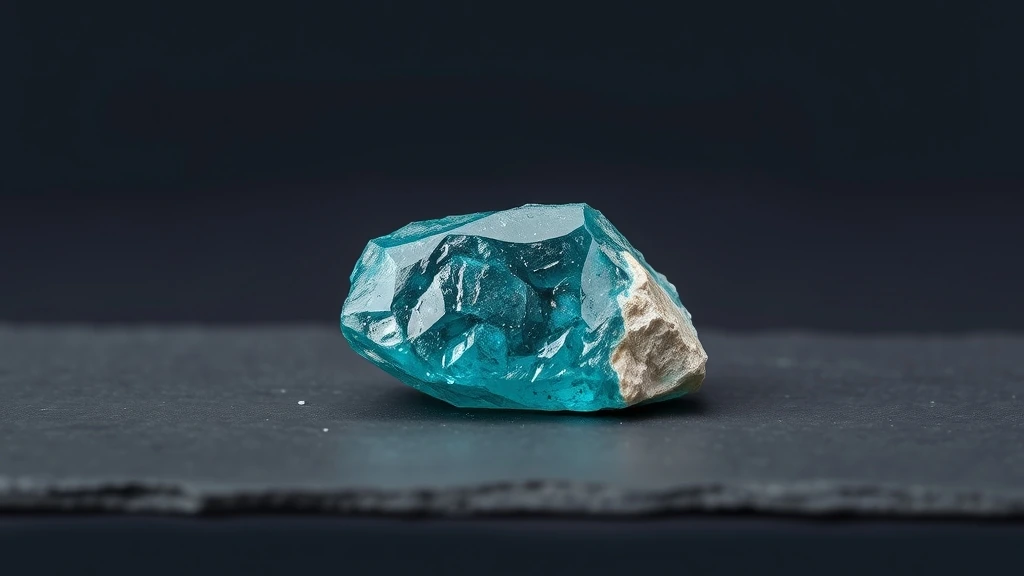
Green sapphire belongs to the Oxides mineral group, specifically the corundum family. It crystallizes in a trigonal system, forming hexagonal bipyramidal or prismatic crystals. The gemstone’s striking color arises from trace elements rather than intrinsic impurities, and it is prized for both its hardness and optical brilliance.
What is Green Sapphire? Geological Overview & Definition
Green sapphire is a corundum variant distinguished by its green coloration, which results from trace amounts of iron and titanium. It is not a separate mineral species but a gem‑grade form of the same crystalline structure that produces ruby and other colored sapphires. Historically, green sapphires were prized in ancient civilizations for their perceived protective qualities and were often set in royal regalia. In modern gemology, they are valued for their rarity and the subtle, sophisticated hue they bring to jewelry.
Green Sapphire Chemical Composition & Crystallographic Properties
The crystal lattice of green sapphire is trigonal, adopting the hexagonal bipyramidal or prismatic corundum structure. Within this lattice, aluminum ions occupy octahedral sites, while iron (Fe³⁺) and titanium (Ti⁴⁺) substitute for aluminum, creating chromophore color centers that absorb specific wavelengths of light to produce green. The substitution is typically in the range of 0.1–1.0 wt % for iron and 0.01–0.1 wt % for titanium, though exact concentrations vary by locality. Green sapphires are chemically inert to most acids, but strong oxidizing acids can alter surface coloration over extended exposure. Thermal treatment can slightly shift color intensity, with high temperatures often enhancing the green by promoting additional iron–titanium pairing. Overall, the gemstone’s optical properties are governed by the delicate balance of these trace elements within the rigid corundum lattice.
| Property | Specification |
|---|---|
| Mineral Group | Oxides (Corundum Group) |
| Chemical Formula | Al₂O₃:Fe,Ti (Aluminum Oxide with Iron/Titanium traces) |
| Mohs Hardness | 9.0 |
| Crystal System | Trigonal (Hexagonal bipyramidal or prismatic corundum) |
| Specific Gravity (Density) | 3.98 – 4.06 |
| Refractive Index | 1.762 – 1.778 |
| Color & Optical Properties | Natural Green Sapphire color spectrum and optical dispersion |
| Primary Mining Localities | Sri Lanka, Madagascar, Myanmar, Australia, Kashmir |
| Water & Chemical Resistance | Very High (Fully resistant to water and standard detergents) |
| Chakra Alignment (Traditional) | Throat Chakra and Third Eye Chakra |
| Zodiac Affinity (Traditional) | Virgo, Libra, Sagittarius |
| Symbolic Meaning (Traditional) | Wisdom, royalty, fidelity, mental focus, and spiritual clarity |
Green Sapphire Varieties & Color Spectrum
Almandine‑Green Sapphire
Almandine‑green sapphires arise from Fe²⁺ and Ti⁴⁺ substitutions within corundum, producing a deep, forest‑green hue. They form in high‑pressure metamorphic rocks, often within gneiss and schist matrices. The gemstone typically displays inclusions of rutile needles, giving a characteristic “silk” effect. Due to their rarity and the difficulty of distinguishing them from emeralds, these stones command premium prices in the fine‑gem market.
Spinel‑Green Sapphire
Spinel‑green sapphires are actually spinel (MgAl₂O₄) misidentified as corundum, yet they share similar hardness and refractive indices. Their green coloration results from trace Fe²⁺ and Ti⁴⁺. These stones often exhibit a “mottled” appearance with fine, parallel inclusions. Although they are less common than true corundum greens, spinel greens are prized for their clarity and bright, even tone. In comparative mineralogical collections, practitioners and geologists frequently study Star Ruby alongside this crystal to appreciate their subtle energetic and structural differences.
Greenish‑Blue Sapphire (Sapphire‑Emerald Hybrids)
These hybrids display a blended green‑blue spectrum, often termed “sapphire‑emerald.” They form where corundum and emerald deposits intersect, allowing trace amounts of chromium and boron to influence color. The resulting stones show a subtle “cobalt” tint and a slightly translucent quality. Their scarcity and unique chromatic balance make them highly sought after by collectors. In comparative mineralogical collections, practitioners and geologists frequently study Blue Jay Sapphire alongside this crystal to appreciate their subtle energetic and structural differences.
Emerald‑Green Sapphire (Beryllium‑Infused)
Emerald‑green sapphires contain minute beryllium inclusions that shift the hue toward a vivid, emerald‑like green. They are typically found in pegmatitic environments where beryllium is abundant. These gems often exhibit a “cobalt‑green” tone with a faint, pearly luster. Their limited supply and distinctive color profile contribute to their high market value.
Green Sapphire from the Kachin Hills
The Kachin Hills of Myanmar produce a distinctive “forest green” sapphire, characterized by a deep, saturated green with a subtle “emerald” undertone. These stones form in quartz‑rich pegmatites and frequently contain rutile and chromite inclusions. Their density and clarity are exceptional, making them a favorite among high‑end jewelers. The region’s limited output and strict export controls add to their exclusivity.
Green Sapphire from the Sri Lanka Bentota District
Sri Lankan Bentota sapphires exhibit a “pale green” hue with a bright, almost translucent quality. They form in metamorphic schist and are often accompanied by titanium‑rich inclusions that create a subtle “silver” sheen. These stones are relatively abundant but still prized for their light, airy appearance. Their accessibility makes them a popular choice for costume jewelry and mid‑tier fine pieces.
Where is Green Sapphire Found? Geological Mining & Extraction
Green sapphires are primarily sourced from pegmatitic and metamorphic environments where corundum crystallizes under high temperatures and pressures. Key deposits include the Kachin Hills in Myanmar, the Bentota District of Sri Lanka, and the Bengal region of India, each offering distinct color profiles and inclusion characteristics.
Extraction typically involves open‑pit and underground mining techniques, followed by meticulous sorting and grading. Modern processing employs laser‑cutting and ultrasonic cleaning to preserve the gemstone’s natural luster while removing surface impurities. The global supply chain is tightly regulated, with major exporters such as Myanmar and Sri Lanka maintaining strict quality controls to meet international standards.
Historical Significance & Cultural Lore of Green Sapphire
Across ancient Greco‑Roman and Egyptian lapidary traditions, green sapphires were revered as symbols of royalty and wisdom, often incorporated into imperial regalia and funerary jewelry. In Vedic lore, these stones were believed to enhance mental focus and spiritual clarity, and were sometimes used in sacred rituals to balance the throat and third eye chakras. The Chinese also prized green sapphires for their association with longevity and protection, frequently embedding them in imperial jade sets. These enduring cultural narratives underscore the gemstone’s timeless allure and its role as a bridge between earthly beauty and metaphysical aspiration.
Modern Uses & Jewelry Applications of Green Sapphire
Green sapphire is prized for its vivid emerald‑green hue, making it a favorite in both cabochon and faceted settings. Lapidaries often employ a cushion cut or round brilliant to enhance the stone’s brilliance while preserving its natural color saturation. In high‑end jewelry, green sapphires appear in engagement rings, pendants, and earrings, where their durability (Mohs 9) ensures long‑lasting wear.
- Cabochon: polished, rounded surfaces that showcase color and luster.
- Faceted: brilliant or step cuts that amplify fire and depth.
- Ornamental carving: used in architectural mosaics and ceremonial objects in ancient cultures.
Carat, Quality Grades & Value Factors of Green Sapphire
The commercial value of green sapphire hinges on the classic 4Cs: Color (intensity, hue, and saturation), Clarity (inclusions and blemishes), Cut (shape, symmetry, and polish), and Carat weight (size). A stone with a deep, uniform green and minimal internal inclusions commands the highest prices, especially when paired with a well‑executed cut that maximizes brilliance.
Quality grading follows GIA and AGS standards, where a “Very Good” color grade and “Excellent” clarity grade are typical for marketable stones. Durability is paramount; the high hardness of corundum (9) protects against scratches, making green sapphire suitable for everyday wear.
Zodiac and Astrological Lore of Green Sapphire
Across ancient lapidary traditions, green sapphire is associated with the Virgo, Libra, and Sagittarius signs, symbolizing wisdom, balance, and adventurous spirit. In Vedic astrology, the stone is believed to enhance mental clarity and support the Throat Chakra and Third Eye Chakra, aligning with its historical use as a talisman for communication and insight.
How to Identify Real vs. Fake Green Sapphire
Authentic green sapphire can be confused with dyed cubic zirconia, synthetic glass, or low‑quality imitations that lack the characteristic hardness and refractive index. Skilled lapidaries distinguish genuine stones by examining internal inclusions, color uniformity, and optical properties under magnification.
Practical At-Home Authenticity Tests
- Temperature Test (Thermal Feel): Genuine sapphire feels noticeably cooler to the touch than glass or synthetic stones, due to its higher thermal conductivity.
- Specific Gravity & Weight Test: Weigh the stone against a calibrated scale; real sapphire typically weighs 3.98–4.06 g/cm³, heavier than most imitations.
- Scratch & Hardness Test (Mohs Comparison): Use a reference mineral (e.g., quartz, 7.0) to confirm the sapphire’s resistance; it should not scratch quartz.
- Microscopic & Loupe Inspection (Internal Inclusions): Under a 10× loupe, look for natural inclusions such as rutile needles or spinel clusters, which are absent in synthetic replicas.
Green Sapphire Valuation Factors, Grading & Pricing
The first key determinant of a green sapphire’s market value is color saturation. A deep, vivid emerald‑green hue that remains consistent across the stone’s surface commands the highest prices. Uniformity of tone, absence of zoning or banding, and a brilliant luster further enhance desirability.
Carat weight, facet symmetry, and adherence to the four Cs lapidary grading standards also play a critical role. Larger stones with precise, symmetrical facets exhibit greater brilliance and are more sought after. A well‑cut sapphire that reflects light evenly across its facets will fetch a premium over a similarly sized but poorly cut counterpart.
Geographical provenance can add a significant premium to a green sapphire’s value. Stones sourced from renowned localities such as Kashmir, Sri Lanka, or Madagascar often carry a market‑value boost, especially when accompanied by a reputable certification. Current gem market trends show that certified specimens from these regions consistently outperform generic sources in auction and retail sales.
How to Clean and Care for Green Sapphire
Clean with warm soapy water and a soft brush. Gently rinse the stone under running water, ensuring no residue remains on its facets. Dry the sapphire with a lint‑free cloth, avoiding any abrasive contact. Ultrasonic cleaners should generally be avoided or used with extreme caution, as high-frequency vibrations can cause microscopic fissures.
Cleansing and Recharging Green Sapphire (Energetic Care)
Place the green sapphire under gentle moonlight for a few hours to allow subtle energetic renewal. Alternatively, resting the stone on a selenite charging slab can help realign its vibrational field. Herbal smudging with sage or palo santo may be employed, but only in a well‑ventilated area and without direct flame contact. These dry, low‑energy methods preserve the crystal lattice while supporting the stone’s metaphysical properties.
Frequently Asked Questions About Green Sapphire
What makes a green sapphire different from other green gemstones?
Green sapphires are a variety of corundum (Al₂O₃) colored by trace amounts of iron and titanium. The trigonal crystal system and high mohs hardness of 9 give them exceptional durability, while the subtle green hue ranges from pale jade to deep emerald tones, distinguishing them from emeralds or peridot.
Is a green sapphire safe to wear in the shower or while swimming?
Yes, green sapphires are fully resistant to water and standard detergents. Their high water resistance means they can be worn in everyday activities, including showering or swimming, without risk of damage or discoloration.
How should I clean a green sapphire to keep its brilliance?
Clean with warm soapy water and a soft brush; Ultrasonic cleaners should generally be avoided or used with extreme caution, as high-frequency vibrations can cause microscopic fissures. Gently brushing removes surface grime, and ultrasonic cleaning can be used for deeper cleaning, but avoid harsh chemicals that could dull the stone’s natural luster.
Can I use an ultrasonic cleaner on a green sapphire that has been cut or faceted?
Yes, ultrasonic cleaning is safe for untreated sapphires, but use caution with faceted stones. The vibrations can loosen loose inclusions, yet prolonged exposure may affect delicate facets; always test a small area first and consult a professional if unsure.
Which zodiac signs are traditionally associated with green sapphire?
Green sapphire is traditionally linked to Virgo, Libra, and Sagittarius. These signs are believed to benefit from the stone’s qualities of wisdom, royalty, and mental focus, enhancing clarity and balance in their lives.
Which chakras does green sapphire correspond to in metaphysical practice?
Green sapphire is aligned with the Throat Chakra and the Third Eye Chakra. It is thought to promote honest communication and intuitive insight, supporting both emotional expression and spiritual awareness.
Does the color intensity of a green sapphire affect its value?
Yes, deeper, more saturated green hues typically command higher prices. The intensity of color reflects the concentration of iron and titanium impurities, and stones with a rich, even tone are prized for their visual impact and rarity.
Are there any special care instructions for a green sapphire that has been set in jewelry?
Avoid harsh chemicals and keep the setting clean to preserve the stone’s brilliance. Regular polishing with a microfiber cloth and occasional professional cleaning will maintain the sapphire’s clarity, ensuring its durability and aesthetic appeal remain intact.