
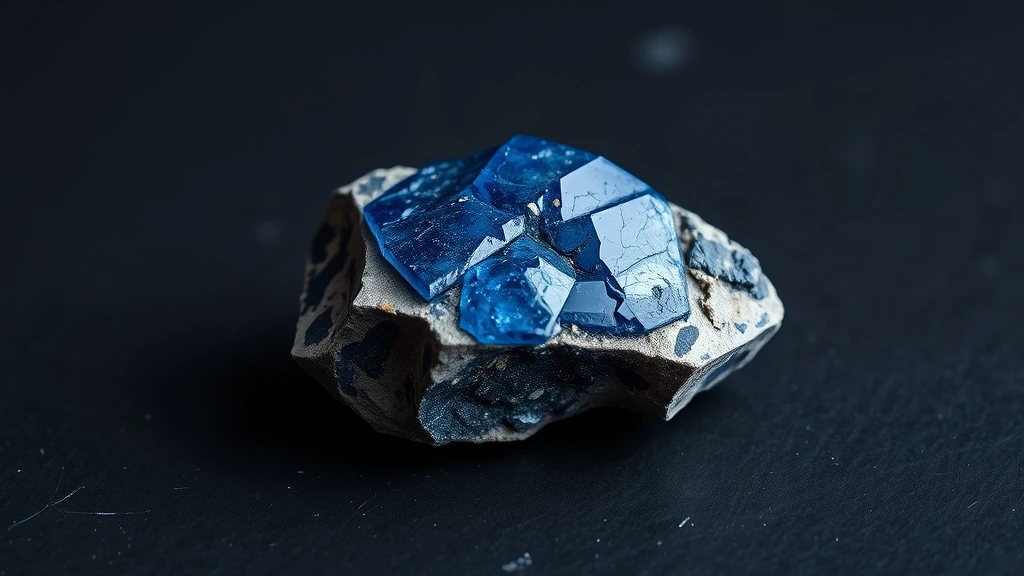
Blue Jay Sapphire belongs to the Oxides mineral group, specifically the corundum family. Its crystal structure is trigonal, forming hexagonal bipyramidal or prismatic prisms. This classification places it among the hardest and most durable gemstones, prized for both its beauty and resilience.
What is Blue Jay Sapphire? Geological Overview & Definition
Blue Jay Sapphire is a corundum variety distinguished by a deep, saturated blue tone. The coloration arises from iron and titanium impurities that create chromophore centers within the crystal lattice. Historically, it has been valued across cultures for its perceived spiritual and protective qualities. In modern gemology, it is recognized as a high-quality, color-pure sapphire suitable for fine jewelry. In comparative mineralogical collections, practitioners and geologists frequently study Black Kyanite alongside this crystal to appreciate their subtle energetic and structural differences.
Blue Jay Sapphire Chemical Composition & Crystallographic Properties
The mineral’s chemical formula is Al₂O₃, with minor Fe²⁺/Fe³⁺ and Ti⁴⁺ substitutions that generate the blue color. It crystallizes in the Trigonal system, forming hexagonal bipyramidal or prismatic crystals. The lattice is a close‑packed arrangement of oxygen anions with aluminum cations occupying octahedral sites. Acid sensitivity is minimal; dilute hydrochloric acid does not attack the crystal, confirming its oxide nature. Chromophore color centers result from Fe/Ti pairs trapped in the lattice, producing the intense blue. Thermal treatment can alter color intensity, but high temperatures typically preserve the blue hue while reducing inclusions.
| Property | Specification |
|---|---|
| Mineral Group | Oxides (Corundum Group) |
| Chemical Formula | Al₂O₃:Fe,Ti (Aluminum Oxide with Iron/Titanium traces) |
| Mohs Hardness | 9.0 |
| Crystal System | Trigonal (Hexagonal bipyramidal or prismatic corundum) |
| Specific Gravity (Density) | 3.98 – 4.06 |
| Refractive Index | 1.762 – 1.778 |
| Color & Optical Properties | Natural Blue Jay Sapphire color spectrum and optical dispersion |
| Primary Mining Localities | Sri Lanka, Madagascar, Myanmar, Australia, Kashmir |
| Water & Chemical Resistance | Very High (Fully resistant to water and standard detergents) |
| Chakra Alignment (Traditional) | Throat Chakra and Third Eye Chakra |
| Zodiac Affinity (Traditional) | Virgo, Libra, Sagittarius |
| Symbolic Meaning (Traditional) | Wisdom, royalty, fidelity, mental focus, and spiritual clarity |
Blue Jay Sapphire Varieties & Color Spectrum
Blue Jay Sapphire displays distinct mineralogical characteristics across its geological varieties and structural habits. Gemologists evaluate these natural varieties based on crystal habit, trace chromophore concentrations, and visual luster. Similarly, the metallic sheen of Specular Hematite offers a striking contrast to the sapphire’s deep blue, illustrating how variations in crystal habit and trace elements can produce distinctly different visual lusters within the same geological framework.
Primary Natural Blue Jay Sapphire
The benchmark natural variety exhibiting diagnostic color saturation and classic crystallographic symmetry.
Distinct Geological Morphs of Blue Jay Sapphire
Secondary regional and structural varieties formed under localized geological temperature and pressure conditions.
Kashmir Blue Jay
Formed in high‑grade metamorphic schists of the Kashmir region, this variety acquires its vivid azure hue from trace titanium and iron substituting into the corundum lattice. The stones often display a velvety silk‑like sheen known as asterism, caused by oriented rutile inclusions. Rarity is extreme; only a few carats have entered the market since the 1970s, making it a collector’s benchmark.
Sri Lankan Blue Jay (Ceylon)
Emerging from alluvial deposits in the Ratnapura basin, Sri Lankan Blue Jay sapphires grow in granite-derived pegmatites where slow cooling promotes large, inclusion‑free crystals. Their hallmark is a bright, saturated blue with a subtle pleochroic shift when viewed from different angles. While more abundant than Kashmir, high‑clarity stones above 2 carats remain scarce and command premium prices.
Montana “Yogo” Blue Jay
The Yogo Creek deposit in western Montana yields sapphires that crystallize directly within intrusive basaltic dikes, bypassing sedimentary transport. This geological setting produces a distinctive cornflower blue with minimal inclusions and a natural hexagonal facet pattern. The mines are limited, and the United States’ only primary source of blue sapphire, giving the Yogo variety a unique national significance.
Madagascar “Sambava” Blue Jay
In the Sambava region, sapphires develop in metamorphosed basaltic terranes where fluid‑rich metasomatism introduces iron and titanium. The stones exhibit a deep, royal blue often accompanied by a faint star‑burst of light‑scattering inclusions. Madagascar’s output is relatively high, yet the finest color‑saturated pieces are still considered rare on the global market.
Burmese “Mogok” Blue Jay
Mogok’s sapphire deposits are hosted in granulite‑facies metamorphic rocks, where high pressure and temperature foster well‑ordered crystal lattices. The resulting gems display an intense, saturated blue with a characteristic “royal” glow and occasional silvery needle‑like rutile that enhances brilliance. Although Mogok produces a large volume of sapphires, true Blue Jay specimens with optimal hue and clarity are limited and highly prized.
Tanzanian “Mwadui” Blue Jay
Extracted from the Mwadui kimberlite pipe, these sapphires form as xenocrysts entrapped within the volcanic mantle material. Their signature is a vivid, slightly violet‑tinged blue, often accompanied by microscopic gas bubbles that create a subtle internal sparkle. The kimberlite context makes the variety geologically unique, and high‑quality stones are uncommon due to the challenging extraction environment.
Where is Blue Jay Sapphire Found? Geological Mining & Extraction
Blue Jay sapphires are predominantly recovered from metamorphic schists, granitic pegmatites, and basaltic intrusions where corundum crystallizes under high temperature and pressure. In Kashmir and Sri Lanka, miners exploit river‑washed gravels and primary vein deposits, using hand‑sorting and water‑screening to isolate the dense, 4 g/cm³ crystals from surrounding matrix.
In North America and Africa, modern operations employ open‑pit and underground drilling to access basaltic dikes and kimberlite pipes, followed by crushing, dense‑media separation, and laser‑sorting technologies. These methods preserve the stone’s integrity while maximizing recovery of the prized blue‑hued corundum from complex host rocks.
Historical Significance & Cultural Lore of Blue Jay Sapphire
Across ancient lapidary traditions, blue sapphires symbolized royalty and divine favor, appearing in Egyptian burial caches where they adorned the necks of pharaohs as talismans of protection. Greco‑Roman texts praised the stone for its ability to sharpen the mind, linking it to the deity Apollo and the pursuit of wisdom.
In Vedic literature, the sapphire was associated with the Throat Chakra, believed to enhance verbal expression and spiritual clarity, while Chinese imperial courts prized it as a marker of imperial authority, embedding it in ceremonial seals. Throughout these cultures, the gemstone’s enduring allure was woven into myths of fidelity, mental focus, and the pursuit of higher knowledge.
Modern Uses & Jewelry Applications of Blue Jay Sapphire
Lapidaries favor Blue Jay Sapphire for its exceptional durability and distinct cool-toned aesthetic, making it a versatile choice for both high-end and contemporary jewelry. The stone’s Mohs hardness of 9 allows for intricate faceting without significant risk of chipping during daily wear. Designers often pair this gem with white gold or platinum to enhance its icy, steel-blue undertones.
- Faceted Cuts: Oval, cushion, and emerald cuts maximize the stone’s refractive index (1.762–1.778), creating brilliant fire and scintillation.
- Cabochon Polishing: Smooth, domed cabochons are used in vintage-inspired settings, showcasing the stone’s subtle silkiness and depth.
- Ornamental Carving: Rarely carved due to its brittleness under pressure, but occasionally used in intaglio seals for its symbolic fidelity.
- Accent Stones: Frequently set as side stones in engagement rings to complement traditional blue sapphires or diamonds.
Carat, Quality Grades & Value Factors of Blue Jay Sapphire
The valuation of Blue Jay Sapphire hinges on the interplay between Color and Clarity, with the former being the primary driver of market price. Ideal specimens exhibit a medium to medium-dark blue hue with a distinct grayish or steel-like tint, avoiding overly pale or muddy tones. Clarity is assessed under 10x magnification, where eye-clean stones command premium prices, though minor inclusions are acceptable in larger carats. The presence of rutile needles or silk can either enhance or diminish value depending on the intensity of the asterism or color saturation.
Cut and Carat weight further refine the gem’s commercial appeal, with larger stones exceeding five carats being increasingly rare and valuable. The specific gravity of 3.98–4.06 ensures the stone feels substantial, a tactile cue that collectors associate with quality. Jewelry durability is paramount, as the trigonal crystal system provides excellent resistance to abrasion, making it suitable for rings and bracelets. Grading standards align with GIA protocols, emphasizing that natural origin and lack of heat treatment significantly elevate the stone’s intrinsic worth.
Zodiac and Astrological Lore of Blue Jay Sapphire
In astrological tradition, Blue Jay Sapphire is strongly aligned with Virgo, Libra, and Sagittarius, serving as a talisman for mental clarity and diplomatic harmony. For Virgos, it enhances analytical precision, while Librans find it fosters balanced decision-making and aesthetic appreciation. Sagittarians often wear this stone to sharpen their intellectual pursuits and expand their philosophical horizons.
Historically, this gemstone has been linked to the Throat Chakra and Third Eye Chakra, symbolizing truth, communication, and spiritual insight. Across ancient lapidary traditions, blue corundum was revered for its ability to promote wisdom and fidelity, often gifted to scholars and leaders. Its cool, steady energy is believed to calm the mind, facilitating deep meditation and intuitive perception.
How to Identify Real vs. Fake Blue Jay Sapphire
Distinguishing genuine Blue Jay Sapphire from synthetic glass or dyed replicas requires attention to optical and physical properties. Glass imitations often contain bubbles and lack the natural inclusions found in corundum, while dyed stones may show color concentration along cracks. Synthetic sapphires, created via the Verneuil or flux-growth methods, can be visually identical but often exhibit curved striae or flux inclusions under magnification.
Practical At-Home Authenticity Tests
- Temperature Test (Thermal Feel): Genuine corundum feels cool to the touch and retains that coolness longer than glass or plastic, which warm up quickly due to lower thermal conductivity.
- Specific Gravity & Weight Test: A real Blue Jay Sapphire has a density of 3.98–4.06, making it feel noticeably heavier than glass of the same size, which typically has a lower specific gravity.
- Scratch & Hardness Test (Mohs Comparison): With a Mohs hardness of 9, genuine sapphire will scratch quartz (7) and glass (5.5) but will not be scratched by them; glass imitations will scratch easily under a steel nail.
- Microscopic & Loupe Inspection (Internal Inclusions): Use a 10x loupe to look for natural inclusions like rutile needles or gas-liquid inclusions; glass often shows round bubbles, and synthetic stones may display curved growth lines.
Blue Jay Sapphire Valuation Factors, Grading & Pricing
Market value is primarily driven by Color Saturation, where deep, vivid blue tones command the highest premiums. Uniformity across the stone ensures visual consistency, while high optical clarity enhances the gem’s natural luster. Stones exhibiting minimal inclusions and intense chromatic depth are classified as top-tier specimens by global gemological institutes.
The Carat Weight of a blue jay sapphire significantly influences its per-carat price, especially for larger, flawless stones. Precise facet symmetry maximizes light return, a critical element within the 4Cs lapidary grading standards. Expert cutters optimize these proportions to balance brilliance with the stone’s inherent color intensity.
Geographical Provenance Premium plays a crucial role in determining certified gem market value trends. Sapphires from renowned mines often carry higher valuations due to established historical reputation and consistent quality. Buyers should always request independent laboratory certification to verify origin and confirm the absence of heat treatment.
How to Clean and Care for Blue Jay Sapphire
Due to its exceptional Mohs Hardness of 9.0, blue jay sapphire is fully resistant to water and standard detergents. To maintain its brilliance, clean the gem with warm soapy water and a soft brush to remove accumulated oils. This gentle method effectively restores surface luster without risking damage to the crystal structure.
Ultrasonic cleaners are safe for untreated sapphires, providing a deep clean for intricate jewelry settings. However, always verify that the stone has not undergone fracture filling or other treatments that could be compromised by vibration. Regular inspection ensures that prongs remain secure, protecting the gemstone from accidental loss or impact.
Cleansing and Recharging Blue Jay Sapphire (Energetic Care)
For holistic energetic maintenance, practitioners often use dry methods such as herbal smudging with sage or palo santo. This ritual is performed in a well-ventilated area to clear stagnant energy without exposing the stone to moisture. The aromatic smoke is believed to purify the gem’s vibrational field, aligning it with spiritual clarity.
Alternatively, placing the sapphire on a selenite charging slab allows for gentle recharging through ambient energy absorption. Gentle moonlight exposure is another popular practice, believed to enhance the stone’s connection to the Third Eye Chakra. These methods avoid thermal stress, preserving the integrity of the trigonal crystal lattice during the process.
Frequently Asked Questions About Blue Jay Sapphire
Blue Jay Sapphire displays distinct mineralogical characteristics across its geological varieties and structural habits. Gemologists evaluate these natural varieties based on crystal habit, trace chromophore concentrations, and visual luster.
Primary Natural Blue Jay Sapphire
The benchmark natural variety exhibiting diagnostic color saturation and classic crystallographic symmetry.
Distinct Geological Morphs of Blue Jay Sapphire
Secondary regional and structural varieties formed under localized geological temperature and pressure conditions.
What makes a Blue Jay Sapphire different from other sapphires?
Blue Jay sapphires are a vivid blue variety of corundum, distinguished by their deep, saturated hue and high clarity. These stones are prized for their chemical formula Al₂O₃:Fe,Ti, which imparts a rich blue tone, and for their density of 3.98–4.06 g/cm³ that gives them a substantial feel in jewelry.
Is a Blue Jay Sapphire safe to wear in the shower?
Yes, Blue Jay sapphires are fully resistant to water and standard detergents. Their trigonal crystal system and robust lattice structure prevent water absorption, making them ideal for everyday wear, even in wet environments.
How should I clean my Blue Jay Sapphire?
Clean with warm soapy water and a soft brush; Ultrasonic cleaners should generally be avoided or used with extreme caution, as high-frequency vibrations can cause microscopic fissures. A gentle microfiber cloth can also remove surface grime, but avoid harsh chemicals that might dull the stone’s natural luster.
Can I use an ultrasonic cleaner on a treated Blue Jay Sapphire?
Ultrasonic cleaning is safe for untreated sapphires, but treated stones may be damaged by the vibration. If your sapphire has a protective coating, it is best to stick to manual cleaning with mild soap and water.
Which zodiac signs are associated with Blue Jay Sapphire?
Blue Jay Sapphire aligns with Virgo, Libra, and Sagittarius. These signs are believed to benefit from the stone’s reputed qualities of wisdom, royalty, fidelity, mental focus, and spiritual clarity.
Which chakras does Blue Jay Sapphire influence?
Blue Jay Sapphire is linked to the Throat Chakra and the Third Eye Chakra. These energy centers are thought to be enhanced by the stone’s calming blue vibration, promoting clear communication and intuitive insight.
Does the color intensity of a Blue Jay Sapphire affect its value?
Higher color saturation and uniformity increase a Blue Jay Sapphire’s value. Gemologists evaluate the refractive index (1.762–1.778) and Mohs hardness (9.0) to confirm authenticity and assess how the hue will perform under light.
Are Blue Jay Sapphires suitable for engagement rings?
Yes, Blue Jay sapphires are durable and visually striking, making them excellent for engagement rings. Their hardness of 9.0 ensures resistance to scratches, while the vibrant blue offers a distinctive alternative to traditional diamonds.