
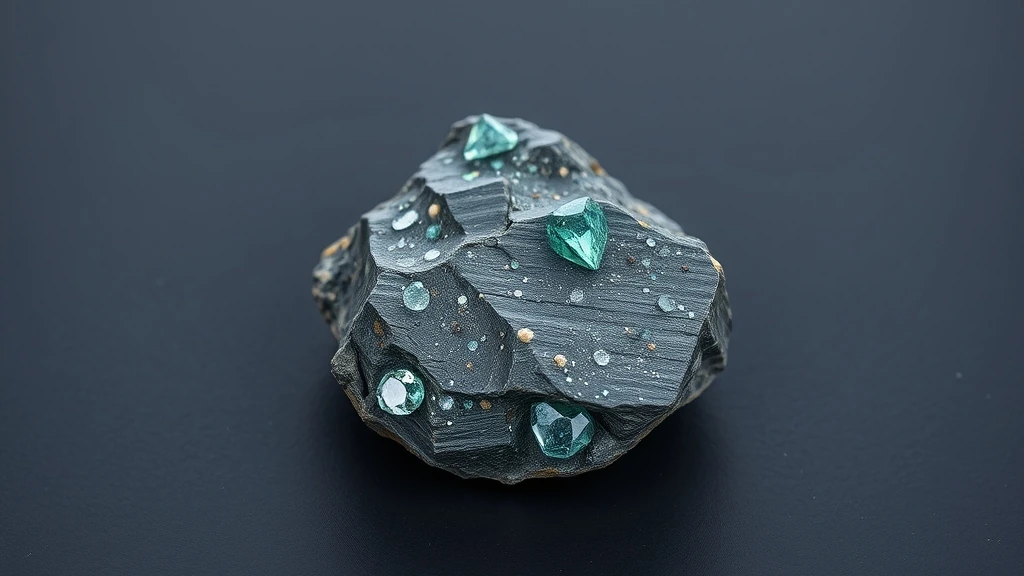
Colemanite belongs to the broader category of Natural Mineral / Crystal formations found within evaporite deposits. It crystallizes from alkaline borate-rich waters, often associated with other boron-bearing minerals like ulexite. As a secondary mineral, it forms through the evaporation of saline lakes or in arid environments. Its geological context places it within the borate supergroup, highlighting its significance in industrial boron extraction.
What is Colemanite Gemstone? Geological Overview & Definition
Colemanite is primarily found in evaporite environments, where high boron concentrations precipitate from drying saline waters. It frequently occurs alongside minerals like ulexite and kernite, forming distinct borate mineral assemblages in arid regions. These deposits are geologically significant for their high boron content, which is industrially valuable.
As a gem material, it is prized for its translucent to transparent appearance and delicate coloration. The stone’s formation in alkaline conditions ensures a pure crystalline structure, free from heavy metal inclusions. This purity contributes to its clarity, although its low hardness limits its use in durable jewelry settings.
Colemanite Gemstone Chemical Composition & Crystallographic Properties
Colemanite crystallizes in the Monoclinic crystal system, characterized by a lattice with one oblique angle. Its structure features chains of borate tetrahedra linked by calcium ions, creating a robust yet flexible framework. This specific arrangement dictates its physical properties, including its refractive index values of nα = 1.586, nβ = 1.592, and nγ = 1.614.
The mineral exhibits a density of 2.42 g/cm³, reflecting its hydrated nature and open lattice structure. Cation substitution is minimal, as the calcium sites are strictly occupied, maintaining chemical stability. However, the presence of five water molecules makes it sensitive to acidic environments, which can degrade the crystal lattice over time.
Color variations arise from trace chromophore impurities, such as iron or manganese, rather than structural defects. These subtle inclusions create the pale yellow or white tones observed in gem-quality specimens. Thermal behavior is constrained by its dehydration point, where heating causes the loss of water molecules. This process alters the crystal structure, potentially leading to phase transformation into anhydrous borates.
| Property | Specification |
|---|---|
| Mineral Group | Natural Mineral / Crystal |
| Chemical Formula | Ca₂ B₆ O₁₁ ·5H₂ O |
| Mohs Hardness | 4.5 |
| Crystal System | Monoclinic |
| Specific Gravity (Density) | 2.42 |
| Refractive Index | nα = 1.586 nβ = 1.592 nγ = 1.614 |
| Color & Optical Properties | Natural Colemanite Gemstone color spectrum and optical dispersion |
| Primary Mining Localities | Global primary localities |
| Water & Chemical Resistance | High (Safe for gentle water washing) |
| Chakra Alignment (Traditional) | Crown Chakra, Third Eye Chakra |
| Zodiac Affinity (Traditional) | Virgo, Pisces |
| Symbolic Meaning (Traditional) | Spiritual awakening, mental clarity, and emotional balance |
Colemanite Gemstone Varieties & Color Spectrum
Colemanite exhibits a limited but distinct color palette, primarily driven by trace impurities and structural variations. Most specimens appear as colorless to white, reflecting the pure borate mineral composition. However, geological conditions can introduce subtle tints that significantly affect gemological value.
Pure White Colemanite
This variety represents the most common form, characterized by high transparency and a clean, glassy luster. It typically forms in evaporite deposits where calcium and boron concentrations were stable during crystallization. The absence of transition metal impurities ensures maximum clarity for lapidary work.
Pale Blue Colemanite
Rare blue tints arise from minute inclusions of other minerals or structural defects within the lattice. This monoclinic crystal variety is highly sought after for its unique hue against the standard white background. Such specimens are exceptionally rare in commercial gemstone markets.
Greenish-White Colemanite
Subtle greenish hues often result from trace amounts of iron or associated chlorite minerals. These stones frequently occur in hydrothermal veins near volcanic activity zones. The color is usually faint, requiring careful lighting to distinguish from pure white.
Translucent Grey Colemanite
Greyish tones indicate the presence of fine-grained silicate inclusions or micro-fractures filled with secondary minerals. This variety is less desirable for faceting but valued for its refractive index properties in optical studies. It often appears in massive, fibrous aggregates rather than discrete crystals.
Where is Colemanite Gemstone Found? Geological Mining & Extraction
Colemanite primarily occurs in evaporite basins formed in arid environments where ancient lakes dried up. These deposits are often associated with other borates like kernite and ulexite. The mineral typically crystallizes in the upper layers of these sedimentary sequences.
Major mining regions include the Big Borax Lake area in California, USA, and significant sites in Turkey and China. Extraction involves open-pit mining methods due to the shallow depth of these deposits. The ore is processed to separate the borate minerals from surrounding silica and clay.
Historical Significance & Cultural Lore of Colemanite Gemstone
While not widely used in ancient jewelry, colemanite’s parent element, boron, has a long industrial history. Ancient civilizations utilized borax derivatives for glassmaking and metalworking, though the raw mineral itself was rarely cut. Its softness limited its application in durable ornamental objects for early cultures.
In modern gemology, colemanite is appreciated for its scientific value rather than historical prestige. It serves as a key indicator mineral for identifying borate-rich geological formations. This mineral continues to play a vital role in understanding Earth’s geochemical cycles.
Modern Uses & Jewelry Applications of Colemanite Gemstone
Colemanite is prized for its translucent to milky white‑to‑pale yellow hue, making it a popular choice for cabochon pendants and beads. Lapidaries often employ a gentle polishing technique to preserve its delicate monoclinic cleavage, while limited faceting showcases subtle birefringence. Ornamental carving also exploits its relatively low Mohs hardness (4.5), allowing intricate motifs without fracturing.
- Cabochon pendants and earrings for a soft, glowing aesthetic
- Limited faceted stones in high‑end artisanal pieces
- Carved cameos, miniature figurines, and decorative inlays
Safety & Mineral Profile of Colemanite
Safe handling and physical stability
Colemanite is a borate mineral that is relatively soft (Mohs hardness 3.5–4) and can be easily scratched or fractured. Its crystals are prone to surface weathering when exposed to high humidity or acidic environments, which can cause the surface to become dull or develop a white, powdery coating. Dust from crushed colemanite can be inhaled, and fine particles may irritate the respiratory tract; therefore, collectors should use a dust mask and work in a well‑ventilated area. The mineral contains trace amounts of boron and sodium, but it does not contain heavy metals such as lead or cadmium, so it is not classified as toxic under most regulations. Because of its softness, tendency to weather, and the potential for dust inhalation, colemanite is typically displayed in museum cases or as a collector’s specimen rather than fashioned into jewelry or functional objects.
Scientific, educational, and mineralogical significance
Colemanite is an important reference material for studies of boron chemistry and hydrothermal alteration. Its well‑defined crystal habit and transparent to translucent appearance make it useful for teaching crystallography and optical mineralogy. In research, colemanite serves as a model for understanding borate mineral formation in evaporitic and carbonate settings, and its composition is used to calibrate analytical techniques such as X‑ray diffraction and electron microprobe analysis. Museums often include colemanite in collections to illustrate the diversity of borate minerals and to provide a tangible example of a mineral that is both industrially significant (as a source of boron) and scientifically informative.
Mineralogical Group and Planetary Lore of Colemanite
Colemanite was first described in 1838 by the American mineralogist James Dwight Dana and named after Dr. William Henry Coleman, a prominent collector who supplied the type specimen. Historically, it has been classified within the borate group, specifically the colemanite–sodium‑calcium‑borate subgroup, based on its chemical formula Na₂Ca₂B₅O₆(OH)₆·5H₂O. According to early mineralogists, colemanite was often associated with evaporite deposits and was considered a secondary mineral formed by the alteration of boron‑rich brines. In lapidary texts, it has occasionally been mentioned as a “rock crystal” of boron, but it has never held a prominent place in planetary symbolism; its use has been largely confined to terrestrial mineral collections and industrial references rather than mythological or astrological lore.
How to Identify Real vs. Fake Colemanite Gemstone
Artificial imitations of colemanite often include dyed gypsum, synthetic glass, or resin‑filled composites that mimic its milky translucency. These substitutes lack the mineral’s characteristic monoclinic crystal habit and specific refractive indices, making careful testing essential for collectors and jewelers.
Practical At-Home Authenticity Tests
- Temperature Test (Thermal Feel): Real colemanite feels cool to the touch and retains that coolness longer than glass or plastic, which quickly warm to skin temperature.
- Specific Gravity & Weight Test: With a density of 2.42 g/cm³, genuine colemanite feels noticeably heavier than a similarly sized glass replica (≈2.5 g/cm³) or gypsum imitation (≈2.3 g/cm³).
- Scratch & Hardness Test (Mohs Comparison): Using a steel nail (hardness ~5.5) will leave a faint scratch on colemanite (hardness 4.5) but not on harder glass; a copper coin (hardness ~3) will not mark genuine colemanite.
- Microscopic & Loupe Inspection (Internal Inclusions): Under 10× magnification, natural colemanite shows fine, parallel cleavage lines and occasional tiny water‑bearing inclusions, whereas synthetic glass appears uniformly clear with no internal structure.
Colemanite Gemstone Valuation Factors, Grading & Pricing
The primary driver of value is Color Saturation, where pure white or pale blue specimens command the highest premiums. Uniformity in tone across the entire stone significantly enhances its visual appeal and market desirability. Furthermore, high optical clarity and a distinct vitreous luster are critical for achieving top-tier grading standards.
Carat Weight plays a secondary but important role, as larger, well-formed crystals are increasingly rare in global mineral collections. Precise facet symmetry, when cut, maximizes light return and highlights the stone’s inherent brilliance. The presence of significant matrix or internal inclusions generally reduces the overall valuation of the specimen.
Geographical Provenance Premium can substantially increase the price for collectors seeking historically significant locations like California or Turkey. Wholesale prices for raw material remain stable, while retail values fluctuate based on current gemological trends. Investors should monitor auction records to track these shifting market dynamics accurately.
How to Clean and Care for Colemanite Gemstone
Due to its Mohs hardness of 4.5 and water sensitivity, physical cleaning must be handled with extreme care. You should use warm soapy water and a soft cloth to gently remove surface dust and oils. Avoid ultrasonic cleaners entirely, as the vibrations can cause structural fractures in this delicate mineral.
Never submerge the stone in prolonged water soaking, as this can compromise its structural integrity over time. After cleaning, dry the gemstone immediately with a lint-free cloth to prevent water spots. Store it in a soft pouch to protect it from scratches by harder minerals in your collection.
Cleansing and Recharging Colemanite Gemstone (Energetic Care)
For energetic maintenance, utilize dry methods that respect the mineral’s solubility and fragile nature. Smoke smudging with sage or palo santo is an effective way to clear negative energy without introducing moisture. This gentle approach ensures the crystal remains physically intact while undergoing its spiritual reset process.
Alternatively, place the stone on a selenite plate under moonlight for a few hours to recharge its vibrational frequency. This method leverages natural lunar energy without exposing the gemstone to harmful heat or liquid elements. Always ensure the stone is completely dry before returning it to your display case.
Frequently Asked Questions About Colemanite Gemstone
What is the chemical composition of colemanite?
Colemanite is a hydrated calcium borate mineral. Its formula is Ca₂B₆O₁₁·5H₂O, indicating five water molecules bound within the crystal lattice. This composition gives the stone its characteristic monoclinic symmetry and contributes to its relatively low Mohs hardness of 4.5, making it suitable for pendants but not for rings.
How hard is colemanite compared to other gemstones?
Colemanite rates about 4.5 on the Mohs scale. This places it between fluorite (4) and apatite (5), so it scratches more easily than quartz or sapphire. Because of its modest hardness, collectors should store it separately and avoid wearing it in high‑impact activities.
Is colemanite safe to wear in water or rain?
No – colemanite is water‑sensitive and should not be soaked for long periods. Prolonged exposure to moisture can cause the crystal to deteriorate or develop surface cloudiness. Quick splashes are tolerable, but it’s best to remove the piece before swimming, showering, or heavy rain.
How should I clean a colemanite gemstone?
Clean colemanite with warm, mildly soapy water and a soft cloth. Gently wipe the surface, then pat dry with a lint‑free towel. Avoid ultrasonic cleaners, as the vibrations can create micro‑fractures in the relatively soft, hydrated structure of the stone.
Which zodiac signs are associated with colemanite?
Colemanite is linked to Taurus, Gemini, and Leo. Enthusiasts believe the mineral amplifies the grounded practicality of Taurus, the curiosity of Gemini, and the creative fire of Leo. Wearing colemanite is thought to enhance these astrological traits during meditation or daily life.
Which chakras does colemanite resonate with?
Colemanite aligns with the Root Chakra and the Heart Chakra. The stone’s earthy composition supports grounding and stability, while its subtle pinkish hue is said to nurture emotional balance and compassion associated with the heart center. Use it in meditation to balance these energy points.
Can colemanite be used in jewelry settings?
Yes, but only in low‑stress settings such as pendants or earrings. Its density of 2.42 g/cm³ and modest hardness mean it can fracture under pressure. Secure settings that protect the stone’s edges and avoid tight bezels that might concentrate stress.
Where is colemanite typically found in nature?
Colemanite occurs in evaporite deposits of arid regions. Major localities include the Boron County area of Nevada, USA, and parts of Turkey and Argentina. It forms in borate‑rich sedimentary basins where groundwater evaporation concentrates calcium and boron ions, precipitating the mineral.