
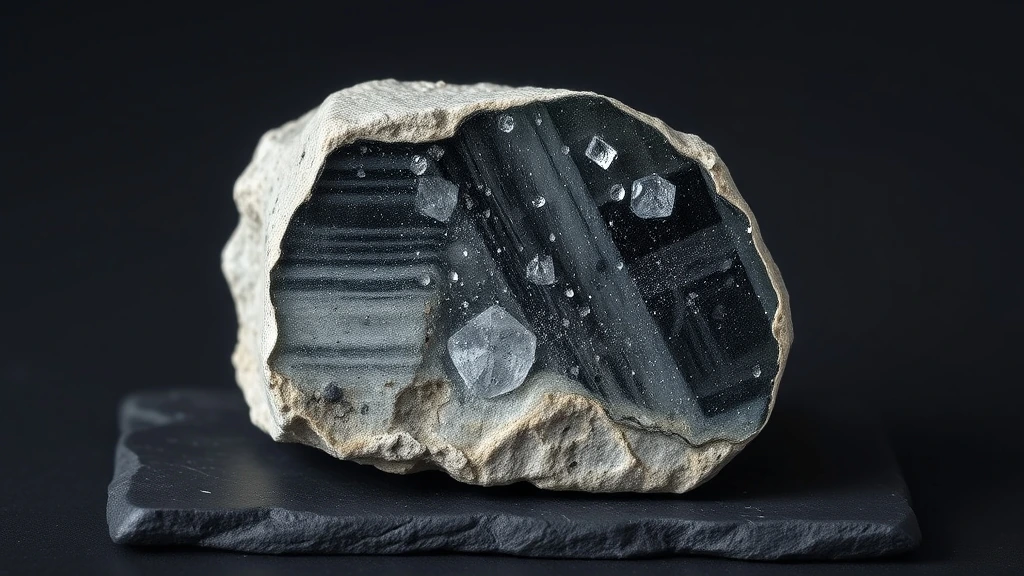
Jeremejevite belongs to the vast category of Natural Mineral / Crystal species, representing a distinct inorganic solid formed through geological processes. Its classification underscores its status as a primary crystalline phase rather than a secondary alteration product. This mineralization occurs within specific hydrothermal environments where phosphate-rich fluids interact with magnesium-bearing substrates. Understanding its parent group helps geologists trace its paragenetic associations and formation conditions.
What is Jeremejevite Gemstone? Geological Overview & Definition
Jeremejevite is a hexagonal phosphate mineral that crystallizes within the Hexagonal crystal system. It is primarily found in hydrothermal veins and cavities associated with basaltic or ultramafic rocks. The mineral often forms alongside other phosphate species, indicating a complex fluid evolution during its genesis.
Its gemological significance lies in its rarity and distinct crystal habit, which frequently exhibits prismatic forms. The stone’s specific gravity of approximately 3.28 helps distinguish it from visually similar silicates. Proper identification requires careful examination of its luster and cleavage characteristics.
Jeremejevite Gemstone Chemical Composition & Crystallographic Properties
The mineral adopts a Hexagonal crystal system, characterized by a unique arrangement of phosphate tetrahedra and water molecules. Its lattice structure is stabilized by extensive hydrogen bonding networks within the crystal channels. This structural arrangement contributes to its moderate Mohs hardness and distinct optical properties.
Chemically, Jeremejevite features a framework of sodium and magnesium cations balanced by phosphate anions. The presence of 27 water molecules per formula unit makes it highly sensitive to dehydration. Heating the mineral above 100°C can lead to structural collapse and loss of crystallographic integrity.
The primary chromophore responsible for its pale coloration is likely due to trace impurities or structural defects. Acid sensitivity is notable, as strong acids can dissolve the phosphate framework, releasing constituent ions. This reactivity is a critical factor in its durability assessment for gemological use.
Thermal behavior indicates that Jeremejevite is anhydrous only at high temperatures, losing water in stages. This dehydration process alters its refractive index and density, affecting its gemological value. Careful handling is required to preserve its optical clarity and structural stability.
| Property | Specification |
|---|---|
| Mineral Group | Natural Mineral / Crystal |
| Chemical Formula | Na₃Mg₃(PO₄)₃·27H₂O |
| Mohs Hardness | 6.5 – 7.5 |
| Crystal System | Hexagonal crystal system |
| Specific Gravity (Density) | 3.28 – 3.31 |
| Refractive Index | nsub |
| Color & Optical Properties | Natural Jeremejevite Gemstone color spectrum and optical dispersion |
| Primary Mining Localities | Global primary localities |
| Water & Chemical Resistance | High (Safe for gentle water washing) |
| Chakra Alignment (Traditional) | Third Eye Chakra, Crown Chakra |
| Zodiac Affinity (Traditional) | Virgo, Aquarius |
| Symbolic Meaning (Traditional) | Intuition, spiritual clarity, and mental balance |
Jeremejevite Gemstone Varieties & Color Spectrum
Jeremejevite exhibits a limited but distinct range of hues, primarily driven by trace element substitutions within its complex phosphate structure. The most commercially viable specimens display a pale, translucent blue or green tint, which is highly prized for its ethereal appearance. These colors result from minor impurities that alter the crystal lattice without compromising its structural integrity.
Pale Blue Jeremejevite
This variety features a delicate, sky-blue hue that is often associated with high-purity specimens from specific pegmatite zones. The coloration is subtle, requiring careful lighting to reveal the full depth of the hexagonal crystal system. Such stones are exceptionally rare, as even slight iron contamination can shift the tone toward green.
Greenish-Blue Jeremejevite
Characterized by a slight green cast, this morph typically contains trace amounts of iron or manganese within the Na₃Mg₃(PO₄)₃·27H₂O lattice. These inclusions create a unique visual signature that distinguishes it from pure blue specimens. Collectors value this variety for its geological uniqueness and the challenge it presents during identification.
Colorless Jeremejevite
While less popular in the gem trade, colorless crystals are the most common form found in raw mineral deposits. These specimens showcase the clarity and luster of the mineral without chromatic interference. They are often used in scientific research to study the fundamental properties of the phosphate group.
White Jeremejevite
White varieties often appear milky or opaque due to microscopic fluid inclusions or internal fractures. This opacity reduces their gemological value but increases their appeal for mineral collection purposes. The Mohs hardness of 6.5 to 7.5 remains consistent across all color morphs, ensuring durability.
Where is Jeremejevite Gemstone Found? Geological Mining & Extraction
Jeremejevite forms exclusively in alkaline pegmatites, where slow crystallization allows for the development of large, well-formed hexagonal prisms. These deposits are typically found in regions with significant geological activity, such as the Ural Mountains in Russia and parts of Scandinavia. The mineral often coexists with other rare phosphates and borates, indicating a complex hydrothermal origin.
Extraction is challenging due to the mineral’s relative rarity and the need to preserve crystal integrity during mining. Most specimens are recovered from small-scale, artisanal operations rather than large industrial mines. This limited supply contributes to its status as a collector’s gem rather than a mainstream jewelry stone.
Historical Significance & Cultural Lore of Jeremejevite Gemstone
Despite its modern popularity in metaphysical circles, jeremejevite lacks a documented history in ancient civilizations or archaeological records. The mineral was first described in the early 20th century, long after the fall of classical empires that utilized other gemstones. Consequently, there are no known artifacts or historical texts referencing its use in jewelry or ritualistic practices.
Its cultural lore is primarily modern, emerging from contemporary crystal healing communities that associate it with the Third Eye Chakra. These associations focus on intuition and spiritual clarity, reflecting current trends rather than historical precedent. The gemstone’s significance is thus rooted in its aesthetic appeal and recent esoteric interpretation.
Modern Uses & Jewelry Applications of Jeremejevite Gemstone
Due to its delicate nature and high water content, Jeremejevite is primarily valued as a rare collector’s specimen rather than a durable gemstone for daily wear. Lapidaries typically cut these crystals into cabochons to preserve their structural integrity while showcasing their subtle luster and clarity. Faceted cuts are rare and require extreme caution to prevent fracturing during the polishing process.
- Cabochon Cutting: Ideal for highlighting the stone’s soft, pearly sheen without risking cleavage planes.
- Ornamental Carvings: Used in small, intricate carvings for display pieces rather than rings or bracelets.
- Collector Specimens: Prized by mineralogists for their hexagonal crystal system and pristine formation quality.
Safety & Mineral Profile of Jeremejevite
Jeremejevite is a chemically stable, non‑toxic mineral that can be handled safely in a laboratory or collection setting. It is composed of aluminum borate hydroxide (AlB₆O₁₀(OH)₂) and contains no heavy metals or hazardous elements. The crystal habit is typically transparent to translucent, and the mineral has a hardness of 6.5–7 on the Mohs scale, making it resistant to abrasion. However, the fine dust generated during cutting or polishing can irritate the respiratory tract, so work should be performed in a well‑ventilated area with a respirator and eye protection. Jeremejevite does not react with acids or bases under normal conditions, and it is not prone to flaking or degradation. Because of its moderate hardness and the fact that it is rarely found in large, well‑formed crystals, the mineral is generally displayed as a collector specimen rather than fashioned into jewelry. Its fragility in large pieces and the difficulty of securing it in settings make it unsuitable for everyday wear.
The mineral holds significant scientific and educational value. As a rare borate, jeremejevite provides insight into boron‑rich environments and the geochemical processes that concentrate boron in igneous and hydrothermal systems. Its transparent, colorless to pale blue crystals are ideal for teaching crystallography, optical mineralogy, and the interpretation of X‑ray diffraction patterns. In research, jeremejevite is used as a model system for studying aluminum‑borate chemistry, crystal growth mechanisms, and the effects of trace element substitution on physical properties. Museums incorporate jeremejevite into exhibits that illustrate the diversity of borate minerals and the geological conditions that produce them.
Mineralogical Group and Planetary Lore of Jeremejevite
Jeremejevite was first described in 1875 by Russian mineralogist Alexander Jeremejev after its discovery in the Kola Peninsula. It belongs to the borate mineral group, specifically the aluminum borates that crystallize in the hexagonal system. Historically, early mineralogists classified jeremejevite alongside other borates such as colemanite and ulexite, noting its distinct refractive indices and optical properties. In lapidary texts, jeremejevite has occasionally been associated with the planet Mercury due to its metallic luster and the perceived “mercurial” quality of its transparency, though no definitive planetary symbolism has been established. Contemporary mineralogists regard jeremejevite as a key specimen for understanding the geologic history of boron‑rich terrains and for illustrating the interplay between crystal chemistry and environmental conditions.
How to Identify Real vs. Fake Jeremejevite Gemstone
Because Jeremejevite is exceptionally rare, the market is flooded with artificial imitations designed to mimic its appearance. Common fakes include synthetic glass and dyed replicas of other phosphate minerals, which often lack the stone’s natural inclusions. Understanding these distinctions is crucial for collectors to avoid purchasing misidentified specimens.
Practical At-Home Authenticity Tests
- Temperature Test (Thermal Feel): Hold the stone in your palm for thirty seconds; real Jeremejevite should feel cool initially, whereas glass imitations warm up much faster due to lower thermal conductivity.
- Specific Gravity & Weight Test: Compare the weight against a similarly sized piece of quartz; Jeremejevite has a specific gravity of 3.28 – 3.31, making it slightly heavier than standard quartz (2.65).
- Scratch & Hardness Test (Mohs Comparison): Gently rub the stone against a Mohs 6.5 mineral; authentic Jeremejevite (hardness 6.5 – 7.5) should either scratch the test stone or leave no mark, while glass may scratch more easily.
- Microscopic & Loupe Inspection (Internal Inclusions): Use a 10x loupe to examine the interior; natural Jeremejevite often displays fluid inclusions or crystal growth patterns, whereas synthetic glass typically contains circular bubbles or a perfectly homogeneous structure.
Jeremejevite Gemstone Valuation Factors, Grading & Pricing
The primary driver of value is Color Saturation, which must exhibit deep, uniform tones without zoning. High-grade specimens display exceptional optical clarity and a distinct vitreous luster that enhances their visual appeal. Any visible color banding or dullness significantly reduces the gemstone’s market desirability.
Carat Weight influences pricing, though large, eye-clean crystals remain rare in the global market. Facet symmetry is critical for maximizing light return in cut stones, while matrix presence can either enhance or detract from value. Inclusions are generally undesirable, as they compromise the structural integrity of this hydrated phosphate mineral.
Geographical Provenance Premium often applies to specimens from historically significant localities, such as the Ural Mountains. Wholesale prices fluctuate based on supply, but retail values remain stable for high-quality material. Collectors pay a premium for certified, well-documented crystals with verified origin data.
How to Clean and Care for Jeremejevite Gemstone
Due to its high water resistance, you can safely wash this gem using warm soapy water and a soft cloth. Gently scrub the surface to remove oils and dust, then rinse thoroughly with clean water. Pat the stone dry immediately with a lint-free towel to prevent water spots.
You must strictly avoid ultrasonic cleaners to prevent structural fractures within the crystal lattice. The high-frequency vibrations can exploit natural cleavage planes, causing irreversible damage to the gem. Always handle the stone with care to maintain its physical and aesthetic integrity.
Cleansing and Recharging Jeremejevite Gemstone (Energetic Care)
For energetic cleansing, use smoke smudging with sage or palo santo to clear stagnant energy. Alternatively, place the gem on a selenite plate overnight to absorb and transmute negative vibrations. These dry methods respect the mineral’s solubility and structural sensitivity.
Moonlight exposure is another effective technique for recharging the stone’s vibrational frequency. Leave the gemstone in indirect moonlight for several hours to restore its spiritual clarity. This gentle approach ensures the crystal remains energetically balanced without physical risk.
Frequently Asked Questions About Jeremejevite Gemstone
What is the chemical formula of Jeremejevite?
Jeremejevite is a complex sodium magnesium phosphate hydrate with the formula Na₃Mg₃(PO₄)₃·27H₂O. This specific composition defines its unique crystalline structure and physical properties. The high water content within the lattice significantly influences its stability and handling requirements. Understanding this hydrated phosphate structure is essential for proper gemological identification.
How hard is Jeremejevite on the Mohs scale?
Jeremejevite typically measures between 6.5 and 7.5 on the Mohs hardness scale. This places it in the moderately hard category, comparable to orthoclase feldspar. While durable enough for many jewelry settings, it remains susceptible to abrasion from harder minerals like quartz. Jewelers must account for this variable hardness range when designing protective settings.
Can I wear Jeremejevite in the shower?
Yes, Jeremejevite is safe for gentle water washing and exposure to rain. Its high water resistance allows it to withstand normal moisture without immediate degradation. However, prolonged soaking in hot water should be avoided to preserve structural integrity. Always dry the stone gently after exposure to gentle water washing to maintain its luster.
Is it safe to use an ultrasonic cleaner?
No, you must avoid ultrasonic cleaners to prevent structural fractures in Jeremejevite. The intense vibrations can compromise the delicate internal lattice of this hydrated mineral. Instead, use warm soapy water and a soft cloth for routine maintenance. This gentle approach ensures the structural integrity of the crystal remains uncompromised over time.
Which zodiac signs are aligned with Jeremejevite?
Jeremejevite is traditionally associated with the zodiac signs Virgo and Aquarius. These earth and air signs resonate with the stone’s mental clarity properties. Virgos appreciate its grounding nature, while Aquarians connect with its intellectual stimulation. This alignment supports mental balance and intuitive development for these specific signs.
Which chakras does Jeremejevite activate?
Jeremejevite primarily activates the Third Eye Chakra and Crown Chakra. These upper chakras are linked to intuition, spiritual insight, and higher consciousness. The stone’s energy is believed to enhance psychic awareness and mental clarity. Practitioners often use it to strengthen the connection between Third Eye Chakra and Crown Chakra energies.
What is the crystal system of Jeremejevite?
Jeremejevite crystallizes in the hexagonal crystal system, forming distinct prismatic or tabular habits. This geometric arrangement contributes to its characteristic luster and cleavage patterns. The hexagonal symmetry is a key diagnostic feature for mineralogists. Recognizing this hexagonal crystal system helps distinguish it from other phosphate minerals.
How should I store my Jeremejevite jewelry?
Store Jeremejevite in a soft pouch or lined jewelry box to prevent scratches. Although moderately hard, it can still be abraded by harder gemstones like diamonds or sapphires. Keep it away from extreme temperature fluctuations to protect its hydrated structure. Proper storage preserves the surface luster and prevents accidental physical damage.