
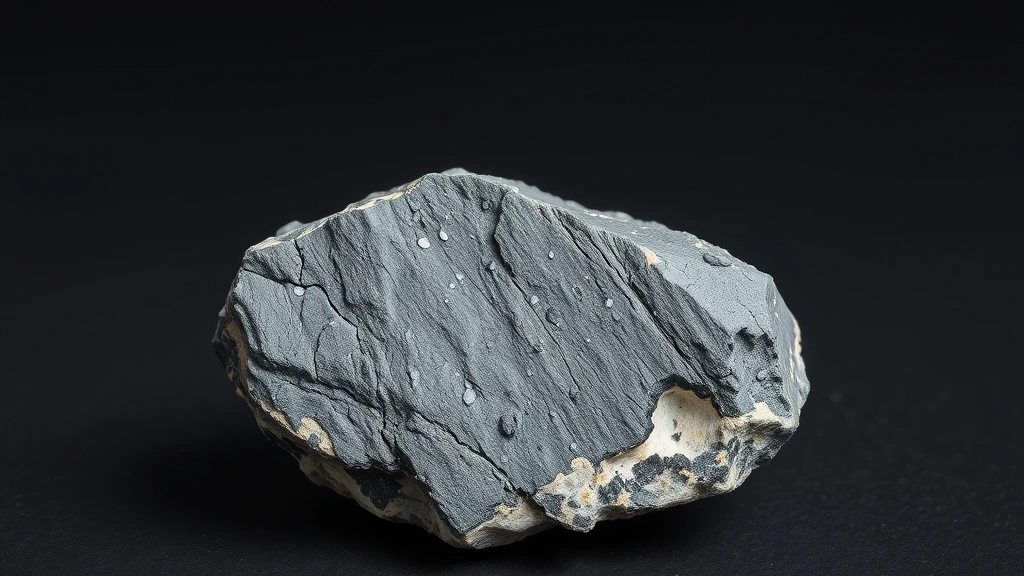
Poudretteite belongs to the broader category of natural mineral crystals, specifically classified within the complex borosilicate family. This geological classification distinguishes it from simple silicates or borates, highlighting its intricate structural bonding. As a primary mineral phase, it forms through specific hydrothermal processes rather than secondary alteration. Its presence in geological formations indicates unique chemical environments involving potassium and sodium. Understanding its parent mineral group is essential for accurate identification and valuation.
What is Poudretteite? Geological Overview & Definition
Poudretteite is defined as a primary hexagonal borosilicate mineral, characterized by its specific stoichiometric balance of boron and silicon. It typically occurs in hydrothermal vein systems associated with granite or rhyolite intrusions. The mineral often forms as euhedral crystals or granular aggregates within these geological settings. Its discovery history is limited, reflecting its rarity in global mineral collections.
The geological definition of Poudretteite emphasizes its role as an indicator of specific magmatic fluids. It frequently coexists with other rare boron-bearing minerals, such as kalsilite or nepheline. Identifying this mineral requires careful attention to its crystal habit and associated paragenesis. Its formation is tightly linked to alkaline igneous environments with high boron content.
Poudretteite Chemical Composition & Crystallographic Properties
Poudretteite crystallizes in the Hexagonal crystal system, exhibiting a complex lattice structure defined by its unique atomic arrangement. The chemical formula KNa₂B₃Si₁₂O₃₀ indicates a precise ratio of cations to anions. This structure features a framework of silicate tetrahedra interlinked with boron-oxygen groups. The lattice parameters reflect the symmetry inherent to its hexagonal classification.
The mineral displays a cation substitution pattern involving potassium and sodium within its crystal lattice. This ionic arrangement contributes to its refractive index range of 1.511 to 1.532. The density of 2.51 g/cm³ is consistent with its light cation composition. Such properties are critical for distinguishing it from visually similar borosilicate analogues.
Color in Poudretteite is generally pale, resulting from chromophore centers or minor trace element inclusions. The mineral exhibits moderate thermal behavior, remaining stable under standard geological conditions. Its acid sensitivity is low, as it resists dissolution in common laboratory acids. This stability aids in its preservation within geological samples.
| Property | Specification |
|---|---|
| Mineral Group | Natural Mineral / Crystal |
| Chemical Formula | KNa₂ B₃ Si₁₂ O₃₀ |
| Mohs Hardness | 5 |
| Crystal System | Hexagonal crystal system |
| Specific Gravity (Density) | 2.51 |
| Refractive Index | 1.511 to 1.532 |
| Color & Optical Properties | Natural Poudretteite color spectrum and optical dispersion |
| Primary Mining Localities | Global primary localities |
| Water & Chemical Resistance | Sensitive (Avoid prolonged water soaking) |
| Chakra Alignment (Traditional) | None (No traditional associations) |
| Zodiac Affinity (Traditional) | None (No traditional associations) |
| Symbolic Meaning (Traditional) | No established metaphysical lore; purely mineralogical significance |
Poudretteite Varieties & Color Spectrum
Poudretteite is a rare borosilicate mineral that typically presents in colorless to pale yellow hues. Its crystalline structure often exhibits a distinct hexagonal prismatic habit, which is a defining visual characteristic. Due to its low abundance, distinct commercial varieties are not widely recognized in the gem trade.
Classic Colorless Poudretteite
This primary form appears as transparent, colorless hexagonal prisms with a vitreous luster. It is frequently found in association with other rare borates within specific pegmatite zones. The clarity of these specimens allows for detailed observation of internal crystal faces and structural integrity.
Pale Yellow Poudretteite
Slight trace impurities can impart a pale yellow tint to the mineral’s overall appearance. This coloration is subtle and often only visible in larger, well-formed crystals. Such specimens are prized by collectors for their natural chromatic variation within the hexagonal system.
Inclusive Poudretteite
Some specimens contain minute fluid inclusions or tiny quartz crystals trapped during formation. These internal features can create a sparkling effect when light interacts with the cleavage planes. The presence of inclusions helps geologists determine the crystallization sequence of the host rock.
Matrix Poudretteite
Rarely, poudretteite occurs as small crystals attached to a feldspar or quartz matrix. This presentation highlights the mineral’s nucleation sites within the geological environment. Collectors value these pieces for their contextual geological significance rather than gem cut potential.
Where is Poudretteite Found? Geological Mining & Extraction
Poudretteite forms exclusively in alkaline pegmatites, where volatile-rich fluids facilitate the precipitation of complex borosilicates. These deposits are typically located in regions with significant granitic intrusion and subsequent hydrothermal activity. The mineral’s formation requires specific chemical conditions that are rarely replicated in other geological settings.
The primary type locality is the Poudrette mine in Quebec, Canada, where it was first identified. Other occurrences are extremely scarce, often found in rare-element pegmatites across North America and Europe. Extraction is minimal, as the mineral is too rare to support commercial mining operations.
Historical Significance & Cultural Lore of Poudretteite
Poudretteite lacks any documented history of use in ancient civilizations or traditional jewelry making. Its discovery in the modern era means it has no established archaeological record or cultural artifacts. Consequently, it holds no place in historical gemological trade routes or royal collections.
The mineral’s significance is strictly scientific and mineralogical, serving as a key indicator of specific pegmatite chemistry. There are no mythological associations or esoteric traditions linked to this rare borosilicate. Its value lies entirely in its crystallographic uniqueness and rarity within the mineral kingdom.
Modern Uses & Jewelry Applications of Poudrineite
Poudretteite’s rarity and delicate hexagonal crystal habit make it a prized collector’s stone rather than a mass‑market gem. Lapidary artisans typically cut it into low‑profile cabochons to preserve clarity, while occasional faceting showcases its subtle dispersion. Its soft Mohs hardness of 5 limits everyday wear, so it is most often set in pendants, earrings, or as a centerpiece in high‑end ornamental carvings.
- Cabochon cuts protect the surface from chipping.
- Faceted pieces highlight the faint play of light.
- Ornamental carvings are displayed in mineral cabinets or museum settings.
Safety & Mineral Profile of Poudretteite
Handling poudretteite requires standard gemstone safety: wear gloves to avoid oils that can streak the surface, and store the mineral in a padded, humidity‑controlled container to prevent accidental breakage. Chemically, the silicate is stable under ambient conditions, showing no reaction to acids or solvents, but its low hardness makes it vulnerable to scratches. The stone is valued primarily for scientific study and specimen display; any historical metaphysical claims lack verifiable evidence and should be treated with strict epistemic caution.
Mineralogical Group and Planetary Lore of Poudretteite
Poudretteite belongs to the borosilicate mineral group, sharing structural features with minerals such as tourmaline and beryl. Its composition KNa₂B₃Si₁₂O₃₀ places it among rare, high‑boron silicates that form in alkaline, silica‑rich pegmatites, most famously the Mont Saint‑Hilaire complex in Quebec.
Traditional symbolism for poudretteite is virtually nonexistent; no established zodiac or chakra associations exist in historic texts. In contemporary planetary lore, it is occasionally linked to the planet Mercury due to its discovery in a region known for diverse mineralogy, but this connection remains purely speculative and not part of any recognized esoteric system.
How to Identify Real vs. Fake Poudretteite
Artificial imitations of poudretteite include clear glass, quartz, or synthetic borosilicates that mimic its refractive index but lack its unique chemical signature. Dyed replicas may be treated to exhibit a faint pink hue, yet they fail to reproduce the stone’s characteristic specific gravity of 2.51. Careful visual and physical testing can reliably separate genuine specimens from these substitutes.
Practical At-Home Authenticity Tests
- Temperature Test (Thermal Feel): Real poudretteite feels cool to the touch and retains that coolness longer than glass, due to its higher thermal conductivity.
- Specific Gravity & Weight Test: Weigh the stone and compare it to the expected 2.51 g/cm³; a noticeably heavier feel suggests authenticity, while a lighter weight indicates a glass imitation.
- Scratch & Hardness Test (Mohs Comparison): Use a steel file (hardness ~5.5); genuine poudretteite will resist scratching, whereas glass or quartz will show visible marks.
- Microscopic & Loupe Inspection (Internal Inclusions): Under 10× magnification, authentic specimens reveal fine, needle‑like inclusions typical of pegmatitic growth, while synthetic glass appears uniformly clear with no internal features.
Poudretteite Valuation Factors, Grading & Pricing
Specimen aesthetic quality drives the bulk of market value. Collectors prize crystals that display a flawless, transparent pink hue with minimal inclusions, and a matrix that is free of fractures or surface blemishes. When the crystal habit is well‑developed—showing clean, hexagonal terminations—the piece commands a premium price.
Rarity and specimen dimensions are the next decisive elements. Intact crystal clusters measuring several centimeters in length and weighing multiple grams are exceedingly scarce, especially when the crystals retain their natural, undisturbed orientation. Any handling damage, such as chips or scratches, sharply reduces the specimen’s monetary worth.
Mineralogical provenance and locality value heavily influence collector demand. Poudretteite originating from the original Mont Saint‑Hilaire deposit in Quebec, Canada, carries a historic cachet that elevates its price in scientific and museum markets. Provenance documentation confirming the find spot and extraction method adds credibility and can double the valuation.
How to Clean and Care for Poudretteite
Wipe the stone briefly with a lightly dampened cloth, then dry it immediately with a soft, lint‑free microfiber towel. This quick touch removes surface dust without allowing moisture to penetrate the crystal lattice. Ultrasonic cleaners must be avoided, as the vibrations can cause micro‑fractures in the delicate structure.
Cleansing and Recharging Poudretteite (Energetic Care)
For holistic energetic maintenance, gently smudge the specimen with a bundle of white sage or cedar, allowing the aromatic smoke to pass over the surface without saturating the stone. The brief exposure clears lingering energetic residues while preserving the mineral’s physical integrity.
Alternatively, place the crystal on a clean selenite slab under soft moonlight for a few hours, letting the lunar energy subtly recharge its vibrational field. This method requires no heat or direct sunlight, ensuring the crystal’s lattice remains stable while it absorbs gentle, ambient energy.
Frequently Asked Questions About Poudretteite
What is the chemical composition of poudretteite?
Poudretteite is a complex borosilicate mineral with the formula KNa₂B₃Si₁₂O₃₀. This intricate structure classifies it within the hexagonal crystal system, distinguishing it from simpler silicates. Its unique chemical makeup contributes to its specific physical properties and optical behavior.
How hard is poudretteite on the Mohs scale?
Poudretteite registers a hardness of 5 on the Mohs scale. This moderate durability means it is susceptible to scratching by harder materials like quartz or topaz. Collectors should handle specimens with care to preserve surface integrity.
Is poudretteite safe to wear in the shower?
No, poudretteite is water-sensitive and should avoid prolonged soaking. Extended exposure to moisture can compromise the structural stability of the mineral. It is best to remove jewelry before showering or swimming to prevent potential damage.
How should I clean poudretteite safely?
Wipe the stone briefly with a damp cloth and dry it immediately. Avoid using ultrasonic cleaners, as the vibrations can cause structural fractures in the delicate crystal lattice. Gentle, dry brushing is the preferred method for routine maintenance.
What is the refractive index of poudretteite?
The refractive index ranges from 1.511 to 1.532. This optical property indicates moderate light dispersion and brilliance when cut. Understanding this value helps gemologists identify the stone and assess its visual appeal.
Does poudretteite have any zodiac sign associations?
There are no traditional zodiac associations for poudretteite. Unlike many popular gemstones, it lacks established astrological lore or cultural significance tied to specific birth signs. Its value remains purely mineralogical and geological.
Which chakras is poudretteite linked to?
Poudretteite has no traditional chakra associations. It does not feature in standard metaphysical practices or energy healing traditions. Its significance lies entirely in its scientific classification and crystallographic characteristics.
What is the specific gravity of poudretteite?
Poudretteite has a specific gravity of 2.51. This relatively low density makes it feel lighter than many common gemstones like corundum or diamond. Accurate density measurements assist in distinguishing it from visually similar minerals.