
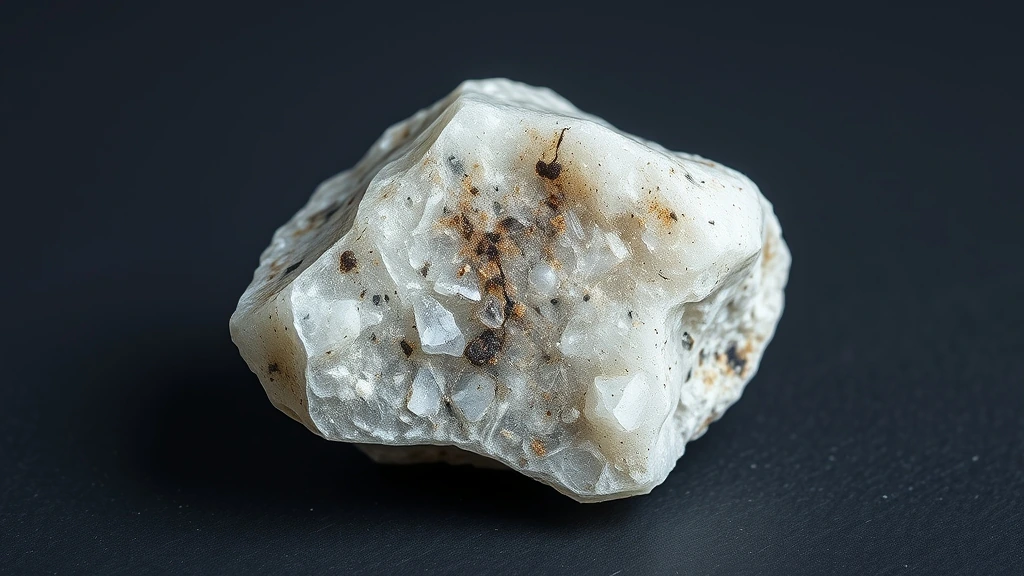
Pectolite belongs to the natural mineral group, specifically classified as a tectosilicate. It forms within igneous and metamorphic environments, often accompanying feldspars and pyroxenes. As a Natural Mineral / Crystal, it displays distinct prismatic habits. Its geological origin ensures a pure, inorganic structure. This classification distinguishes it from organic gemstones. Understanding its parent group aids in proper identification. While pectolite’s prismatic habit distinguishes it from other tectosilicates, collectors often compare its fibrous inclusions to the striking banded patterns found in Zebra Moonstone.
What is Pectolite ? Geological Overview & Definition
Pectolite is a sodium-calcium inosilicate mineral found in basaltic rocks. It frequently coexists with feldspar and pyroxene minerals. The stone often forms in hydrothermal veins. These environments facilitate its crystallization.
The gemstone is prized for its translucent to opaque appearance. Common colors include white, green, and blue. It is distinct from chrysoprase, which is a variety of chalcedony. Pectolite possesses a unique prismatic crystal habit. This structural feature aids in visual identification.
Pectolite Chemical Composition & Crystallographic Properties
Pectolite crystallizes in the Triclinic crystal system. Its unit cell lacks right angles, distinguishing it from other silicates. The structure features chains of silicate tetrahedra. These chains are linked by sodium and calcium ions. While Pectolite’s triclinic structure is defined by its lack of right angles, other blue silicates like Violan Blue Diopside exhibit distinct optical properties that help gemologists differentiate between these visually similar chain-silicate minerals.
The chemical formula is NaCa₂Si₃O₈(OH). Cation substitution can occur between sodium and calcium. This affects the mineral’s specific gravity slightly. The refractive index ranges from 1.594 to 1.642. This optical property helps distinguish it from similar stones.
Pectolite is sensitive to strong acids. Exposure can degrade its surface luster. It is not recommended for harsh cleaning agents. Thermal stability is moderate for a gemstone.
Color variations arise from trace impurities. Chromophore centers involving iron or manganese create hues. Green tones often indicate nickel or chromium. These subtle inclusions add value to the gem.
| Property | Specification |
|---|---|
| Mineral Group | Natural Mineral / Crystal |
| Chemical Formula | NaCa₂ Si₃ O₈ (OH) |
| Mohs Hardness | 4.5 – 5 |
| Crystal System | Triclinic |
| Specific Gravity (Density) | 2.84 – 2.90 |
| Refractive Index | n α = 1.594 – 1.610 n β = 1.603 – 1.614 n γ = 1.631 – 1.642 |
| Color & Optical Properties | Natural Pectolite Gemstone color spectrum and optical dispersion |
| Primary Mining Localities | Global primary localities |
| Water & Chemical Resistance | High (Safe for gentle water washing) |
| Chakra Alignment (Traditional) | Heart Chakra, Throat Chakra |
| Zodiac Affinity (Traditional) | Taurus, Libra |
| Symbolic Meaning (Traditional) | Emotional healing, inner peace, and spiritual growth |
Pectolite Varieties & Color Spectrum
Pectolite presents a diverse array of natural color morphs, ranging from pure white to deep green. The mineral’s appearance is heavily influenced by trace elements and structural imperfections. Understanding these variations is crucial for accurate gemological identification and valuation.
White Pectolite (Milk Pectolite)
This variety is the most common commercial form, prized for its opaque, milky appearance. The color results from minute fluid inclusions that scatter light within the triclinic crystal structure. It is frequently cut into cabochons for jewelry due to its soft luster.
Green Pectolite (Chrysoprase-like)
Rare green specimens owe their hue to trace amounts of chromium or nickel impurities. These stones often exhibit a translucent quality that distinguishes them from opaque white varieties. Collectors value this morph for its resemblance to chrysoprase, though it is significantly softer.
Blue Pectolite
Blue pectolite is an exceptionally rare color morph, often associated with specific trace element substitutions. The bluish tint is subtle and usually visible only in well-lit, translucent specimens. This scarcity makes it a highly sought-after item among mineral collectors and gemologists.
Pink Pectolite
Pink varieties are extremely uncommon and typically result from manganese impurities within the lattice. These stones are often found in specific pegmatite zones where oxidation states shift. Their rarity elevates their status in the gemstone market beyond standard white pectolite.
Black Pectolite
Black pectolite is a dark, opaque variety often containing significant carbonaceous inclusions. It is less common in the jewelry trade but valued for its unique aesthetic. The high density of inclusions gives it a matte finish rather than a vitreous luster.
Where is Pectolite Found? Geological Mining & Extraction
Pectolite primarily forms in alkaline igneous rocks, particularly within syenite and nepheline syenite intrusions. It also occurs in contact metamorphic zones where limestone interacts with basic igneous material. These geological settings provide the necessary sodium and calcium for crystal growth.
Major mining regions include the United States, particularly California and New Jersey, where significant deposits have been documented. Other notable sources include Brazil, Russia, and the Czech Republic, which produce high-quality specimens. Extraction methods typically involve careful hand-picking to preserve the integrity of the crystal habit.
Historical Significance & Cultural Lore of Pectolite
Historical records of pectolite use are limited compared to harder gemstones, reflecting its lower Mohs hardness and durability. Ancient civilizations likely utilized it for decorative purposes rather than durable jewelry or tools. Its soft nature restricted its role in archaeological contexts to small, preserved artifacts.
In modern esoteric traditions, pectolite is associated with emotional healing and spiritual growth. It is frequently linked to the Heart and Throat Chakras in metaphysical practices. This contemporary lore has driven a resurgence in its popularity for alternative wellness applications.
Modern Uses & Jewelry Applications of Pectolite
Pectolite is primarily valued as a collector mineral and ornamental stone rather than a high-end gemstone. Its moderate Mohs hardness of 4.5 to 5 limits its use in durable ring settings. Lapidaries typically cut it into cabochons or simple faceted shapes to highlight its soft luster.
- Cabochon Cutting: Smooth, polished surfaces best display the stone’s subtle color variations and translucency.
- Ornamental Carving: Artisans carve pectolite into beads, pendants, and decorative carvings for home decor.
- Lapidary Caution: Avoid high-polish settings that risk chipping due to the mineral’s relatively low durability.
Safety & Mineral Profile of Pectolite
Handling pectolite requires standard mineral safety protocols, as it is chemically stable under normal conditions. It does not release toxic fumes but can be scratched by harder materials. This stone is best appreciated for its scientific study and specimen display value.
- Chemical Stability: Pectolite resists water and mild acids but should be cleaned with lukewarm water only.
- Identification: Its triclinic crystal system and specific gravity help distinguish it from similar silicates.
- Epistemic Caution: While historical lore suggests metaphysical properties, these lack scientific validation. Prioritize physical safety and mineralogical accuracy over unverified claims.
Mineralogical Group and Planetary Lore of Pectolite
Pectolite belongs to the inosilicate group, characterized by single chains of silicon-oxygen tetrahedra. Its chemical formula, NaCa₂Si₃O₈(OH), defines its unique position among sodium-calcium silicates. This composition influences its physical properties, including its density and refractive index.
Traditional lore often associates pectolite with the Heart Chakra and Throat Chakra. Astrologically, it is linked to Taurus and Libra, though these connections are cultural rather than scientific. Modern mineralogy focuses on its crystal structure and geological formation instead.
How to Identify Real vs. Fake Pectolite
Artificial imitations of pectolite are rare due to its modest market value, but synthetic glass and dyed replicas exist. These fakes often mimic the stone’s pale green or white hues. Careful examination of internal inclusions and physical properties is essential for accurate identification.
Practical At-Home Authenticity Tests
- Temperature Test (Thermal Feel): Pectolite feels cool to the touch initially but warms quickly. Glass imitations may feel colder for longer due to higher thermal conductivity.
- Specific Gravity & Weight Test: Real pectolite has a density of 2.84 – 2.90. It should feel slightly heavier than similarly sized glass or plastic fakes.
- Scratch & Hardness Test (Mohs Comparison): Pectolite (Mohs 4.5–5) can be scratched by a steel knife (Mohs 5.5). If the stone scratches glass (Mohs 5.5), it is likely a harder fake.
- Microscopic & Loupe Inspection (Internal Inclusions): Use a 10x loupe to look for natural fluid inclusions or crystal fragments. Perfect clarity or bubble-like inclusions suggest synthetic glass.
Pectolite Valuation Factors, Grading & Pricing
Market value hinges primarily on Color Saturation and overall tone uniformity. High-grade specimens display a consistent, vivid apple-green hue without muddy or brownish overtones. Optical clarity and a strong vitreous luster further enhance the stone’s visual appeal and desirability.
The Specimen Dimensions & Matrix Intactness of a clean pectolite significantly influences its final price point. crystal cluster integrity must be precise to maximize light return and minimize visual distortion. Additionally, the presence of matrix or internal inclusions can drastically reduce the gemstone’s commercial value.
Geographical Provenance Premium often elevates the price of rare, high-quality material. Wholesale markets typically offer lower base rates, while retail prices reflect significant markup for cut quality. Current trends favor large, transparent cabochons from established mining regions.
How to Clean and Care for Pectolite
Always use warm soapy water and a soft cloth for routine maintenance. Gently wipe the surface to remove oils and dust without applying excessive pressure. This method effectively preserves the stone’s natural luster and structural integrity.
Strictly avoid ultrasonic cleaners to prevent potential structural fractures. The mineral’s moderate hardness makes it susceptible to stress from high-frequency vibrations. Never submerge the stone in harsh chemical solutions or abrasive cleaning agents.
Cleansing and Recharging Pectolite (Energetic Care)
For energetic cleansing, utilize safe dry methods like smoke smudging with sage or palo santo. Allow the gentle smoke to pass over the stone without direct contact or moisture. This approach respects the mineral’s solubility while clearing perceived negative energy.
To recharge the gemstone, place it on a selenite plate under moonlight. This method avoids water exposure entirely, ensuring the crystal remains physically stable. Regular dry recharging helps maintain the stone’s purported vibrational alignment.
Frequently Asked Questions About Pectolite
What is the chemical composition of pectolite?
Pectolite is a sodium-calcium silicate mineral with the formula NaCa₂Si₃O₈(OH). This specific composition distinguishes it from other chain silicates found in geological formations. Understanding this chemical structure helps gemologists identify authentic specimens. It ensures proper care and valuation in the market.
How hard is pectolite on the Mohs scale?
Pectolite measures between 4.5 and 5 on the Mohs hardness scale. This moderate hardness makes it susceptible to scratching by harder minerals like quartz. You must handle it with care to maintain its luster. Avoid storing it with diamonds or sapphires to prevent surface damage.
Can I wear pectolite in the shower?
Yes, pectolite is safe for gentle water washing and shower exposure. Its high water resistance allows it to withstand occasional contact with water without dissolving. However, avoid harsh soaps that may leave residue on the surface. Rinse it thoroughly after exposure to maintain its natural beauty.
Is pectolite safe for ultrasonic cleaners?
No, you must avoid ultrasonic cleaners to prevent structural fractures. Instead, use warm soapy water and a soft cloth for cleaning. The vibrations from ultrasonic devices can cause internal stress in this mineral. Gentle manual cleaning preserves the integrity of the stone’s structure.
Which zodiac signs are aligned with pectolite?
Pectolite is traditionally associated with Taurus and Libra. These earth and air signs benefit from the stone’s balancing properties. It supports emotional stability and harmony for these individuals. Wearing pectolite can enhance their natural traits and spiritual alignment.
Which chakras does pectolite activate?
Pectolite primarily activates the Heart Chakra and Throat Chakra. These energy centers govern love, compassion, and clear communication. The stone helps clear blockages in these areas. This promotes emotional healing and improved interpersonal connections for the wearer.
What color variations exist in pectolite?
Pectolite typically appears in shades of white, green, or blue. The color depends on trace elements present during formation. Chalcedony inclusions can also create unique patterns within the stone. Each variation offers distinct aesthetic and energetic properties for collectors.
How should I store pectolite safely?
Store pectolite in a soft pouch or separate compartment. This prevents contact with harder gemstones that could scratch it. Keep it away from direct sunlight to preserve its color. Proper storage ensures the crystal structure remains intact over time.