
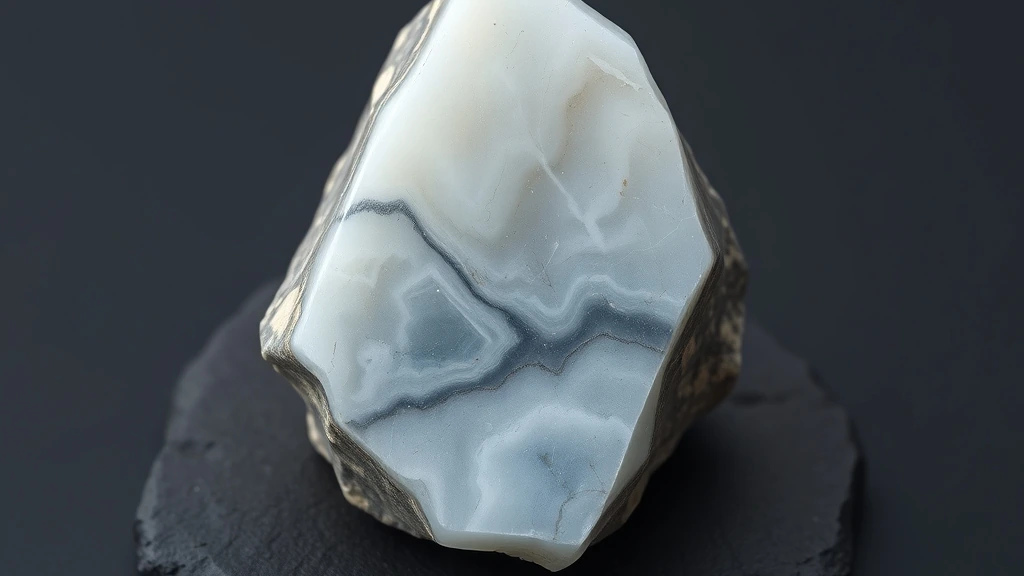
Zebra Moonstone is classified as a member of the Silicates group, specifically within the Tectosilicates or Feldspar Group. This geological classification is based on its mineral composition and crystal structure. As a feldspar, Zebra Moonstone is closely related to other minerals in this group, sharing similar properties and characteristics. Its parent mineral group is a key factor in determining its overall geological identity.
What is Zebra Moonstone? Geological Overview & Definition
Zebra Moonstone is a type of moonstone that exhibits a unique, striped pattern, often referred to as “zebra-like”. This pattern is caused by the presence of albite and orthoclase feldspars, which are intergrown in a perthitic manner. The resulting stone has a distinctive appearance, with a play of colors that is often described as adularescence.
The geological definition of Zebra Moonstone is closely tied to its mineral composition and crystal structure. As a feldspar, it is composed of silicon, aluminum, and potassium ions, which are arranged in a specific pattern to form its crystal lattice. This lattice structure is responsible for the stone’s optical properties, including its refractive index and birefringence.
Zebra Moonstone Chemical Composition & Crystallographic Properties
The chemical composition of Zebra Moonstone is characterized by its stoichiometric formula, KAlSi₃O₈, which indicates the presence of potassium, aluminum, and silicon ions. The crystal system of Zebra Moonstone is Monoclinic, with a perthitic lamellar structure that is typical of orthoclase and albite feldspars. This structure is responsible for the stone’s unique optical properties, including its refractive index and birefringence.
The lattice structure of Zebra Moonstone is composed of silicon-oxygen tetrahedra, which are linked together in a three-dimensional pattern. This pattern is responsible for the stone’s thermal behavior, including its thermal expansion and thermal conductivity. The cation substitution of potassium and sodium ions in the lattice structure can also affect the stone’s optical properties, including its color and transparency.
The chromophore color centers in Zebra Moonstone are responsible for its distinctive color spectrum, which is often described as white, gray, or brown. These color centers are caused by the presence of transition metals, such as iron or titanium, which absorb certain wavelengths of light and produce the stone’s characteristic color. The acid sensitivity of Zebra Moonstone is also an important consideration, as it can be affected by hydrochloric acid or other mineral acids.
The thermal behavior of Zebra Moonstone is an important consideration in its geological and gemological context. The stone’s thermal expansion and thermal conductivity can affect its optical properties, including its refractive index and birefringence. Additionally, the stone’s thermal stability can be affected by heat treatment or other geological processes, which can alter its mineral composition and crystal structure.
| Property | Specification |
|---|---|
| Mineral Group | Silicates (Tectosilicates / Feldspar Group) |
| Chemical Formula | KAlSi₃O₈ (Orthoclase / Albite feldspar) |
| Mohs Hardness | 6.0 – 6.5 |
| Crystal System | Monoclinic (Orthoclase / Albite perthitic lamellar) |
| Specific Gravity (Density) | 2.56 – 2.60 |
| Refractive Index | 1.518 – 1.526 |
| Color & Optical Properties | Natural Zebra Moonstone color spectrum and optical dispersion |
| Primary Mining Localities | Sri Lanka, India, Madagascar, Myanmar, Brazil |
| Water & Chemical Resistance | Moderate (Safe for brief lukewarm washing; avoid acids and thermal shocks) |
| Chakra Alignment (Traditional) | Crown Chakra and Third Eye Chakra |
| Zodiac Affinity (Traditional) | Cancer, Libra, Scorpio |
| Symbolic Meaning (Traditional) | Feminine intuition, inner harmony, new beginnings, and emotional balance |
Zebra Moonstone Varieties & Color Spectrum
Zebra Moonstone exhibits a range of natural varieties, including Adularia and Orthoclase types, which differ in their chemical composition and optical properties. The Peach Moonstone variety is characterized by its soft, peach-colored hue and lamellar twinning, while the Gray Moonstone variety displays a more subdued, grayish tone. These varieties often feature inclusions and iridescence, which can enhance their visual appeal.
Rainbow Moonstone
Rainbow Moonstone is a rare and prized variety, known for its vibrant, multicolored iridescence and schillerization. This phenomenon is caused by the diffraction of light as it passes through the stone’s lamellar structure, creating a range of colors, including blue, green, and orange. Rainbow Moonstone is highly sought after for its unique visual signature and is often used in high-end jewelry pieces.
White Moonstone
White Moonstone is a common variety, characterized by its pale, creamy color and translucency. It often features inclusions, such as rutile needles or biotite flakes, which can add to its visual interest. White Moonstone is frequently used in jewelry and decorative objects, where its subtle color and luster can add a touch of elegance.
Peach Moonstone
Peach Moonstone is a popular variety, known for its warm, peach-colored hue and orange-pink undertones. It often exhibits adularescence, a phenomenon in which a blue-white sheen appears to float beneath the stone’s surface. Peach Moonstone is highly prized for its unique color and is often used in jewelry pieces where its warmth and glow can be showcased.
Gray Moonstone
Gray Moonstone is a more subdued variety, characterized by its grayish tone and brown undertones. It often features inclusions, such as graphite flakes or rutile needles, which can add to its visual interest. Gray Moonstone is frequently used in jewelry and decorative objects, where its subtle color and matte finish can add a touch of sophistication.
Black Moonstone
Black Moonstone is a rare and dramatic variety, known for its dark, opaque color and metallic luster. It often exhibits schillerization, a phenomenon in which a play of colors appears to shift and change as the stone is turned. Black Moonstone is highly prized for its unique visual signature and is often used in statement jewelry pieces.
Where is Zebra Moonstone Found? Geological Mining & Extraction
Zebra Moonstone is typically found in pegmatitic deposits, where it forms in association with other feldspathic minerals, such as quartz and mica. The primary extraction regions for Zebra Moonstone include India, Sri Lanka, and Brazil, where it is often mined from alluvial deposits and pegmatitic veins. These regions are known for their geological complexity and mineral diversity, which can result in a wide range of Moonstone varieties.
The extraction of Zebra Moonstone often involves artisanal mining techniques, where small-scale miners extract the stone from surface outcrops and shallow deposits. This approach can help to preserve the stone’s natural beauty and integrity, while also supporting local economic development and community engagement. The mining process typically involves hand sorting and grading, where the stone is carefully selected and evaluated for its color, clarity, and quality.
Historical Significance & Cultural Lore of Zebra Moonstone
Across ancient lapidary traditions, Moonstone has been revered for its mystical properties and symbolic significance, often associated with feminine intuition, inner harmony, and emotional balance. In ancient Greco-Roman culture, Moonstone was believed to possess magical powers, while in Egyptian and Chinese traditions, it was associated with good fortune and prosperity. The stone’s iridescence and play of colors were often seen as a symbol of hope and new beginnings.
Throughout early archaeological records, Moonstone has been found in jewelry and decorative objects, where its beauty and significance were highly valued. In Vedic tradition, Moonstone is associated with the Crown Chakra and Third Eye Chakra, where it is believed to promote spiritual growth and inner wisdom. The stone’s cultural significance and historical use continue to inspire and captivate people around the world, making it a truly unique and timeless gemstone.
Modern Uses & Jewelry Applications of Zebra Moonstone
Zebra Moonstone is a versatile gemstone used in various jewelry applications, including cabochon and faceted cuts. Its unique pattern and iridescence make it a popular choice for ornamental carving and lapidary art. Some common uses of Zebra Moonstone include:
- Pendants and rings featuring cabochon cuts to showcase its adularescence
- Earrings and brooches with faceted cuts to highlight its brilliance
- Ornamental carvings and sculptures that emphasize its unique pattern
Metaphysical Properties & Traditional Meaning of Zebra Moonstone
According to historical traditions and metaphysical lore, Zebra Moonstone is believed to possess emotional resonance and spiritual attributes that promote inner harmony and feminine intuition. Across ancient lapidary traditions, this gemstone is thought to embody new beginnings and emotional balance, making it a popular choice for those seeking to cultivate intuitive guidance. In Vedic and Mediterranean traditions, Zebra Moonstone is often associated with lunar energy and mystical properties.
Which Chakra and Zodiac Signs Align with Zebra Moonstone?
Zebra Moonstone is traditionally aligned with the Crown Chakra and Third Eye Chakra, which are believed to facilitate higher states of consciousness and intuitive awareness. This alignment is thought to enhance the gemstone’s metaphysical properties and promote spiritual growth.
The canonical zodiac signs associated with Zebra Moonstone are Cancer, Libra, and Scorpio, which are believed to share a deep connection with the gemstone’s emotional resonance and symbolic meaning. Across various astrological traditions, these zodiac signs are thought to embody the qualities of emotional depth and intuitive insight that Zebra Moonstone is believed to possess.
How to Identify Real vs. Fake Zebra Moonstone
Zebra Moonstone can be imitated using artificial materials, such as synthetic glass or dyed replicas, which can be difficult to distinguish from the real thing. To ensure authenticity, it’s essential to examine the gemstone carefully and conduct practical tests to verify its chemical composition and physical properties.
Practical At-Home Authenticity Tests:
- Temperature Test (Thermal Feel): Genuine Zebra Moonstone tends to feel cool to the touch, while artificial imitations may feel warmer or more neutral.
- Specific Gravity & Weight Test: Zebra Moonstone has a density of 2.56-2.60, which can be verified using a specific gravity test or by comparing its weight to a similar-sized artificial imitation.
- Scratch & Hardness Test (Mohs Comparison): Zebra Moonstone has a Mohs hardness of 6.0-6.5, which can be verified by scratching the gemstone with a mineral of known hardness.
- Microscopic & Loupe Inspection (Internal Inclusions): Genuine Zebra Moonstone often exhibits unique internal inclusions, such as perthitic lamellae, which can be observed using a microscope or loupe.
Zebra Moonstone Valuation Factors, Grading & Pricing
The value of Zebra Moonstone is significantly influenced by its Color Saturation, which refers to the intensity and vibrancy of its colors. A more saturated color generally increases the stone’s value. The visual vibrancy and natural energetic luster of the stone also play a crucial role in determining its market value. These factors contribute to the overall aesthetic appeal of the Zebra Moonstone.
The Crystal Size & Weight (Grams) of the Zebra Moonstone is another important factor in determining its value. Larger, heavier crystals with a high-quality polish are generally more valuable than smaller, lighter ones. The presence of natural matrix inclusions and the quality of the polish, whether raw or tumbled, also impact the stone’s value. The size and weight of the crystal are often used as a basis for pricing.
In holistic and collector markets, the value of Zebra Moonstone can also be affected by Ethical Sourcing & Locality Premium. Stones that are sourced from reputable, environmentally responsible suppliers and have a unique locality or provenance may command a higher price. This premium is reflected in the stone’s market value, making it more desirable to collectors and those who prioritize ethical sourcing. The locality and sourcing of the stone can significantly impact its value.
How to Clean and Care for Zebra Moonstone
To clean Zebra Moonstone, it is essential to follow a gentle approach due to its tendency to cleavage splitting. The recommended method is to clean the stone gently with warm soapy water, taking care to avoid any harsh chemicals or abrasive materials. It is also crucial to avoid ultrasonic cleaning, as this can cause damage to the stone. Instead, a soft, gentle cleaning method should be used to preserve the stone’s integrity.
Cleansing and Recharging Zebra Moonstone (Energetic Care)
For energetic cleansing and recharging, Zebra Moonstone can be safely smudged with herbs like sage or sweetgrass, allowing the stone to absorb the gentle, cleansing energy. Alternatively, the stone can be placed under gentle moonlight, allowing it to recharge and balance its energies. This method is safe and effective, as it does not involve heat or harsh chemicals that could damage the stone. The stone can also be rested on a selenite charging slab to absorb its cleansing properties.
The use of gentle, dry holistic methods for cleansing and recharging Zebra Moonstone is essential to preserve its energetic integrity. Methods like herbal smudging or moonlight exposure are safe and effective, as they do not involve heat or moisture that could damage the stone. By using these methods, the stone’s natural energies can be balanced and restored, maintaining its unique properties and aesthetic appeal. This approach ensures the long-term preservation of the Zebra Moonstone’s beauty and energetic value.
Frequently Asked Questions About Zebra Moonstone
Zebra Moonstone displays distinct mineralogical characteristics across its geological varieties and structural habits. Gemologists evaluate these natural varieties based on crystal habit, trace chromophore concentrations, and visual luster.
Primary Natural Zebra Moonstone
The benchmark natural variety exhibiting diagnostic color saturation and classic crystallographic symmetry.
Distinct Geological Morphs of Zebra Moonstone
Secondary regional and structural varieties formed under localized geological temperature and pressure conditions.
What is the chemical composition of zebra moonstone?
Zebra moonstone is a feldspar consisting of KAlSi₃O₈. It is a perthitic mixture of orthoclase and albite, forming the characteristic striped appearance. The potassium aluminosilicate lattice creates the subtle adularescence that distinguishes this gemstone from other moonstones.
How hard is zebra moonstone on the Mohs scale?
It rates between 6.0 and 6.5. This hardness makes the stone suitable for many types of jewelry, yet it remains vulnerable to scratches from harder materials. Careful handling and avoidance of abrasive surfaces help preserve its lamellar sheen over time.
Can I wear zebra moonstone while washing my hands or showering?
It tolerates brief lukewarm washing but should not be exposed to acids or thermal shock. Moderate water resistance means a quick rinse is safe, but prolonged soaking or hot water can cause cleavage splitting. Always dry the stone gently with a soft cloth afterward.
What is the safest way to clean zebra moonstone?
Clean gently with warm soapy water and a soft brush; avoid ultrasonic cleaners. The stone’s natural cleavage planes make it prone to fracture under high‑frequency vibrations. Using a mild detergent and a soft‑bristled brush removes residues without stressing the perthitic lamellae.
Which zodiac signs are most aligned with zebra moonstone?
Cancer, Libra, and Scorpio are the associated signs. Across ancient lapidary traditions, these signs are linked to the stone’s feminine intuition and emotional balance. Wearing the gem is believed to enhance the personal traits traditionally ascribed to these zodiaces.
Which chakras does zebra moonstone activate?
It resonates with the Crown Chakra and the Third Eye Chakra. In metaphysical lore, the stone’s shimmering bands aid in inner harmony and heightened perception, supporting meditation practices that focus on spiritual insight and mental clarity.
Is zebra moonstone suitable for everyday jewelry?
Yes, provided it is set securely and cared for properly. Its moderate hardness and cleavage risk require protective settings, such as bezel or channel mounts, to shield the perthitic layers from impact. Regular inspection ensures the stone remains intact in daily wear.
Does zebra moonstone have any notable metaphysical properties?
It is said to promote feminine intuition, new beginnings, and emotional balance. Practitioners claim the stone assists in accessing inner guidance and fostering calm during periods of change. While these attributes are rooted in historical belief, they add cultural depth to the gem’s appeal.