
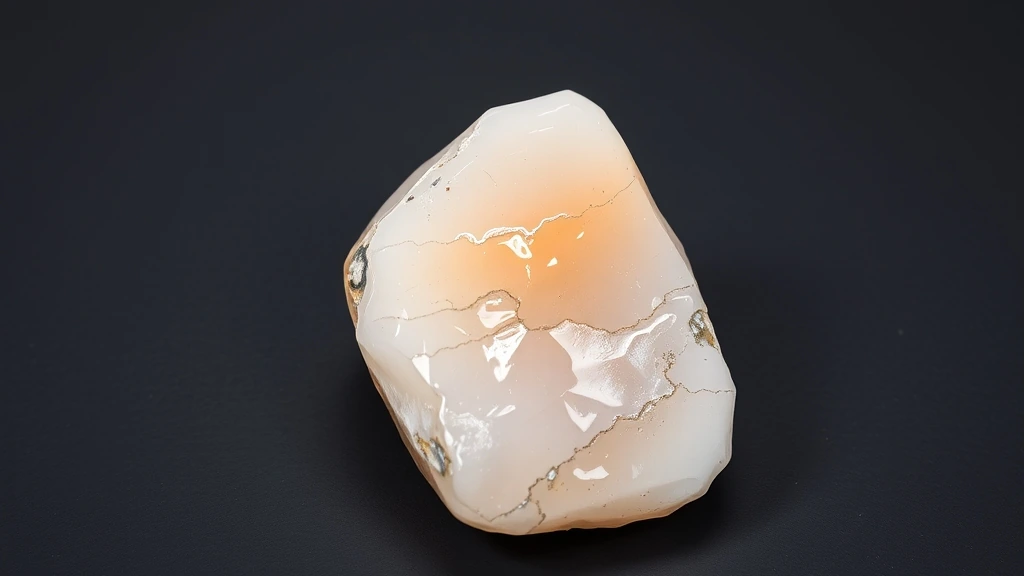
Peach Moonstone belongs to the vast silicate mineral family, specifically the tectosilicate subclass. It is a member of the feldspar group, which constitutes the most abundant mineral group in Earth’s crust. This geological classification underscores its structural complexity and widespread occurrence in igneous and metamorphic rocks. Understanding its parent group provides essential context for its physical durability and optical behavior.
What is Peach Moonstone? Geological Overview & Definition
Peach Moonstone is a specific variety of labradorite or orthoclase feldspar exhibiting a distinctive peach or salmon body color. It is characterized by a soft, glowing adularescence that floats above the stone’s surface. This optical phenomenon distinguishes it from standard clear moonstones or other feldspar varieties.
The stone forms through the exsolution process during the cooling of magma. Alternating layers of different feldspar species create the necessary conditions for light scattering. This internal structure is critical for the gem’s unique visual appeal. Geologists identify it primarily by its specific gravity and refractive index. In comparative mineralogical collections, practitioners and geologists frequently study Hackmanite With Ijolite alongside this crystal to appreciate their subtle energetic and structural differences.
Peach Moonstone Chemical Composition & Crystallographic Properties
The mineral crystallizes in the monoclinic system, specifically exhibiting an orthoclase-albite perthitic lamellar structure. This arrangement consists of intergrown layers of potassium-rich and sodium-rich feldspar. The lattice parameters reflect the monoclinic symmetry with unique axial angles. This structural complexity is fundamental to its optical properties. While Peach Moonstone’s optical phenomena arise from its delicate perthitic lamellar structure, other feldspar-based stones like Green Tiger Eye demonstrate how similar mineral compositions can yield vastly different visual characteristics through distinct inclusion patterns.
The primary chemical composition is KAlSi₃O₈, representing the orthoclase end-member. Minor substitutions of sodium for potassium can occur, shifting the composition toward albite. These cation substitutions influence the density, which ranges from 2.56 to 2.60 g/cm³. The refractive index remains consistent between 1.518 and 1.526.
The peach coloration is attributed to trace iron impurities acting as chromophores. These elements create specific color centers within the crystal lattice. The stone is generally stable but can be sensitive to strong acids. Thermal behavior is stable under normal handling conditions, though rapid temperature changes should be avoided.
| Property | Specification |
|---|---|
| Mineral Group | Silicates (Tectosilicates / Feldspar Group) |
| Chemical Formula | KAlSi₃O₈ (Orthoclase / Albite feldspar) |
| Mohs Hardness | 6.0 – 6.5 |
| Crystal System | Monoclinic (Orthoclase / Albite perthitic lamellar) |
| Specific Gravity (Density) | 2.56 – 2.60 |
| Refractive Index | 1.518 – 1.526 |
| Color & Optical Properties | Natural Peach Moonstone color spectrum and optical dispersion |
| Primary Mining Localities | Sri Lanka, India, Madagascar, Myanmar, Brazil |
| Water & Chemical Resistance | Moderate (Safe for brief lukewarm washing; avoid acids and thermal shocks) |
| Chakra Alignment (Traditional) | Crown Chakra and Third Eye Chakra |
| Zodiac Affinity (Traditional) | Cancer, Libra, Scorpio |
| Symbolic Meaning (Traditional) | Feminine intuition, inner harmony, new beginnings, and emotional balance |
Peach Moonstone Varieties & Color Spectrum
Peach moonstone exhibits a distinctive adularescence that ranges from soft apricot to deep salmon hues. This optical phenomenon arises from the intergrowth of orthoclase and albite layers within the feldspar structure. The intensity of the peach tone depends heavily on the thickness of these lamellar bands.
Classic Peach Adularite
This primary variety features a translucent body with a floating blue-white or peach sheen. The interference color is caused by light scattering between the feldspar layers. It is the most commercially available form of peach moonstone.
Imperial Peach Moonstone
Imperial peach moonstone displays a deeper, more saturated orange-pink body color. It often contains minor inclusions of rutile or hematite that enhance its warmth. This variety is rarer and commands a higher market price.
Rainbow Peach Moonstone
Rainbow peach moonstone showcases multiple adularescence colors simultaneously, including peach, blue, and green. The complex lamellar structure creates a prismatic effect under direct light. This multi-colored variety is highly sought after by collectors.
Milky Peach Moonstone
Milky peach moonstone has a more opaque, cloudy appearance due to higher fluid inclusions. The peach tint is diffuse rather than sharply defined. It is often found in lower-grade deposits but remains popular for carvings.
Clear Peach Moonstone
Clear peach moonstone possesses high transparency with a subtle peach glow. The refractive index allows light to pass through with minimal scattering. This gem-quality variety is exceptionally rare in large sizes.
Where is Peach Moonstone Found? Geological Mining & Extraction
Peach moonstone primarily occurs in granite pegmatites and volcanic igneous rocks. These formations provide the slow cooling conditions necessary for large feldspar crystals. The mineral is often associated with quartz and mica in these deposits.
Major mining regions include Madagascar, India, and Brazil. Madagascar is renowned for producing high-quality adularescent specimens with vibrant peach tones. India remains a significant source for both commercial and gem-grade material.
Historical Significance & Cultural Lore of Peach Moonstone
Ancient civilizations revered moonstone as a sacred gem linked to lunar deities. In Vedic tradition, it was believed to enhance intuition and emotional balance. Roman lapidaries considered it a symbol of feminine intuition and inner harmony.
Archaeological findings reveal moonstone use in Greco-Roman jewelry and amulets. These artifacts often featured the stone set in gold or silver. The cultural significance persists in modern metaphysical practices, emphasizing new beginnings and spiritual clarity.
Modern Uses & Jewelry Applications of Peach Moonstone
Peach moonstone is prized for its soft, adularescent glow, making it a favorite in contemporary lapidary work. Artisans typically cut the stone as a cabochon to showcase its shimmering sheen, though skilled faceting can produce subtle fire on polished facets. Ornamental carving also highlights the stone’s delicate peach‑tone, allowing it to appear in decorative boxes, pendants, and small sculpture elements.
- Cabochon pendants and earrings emphasizing the stone’s luminous body
- Faceted rings that balance sparkle with the stone’s natural adularescence
- Carved cameos, beads, and ornamental inlays for luxury accessories
Metaphysical Properties & Traditional Meaning of Peach Moonstone
According to historical traditions and metaphysical lore, peach moonstone is associated with feminine intuition and the gentle unfolding of inner harmony. Across ancient Mediterranean and Vedic lapidary records, the stone has been invoked to usher in new beginnings, fostering emotional balance and soothing the heart during times of change. Its subtle glow was believed to amplify the wearer’s inner guidance, encouraging a calm yet confident approach to personal growth.
Which Chakra and Zodiac Signs Align with Peach Moonstone?
In esoteric systems, peach moonstone resonates most strongly with the Crown Chakra, supporting higher consciousness and spiritual connection, while also stimulating the Third Eye Chakra, which enhances insight and intuitive perception. The stone’s gentle energy is said to open pathways to inner wisdom, aligning the mind with transcendent thought.
Astrologically, the gemstone is linked to the signs Cancer, Libra, and Scorpio. For Cancer, it nurtures emotional security; for Libra, it balances relational harmony; and for Scorpio, it deepens transformative insight. These alignments reinforce the stone’s reputation as a catalyst for emotional equilibrium and intuitive clarity.
How to Identify Real vs. Fake Peach Moonstone
Artificial imitations of peach moonstone often include dyed quartz, synthetic glass, or resin composites that mimic its pastel hue but lack the characteristic adularescence. Synthetic glass may display a uniform, glassy luster without the subtle internal glow, while dyed replicas can appear overly saturated and may flake under close inspection. Recognizing these differences is essential for collectors and buyers seeking authentic material.
Practical At-Home Authenticity Tests
- Temperature Test (Thermal Feel): Genuine peach moonstone feels cool to the touch initially and warms slowly, whereas glass or plastic warms rapidly in the hand.
- Specific Gravity & Weight Test: With a density of 2.56‑2.60 g/cm³, authentic stone feels noticeably heavier than glass (≈2.4 g/cm³) of similar size.
- Scratch & Hardness Test (Mohs Comparison): A steel file (hardness ~5.5) will not scratch a real stone (hardness 6‑6.5), but will leave a mark on glass or softer imitations.
- Microscopic & Loupe Inspection (Internal Inclusions): Under 10× magnification, authentic peach moonstone shows fine, parallel lamellae or subtle clouding, while synthetic glass appears flawless or shows bubbles and surface scratches.
Peach Moonstone Valuation Factors, Grading & Pricing
The first key factor in determining the market value of peach moonstone is color saturation. A vivid, warm peach hue that radiates with subtle play-of-light enhances visual vibrancy and is highly prized by collectors. The natural energetic luster, often described as a gentle glow, adds perceived metaphysical appeal and can command higher prices in holistic circles.
The second consideration is crystal size and weight (grams). Larger specimens with a smooth, tumbled polish exhibit greater mass and are more desirable than smaller, raw fragments. Natural matrix inclusions, such as feldspar lamellae, can either add character or reduce value depending on their visibility and the overall clarity of the stone. Buyers typically assess these attributes through a combination of dimensional measurements and visual inspection rather than specimen weight (grams) or tumbled polish and natural crystal geometry.
The third factor involves ethical sourcing and locality premium. Stones extracted from responsibly managed mines or artisanal deposits receive a premium in both holistic and collector markets. Provenance from well-documented localities, such as the renowned Himalayan or Australian sources, can further enhance the stone’s desirability and justify a higher price point.
How to Clean and Care for Peach Moonstone
Peach moonstone is prone to cleavage splitting, so cleaning must be handled with care. Gently wash the stone with warm soapy water, using a mild detergent, and rinse with lukewarm water. Avoid ultrasonic cleaning, as the vibration can cause fractures along natural cleavage planes. After washing, pat the stone dry with a soft, lint‑free cloth and store it in a cool, dry place away from direct sunlight.
Cleansing and Recharging Peach Moonstone (Energetic Care)
For energetic cleansing, place the stone on a selenite charging slab under gentle moonlight for several hours. This method allows the moonstone to absorb natural lunar energy without exposure to heat or direct sunlight, preserving its crystal lattice integrity. Alternatively, a short herbal smudging session using sage or palo santo can clear residual energies, but the stone should remain dry throughout the process. Resting the moonstone on a clean, dry surface during these rituals ensures that it remains free from moisture, which could compromise its structural stability.
Frequently Asked Questions About Peach Moonstone
Peach Moonstone displays distinct mineralogical characteristics across its geological varieties and structural habits. Gemologists evaluate these natural varieties based on crystal habit, trace chromophore concentrations, and visual luster.
Primary Natural Peach Moonstone
The benchmark natural variety exhibiting diagnostic color saturation and classic crystallographic symmetry.
Distinct Geological Morphs of Peach Moonstone
Secondary regional and structural varieties formed under localized geological temperature and pressure conditions.
What is the chemical composition of Peach Moonstone?
Peach Moonstone is a variety of orthoclase feldspar with the formula KAlSi₃O₈. This potassium‑aluminum silicate forms in the monoclinic crystal system, often displaying perthitic lamellae that give the stone its characteristic adularescence. Its composition is common to many feldspar deposits worldwide, including the famed Kashmir and Sri Lankan sources.
How durable is Peach Moonstone for everyday wear?
It has a Mohs hardness of 6.0–6.5, making it moderately durable for daily use. While it can resist scratches from ordinary objects, it is still susceptible to chipping if struck against hard surfaces. Protecting it with a protective setting and avoiding rough handling will extend its longevity.
Is Peach Moonstone safe to wash in the shower or with water?
Yes, it is moderately water‑resistant and can be briefly washed in lukewarm water. Avoid prolonged exposure, acidic solutions, or sudden temperature changes, as these can stress the stone’s cleavage planes and potentially cause surface damage or discoloration.
Can I use an ultrasonic cleaner on Peach Moonstone?
No, ultrasonic cleaning should be avoided. The stone’s natural cleavage makes it prone to splitting under ultrasonic vibration. Instead, clean gently with warm soapy water and a soft brush, or dry‑clean with a microfiber cloth to preserve its surface integrity.
Which zodiac signs are traditionally associated with Peach Moonstone?
Cancer, Libra, and Scorpio are the zodiac signs linked to Peach Moonstone. In astrological lore, these signs are said to resonate with the stone’s gentle, nurturing energy, fostering emotional balance and intuitive insight.
Which chakras does Peach Moonstone correspond to?
Peach Moonstone is aligned with the Crown Chakra and the Third Eye Chakra. These energy centers are believed to enhance spiritual awareness, intuition, and higher consciousness, making the stone a popular choice for meditation and healing practices.
Does Peach Moonstone have any special metaphysical properties?
It is reputed to promote feminine intuition, inner harmony, new beginnings, and emotional balance. In metaphysical traditions, the stone’s soft peach hue is thought to soothe the mind, encourage self‑confidence, and support emotional healing during transitional periods.
How should I store Peach Moonstone to prevent damage?
Store it separately from harder gemstones and in a soft pouch or lined jewelry box. This prevents scratches and minimizes exposure to environmental factors that could affect its delicate cleavage. Regular gentle cleaning with a soft brush will keep its surface clear and vibrant.