
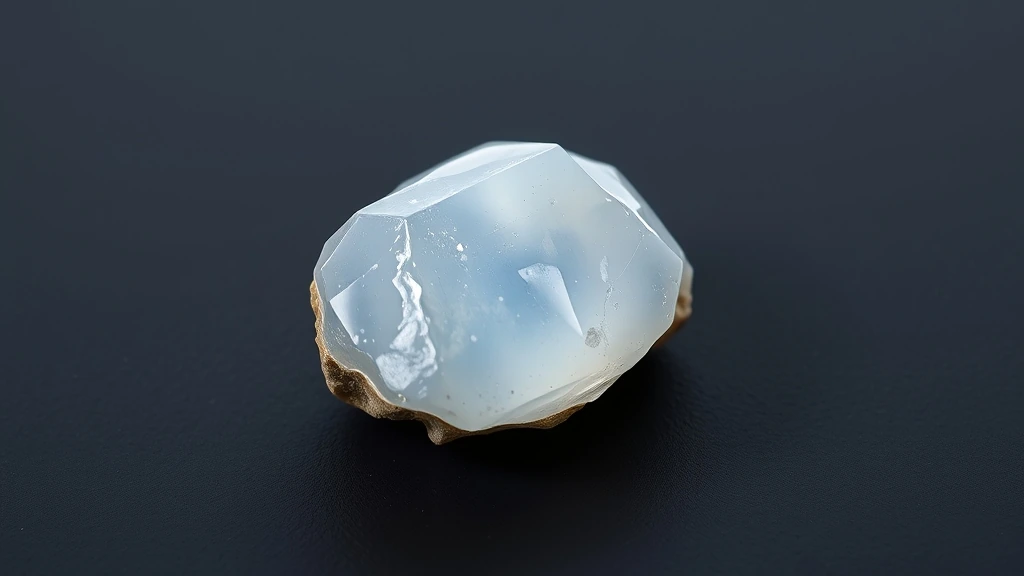
Moonstone belongs to the tectosilicate subclass of the feldspar family, where its structure is built from a three‑dimensional framework of silica tetrahedra. The gemstone forms as perthitic intergrowths of orthoclase and albite, producing the characteristic lamellar texture that gives rise to its shimmering optical effect. Its occurrence is typical in granitic pegmatites and metamorphic schists, where slow cooling allows the development of large, well‑cleaved crystals prized by gem cutters.
What is Moonstone Gemstone? Geological Overview & Definition
Moonstone is defined as a perthitic feldspar in which exsolution of albite lamellae within orthoclase creates microscopic layers that scatter light. This scattering produces the famed adularescence, a soft, billowy glow that appears to move across the stone’s surface as the viewer changes angle.
The gemstone’s color palette spans white, gray, peach, and blue, each hue dictated by the thickness and orientation of the lamellar intergrowths. While the base mineral is colorless, trace Fe²⁺/Fe³⁺ ions and structural strain act as chromophore centers, modulating the intensity of the luminous effect without introducing true pigmentation.
Moonstone Gemstone Chemical Composition & Crystallographic Properties
Moonstone crystallizes in the monoclinic system, specifically as orthoclase/albite perthitic lamellar aggregates. Its lattice parameters reflect a slightly distorted monoclinic cell, where the β angle deviates from 90°, accommodating the intergrowth of two feldspar end‑members.
Cation substitution occurs primarily between K⁺ (orthoclase) and Na⁺ (albite), with minor Ca²⁺ and Fe²⁺/Fe³⁺ entering the framework. This solid‑solution behavior influences both the crystal’s density and its response to chemical agents; the mineral is sensitive to strong acids, which can leach alkali cations and degrade the surface.
The chromophore color centers responsible for adularescence arise from electron transitions within the thin albite lamellae, acting as nanoscale diffraction gratings. These centers are not true pigments but rather interference effects that amplify specific wavelengths, most notably the blue‑white region of the spectrum.
Thermally, moonstone exhibits reversible color changes when heated to 300–400 °C; the lamellar structure can partially anneal, diminishing adularescence. Rapid cooling, however, can re‑establish the perthitic texture, restoring the gemstone’s characteristic glow.
| Property | Specification |
|---|---|
| Mineral Group | Silicates (Tectosilicates / Feldspar Group) |
| Chemical Formula | KAlSi₃O₈ (Orthoclase / Albite feldspar) |
| Mohs Hardness | 6.0 – 6.5 |
| Crystal System | Monoclinic (Orthoclase / Albite perthitic lamellar) |
| Specific Gravity (Density) | 2.56 – 2.60 |
| Refractive Index | 1.518 – 1.526 |
| Color & Optical Properties | Natural Moonstone Gemstone color spectrum and optical dispersion |
| Primary Mining Localities | Sri Lanka, India, Madagascar, Myanmar, Brazil |
| Water & Chemical Resistance | Moderate (Safe for brief lukewarm washing; avoid acids and thermal shocks) |
| Chakra Alignment (Traditional) | Crown Chakra and Third Eye Chakra |
| Zodiac Affinity (Traditional) | Cancer, Libra, Scorpio |
| Symbolic Meaning (Traditional) | Feminine intuition, inner harmony, new beginnings, and emotional balance |
Moonstone Gemstone Varieties & Color Spectrum
Moonstone exists as a distinct gem variety of the orthoclase feldspar group, prized for its unique optical phenomenon. This effect, known as adularescence, arises from the intergrowth of different feldspar layers. The quality of this sheen determines the stone’s market value and desirability.
White Moonstone
This is the most commercially prevalent variety, characterized by a translucent, milky-white body color. Its value hinges on the intensity and blue hue of the adularescence floating just beneath the surface. High-grade specimens exhibit a vivid, electric-blue shimmer that moves dynamically as the stone rotates.
Rainbow Moonstone
Rainbow moonstone displays a complex spectrum of colors, including blue, green, and peach, within a single stone. These vibrant hues result from the intergrowth of albite and orthoclase layers with varying thicknesses. This variety is highly sought after for its multi-colored, iridescent display and unique aesthetic appeal.
Blue Moonstone
Distinguished by a deep, intense blue sheen, this variety represents the pinnacle of moonstone quality. The blue color is caused by light scattering from thin, parallel layers of albite within the host feldspar. True blue moonstone is rare, and its value increases significantly with the depth of the blue flash.
Peach Moonstone
Peach moonstone features a warm, pinkish-orange body color with a subtle, silvery sheen. This hue is often attributed to trace amounts of iron or other impurities within the crystal lattice. It is less common than white varieties and appeals to collectors seeking warmer, earthy tones.
Green Moonstone
Green moonstone is a rare variety that exhibits a distinct greenish tint in its body color. This coloration typically results from the presence of chlorite or other greenish inclusions within the feldspar structure. Its scarcity makes it a highly collectible item among serious gemstone enthusiasts.
Where is Moonstone Gemstone Found? Geological Mining & Extraction
Moonstone is primarily extracted from pegmatite dikes, which are coarse-grained igneous rocks formed during the final stages of magma crystallization. These geological formations often contain large, well-formed crystals suitable for gem cutting. The host rock provides the necessary chemical environment for the development of the feldspar layers.
The most significant commercial deposits are located in Sri Lanka, Myanmar, India, and Brazil. Sri Lanka, in particular, is renowned for producing high-quality blue moonstone with exceptional adularescence. Mining operations in these regions focus on identifying and extracting large, inclusion-free crystals for the global gem market.
Historical Significance & Cultural Lore of Moonstone Gemstone
Ancient civilizations revered moonstone as a sacred gem, often associating it with the moon and divine powers. Roman soldiers carried moonstone as a talisman for protection during battles, believing it brought good fortune. In Hindu mythology, the stone is considered a sacred symbol of the moon god, Soma.
Archaeological evidence reveals moonstone artifacts dating back thousands of years, including jewelry and ceremonial objects. The stone was believed to enhance intuition and balance emotions, making it a popular choice for spiritual practices. Its enduring cultural significance continues to influence its popularity in modern jewelry design.
Modern Uses & Jewelry Applications of Moonstone Gemstone
Moonstone is most often fashioned as a cabochon to showcase its characteristic adularescence, though skilled lapidaries also produce subtle faceted cuts for contemporary rings and earrings. The stone’s translucency makes it ideal for pendants, bracelets, and cocktail rings, while larger blocks are carved into ornamental figurines and decorative inlays. Modern designers favor minimalist settings that let the stone’s inner glow dominate the piece.
- Cabochon cuts emphasize the soft, milky sheen and are the classic choice for pendants and brooches.
- Faceted cuts add sparkle for modern rings, earrings, and watch bezels.
- Ornamental carving produces decorative boxes, hair combs, and architectural accents.
Metaphysical Properties & Traditional Meaning of Moonstone Gemstone
According to historical traditions and metaphysical lore, moonstone is regarded as a stone of inner growth and emotional balance, believed to calm turbulent feelings and enhance intuition. It is said to amplify feminine energy, fostering love, compassion, and the gentle unfolding of personal dreams. Practitioners also associate the gem with heightened psychic perception and the ability to navigate change with grace.
Which Chakra and Zodiac Signs Align with Moonstone Gemstone?
Moonstone resonates most strongly with the Crown Chakra, supporting spiritual connection and higher consciousness, while also stimulating the Third Eye Chakra, which governs insight and inner vision. When placed on these energy centers, the stone is thought to open channels for divine guidance and intuitive clarity.
In astrology, moonstone is traditionally linked to the zodiac signs Cancer, Libra, and Scorpio. Cancer benefits from the stone’s soothing lunar energy, Libra finds balance in its harmonizing vibrations, and Scorpio experiences deep emotional renewal through its transformative glow.
How to Identify Real vs. Fake Moonstone Gemstone
Artificial imitations of moonstone include synthetic glass such as leaded crystal, and dyed quartz or resin pieces that mimic the stone’s glow but lack its natural internal structure. These replicas often display overly uniform color, a glassy feel, or a lack of the characteristic floating light effect seen in genuine moonstone. Recognizing these differences helps collectors avoid costly misidentifications.
Practical At-Home Authenticity Tests
- Temperature Test (Thermal Feel): Real moonstone feels cool to the touch initially and warms slowly, whereas glass or plastic replicas adjust temperature rapidly.
- Specific Gravity & Weight Test: Moonstone’s specific gravity ranges from 2.55‑2.60; a simple water displacement test will reveal a heavier feel compared with lighter glass imitations.
- Scratch & Hardness Test (Mohs Comparison): With a hardness of 6‑6.5, moonstone can be scratched by a steel file but not by a copper coin; glass typically scratches more easily.
- Microscopic & Loupe Inspection (Internal Inclusions): Under 10× magnification, genuine moonstone shows fine, wispy inclusions and a layered structure, while synthetic glass appears flawless or shows bubble patterns.
Moonstone Gemstone Valuation Factors, Grading & Pricing
The primary driver of value is Color Saturation, specifically the intensity and hue of the adularescence. High-grade stones exhibit a vibrant, blue-white sheen that floats above the body color. Uniformity in tone and exceptional optical clarity significantly enhance the gem’s visual appeal and market desirability.
Carat Weight directly influences price, as larger, flawless specimens are increasingly rare in the global market. Precise facet symmetry maximizes the play of light, while the absence of visible matrix or inclusions is critical. Any internal fractures or cloudiness will disproportionately reduce the final valuation of the stone.
Geographical Provenance Premium often elevates the value of stones from renowned sources like Sri Lanka or India. Wholesale prices fluctuate based on supply chains, but retail margins typically expand for certified, high-quality gems. Buyers should expect significant price variances depending on the specific origin and current market trends.
How to Clean and Care for Moonstone Gemstone
Moonstone is prone to cleavage splitting, making it susceptible to damage from mechanical stress or impact. You must clean the gem gently using warm, soapy water and a soft-bristled brush to remove surface oils. This method effectively maintains luster without risking structural integrity or introducing harmful chemicals.
It is strictly necessary to avoid ultrasonic cleaning devices, as the vibrations can trigger internal fractures in the crystal lattice. Never expose the stone to harsh acids or sudden thermal shocks, which can cause irreversible damage. Always dry the gemstone thoroughly with a lint-free cloth after washing to prevent water spots.
Cleansing and Recharging Moonstone Gemstone (Energetic Care)
For energetic maintenance, place the gemstone on a selenite plate overnight to absorb lunar energy. This dry method respects the mineral’s physical limitations while aligning with traditional metaphysical practices. Ensure the stone is completely dry before beginning this process to avoid any moisture-related issues.
Alternatively, you may use smoke smudging with sage or palo santo to clear perceived negative energies. Hold the stone in your hands or place it near the smoke source for a brief period. These gentle, dry techniques ensure the moonstone remains physically intact while undergoing its intended energetic reset.
Frequently Asked Questions About Moonstone Gemstone
What is the chemical composition of moonstone?
Moonstone is a variety of the mineral orthoclase, a potassium feldspar with the formula KAlSi₃O₈. In gemology it is classified as a feldspathic stone, displaying a characteristic adularescence caused by light scattering from thin, alternating layers of differing refractive index within the crystal lattice.
How should I clean my moonstone jewelry?
Clean moonstone gently with warm, soapy water and a soft brush; avoid ultrasonic cleaners. The stone’s perfect cleavage makes it vulnerable to splitting under vibration, so a mild detergent and a lint‑free cloth are the safest methods for restoring its luster without damage.
Can moonstone be worn while swimming or showering?
Moonstone has moderate water resistance and tolerates brief lukewarm washing, but should not be exposed to acids or sudden temperature changes. Prolonged immersion, hot tubs, or harsh detergents can stress the crystal lattice, leading to clouding or micro‑fractures over time.
Why does moonstone display a glowing sheen?
The phenomenon is called adularescence, a soft, billowy glow that shifts as the stone is moved. It results from light diffraction within the stone’s internal lamellae—alternating layers of orthoclase and albite—that scatter light in a characteristic pearly fashion.
Which zodiac signs are most associated with moonstone?
Moonstone is traditionally linked to Cancer, Libra, and Scorpio. These signs are believed to benefit from the stone’s calming energy, which aligns with the emotional sensitivity of Cancer, the balance‑seeking nature of Libra, and the transformative intensity of Scorpio.
Which chakras does moonstone activate?
Moonstone resonates with the Crown Chakra and the Third Eye Chakra. By stimulating these higher‑frequency centers, the gem is said to enhance intuition, spiritual insight, and a sense of inner peace, supporting meditation and psychic development.
Is moonstone suitable for everyday wear?
Moonstone can be worn daily if handled with care, avoiding hard impacts and extreme temperature shifts. Its relatively low hardness (6–6.5 on the Mohs scale) means it may scratch more easily than harder gems, so protective settings are advisable for active lifestyles.
How can I tell if a moonstone is genuine or synthetic?
Genuine moonstone exhibits natural adularescence that moves fluidly across the surface, whereas many synthetics show a uniform sheen or lack the layered internal structure. A trained gemologist can also assess refractive index, specific gravity, and inclusions under magnification to confirm authenticity.