
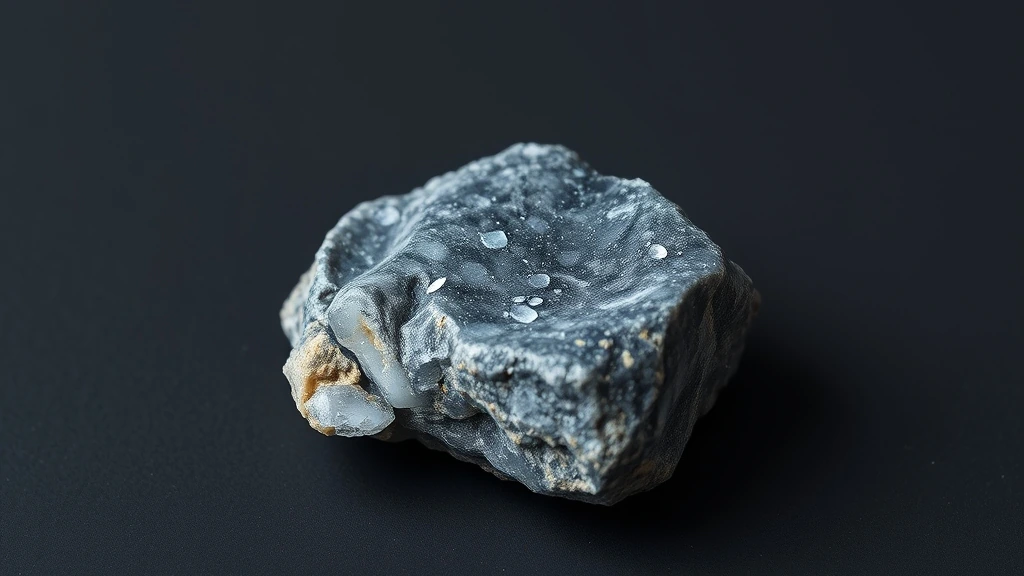
Black moonstone belongs to the vast feldspar group within the silicate mineral family. Specifically, it is classified as a tectosilicate, characterized by a three-dimensional framework of silicon and oxygen tetrahedra. This geological classification places it among the most abundant minerals in the Earth’s crust, though its specific black variety remains geologically distinct. Its formation involves complex magmatic processes that result in unique optical properties and structural integrity.
What is Black Moonstone? Geological Overview & Definition
Black moonstone is a rare, opaque variety of orthoclase or perthitic feldspar found in specific igneous and metamorphic environments. Unlike common moonstone, which displays blue or white adularescence, this variety features a deep, smoky to jet-black hue. It often occurs in granitic pegmatites or rhyolitic volcanic rocks where specific impurities dominate the crystal lattice. In contrast, the vibrant **Orange Moonstone Peach Moonstone** offers a strikingly warm glow that complements the deep, smoky allure of Black Moonstone.
The stone’s defining characteristic is its perthitic texture, resulting from the exsolution of albite within an orthoclase host. This lamellar structure scatters light differently, creating a subtle sheen rather than the typical blue glow. Geologically, it forms during the slow cooling of silica-rich magmas, allowing for the development of these distinctive internal inclusions.
Black Moonstone Chemical Composition & Crystallographic Properties
The primary chemical formula for this feldspar variety is KAlSi₃O₈, representing the pure end-member of orthoclase. However, natural specimens frequently contain minor substitutions of sodium for potassium, shifting the composition toward albite. This cation exchange is critical in determining the stone’s exact physical properties and stability. The monoclinic crystal system governs its lattice geometry, with distinct angles that differ from cubic or hexagonal structures.
Internally, the stone exhibits a perthitic lamellar structure where alternating layers of potassium and sodium feldspar create optical interference. These microscopic inclusions are responsible for the stone’s unique light-scattering behavior and subtle luster. The lattice is stable under normal conditions but may undergo minor structural adjustments under extreme thermal stress. Understanding this lamellar arrangement is key to identifying authentic specimens in the market. Similarly, the delicate lattice of Black Moonstone can be complemented by the shimmering, fractured inclusions of Crackled Quartz Ice Quartz, which enhance its light‑scattering qualities and add a subtle, icy brilliance.
The refractive index of black moonstone ranges from 1.518 to 1.526, consistent with standard feldspar minerals. Its density typically measures between 2.56 and 2.60 g/cm³, reflecting the compact nature of its tectosilicate framework. The coloration arises from trace elements or structural defects acting as chromophores, absorbing specific wavelengths of visible light. These color centers are intrinsic to the crystal lattice rather than surface treatments. In comparative mineralogical collections, practitioners and geologists frequently study Vesuvianite Idocrase alongside this crystal to appreciate their subtle energetic and structural differences.
Thermal behavior indicates that the stone is sensitive to rapid temperature changes, which can cause fracturing due to differential expansion. It is generally resistant to weak acids but may show etching in highly corrosive environments over time. The Mohs hardness of 6.0 to 6.5 makes it suitable for jewelry, though it requires care against hard impacts. Proper cleaning with mild soap and water preserves its integrity without damaging the delicate internal structure.
| Property | Specification |
|---|---|
| Mineral Group | Silicates (Tectosilicates / Feldspar Group) |
| Chemical Formula | KAlSi₃O₈ (Orthoclase / Albite feldspar) |
| Mohs Hardness | 6.0 – 6.5 |
| Crystal System | Monoclinic (Orthoclase / Albite perthitic lamellar) |
| Specific Gravity (Density) | 2.56 – 2.60 |
| Refractive Index | 1.518 – 1.526 |
| Color & Optical Properties | Natural Black Moonstone color spectrum and optical dispersion |
| Primary Mining Localities | Sri Lanka, India, Madagascar, Myanmar, Brazil |
| Water & Chemical Resistance | Moderate (Safe for brief lukewarm washing; avoid acids and thermal shocks) |
| Chakra Alignment (Traditional) | Crown Chakra and Third Eye Chakra |
| Zodiac Affinity (Traditional) | Cancer, Libra, Scorpio |
| Symbolic Meaning (Traditional) | Feminine intuition, inner harmony, new beginnings, and emotional balance |
Black Moonstone Varieties & Color Spectrum
Classic Black Moonstone
Formed in perthitic feldspar where albite lamellae exsolve from orthoclase, this variety displays the signature adularescence that shifts from deep gray to a milky blue sheen. Inclusions of microscopic fluid bubbles create the “schiller” effect prized by gem cutters. High‑grade stones are rare, especially those with a uniform black body color and vivid blue flash.
Rainbow Black Moonstone
Found primarily in Sri Lankan alluvial deposits, this morph exhibits a multicolored play of light that includes pink, green, and violet over a dark base. The rainbow effect arises from intergrowths of albite and orthoclase that diffract light at varying angles. Because the color zones are uneven, only a few specimens achieve the intense, balanced spectrum demanded by collectors.
Blue‑Sheen Black Moonstone
Typical of Madagascar pegmatites, the blue‑sheen variety shows a deep, almost indigo body with a subtle, cool blue adularescence that persists across many viewing angles. Thin, parallel lamellae of albite cause the light to scatter in a way that mimics the ocean’s surface. Large, clean crystals are scarce, making this type highly sought after for high‑end jewelry.
Green‑Tinted Black Moonstone
Originating from the western United States, especially California’s Sierra Nevada, this stone incorporates trace amounts of iron‑rich inclusions that impart a faint emerald hue to the adular surface. The green tint is most pronounced under direct sunlight, while the underlying black matrix remains dominant. Its limited geographic occurrence contributes to a modest market supply.
Opaque Black Moonstone (Commercial Grade)
Widely mined in India’s Andhra Pradesh region, this commercial grade lacks strong adularescence but retains a solid black body color. The stone’s opacity results from dense micro‑fractures and mineral impurities that scatter light uniformly. Though abundant and affordable, it is considered less valuable by connoisseurs seeking luminous play of light.
Heat‑Treated Black Moonstone
Specialty workshops in Thailand apply controlled heating to enhance the stone’s schiller intensity and shift the hue toward a richer violet‑blue. The process alters the crystal lattice slightly, improving lamellar alignment without compromising structural integrity. Treated stones are marketed as premium alternatives, yet natural specimens with comparable brilliance remain the benchmark for collectors.
Where is Black Moonstone Found? Geological Mining & Extraction
Black moonstone occurs chiefly in pegmatitic host rocks, where slow cooling allows orthoclase and albite to separate into fine lamellae that generate adularescence. These pegmatites are typically associated with granitic intrusions rich in potassium feldspar, quartz, and mica, providing the chemical environment for KAlSi₃O₈ formation.
Major extraction zones include Sri Lanka’s Ratnapura district, Madagascar’s Antsirabe region, and the United States’ California and North Carolina pegmatite fields. In each locale, miners employ selective hand‑sorting and low‑impact crushing to preserve the delicate lamellar structure, ensuring that the prized optical effect remains intact for cutting.
Historical Significance & Cultural Lore of Black Moonstone
Ancient Romans prized black moonstone as a talisman for protection and believed it could calm stormy seas, a notion reflected in numerous maritime amulets unearthed from Mediterranean shipwrecks. In the Indian subcontinent, the stone featured in Mughal jewelry, symbolizing feminine intuition and used in royal coronation regalia to invoke divine favor.
In Native American traditions of the Pacific Northwest, black moonstone was carved into ceremonial pipes, thought to open the Third Eye Chakra and guide vision quests. Across Europe during the Victorian era, it became a favored birthstone for Cancer, associated with new beginnings and emotional balance, a belief that persists in modern esoteric practice.
Modern Uses & Jewelry Applications of Black Moonstone
Black Moonstone is prized for its adularescent sheen, which makes it a favorite in contemporary lapidary work. Artisans typically cut the stone as a smooth cabochon to showcase its glow, though skilled faceting can produce striking fire on select crystals. Ornamental carving also exploits the stone’s layered structure for decorative panels and small figurines.
- Cabochon pendants and rings that highlight the stone’s milky glow.
- Faceted earrings and brooches where precision cuts amplify sparkle.
- Carved beads, intaglios, and miniature sculptures for luxury décor.
Metaphysical Properties & Traditional Meaning of Black Moonstone
According to historical traditions and metaphysical lore, Black Moonstone embodies feminine intuition and serves as a conduit for inner harmony. It is believed to calm turbulent emotions, fostering new beginnings and balanced decision‑making. Practitioners often meditate with the stone to enhance psychic receptivity and emotional equilibrium.
Which Chakra and Zodiac Signs Align with Black Moonstone?
The stone resonates most strongly with the Crown Chakra, supporting spiritual insight and connection to higher consciousness. It also activates the Third Eye Chakra, sharpening intuitive perception and inner vision during meditation.
In astrology, Black Moonstone is specifically aligned with the signs Cancer, Libra, and Scorpio. These zodiac energies are said to amplify the stone’s capacity for emotional balance, diplomatic clarity, and transformative depth.
How to Identify Real vs. Fake Black Moonstone
Artificial imitations such as glass, resin, or dyed quartz often mimic Black Moonstone’s dark hue but lack its characteristic layered adularescence. Synthetic glass may display a uniform sheen, while dyed replicas can appear overly glossy or exhibit color streaks. Careful observation of optical properties and weight can reveal these differences.
Practical At-Home Authenticity Tests
- Temperature Test (Thermal Feel): Genuine Black Moonstone feels cool to the touch and retains that coolness longer than glass or plastic, which quickly warm to skin temperature.
- Specific Gravity & Weight Test: The stone’s density (2.56‑2.60 g/cm³) makes it noticeably heavier than glass of comparable size; a simple water displacement test can confirm this.
- Scratch & Hardness Test (Mohs Comparison): With a hardness of 6.0‑6.5, Black Moonstone can be scratched by a steel file but not by a copper coin; glass typically scratches more easily.
- Microscopic & Loupe Inspection (Internal Inclusions): Under 10× magnification, authentic specimens reveal fine, parallel lamellae and subtle internal fractures, whereas imitations show bubbles, uniform texture, or absent layering.
Black Moonstone Valuation Factors, Grading & Pricing
The color saturation of black moonstone drives its market appeal; stones that display a deep, uniform black base with a vivid adularescent sheen command premium prices. Collectors prize a strong, consistent glow that shifts with viewing angle, as it signals minimal surface alteration and high natural brilliance. A muted or uneven hue often indicates excessive treatment or inferior source material, reducing desirability.
Crystal size & weight (grams) are the primary quantitative metrics, with larger, heavier specimens fetching higher values when the surface retains a natural, unblemished polish. Raw blocks that exhibit a smooth, glassy finish are prized above heavily tumbled pieces, because the former preserve the stone’s intrinsic lattice and adularescence. Inclusions such as albite lamellae or faint matrix patterns can enhance character, but extensive fractures or cleavage planes sharply lower the price.
Ethical sourcing & locality premium increasingly influence both holistic practitioners and high‑end collectors, especially stones mined in Sri Lanka or Madagascar under certified fair‑trade conditions. Transparent supply chains assure buyers that the mineral was extracted without environmental degradation or exploitative labor. Consequently, ethically sourced black moonstone often commands a noticeable surcharge over comparable material of uncertain provenance.
How to Clean and Care for Black Moonstone
Black moonstone is prone to cleavage splitting, so cleaning must be gentle to avoid fracturing the delicate lamellar structure. Use lukewarm water mixed with a mild, pH‑neutral soap, immersing the stone briefly and wiping it with a soft, lint‑free microfiber cloth; rinse quickly with clean lukewarm water and pat dry. Avoid ultrasonic cleaners entirely, as the high‑frequency vibrations can propagate micro‑cracks along natural cleavage planes. Store the gemstone in a padded pouch away from hard surfaces and sudden temperature changes.
Cleansing and Recharging Black Moonstone (Energetic Care)
For energetic renewal, place the stone on a clean selenite slab and allow the natural lattice of the selenite to absorb and disperse stagnant vibrations for several hours. This dry method respects the mineral’s sensitivity while providing a subtle, non‑thermal charge that aligns with its metaphysical properties.
Alternatively, a brief exposure to gentle moonlight, preferably during a waning or full moon, can refresh the stone’s inner harmony without introducing heat or moisture. Lightly smudge the surface with dried sage or rosemary, ensuring the herbs are not damp, to clear any residual energetic debris while preserving the crystal’s structural integrity.
Frequently Asked Questions About Black Moonstone
Is black moonstone safe to wear in the shower?
Black moonstone offers moderate water resistance, making it safe for brief exposure to lukewarm water during washing. However, you must avoid hot showers or thermal shocks that could stress the stone. Prolonged submersion or contact with acidic soaps should be strictly avoided to preserve structural integrity.
How should I clean black moonstone safely?
Clean the stone gently using warm soapy water and a soft, lint-free cloth to remove surface oils. Never place it in an ultrasonic cleaner, as the vibrations can trigger cleavage splitting along internal lamellar boundaries. Rinse thoroughly and dry immediately to prevent water spotting on the polished surface.
What is the chemical composition of black moonstone?
This gemstone is a variety of feldspar, primarily composed of KAlSi₃O₈ (orthoclase) and albite. The characteristic black or dark grey color arises from microscopic inclusions or specific crystal lattice arrangements. Its monoclinic crystal system defines the internal structure that produces the unique adularescence effect seen in high-quality specimens.
Which zodiac signs are aligned with black moonstone?
Astrological traditions associate this stone with Cancer, Libra, and Scorpio, enhancing their intuitive and emotional capacities. These signs are believed to resonate with the stone’s energy for emotional balance and inner harmony. Wearing it may support these individuals in navigating complex emotional landscapes with greater clarity and stability.
Which chakras does black moonstone activate?
This gemstone is primarily linked to the Crown Chakra and Third Eye Chakra, facilitating spiritual insight and heightened intuition. It is not associated with lower chakras in standard metaphysical frameworks. This alignment supports feminine intuition and mental clarity, helping the wearer connect with deeper subconscious wisdom and spiritual awareness.
What is the Mohs hardness of black moonstone?
Black moonstone registers a Mohs hardness of 6.0 to 6.5, making it moderately durable for everyday jewelry use. It is harder than calcite but softer than quartz, requiring careful handling to prevent scratches. This moderate durability means it should be stored separately from harder gems to maintain its polished surface integrity.
Does black moonstone have a specific refractive index?
The stone exhibits a refractive index between 1.518 and 1.526, which is typical for feldspar minerals. This optical property contributes to its characteristic sheen and light reflection. Understanding this value helps gemologists distinguish it from other similar-looking stones like labradorite or white moonstone during identification processes.
What is the density of black moonstone?
The specific gravity of this mineral ranges from 2.56 to 2.60, indicating a relatively lightweight stone for its size. This density is consistent with its feldspar composition and helps differentiate it from heavier minerals like hematite. Accurate density measurements are crucial for verifying authenticity and assessing the quality of the gem material.