
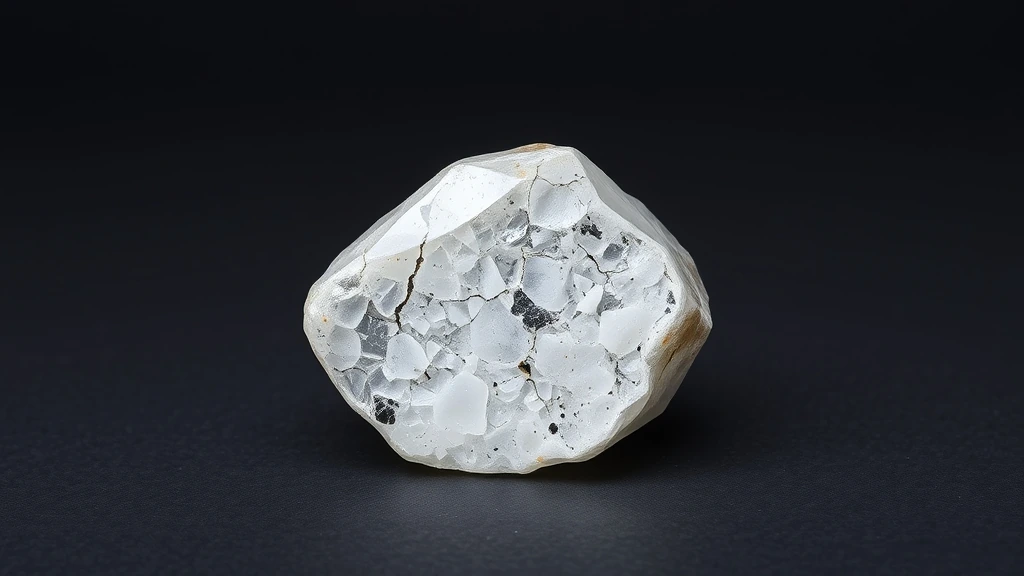
Crackled quartz belongs to the extensive silicate mineral family, specifically within the tectosilicate subclass. As a variety of the quartz group, it shares the fundamental framework of silicon-oxygen tetrahedra. Its unique aesthetic arises from physical stress rather than chemical substitution. This geological classification places it firmly within the trigonal crystal system. Understanding its parentage is essential for accurate gemological identification and valuation.
What is Crackled Quartz (ice Quartz) Gemstone? Geological Overview & Definition
Crackled quartz forms when internal tension fractures the crystal lattice during cooling or tectonic stress. These microscopic fissures create a distinctive ice-like appearance that scatters light internally. Unlike inclusions, these cracks are structural features inherent to the stone’s formation history.
The gemstone is defined by its optical scattering properties caused by these internal fractures. It is often confused with other quartz varieties, but the crackled texture is its primary diagnostic feature. This phenomenon results from rapid cooling or pressure changes in the host rock. Recognizing these structural nuances is critical for proper gemological classification.
Crackled Quartz (ice Quartz) Gemstone Chemical Composition & Crystallographic Properties
The mineral crystallizes in the trigonal system, specifically exhibiting rhombohedral or trapezohedral habits. Its lattice consists of a continuous three-dimensional framework of SiO₄ tetrahedra. This tectosilicate structure provides exceptional rigidity and stability. No cation substitution occurs, as the composition remains pure silicon dioxide.
Chemically, the stone is acid-resistant due to the strong covalent silicon-oxygen bonds. It lacks chromophore color centers, meaning its color is purely structural, not impurity-based. Thermal behavior shows high stability, though rapid temperature changes can exacerbate existing fractures. This thermal sensitivity requires careful handling during cutting and polishing.
| Property | Specification |
|---|---|
| Mineral Group | Silicates (Tectosilicates / Quartz Group) |
| Chemical Formula | SiO₂ (Silicon Dioxide) |
| Mohs Hardness | 7.0 |
| Crystal System | Trigonal (Rhombohedral / Trapezohedral) |
| Specific Gravity (Density) | 2.65 |
| Refractive Index | 1.544 – 1.553 |
| Color & Optical Properties | Natural Crackled Quartz (ice Quartz) Gemstone color spectrum and optical dispersion |
| Primary Mining Localities | Brazil, Madagascar, USA (Arkansas), Swiss Alps |
| Water & Chemical Resistance | High (Fully resistant to water and moisture) |
| Chakra Alignment (Traditional) | All Chakras (Universal Harmonizer) |
| Zodiac Affinity (Traditional) | All Zodiac Signs (Especially Leo and Aries) |
| Symbolic Meaning (Traditional) | Master energy amplifier, clarity, purification, and focus |
Quartz Varieties & Comprehensive Sub-Types
Amethyst
This violet to royal purple macrocrystalline quartz derives its color from iron irradiation and specific [FeO₄]⁴⁻ centers. It typically exhibits a Mohs hardness of 7.0 and displays distinct banding patterns. Gemologists classify it as a premier stone for spiritual practices, particularly associated with the crown chakra.
Citrine
Golden-yellow to amber honey quartz is naturally rare, often resulting from heat-treated amethyst in the trade. Its formation involves specific thermal conditions that alter iron impurities within the crystal lattice. This variety is widely recognized as a solar plexus prosperity stone in metaphysical contexts.
Rose Quartz
Soft pink to rose-red quartz is colored by microscopic fibrous inclusions of dumortierite-like borosilicate minerals. These inclusions create a diffuse, milky appearance rather than distinct banding. It remains a premier heart chakra crystal in global lapidary markets.
Smoky Quartz
Translucent brown to smoky black quartz is colored by natural radioactive irradiation of aluminum centers. This process creates color centers that absorb specific wavelengths of light. It is traditionally regarded as a master grounding stone for stability and energy.
Rutilated Quartz
Clear rock crystal quartz is shot through with acicular needle-like rutile crystals, which are titanium dioxide (TiO₂). These inclusions appear as golden, copper, or black threads within the host stone. Collectors value specimens with dense, well-distributed rutile needles for their visual complexity.
Strawberry Quartz
Clear or pale pink quartz hosts red or orange specks and flakes of lepidocrocite, hematite, or goethite. These iron oxide inclusions give the stone its distinctive strawberry-like appearance. It is a popular collector’s item due to its unique inclusion morphology.
Ametrine
This naturally zoned single crystal displays distinct sectors of purple amethyst and golden citrine. It is sourced almost exclusively from the Anahi mine in Bolivia. Gemologists verify its natural zoning to distinguish it from artificially combined stones.
Prasiolite (Green Quartz)
Leek-green transparent macrocrystalline quartz is formed through controlled heat treatment of specific iron-bearing amethyst deposits. This process alters the iron impurities to produce a stable green hue. It is a lab-created variety that mimics natural green quartz.
Gemologists differentiate these varieties by analyzing inclusion types, color centers, and zoning patterns. Lapidary practice relies on identifying specific mineral impurities and formation conditions. This systematic approach ensures accurate classification and valuation in the gemstone trade.
Where is Crackled Quartz (ice Quartz) Gemstone Found? Geological Mining & Extraction
Crackled quartz is primarily extracted from pegmatite deposits where rapid cooling creates internal stress fractures. These geological formations often host large, clear crystals suitable for lapidary work. The host rock provides the necessary pressure and mineral environment for crystal growth.
Primary extraction regions include areas with significant quartzite and granite formations. Miners target zones where thermal shock has naturally fractured the crystal lattice. This natural cracking process is essential for the stone’s distinctive ice-like appearance.
Historical Significance & Cultural Lore of Crackled Quartz (ice Quartz) Gemstone
Ancient civilizations valued quartz for its clarity and perceived spiritual properties. Archaeological artifacts reveal its use in ritualistic ceremonies and protective talismans. The stone’s natural fractures were often interpreted as signs of divine intervention or energy.
Cultural lore associates crackled quartz with emotional healing and the release of negative energy. Its unique appearance has inspired myths about frozen lightning or trapped spirits. This enduring fascination continues to influence modern crystal healing practices.
Modern Uses & Jewelry Applications of Crackled Quartz (ice Quartz) Gemstone
Lapidaries primarily cut crackled quartz into cabochons to showcase its unique internal fracture patterns rather than relying on light refraction. The stone’s translucent, ice-like appearance makes it ideal for pendants, earrings, and rings where the visual texture is the focal point. Its moderate hardness allows for intricate ornamental carving into small figurines or decorative beads.
- Cabochon Cutting: Polished domes highlight the “cracked” or “frozen” internal structure without risking further fracture.
- Faceted Designs: Rarely faceted, but possible for larger, clearer specimens to enhance sparkle.
- Ornamental Carving: Used in carvings where the natural, rugged aesthetic is desired over high polish.
- Beading: Commonly drilled for bracelets and necklaces due to its availability and affordability.
Metaphysical Properties & Traditional Meaning of Crackled Quartz (ice Quartz) Gemstone
According to historical traditions and metaphysical lore, crackled quartz is believed to represent resilience and the ability to heal from emotional fractures. Practitioners often associate its jagged internal structure with the concept of emotional mending and breaking through mental barriers. The stone is thought to resonate with those who have experienced significant life changes or trauma.
In modern crystal healing, it is valued for its capacity to release stagnant energy and promote clarity of thought. Believers suggest that holding the stone can help individuals process complex emotions and find inner peace. Its icy appearance symbolizes purity and the freezing of negative patterns, allowing for a fresh start.
Which Chakra and Zodiac Signs Align with Crackled Quartz (ice Quartz) Gemstone?
Crackled quartz is considered a Universal Harmonizer, meaning it aligns with All Chakras rather than targeting a single energy center. This broad alignment suggests it helps balance the entire energetic system, promoting flow and stability from the root to the crown. It is particularly useful for individuals seeking overall energetic equilibrium and holistic well-being.
In zodiacal terms, this stone resonates with All Zodiac Signs, making it a versatile accessory for anyone. However, it holds special significance for Leo and Aries, whose fiery natures may benefit from the stone’s cooling and stabilizing influence. These signs often appreciate the stone’s ability to temper intensity and encourage reflective calm.
How to Identify Real vs. Fake Crackled Quartz (ice Quartz) Gemstone
Artificial imitations of crackled quartz often involve synthetic glass or dyed silica that mimics the natural fracture patterns. These fakes may appear too uniform or possess an unnatural sheen compared to genuine specimens. Understanding the subtle differences in texture and internal structure is crucial for accurate identification.
Practical At-Home Authenticity Tests
- Temperature Test (Thermal Feel): Genuine quartz feels cool to the touch initially and warms slowly. Glass imitations tend to warm up much faster under hand contact.
- Specific Gravity & Weight Test: Real quartz has a specific gravity of approximately 2.65. It should feel heavier than a similarly sized piece of glass or plastic.
- Scratch & Hardness Test (Mohs Comparison): Quartz rates a 7 on the Mohs hardness scale. It will scratch glass (hardness 5-6) but will not be scratched by a steel knife (hardness 5.5).
- Microscopic & Loupe Inspection (Internal Inclusions): Use a 10x loupe to check for natural fractures and mineral inclusions. Glass fakes often contain tiny, spherical bubbles or swirl marks that are not found in natural stone.
Crackled Quartz (ice Quartz) Gemstone Valuation Factors, Grading & Pricing
Market value hinges primarily on Color Saturation and overall tone uniformity across the stone. High-grade specimens exhibit a consistent, icy white or pale blue hue without muddy discoloration. Optical clarity and luster are equally critical, as a glassy finish enhances the visual impact of internal fractures.
The Carat Weight of the piece significantly influences its final price, with larger stones commanding higher premiums. Facet symmetry is essential for maximizing light reflection within the complex internal structure. Additionally, the presence of a clean matrix or minimal secondary inclusions ensures better structural integrity and aesthetic appeal.
Geographical Provenance Premium often elevates prices for stones from renowned mining regions with established reputations. Current wholesale and retail trends show steady demand for unique, fractured quartz varieties in the metaphysical market. Buyers should expect retail prices to be substantially higher than wholesale costs due to artisanal cutting and polishing expenses.
How to Clean and Care for Crackled Quartz (ice Quartz) Gemstone
To maintain the stone’s brilliance, gently wash it with warm water and mild soap using a soft-bristled brush. This method effectively removes oils and dust without damaging the delicate surface or internal cracks. Rinse thoroughly and dry immediately with a lint-free cloth to prevent water spots from forming.
You may use an ultrasonic cleaner for deeper maintenance, provided the stone is not heavily fractured. Excessive vibration can potentially widen existing cracks, so exercise caution with older or more fragile pieces. Avoid harsh chemicals or extreme temperature changes, which could compromise the structural stability of the gemstone.
Cleansing and Recharging Crackled Quartz (ice Quartz) Gemstone (Energetic Care)
For energetic cleansing, place the stone on a selenite plate overnight to absorb negative energies safely. This dry method avoids any risk of moisture exposure, preserving the integrity of the internal ice-like fractures. Selenite is known for its high vibrational frequency, making it an ideal companion for quartz varieties.
Alternatively, you can perform smoke smudging using sage or palo santo to purify the stone’s energy field. Hold the stone in the smoke for a few minutes while setting a clear intention for its use. This traditional practice respects the mineral’s physical properties while addressing its metaphysical applications.
Frequently Asked Questions About Crackled Quartz (ice Quartz) Gemstone
Is crackled quartz safe to wear in the shower?
Yes, it is fully resistant to water and moisture. The mineral structure remains stable under prolonged exposure to humidity and liquid. You can safely wear this stone during bathing or swimming without worry. This high water resistance ensures the internal fractures do not degrade or absorb harmful substances over time.
Can I clean crackled quartz in an ultrasonic cleaner?
It is suitable for ultrasonic cleaning unless heavily fractured. Standard maintenance involves warm water and mild soap for optimal results. However, intense vibrations may stress existing internal cracks if the specimen is heavily fractured. Always inspect the stone for severe internal fissures before subjecting it to high-frequency ultrasonic waves.
Which zodiac signs are most compatible with this stone?
It aligns with all zodiac signs, especially Leo and Aries. This universal appeal stems from its balanced energetic properties. Leos and Aries may find it particularly resonant due to its fiery, dynamic aesthetic. The stone supports universal harmony across all astrological profiles without excluding any specific sign.
What chakras does crackled quartz activate?
It resonates with all chakras as a universal harmonizer. This stone does not target a single energy center exclusively. Instead, it promotes balance and alignment across the entire chakra system. Its ability to facilitate holistic energy flow makes it ideal for comprehensive meditation and energetic cleansing practices.
How should I store crackled quartz safely?
Store it in a soft pouch or separate compartment. Although hard, the internal fractures make it susceptible to chipping from impact. Keep it away from harder gemstones like diamonds or sapphires to prevent surface abrasion. Proper physical isolation preserves the integrity of the delicate ice-like inclusions within the crystal.
Does crackled quartz require special polishing or maintenance?
Routine cleaning with mild soap is sufficient. The stone’s surface is durable and does not require aggressive chemical treatments. Avoid abrasive cloths that might scratch the face of the gem. Regular gentle wiping maintains its luster and protects the fracture planes from accumulating dust or oils.
Is crackled quartz a natural or synthetic gemstone?
It is a natural quartz variety with internal fractures. These fractures form during geological cooling or tectonic stress events. The “ice” appearance results from light scattering within these natural voids. It is distinct from synthetic glass, which lacks the authentic mineral lattice and natural inclusion patterns of true quartz.
Can I use crackled quartz in high-heat environments?
Avoid prolonged exposure to extreme heat sources. While quartz is heat-tolerant, rapid thermal shock can expand existing fractures. Sudden temperature changes may cause the internal cracks to propagate further. Maintain moderate temperatures to ensure the structural stability of the delicate internal ice-like formations remains intact.