
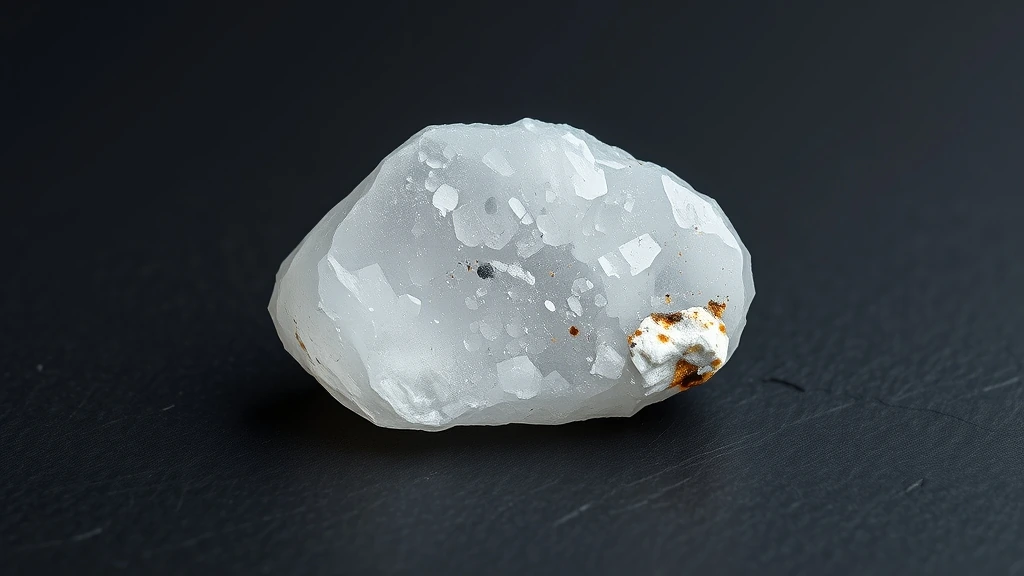
Albite belongs to the plagioclase feldspar series, a critical component of the broader feldspar mineral group. As a natural mineral, it forms through the crystallization of silica-rich magmas in igneous and metamorphic environments. Its geological significance is profound, as it constitutes a major portion of the Earth’s continental crust. Understanding its formation helps geologists decode the thermal history of rock formations.
What is Albite Gemstone? Geological Overview & Definition
Albite is defined as the sodium end-member of the plagioclase feldspar solid solution series. It frequently occurs in granitic rocks, pegmatites, and metamorphic schists where sodium-rich fluids dominate. The term “albite” derives from the Latin *albus*, meaning white, reflecting its common appearance.
In gemology, high-quality albite is prized for its vitreous luster and clean, translucent quality. It often forms in large, well-defined crystals that can be cut into faceted gems. However, inclusions of other minerals may reduce its overall clarity and market value.
Albite Gemstone Chemical Composition & Crystallographic Properties
Albite crystallizes in the triclinic system, characterized by three unequal axes and non-right angles. This structure distinguishes it from other feldspars that may exhibit pseudo-symmetry. The unit cell parameters are strictly defined by its lattice structure, ensuring consistent physical properties.
The chemical composition allows for cation substitution, where sodium can be partially replaced by calcium in the plagioclase series. This substitution alters the refractive index and density slightly. Albite is generally resistant to weak acids but can be etched by strong hydrofluoric acid.
Color in albite arises from chromophore color centers or trace impurities like iron. Pure albite is colorless, but natural specimens often display white, gray, or pale pink tones. Thermal behavior shows that albite undergoes a phase transition at high temperatures, affecting its stability.
The refractive index of albite typically ranges between 1.52 and 1.54. This optical property contributes to its subtle sparkle and glass-like appearance. Gemologists use these values to distinguish albite from similar-looking minerals like quartz or feldspar varieties.
| Property | Specification |
|---|---|
| Mineral Group | Natural Mineral / Crystal |
| Chemical Formula | chem |
| Mohs Hardness | 6–6.5 |
| Crystal System | Triclinic |
| Specific Gravity (Density) | 2.60–2.65 |
| Refractive Index | ubl |
| Color & Optical Properties | Natural Albite Gemstone color spectrum and optical dispersion |
| Primary Mining Localities | Global primary localities |
| Water & Chemical Resistance | High (Safe for gentle water washing) |
| Chakra Alignment (Traditional) | Root Chakra and Heart Chakra |
| Zodiac Affinity (Traditional) | Taurus, Gemini, Leo |
| Symbolic Meaning (Traditional) | Balance, focus, clarity and positivity |
Albite Gemstone Varieties & Color Spectrum
Albite occurs in diverse geological settings, producing distinct visual characteristics based on trace element impurities. The most common form is pure white, resulting from the absence of significant chromophores in the feldspar lattice. Collectors often prize these specimens for their high luster and clarity, which mimic the appearance of quartz.
Pure White Albite
This variety forms in alkaline granitic pegmatites where the crystal structure remains free of iron or manganese contamination. Its visual signature is a bright, pearly white hue with a vitreous to pearly luster that enhances its gemological appeal. While not exceptionally rare, high-clarity white albite is frequently used in carvings and ornamental objects due to its workability.
Green Albite (Olivine Inclusion)
Green albite derives its color from microscopic inclusions of olivine or other green minerals trapped during crystallization. These inclusions create a speckled or mottled appearance rather than a uniform green tint throughout the stone. This variety is geologically significant as it indicates rapid cooling in pegmatitic environments where mineral mixing occurred.
Gray to Black Albite
Darker varieties result from the presence of iron-rich inclusions or fine-grained intergrowths with other feldspars. The color ranges from light gray to nearly black, depending on the concentration of these opaque minerals. Such specimens are often found in metamorphic schists and are valued for their contrast and durability in industrial applications.
Pink Albite (Rare Morph)
Pink albite is an exceptionally rare morph, typically caused by trace amounts of manganese or other transition metals. This subtle pinkish hue distinguishes it from the more common white or gray varieties in the market. Due to its scarcity, pink albite is highly sought after by collectors for its unique gemological rarity and aesthetic appeal.
Striated Albite
This variety is characterized by visible striations on the crystal faces, a diagnostic feature of the triclinic system. The striations result from the complex growth patterns of the albite crystal lattice during formation. These lines can create interesting optical effects, adding to the visual complexity of the mineral specimen.
Where is Albite Gemstone Found? Geological Mining & Extraction
Albite is primarily extracted from granitic pegmatites, which are coarse-grained igneous rocks formed from the last stages of magma crystallization. These deposits often contain large, well-formed crystals suitable for gem-quality specimens. The pegmatite zones are rich in volatile components that facilitate the growth of large feldspar crystals.
Major mining regions include the United States, particularly in Maine and New Hampshire, where extensive pegmatite fields are located. Other significant sources include Brazil, Russia, and Finland, each offering unique color morphs and crystal sizes. Extraction methods typically involve open-pit mining followed by careful hand-picking to preserve crystal integrity.
Historical Significance & Cultural Lore of Albite Gemstone
Historically, albite was often confused with other white feldspars or quartz in ancient civilizations due to its similar appearance. It was used in archaeological artifacts such as beads, amulets, and decorative inlays by various cultures. The pearly luster of albite made it a desirable material for ceremonial objects in pre-modern societies.
In modern gemology, albite is recognized for its triclinic crystal system and distinct cleavage properties. Its cultural lore is less prominent than that of rarer gemstones, but it remains valued for its mineralogical significance and aesthetic qualities. The stone continues to be appreciated by collectors and scientists alike for its diverse geological origins.
Modern Uses & Jewelry Applications of Albite Gemstone
Albite is primarily valued for its optical properties and durability in ornamental contexts. Lapidaries often cut it into cabochons to showcase its subtle sheen rather than brilliance. This approach highlights the stone’s gentle luster and clean aesthetic appeal.
- Cabochon Cutting: Smooth, domed cuts maximize the stone’s soft glow and minimize the risk of chipping.
- Faceted Jewelry: While less common, high-clarity specimens can be faceted for rings and earrings.
- Ornamental Carving: Large blocks are carved into figurines, beads, and decorative inlays for architectural use.
Metaphysical Properties & Traditional Meaning of Albite Gemstone
According to historical traditions and metaphysical lore, albitite is revered for its emotional balancing capabilities. Practitioners believe it fosters inner peace and helps release negative energy patterns. This stone is often associated with clarity of thought and spiritual grounding.
Wearers report a sense of emotional resonance that promotes calmness during stressful periods. The stone is thought to enhance intuition and support personal transformation. Its energy is described as gentle yet persistent in its stabilizing effects.
Which Chakra and Zodiac Signs Align with Albite Gemstone?
In metaphysical practice, albitite is strongly linked to the Root Chakra and the Heart Chakra. The Root Chakra connection provides a sense of security and stability, anchoring the user to the earth. This alignment helps ground spiritual energy into physical reality.
The Heart Chakra association encourages compassion, love, and emotional healing. Together, these chakras create a bridge between physical safety and emotional openness. This dual alignment supports holistic well-being and balanced energy flow.
Astrologically, albitite resonates with Taurus, Gemini, and Leo. Taurus appreciates the stone’s grounding nature and connection to the earth. Gemini benefits from its ability to clarify communication and mental focus.
Leo finds support in the stone’s capacity to boost confidence and creative expression. These zodiac signs are believed to amplify the stone’s positive attributes. This alignment enhances personal traits and spiritual growth for these individuals.
How to Identify Real vs. Fake Albite Gemstone
Artificial imitations of albitite include synthetic glass, dyed quartz, and other feldspar varieties. These fakes often mimic the stone’s pale color but lack its specific crystal structure and physical properties. Understanding these differences is crucial for accurate identification.
Practical At-Home Authenticity Tests
- Temperature Test (Thermal Feel): Real albitite feels cool to the touch initially and warms slowly. Glass imitations tend to warm up much faster due to lower thermal conductivity.
- Specific Gravity & Weight Test: Albitite has a density of 2.60–2.65 g/cm³. It should feel slightly heavier than similarly sized glass or lighter minerals like calcite.
- Scratch & Hardness Test (Mohs Comparison): With a hardness of 6–6.5, albitite will scratch glass (hardness 5.5) but not quartz (hardness 7). It should not be easily scratched by a steel knife.
- Microscopic & Loupe Inspection (Internal Inclusions): Use a 10x loupe to look for natural inclusions or triclinic crystal features. Glass often contains tiny bubbles or swirls, while real albitite may show mineral inclusions or cleavage planes.
Albite Gemstone Valuation Factors, Grading & Pricing
Color Saturation is the primary driver of value, with pure, snow-white specimens commanding the highest premiums. Tone uniformity across the entire stone ensures visual consistency, while high optical clarity enhances its characteristic pearly luster. Stones exhibiting any grayish or brownish tints are significantly devalued in the gem market.
Carat Weight influences pricing, though large, inclusion-free albites are rare and thus exceptionally valuable. Facet symmetry is critical for maximizing light return, as the Triclinic crystal system can complicate cutting precision. The presence of matrix or internal inclusions often reduces value, as they disrupt the stone’s pristine appearance.
Geographical Provenance Premium applies to stones from renowned localities, such as the Swiss Alps or Madagascar. Wholesale prices remain modest, but retail values can triple for certified, high-quality specimens. Market trends show steady demand for metaphysical jewelry, supporting consistent pricing for well-cut gems.
How to Clean and Care for Albite Gemstone
To maintain the integrity of your albite, use warm soapy water and a soft, lint-free cloth for gentle cleaning. This method effectively removes surface oils and dust without risking damage to the stone’s delicate structure. Always rinse thoroughly with clean water and dry immediately to prevent water spotting.
You must strictly avoid ultrasonic cleaners and steam cleaners, as these can induce structural fractures in the mineral. The stone’s moderate hardness of 6–6.5 makes it susceptible to shock from high-frequency vibrations. Store albite separately from harder gems to prevent scratches and maintain its luster.
Cleansing and Recharging Albite Gemstone (Energetic Care)
For energetic maintenance, place your albite on a selenite plate overnight to absorb and transmute negative energies. This dry method respects the mineral’s physical properties while supporting its spiritual applications. Avoid soaking the stone in water for extended periods during this process.
Smoke smudging with sage or palo santo is another safe, dry technique for clearing energetic residue. Alternatively, expose the gem to moonlight for several hours to recharge its vibrational frequency. These methods ensure the stone remains energetically pure without risking physical damage.
Frequently Asked Questions About Albite Gemstone
Is Albite safe to wear in the shower?
Yes, Albite is safe for gentle water exposure during daily activities. Its high water resistance allows it to withstand brief contact with water without damage. However, prolonged soaking is unnecessary and should be avoided. Always pat the stone dry after showering to maintain its natural luster and structural integrity.
Can I clean Albite in an ultrasonic cleaner?
No, you must avoid ultrasonic cleaners to prevent structural fractures. The vibrations can exploit natural cleavage planes within the Triclinic crystal system, causing irreversible damage. Instead, use warm soapy water and a soft cloth for gentle cleaning. This method ensures the stone remains safe and undamaged.
What is the chemical formula of Albite?
The chemical formula is NaAlSi3O8, representing its feldspar composition. This specific arrangement of sodium, aluminum, and silicon defines its mineralogical identity. Understanding this formula helps gemologists distinguish Albite from other feldspar varieties. It is a fundamental aspect of its geological classification.
How hard is Albite on the Mohs scale?
Albite ranks between 6 and 6.5 on the Mohs hardness scale. This moderate hardness makes it suitable for jewelry but requires care against harder minerals. It can be scratched by quartz or topaz, which are significantly harder. Proper storage is essential to preserve its surface finish and clarity.
Which zodiac signs align with Albite?
Albite is traditionally associated with Taurus, Gemini, and Leo. These signs are believed to resonate with the stone’s stabilizing and harmonizing energies. Wearing Albite may enhance personal traits linked to these astrological profiles. It serves as a supportive accessory for spiritual and personal growth.
Which chakras does Albite activate?
Albite primarily activates the Root Chakra and Heart Chakra. This dual alignment supports both physical grounding and emotional balance. It helps anchor energy while fostering compassion and love. This unique combination makes it valuable for holistic healing practices.
What is the crystal system of Albite?
Albite crystallizes in the Triclinic system, characterized by unequal axes. This structure influences its cleavage patterns and optical properties. The Triclinic symmetry is a key identifier for mineralogists. It distinguishes Albite from other feldspars with different crystal habits.
What is the refractive index of Albite?
Albite exhibits a refractive index range that varies with composition. This optical property determines how light bends through the stone. It contributes to the gem’s subtle luster and transparency. Precise measurement aids in accurate gemological identification and grading.