
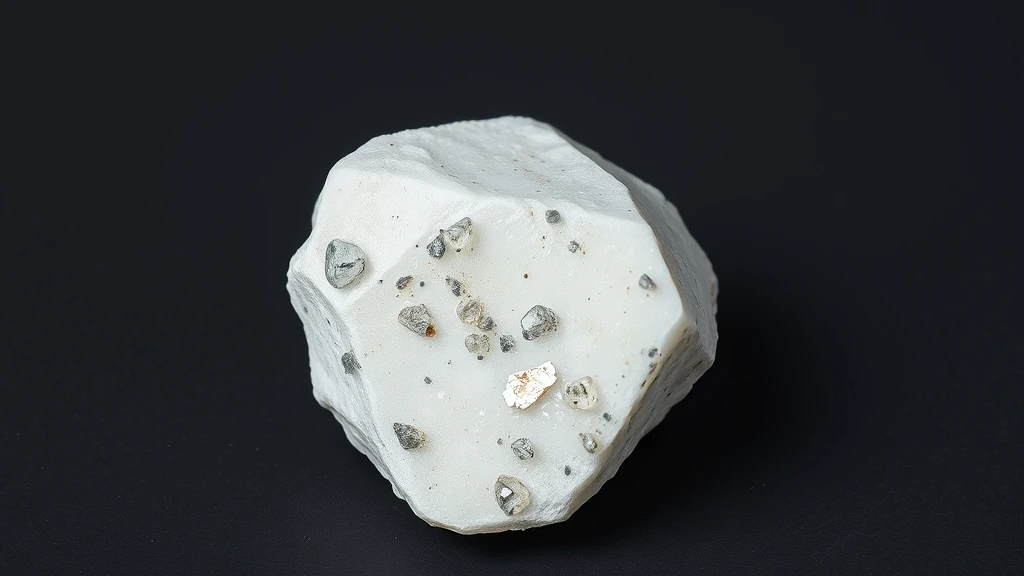
Plagioclase feldspar belongs to the natural mineral category, forming as individual crystals rather than as a rock aggregate. It is a member of the feldspar group, the most abundant mineral family in the Earth’s crust, and crystallizes in the triclinic system. Occurring in igneous, metamorphic, and some sedimentary environments, it records the thermal and chemical history of its host rock. The series bridges albite and anorthite, illustrating continuous cation substitution that influences physical and optical properties.
What is Plagioclase Feldspar? Geological Overview & Definition
Plagioclase feldspar is a solid‑solution series between albite (Na‑rich) and anorthite (Ca‑rich), representing the most common feldspar in mafic to intermediate igneous rocks. Its composition varies smoothly, producing a continuum of intermediate members such as oligoclase, andesine, and labradorite, each with distinct optical signatures.
In the field, plagioclase is identified by its twinning patterns—particularly the characteristic Albite and Carlsbad twins visible under polarized light. These twins, together with its low birefringence, help distinguish it from potassium feldspar and other silicates during petrographic analysis.
Plagioclase Feldspar Chemical Composition & Crystallographic Properties
The crystal structure of plagioclase is unequivocally triclinic, the least symmetric of the seven crystal systems, with three unequal axes intersecting at oblique angles. This geometry accommodates the gradual replacement of Na⁺ by Ca²⁺, creating a continuous lattice distortion that is recorded in unit‑cell parameters.
Cation substitution drives the series’ density shift from 2.62 g cm⁻³ (albite) to 2.76 g cm⁻³ (anorthite), reflecting the heavier calcium ion. The substitution also modifies the refractive indices, ranging from nα = 1.527 in albite to nγ = 1.590 in anorthite, influencing the stone’s subtle luster and optical dispersion.
Color in plagioclase arises from trace chromophore ions such as Fe²⁺, Ti⁴⁺, and rare earth elements that create charge‑transfer bands. These centers can produce pale blues, pinks, or greens, especially in labradorite where labradorescence—a vivid internal play of light—occurs due to exsolution lamellae.
Thermally, plagioclase exhibits exsolution on cooling, separating into Na‑rich and Ca‑rich lamellae that generate perthitic textures. At high temperatures it remains stable, but rapid quenching can trap metastable phases, while prolonged heating may cause irreversible breakdown to glassy or amorphous states.
| Property | Specification |
|---|---|
| Mineral Group | Natural Mineral / Crystal |
| Chemical Formula | NaAlSi₃O₈ – CaAl₂Si₂O₈ |
| Mohs Hardness | 6–6.5 |
| Crystal System | Triclinic |
| Specific Gravity (Density) | 2.62 (albite) to 2.76 (anorthite) |
| Refractive Index | Albite: n α 1.527, n β 1.532 n γ 1.538 Anorthite: n α 1.577 n β 1.585 n γ 1.590 |
| Color & Optical Properties | Natural Plagioclase Feldspar color spectrum and optical dispersion |
| Primary Mining Localities | Global primary localities |
| Water & Chemical Resistance | High (Safe for gentle water washing) |
| Chakra Alignment (Traditional) | Crown Chakra, Third Eye Chakra |
| Zodiac Affinity (Traditional) | Aquarius, Pisces |
| Symbolic Meaning (Traditional) | Intuition, cosmic connection, and spiritual clarity |
Plagioclase Feldspar Varieties & Color Spectrum
Albite
Albite forms in sodium‑rich granitic pegmatites and high‑temperature volcanic rocks, where slow cooling allows well‑developed euhedral crystals. It typically appears white to pale gray, sometimes exhibiting a faint blue‑white sheen caused by microscopic fluid inclusions. The mineral’s low birefringence and clear cleavage make it a favorite for collectors, though large gem‑quality crystals are relatively rare.
Anorthite
Anorthite crystallizes in calcium‑rich mafic rocks such as gabbro and basalt, often as subhedral grains intergrown with pyroxene. Its color ranges from bright white to creamy ivory, occasionally showing a subtle yellowish tint due to iron oxide inclusions. Because anorthite is harder and denser than albite, it is prized for its high refractive index, yet gem‑size specimens are uncommon outside specialized localities.
Oligoclase
Oligoclase occurs in intermediate igneous bodies where sodium and calcium proportions are balanced, producing a transitional composition between albite and anorthite. The stone displays a milky to pale green hue, sometimes with a ghostly chatoyancy from oriented exsolution lamellae. Its moderate rarity in gem markets stems from the difficulty of separating clean crystals from matrix‑bound host rocks.
Labradorite (Labradorescence Variety)
Labradorite is a calcium‑rich plagioclase that develops in mafic to ultramafic intrusions, especially in the Labrador Peninsula and Norway. Its hallmark is labradorescence—a vivid, iridescent play of colors such as blue, green, and gold caused by light diffraction on internal lamellar structures. While abundant in raw form, gem‑cut pieces with strong labradorescence are highly sought after and command premium prices.
Bytownite
Bytownite is typical of cooling zones in layered mafic complexes, where high calcium content yields a white to light gray appearance with occasional pinkish overtones from trace manganese. The mineral often contains microscopic feldspar twins, enhancing its optical anisotropy. Large, inclusion‑free crystals are scarce, making bytownite a niche collector’s item.
Andesine
Andesine forms in volcanic arcs and high‑grade metamorphic belts, where intermediate silica activity favors a balanced Na‑Ca composition. Its color spectrum spans pale yellow to soft pink, sometimes displaying a translucent glow under UV light due to rare earth element traces. The recent surge in synthetic andesine has increased market visibility, yet natural specimens from the Andes remain prized for their authentic geological provenance.
Where is Plagioclase Feldspar Found? Geological Mining & Extraction
Plagioclase is a principal component of granite, diorite, and basaltic rocks, frequently concentrated in pegmatitic veins where slow crystallization yields sizable crystals. Mining operations target these veins in regions such as Canada’s Shield, Brazil’s Minas Gerais, and the Ural Mountains, employing selective blasting and hand‑sorting to preserve crystal integrity.
Extraction also occurs in large‑scale open‑pit quarries where plagioclase occurs as a groundmass mineral within basaltic flows, notably in Iceland and the Great Rift Valley. After crushing, dense‑media separation isolates the lighter feldspar grains, which are then washed, graded, and, when appropriate, cut for gem use.
Historical Significance & Cultural Lore of Plagioclase Feldspar
Ancient Egyptians and Mesopotamians incorporated white albite shards into amulets, believing the stone amplified intuitive insight and protected against malevolent forces. In the Roman Empire, labradorite fragments were set into signet rings, their shimmering play of colors symbolizing divine favor and the cosmic connection of the wearer.
Across historical lapidary traditions, bytownite and oligoclase were associated with the Crown and Third Eye Chakras, thought to enhance mental focus during meditation. Indigenous peoples of the Andes used andesine beads in ceremonial ornaments, attributing to them the power to channel intuitive insight and align the wearer with solar energies.
Modern Uses & Jewelry Applications of Plagioclase Feldspar
Plagioclase feldspar serves primarily as an ornamental stone and architectural aggregate rather than a high-value gemstone. Its triclinic crystal structure often exhibits complex twinning patterns that create unique visual textures in polished surfaces. Lapidaries typically select specimens with distinct albite-anorthite composition gradients to maximize aesthetic appeal in decorative objects.
- Cabochon Cutting: Smooth, domed cuts are preferred to showcase the stone’s subtle iridescence and internal lamellar twinning without risking fracture along cleavage planes.
- Ornamental Carving: Large, clean blocks are carved into decorative bowls, vases, and architectural accents, leveraging the stone’s moderate Mohs hardness for detailed sculpting.
- Faceted Jewelry: Rare, high-clarity specimens are occasionally faceted for rings or pendants, though the stone’s perfect cleavage requires careful setting to prevent chipping.
Safety & Mineral Profile of Plagioclase Feldspar
Handling plagioclase feldspar requires standard lapidary safety protocols due to its perfect cleavage in two directions. The mineral is chemically stable under normal environmental conditions but can be etched by strong acids. It is important to recognize that this is a collector mineral valued for scientific study and specimen display, not for therapeutic purposes.
While historical folklore occasionally associates feldspars with spiritual clarity, these claims lack empirical scientific validation. Modern gemology prioritizes the mineral’s physical properties and geological significance over metaphysical narratives. Always prioritize safe handling practices, including eye protection and dust control, when cutting or polishing specimens.
Mineralogical Group and Planetary Lore of Plagioclase Feldspar
Plagioclase feldspar belongs to the albite-anorthite solid solution series, a fundamental component of the Earth’s crust. This mineral group is defined by its continuous substitution of sodium for calcium within the silicate framework. Its widespread occurrence makes it a critical reference point in petrological studies and geological mapping.
Traditional planetary lore often links feldspars to the Crown Chakra and Third Eye Chakra, symbolizing intuition and cosmic connection. These associations align with zodiac signs such as Aquarius and Pisces in esoteric traditions. However, such symbolic interpretations remain strictly within the realm of cultural belief and do not influence the mineral’s physical or chemical behavior.
How to Identify Real vs. Fake Plagioclase Feldspar
Artificial imitations of plagioclase feldspar are rare due to the stone’s low market value and distinctive appearance. Synthetic glass and dyed replicas are occasionally used to mimic rare, iridescent specimens. Identifying fakes requires attention to internal structure, surface luster, and physical properties that differ from natural triclinic crystals.
Practical At-Home Authenticity Tests
- Temperature Test (Thermal Feel): Hold the stone against your cheek or wrist. Natural plagioclase feels cool to the touch initially due to its thermal conductivity, whereas plastic imitations warm up quickly to body temperature.
- Specific Gravity & Weight Test: Compare the weight of the stone to a similarly sized piece of glass. Plagioclase has a density ranging from 2.62 to 2.76 g/cm³, making it slightly heavier than most common glass substitutes.
- Scratch & Hardness Test (Mohs Comparison): Gently scratch the stone with a steel knife (Mohs 5.5). Plagioclase, with a Mohs hardness of 6–6.5, should not be scratched by the knife. Conversely, it can easily scratch glass (Mohs 5.5).
- Microscopic & Loupe Inspection (Internal Inclusions): Use a 10x loupe to examine the interior. Natural plagioclase often displays characteristic lamellar twinning or fluid inclusions. Glass imitations typically show curved bubbles or a homogeneous, inclusion-free interior.
Plagioclase Feldspar Valuation Factors, Grading & Pricing
Market value hinges primarily on Specimen Aesthetic Quality, where lustrous, unblemished surfaces command premium prices. Collectors seek crystals with sharp, well-defined edges and minimal surface pitting or etching. The presence of iridescent schiller or labradorescence further elevates the visual appeal of the stone.
Rarity & Specimen Dimensions (Centimeters/Grams) significantly influence pricing, as larger, intact crystal clusters are exceptionally scarce in nature. Specimens measured in centimeters and grams must exhibit robust structural integrity without any handling damage. Perfectly formed terminations and clear, colorless to pale bluish-white bodies are highly sought after by serious collectors.
Mineralogical Provenance & Locality Value plays a critical role in the scientific and museum collector markets. Famous localities, such as the Adirondacks in New York, carry substantial prestige and historical significance. Documentation of origin enhances the specimen’s academic and archival worth beyond its physical appearance.
How to Clean and Care for Plagioclase Feldspar
To maintain the integrity of the Triclinic crystal structure, use warm soapy water and a soft cloth for gentle cleaning. This method effectively removes surface dust and oils without risking mechanical abrasion to the delicate faces. Avoid ultrasonic cleaners entirely, as high-frequency vibrations can induce structural fractures in the lattice.
Store the specimen in a dry, stable environment to prevent any potential moisture-related stress on the mineral. Regular inspection ensures that no new cracks or chips have developed during handling. Proper care preserves the optical properties and physical beauty of the feldspar for generations.
Cleansing and Recharging Plagioclase Feldspar (Energetic Care)
For holistic maintenance, employ dry methods such as herbal smudging with sage or palo santo to clear energetic residue. This approach respects the mineral’s physical stability while addressing metaphysical intentions without introducing moisture. Ensure the area is well-ventilated to prevent any accidental contact with wet herbs or ash.
Alternatively, place the specimen on a selenite charging slab or expose it to gentle moonlight overnight. These methods allow for subtle energetic recharging without the risk of thermal shock or UV degradation. Avoid direct intense sunlight, as prolonged exposure may cause fading or minor thermal stress to the crystal lattice.
Frequently Asked Questions About Plagioclase Feldspar
Is plagioclase feldspar safe to wear in the shower?
Yes, it tolerates gentle water exposure. The mineral’s high water resistance allows routine washing with mild soap, but prolonged immersion or hot water can accelerate surface wear, so rinse quickly and pat dry to maintain luster.
How should I clean plagioclase jewelry at home?
Use warm soapy water and a soft cloth, avoiding ultrasonic devices. Gently wipe the stone to remove oils; ultrasonic vibrations can create micro‑fractures in the triclinic crystal lattice, compromising durability over time.
Can plagioclase be repaired if it chips?
Professional lapidary repair is recommended. Because plagioclase has a Mohs hardness of 6–6.5, it can be reshaped with diamond tools, but DIY attempts risk further fracturing the albite‑anorthite solid solution series.
What are the typical refractive indices of plagioclase?
Albite ranges nα 1.527–nγ 1.538; anorthite ranges nα 1.577–nγ 1.590. These values produce a subtle pleochroic effect under polarized light, aiding gemologists in distinguishing plagioclase from similar feldspars.
Which zodiac signs are associated with plagioclase?
Aquarius and Pisces are the aligned signs. In astrological tradition, these water‑element signs are believed to resonate with the stone’s intuitive and cosmic‑connection energies.
Which chakras does plagioclase influence?
Crown Chakra and Third Eye Chakra. Placement of the stone during meditation is said to enhance spiritual clarity and expand higher‑mind perception, aligning with its metaphysical attributes.
Is plagioclase suitable for everyday wear?
It is suitable for casual use but requires care. The 6–6.5 hardness resists scratches from most metals, yet harsh impacts can cause cleavage along its triclinic planes, so avoid heavy physical activity while wearing.
Does plagioclase exhibit any notable inclusions?
Common inclusions include mica flakes and minor feldspar twins. These features can create a lamellar sheen that adds character, though large inclusions may affect clarity and should be considered when grading the gemstone.