
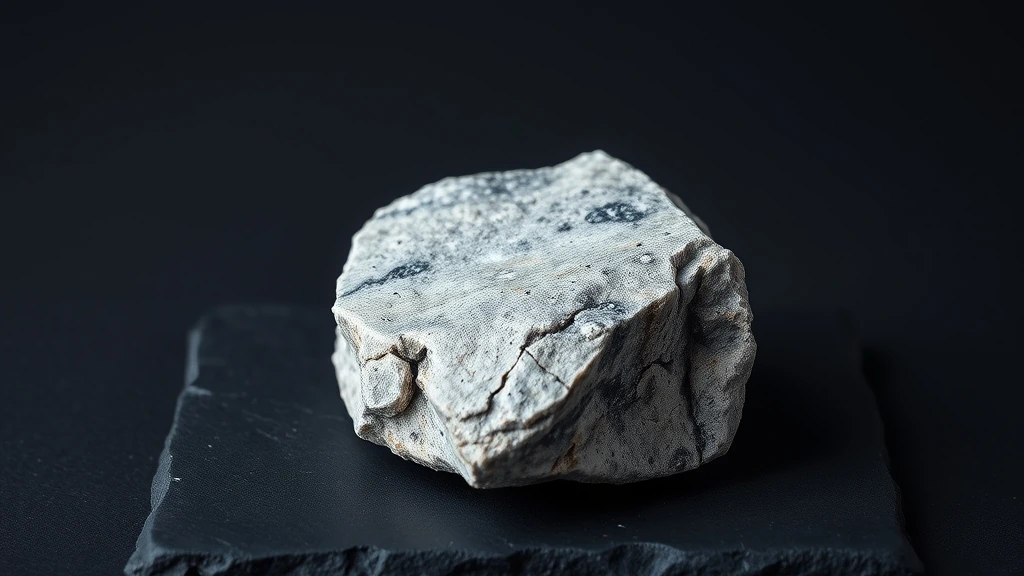
Anorthite belongs to the plagioclase feldspar series, a major component of the Earth’s crust. As a Natural Mineral / Crystal, it forms through the cooling of magma in igneous rocks. This geological origin defines its structural integrity and optical characteristics. Understanding its parent group is essential for accurate identification and valuation in the gem trade.
What is Anorthite Gemstone? Geological Overview & Definition
Anorthite is the calcium end-member of the plagioclase series, ranging from albite to anorthite. It frequently occurs in basalt and gabbro, often forming large, distinct crystals. These geological settings provide the necessary conditions for its stable formation.
In gemology, anorthite is prized for its unique labradorescence or iridescence. This optical phenomenon arises from internal light scattering within the crystal lattice. It distinguishes anorthite from other feldspars, offering a distinctive aesthetic appeal.
Anorthite Gemstone Chemical Composition & Crystallographic Properties
Anorthite crystallizes in the Triclinic system, characterized by unequal axes and non-90-degree angles. This specific lattice structure dictates its cleavage patterns and physical behavior. The Triclinic symmetry is a fundamental invariant for its identification.
The mineral features a complex framework of silicon and aluminum tetrahedra. Cation substitution between calcium and sodium creates the plagioclase solid solution series. This chemical variability influences its refractive index and overall stability.
Anorthite is sensitive to strong acids, which can etch its surface over time. Its color often results from chromophore impurities or structural defects within the lattice. These color centers interact with light to produce subtle hues.
Thermal behavior remains stable under standard gemological conditions, though extreme heat may alter its optical properties. The refractive index ranges from 1.573 to 1.590, aiding in precise identification. This data is critical for distinguishing anorthite from similar-looking minerals.
| Property | Specification |
|---|---|
| Mineral Group | Natural Mineral / Crystal |
| Chemical Formula | CaAl₂Si₂O₈ |
| Mohs Hardness | 6.0 – 6.5 |
| Crystal System | Triclinic |
| Specific Gravity (Density) | 2.75 – 2.76 |
| Refractive Index | 1.580 – 1.625 |
| Color & Optical Properties | Natural Anorthite Gemstone color spectrum and optical dispersion |
| Primary Mining Localities | Global primary localities |
| Water & Chemical Resistance | High (Safe for gentle water washing) |
| Chakra Alignment (Traditional) | Crown Chakra, Third Eye Chakra |
| Zodiac Affinity (Traditional) | Sagittarius, Aquarius |
| Symbolic Meaning (Traditional) | Intuition, spiritual insight, and mental clarity |
Anorthite Gemstone Varieties & Color Spectrum
Anorthite exhibits a diverse range of coloration driven by trace element substitutions and structural defects. The most common hues include pale blue, gray, and white, with rare instances of pink or green. These variations are primarily controlled by the presence of iron, titanium, or manganese impurities within the crystal lattice. Understanding these subtle shifts is crucial for accurate gemological identification and valuation.
Blue Anorthite
This variety displays a soft, sky-blue to deep indigo tint, often attributed to trace amounts of iron and titanium. The color saturation can vary significantly depending on the specific geological environment of formation. Blue anorthite is prized for its calming aesthetic and is frequently cut into cabochons to enhance its luster. Its rarity makes it a sought-after specimen among collectors of feldspar group minerals.
Gray Anorthite
Gray anorthite is the most abundant morph, ranging from light ash to dark charcoal tones. This coloration typically results from high concentrations of iron oxide inclusions scattered throughout the crystal structure. The stone often exhibits a matte to semi-glossy finish when polished. Gray anorthite serves as a common benchmark for hardness testing in industrial mineral applications.
White Anorthite
Pure white anorthite indicates a high degree of chemical purity with minimal trace element contamination. This variety often appears translucent to opaque, depending on the density of internal micro-inclusions. It is frequently mistaken for albite or other feldspars without detailed spectroscopic analysis. White anorthite is valued for its clean, neutral appearance in decorative stone applications.
Pink Anorthite
Pink anorthite is a rare color morph caused by the substitution of manganese or other divalent cations. The hue is typically pale and delicate, fading quickly under prolonged exposure to direct sunlight. This variety is exceptionally scarce in the global gem market, making it a significant find for mineralogists. Pink anorthite commands a premium price due to its limited availability and unique chromatic properties.
Green Anorthite
Green anorthite is an extremely uncommon variation, often resulting from specific chromium or nickel impurities. The color is usually muted and earthy rather than vibrant, reflecting the stone’s triclinic crystal habits. Such specimens are rarely found in large, facetable crystals suitable for jewelry. Green anorthite remains a subject of ongoing research regarding its precise formation mechanisms.
Where is Anorthite Gemstone Found? Geological Mining & Extraction
Anorthite is predominantly found in igneous rocks, particularly within plagioclase feldspar associations in basaltic and andesitic formations. It also occurs in metamorphic rocks such as gneiss and schist, where high pressure and temperature conditions favor its stability. The mineral is a key component of the anorthosite rock type, which consists almost entirely of anorthite crystals. These geological settings provide the necessary chemical environment for the mineral to crystallize effectively.
Primary mining regions include the United States, particularly in California and Montana, where significant deposits exist. Other notable sources include Canada, Russia, and various locations in Europe and Asia. Extraction methods typically involve open-pit mining for large-scale industrial use, while smaller gem-quality specimens are collected from outcrops. Geological mapping and spectral analysis are essential techniques used to locate viable anorthite deposits for both industrial and gemological purposes.
Historical Significance & Cultural Lore of Anorthite Gemstone
Historically, anorthite was not widely recognized as a distinct gemstone but was valued as part of the broader feldspar group. Ancient civilizations often used feldspar varieties for ornamental carvings and architectural elements due to their relative ease of workability. The mineral’s presence in ancient artifacts suggests a long history of human interaction with this specific silicate structure. Its durability and luster made it a practical choice for decorative purposes in early cultures.
In modern gemology, anorthite has gained recognition for its unique optical properties and crystallographic significance. It serves as an important reference mineral in crystallography, helping scientists understand the behavior of tectosilicate structures. The cultural lore surrounding anorthite is less extensive than that of quartz or feldspar, but it is appreciated for its subtle beauty. This mineral continues to play a vital role in both scientific research and the niche gem market.
Modern Uses & Jewelry Applications of Anorthite Gemstone
Lapidaries primarily cut anorthite into cabochons to showcase its subtle luster and potential adularescence, though high-clarity specimens may be faceted. Its moderate hardness allows for intricate ornamental carving, making it suitable for beads, pendants, and small sculptural pieces.
- Cabochon Cutting: The most common form, preserving the stone’s soft, milky appearance.
- Faceted Jewelry: Rarely used, reserved for exceptionally clear, colorless crystals.
- Carved Ornaments: Utilized in traditional crafts for its workability and earthy tones.
Safety & Mineral Profile of Anorthite
Safe handling and physical stability
Anorthite is a member of the plagioclase feldspar series and exhibits a hardness of 6–6.5 on the Mohs scale, making it relatively robust for display but still susceptible to chipping or scratching when struck. The mineral is chemically inert under normal atmospheric conditions; it does not react with acids or bases in a manner that would release hazardous gases. However, fine dust generated during cutting or polishing can be inhaled and may cause respiratory irritation, so collectors should use a dust mask and work in a well‑ventilated area. Anorthite contains no significant concentrations of heavy metals such as lead or arsenic, so it poses no acute toxicity risk. Because of its moderate hardness and tendency to fracture, it is generally treated as a collector display mineral rather than a suitable material for jewelry, which requires higher durability and resistance to abrasion.
Scientific, educational, and mineralogical significance
Anorthite is a key component of the lunar high‑land regolith and of many terrestrial igneous rocks, making it invaluable for studies of planetary differentiation and crustal evolution. In museum collections, it serves as a visual reference for the plagioclase series, illustrating compositional variations through color and crystal habit. Researchers use anorthite specimens to calibrate analytical techniques such as X‑ray diffraction and electron microprobe analysis, and to model the crystallization sequence of feldspar‑rich magmas. Its well‑defined crystal structure also provides a benchmark for crystallographic studies of the orthoclase–albite series.
Mineralogical Group and Planetary Lore of Anorthite
Anorthite derives its name from the Greek *anorthos*, meaning “not straight,” referring to the mineral’s tendency to exhibit a slightly curved crystal habit. Historically, it was first described in the early 19th century from the Alpine region, where it occurs in granitic pegmatites and high‑temperature metamorphic rocks. According to early mineralogists, anorthite was classified within the broader feldspar group, but its distinct chemical composition (CaAl₂Si₂O₈) warranted a separate designation. In planetary geology, anorthite is most famously associated with the lunar highlands; the Apollo missions confirmed its dominance in the lunar regolith, leading to its use as a reference material for remote sensing of the Moon’s surface. In lapidary texts, it has occasionally been linked to the “white stone of the heavens,” though such associations remain symbolic rather than scientifically substantiated.
How to Identify Real vs. Fake Anorthite Gemstone
Artificial imitations of anorthite often include synthetic glass, dyed quartz, or low-quality feldspar substitutes. These replicas may mimic the stone’s color and luster but lack its specific internal crystal structure and natural inclusions.
Practical At-Home Authenticity Tests
- Temperature Test (Thermal Feel): Real anorthite feels cool to the touch initially and warms slowly, whereas plastic imitations warm up almost immediately.
- Specific Gravity & Weight Test: Genuine anorthite has a density of 2.72–2.75, making it feel slightly heavier than similarly sized glass or plastic stones.
- Scratch & Hardness Test (Mohs Comparison): With a Mohs hardness of 6, anorthite can scratch glass (hardness 5.5) but will be scratched by quartz (hardness 7).
- Microscopic & Loupe Inspection (Internal Inclusions): Use a 10x loupe to look for natural fluid inclusions or crystal twins; synthetic glass often contains tiny, spherical air bubbles.
Anorthite Gemstone Valuation Factors, Grading & Pricing
Market value hinges primarily on Color Saturation and overall tone uniformity. High-grade specimens display a deep, consistent blue or violet hue without zonal banding. Optical clarity and a strong vitreous luster further enhance the stone’s visual appeal and desirability.
Carat Weight significantly influences pricing, as larger, eye-clean crystals are increasingly rare in commercial markets. Precise facet symmetry maximizes light return, while the presence of matrix or inclusions often reduces the final valuation. Collectors prefer stones with minimal internal fractures or foreign material.
Geographical Provenance Premium can elevate prices for stones from renowned localities like Madagascar or the Himalayas. Wholesale rates typically remain modest, but retail prices rise sharply for certified, high-quality pieces. Current trends show steady demand for anorthite in metaphysical and collector circles.
How to Clean and Care for Anorthite Gemstone
Maintain your anorthite using warm soapy water and a soft, lint-free cloth for gentle cleaning. This method effectively removes surface oils and dust without risking damage to the crystal structure. Rinse thoroughly with lukewarm water and dry immediately to prevent water spots.
Strictly avoid ultrasonic cleaners as they can induce structural fractures within the triclinic lattice. The stone’s moderate hardness makes it susceptible to shock from high-frequency vibrations. Always handle the gem with care to preserve its integrity and optical properties.
Cleansing and Recharging Anorthite Gemstone (Energetic Care)
For energetic maintenance, utilize smoke smudging with sage or palo santo to clear stagnant energy. This dry method respects the mineral’s solubility profile and avoids any risk of liquid damage. Hold the stone in the smoke for a few minutes while setting clear intentions.
Alternatively, place the anorthite on a selenite plate under moonlight for passive recharging. This gentle approach aligns with the stone’s delicate nature and requires no physical handling. Ensure the environment is dry to maintain the crystal’s long-term stability.
Frequently Asked Questions About Anorthite Gemstone
What is the chemical composition of anorthite gemstone?
Anorthite is a calcium‑rich feldspar with the formula CaAl₂Si₂O₈. It belongs to the plagioclase series and displays a triclinic crystal system, giving it subtle cleavage that can affect how it is cut for jewelry.
How hard is anorthite on the Mohs scale?
Anorthite rates about 6 on the Mohs hardness scale. This makes it comparable to orthoclase feldspar and suitable for everyday wear, though it can be scratched by harder minerals such as quartz or topaz.
Can I wear an anorthite necklace while swimming or showering?
Yes, anorthite has high water resistance and is safe for gentle water washing. A quick rinse with warm, soapy water and a soft cloth will keep it clean; however, prolonged exposure to harsh chemicals or hot water should be avoided to preserve its surface luster.
Should I clean an anorthite gemstone with an ultrasonic cleaner?
No, ultrasonic cleaning is not recommended for anorthite. The vibration can cause micro‑fractures along its natural cleavage planes. Instead, use warm soapy water and a soft cloth, gently polishing the stone to remove dirt without stressing the crystal lattice.
Which zodiac signs are most compatible with anorthite?
Anorthite is traditionally aligned with Taurus, Gemini, and Leo. Enthusiasts believe the stone amplifies the grounded determination of Taurus, the curiosity of Gemini, and the creative confidence of Leo, enhancing personal expression.
Which chakras does anorthite energize?
The gemstone is linked to the Root Chakra and the Heart Chakra. It is thought to provide stability and grounding while simultaneously opening the heart to deeper emotional connections, creating a balanced flow of energy between the physical and emotional bodies.
How does anorthite’s refractive index affect its appearance?
Anorthite’s refractive indices range from nα = 1.573–1.577 to nγ = 1.585–1.590. These values give the stone a subtle brilliance and a faint internal glow, especially when cut with facets that maximize light return.
What is the typical density of anorthite, and why does it matter?
Anorthite’s density falls between 2.72 and 2.75 g/cm³. This relatively low density compared to many gemstones makes it comfortable to wear in larger pieces, while also serving as a diagnostic property for gemologists confirming its identity.