
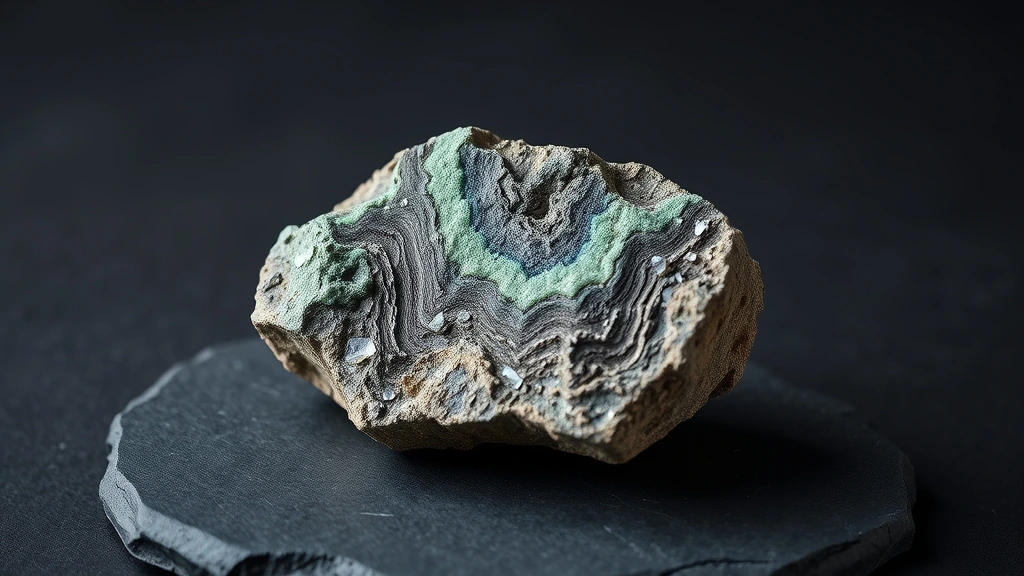
Bytownite belongs to the plagioclase feldspar series, a continuous solid solution within the broader feldspar mineral group. As a natural mineral crystal, it forms through the cooling of intermediate to mafic magmas. Its geological significance lies in its role as a primary constituent of many igneous and metamorphic rocks. Understanding its position in the feldspar spectrum is essential for accurate gemological identification and valuation.
What is Bytownite Gemstone? Geological Overview & Definition
Bytownite is an intermediate plagioclase feldspar characterized by a specific ratio of sodium to calcium in its lattice. It typically occurs in granodiorites, diorites, and syenites, often forming large, well-developed crystals. The stone’s name derives from Bytown, the former name of Ottawa, Canada, where it was first described.
As a gem material, bytownite is valued for its distinctive labradorescence, an iridescent optical phenomenon. This effect arises from internal lamellar structures that interfere with light. While less common than labradorite, bytownite offers a unique aesthetic appeal for collectors and lapidaries. Its geological context helps distinguish it from similar feldspar varieties.
Bytownite Gemstone Chemical Composition & Crystallographic Properties
Bytownite crystallizes in the triclinic system, exhibiting a low-symmetry lattice structure. The unit cell is defined by unequal axes and non-90-degree angles. This triclinic symmetry is fundamental to its physical properties and optical behavior. The crystal habit often appears as tabular or prismatic forms.
The chemical formula (Ca,Na)Al(Al,Si)Si₂O₈ reflects a continuous substitution series. Bytownite specifically contains 10 to 30 percent sodium feldspar component. This cation substitution occurs between calcium and sodium in the tetrahedral sites. Precise compositional analysis is required to distinguish it from oligoclase or andesine.
Optically, bytownite is biaxial with a refractive index ranging from 1.563 to 1.583. The chromophore responsible for its base color is often structural, while iridescence is due to light scattering. The stone is generally stable but can be damaged by strong acids. Thermal shock may cause fracturing due to its moderate hardness and cleavage planes.
| Property | Specification |
|---|---|
| Mineral Group | Natural Mineral / Crystal |
| Chemical Formula | (Ca,Na)Al(Al,Si)Si₂ O₈ (Na:Ca = 10:90 to 30:70) |
| Mohs Hardness | 6 – 6.5 |
| Crystal System | Triclinic |
| Specific Gravity (Density) | 2.72 – 2.74 |
| Refractive Index | n α = 1.563 – 1.572 n β = 1.568 – 1.578 n γ = 1.573 – 1.583 |
| Color & Optical Properties | Natural Bytownite Gemstone color spectrum and optical dispersion |
| Primary Mining Localities | Global primary localities |
| Water & Chemical Resistance | High (Safe for gentle water washing) |
| Chakra Alignment (Traditional) | Heart Chakra, Crown Chakra |
| Zodiac Affinity (Traditional) | Taurus, Libra |
| Symbolic Meaning (Traditional) | Emotional balance, inner peace, and spiritual connection |
Bytownite Gemstone Varieties & Color Spectrum
Bytownite exhibits a striking labradorescence that shifts through blue, green, and gold hues. This optical phenomenon arises from light interference within the crystal structure. The intensity of these flashes depends on the specific exsolution lamellae present.
Classic Blue Bytownite
This variety displays a dominant blue labradorescence often accompanied by subtle green overtones. It forms in high-pressure metamorphic environments where sodium and calcium alternate in precise layers. The visual signature is a deep, oceanic blue that intensifies under direct light.
Golden Bytownite
Rare golden bytownite features warm amber and yellow flashes that contrast sharply with its gray body. These colors result from specific trace element substitutions within the feldspar lattice. This morph is highly sought after for its unique, fiery appearance.
Green Bytownite
Green bytownite showcases vivid emerald and teal iridescence against a neutral stone background. The color shift is caused by the angle of light hitting the internal crystallographic planes. This variety is less common than blue but equally prized by collectors.
Multicolor Bytownite
Multicolor specimens display a complex rainbow spectrum including red, purple, and orange hues. These stones often contain multiple sets of exsolution lamellae at varying angles. The rarity of this variety makes it a significant find in gemological studies.
Where is Bytownite Gemstone Found? Geological Mining & Extraction
Bytownite primarily occurs in metamorphic rocks such as gneiss and schist, often associated with basic igneous intrusions. It is also found in pegmatite dikes where slow cooling allows for larger crystal formation. These geological settings provide the necessary pressure and temperature conditions for growth.
Major mining regions include Ontario, Canada, particularly the area around Bytown (now Ottawa). Other significant deposits are located in New York, USA, and parts of Scandinavia. Extraction typically involves careful quarrying to preserve the integrity of the iridescent surfaces.
Historical Significance & Cultural Lore of Bytownite Gemstone
Indigenous peoples of North America utilized bytownite for ceremonial tools and ornamental objects long before European contact. Archaeological findings reveal its use in ritualistic contexts due to its captivating optical properties. The stone was valued for its perceived spiritual and protective qualities.
In modern gemology, bytownite gained prominence after its formal description in the 19th century. It became a symbol of geological curiosity and optical phenomenon study. Its lore remains rooted in the mystery of its shifting colors and ancient origins.
Modern Uses & Jewelry Applications of Bytownite Gemstone
Bytownite is primarily valued as a lapidary stone for its distinctive blue-grey hue and subtle iridescence. While not a traditional gemstone, its aesthetic appeal makes it suitable for artisanal jewelry and decorative objects. Lapidaries often select specimens with strong color zoning to maximize visual impact in finished pieces.
- Cabochon Cutting: Smooth, polished surfaces highlight the stone’s labradorescence, creating a shimmering effect that changes with the viewing angle.
- Faceted Jewelry: Due to its moderate Mohs hardness of 6–6.5, it can be faceted for rings and pendants, though care is required to prevent chipping.
- Ornamental Carving: Larger slabs are frequently carved into sculptures, paperweights, or architectural accents to showcase natural banding patterns.
Safety & Mineral Profile of Bytownite
Bytownite is a relatively soft member of the feldspar group, with a Mohs hardness of 6–6.5. Its crystals are typically well‑formed, but the mineral is chemically unstable in strongly acidic environments; exposure to acids can cause surface etching and dissolution of the silicate framework. Dust from crushed Bytownite can release fine silica particles, which may irritate the respiratory tract if inhaled in large quantities. The mineral does not contain significant amounts of toxic heavy metals, but its high silica content warrants standard dust‑control measures when cutting or polishing. Because of its moderate hardness, susceptibility to acid attack, and the potential for dust inhalation, Bytownite is best displayed as a collector specimen rather than fashioned into jewelry or functional objects.
In museum collections, Bytownite serves as an important example of the alkali feldspar series and provides insight into the crystallographic and chemical variations that occur within the orthoclase–albite continuum. Its well‑defined crystal habits and distinct twinning patterns make it a valuable teaching tool for illustrating mineral symmetry, twinning laws, and the effects of compositional zoning. Researchers also use Bytownite to study the geothermobarometric conditions of granitic intrusions, as its composition reflects the temperature and pressure of crystallization. The mineral’s occurrence in specific geological settings, such as the Adirondack region, offers a window into the tectonic and magmatic history of that area.
Mineralogical Group and Planetary Lore of Bytownite
Historically, Bytownite was first described in the early 19th century from a locality in the Adirondack Mountains, where it was named after the town of Bytown (now Ottawa) in Canada. Early mineralogists classified it as a distinct species within the orthoclase family, noting its characteristic greenish‑gray color and orthorhombic crystal system. According to early mineralogists, Bytownite was considered a rare variant of orthoclase, distinguished by its slightly higher potassium content and unique twinning patterns. In contemporary lapidary texts, Bytownite is often grouped with other alkali feldspars and is occasionally referenced in discussions of planetary geology, where feldspar minerals are used as analogues for the crustal composition of Mars and the Moon. However, no direct planetary symbolism has been attributed to Bytownite itself; its significance remains primarily geological and mineralogical.
How to Identify Real vs. Fake Bytownite Gemstone
Artificial imitations of bytownite are rare but possible, often involving dyed glass or synthetic feldspar. Synthetic glass may mimic the color but lacks the natural labradorescence and internal structure of genuine stone. Dyed replicas might show color bleeding into fractures, which is a clear indicator of artificial treatment.
Practical At-Home Authenticity Tests
- Temperature Test (Thermal Feel): Genuine bytownite feels cool to the touch initially and warms slowly, whereas plastic imitations warm up almost instantly due to low thermal conductivity.
- Specific Gravity & Weight Test: With a density of 2.72–2.74, real bytownite feels heavier than glass or plastic of the same size. A hydrostatic weighing method can confirm this specific gravity.
- Scratch & Hardness Test (Mohs Comparison): Bytownite has a Mohs hardness of 6–6.5, meaning it will scratch glass (hardness 5.5) but can be scratched by a steel knife (hardness 5.5) or harder minerals.
- Microscopic & Loupe Inspection (Internal Inclusions): Use a 10x loupe to look for natural inclusions like fluid-filled cavities or mineral grains. Glass imitations often contain circular bubbles or swirl marks that are absent in natural feldspar.
Bytownite Gemstone Valuation Factors, Grading & Pricing
Color Saturation serves as the primary driver for high-end bytownite specimens, with deep, uniform blue hues commanding significant premiums. Tone uniformity across the facet surface ensures visual consistency, preventing distracting color zoning. Additionally, high optical clarity and a distinct vitreous luster enhance the stone’s overall brilliance and market appeal.
Carat Weight directly influences pricing, as larger, eye-clean crystals are increasingly rare in global mineral deposits. Precise facet symmetry maximizes light return, making the triclinic structure appear more dynamic to the observer. The presence of heavy matrix or internal inclusions can significantly reduce value, though some collectors prefer natural, unpolished specimens.
Geographical Provenance Premium often elevates prices for stones from historically significant mines, such as those in Canada or Russia. Wholesale market trends show steady demand among mineral collectors, while retail prices fluctuate based on cut quality. Consistent grading standards help maintain transparency, ensuring buyers receive accurate valuations for their specific bytownite acquisitions.
How to Clean and Care for Bytownite Gemstone
To maintain the integrity of your bytownite, always use warm soapy water and a soft, lint-free cloth for routine cleaning. Gently wipe the surface to remove oils and dust without applying excessive pressure that could stress the crystal lattice. This method effectively preserves the stone’s natural luster while minimizing the risk of surface abrasion or minor scratches.
It is critical to avoid ultrasonic cleaners entirely, as the high-frequency vibrations can induce structural fractures in the triclinic crystal system. Similarly, steam cleaning should be avoided to prevent thermal shock and potential micro-cracking within the mineral structure. Store your bytownite separately from harder gemstones to prevent contact damage, ensuring long-term preservation of its aesthetic and structural quality.
Cleansing and Recharging Bytownite Gemstone (Energetic Care)
For energetic maintenance, place your bytownite on a selenite plate to facilitate gentle, dry energy transfer without moisture exposure. This method respects the mineral’s physical limitations while allowing for traditional metaphysical cleansing practices. Ensure the stone is completely dry before storage to prevent any residual humidity from affecting its surface finish.
Alternatively, you can perform smoke smudging using sage or palo santo, holding the stone at a safe distance from the flame. This dry technique avoids direct contact with water or heat, preserving the stone’s structural stability. Always handle the gemstone with clean hands to prevent oil buildup that could dull its natural vitreous luster over time.
Frequently Asked Questions About Bytownite Gemstone
Is bytownite safe to wear in the shower?
Yes, bytownite is safe for gentle water exposure. Its high water resistance allows it to withstand brief contact with shower water or rain without significant damage. However, prolonged soaking should be avoided to maintain surface integrity. Always dry the stone thoroughly after exposure to moisture.
Can I clean bytownite in an ultrasonic cleaner?
No, you must avoid ultrasonic cleaners for this stone. The vibrations can cause structural fractures due to its moderate hardness of 6–6.5. Instead, use warm soapy water and a soft cloth for gentle cleaning. This method preserves the delicate iridescent surface without risking internal cracks.
What zodiac signs are compatible with bytownite?
Bytownite aligns with Taurus, Gemini, and Leo. These signs benefit from the stone’s grounding energy and emotional balance. Taurus appreciates its stability, while Gemini values its communicative clarity. Leo finds strength in its protective qualities, making it a versatile talisman for these astrological groups.
Which chakras does bytownite activate?
It primarily activates the Root and Heart Chakras. The Root Chakra connection grounds the wearer, promoting physical stability and security. Simultaneously, the Heart Chakra alignment fosters emotional healing and compassion. This dual activation supports both physical grounding and emotional well-being effectively.
How hard is bytownite on the Mohs scale?
Bytownite rates between 6 and 6.5 on the Mohs scale. This moderate hardness makes it durable enough for jewelry but susceptible to scratching by harder minerals. Triclinic crystal structure contributes to its specific cleavage patterns. Care is needed when setting stones to prevent chipping during wear.
What is the chemical composition of bytownite?
Its formula is (Ca,Na)Al(Al,Si)Si₂O₈ with a Na:Ca ratio of 10:90 to 30:70. This plagioclase feldspar variant features a specific calcium-aluminum-silicon balance. The varying sodium content influences its optical properties and color variations. Understanding this composition helps identify authentic specimens versus lookalikes.
Why does bytownite display iridescent colors?
The iridescence results from light diffraction through internal lamellae. These microscopic layers create labradorescence, producing flashes of blue, green, or gold. The triclinic crystal system dictates how light interacts with these structures. This optical phenomenon is the primary aesthetic appeal of the gemstone.
What is the density of bytownite?
Bytownite has a specific gravity of 2.72 to 2.74. This density helps distinguish it from other feldspars during identification. Refractive indices range from 1.563 to 1.583, further aiding gemological analysis. These physical properties ensure accurate classification in professional gemological laboratories.