
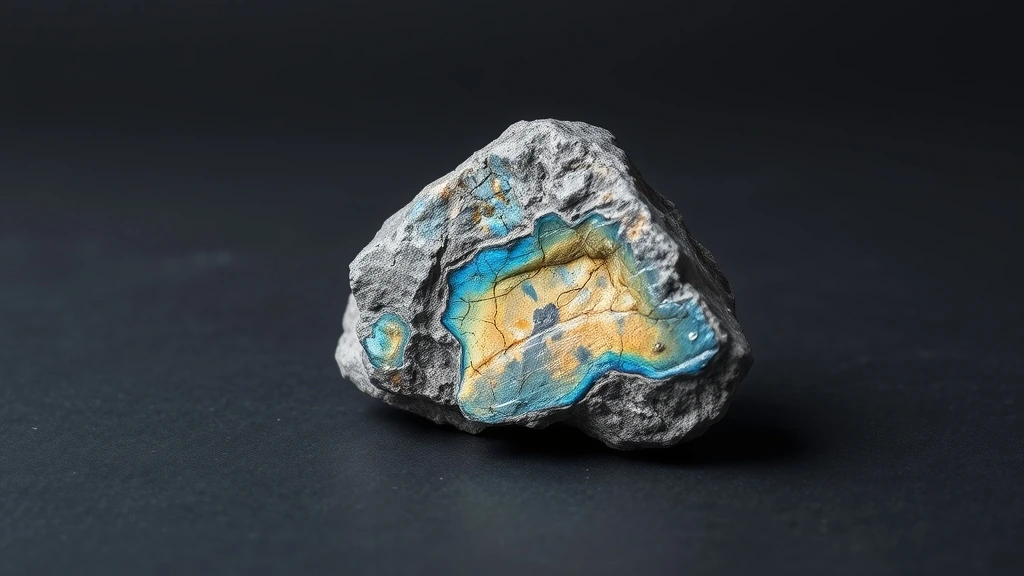
Spectrolite is geologically classified as a member of the Plagioclase Feldspar Group, a solid solution series within the broader silicate mineral family. Unlike common feldspars, it forms through specific cooling conditions in mafic igneous rocks, resulting in unique internal structures. This geological origin dictates its physical properties and optical behavior, distinguishing it from other feldspar varieties. Its formation is tightly linked to the crystallization of basaltic magmas, where rapid cooling traps essential structural features.
What is Spectrolite (finnish Labradorite)? Geological Overview & Definition
Spectrolite is exclusively sourced from the Kiviniemi quarry in Finland, where it occurs in mafic igneous rocks such as gabbro and basalt. This specific geographic origin is critical, as only material from this region qualifies as true spectrolite under gemological standards. The stone is prized for its superior labradorescence, a phenomenon where light reflects off internal lamellar structures to create vivid spectral colors.
The term “spectrolite” distinguishes this variety from common labradorite found worldwide, which typically displays duller, grayish, or brownish iridescence. Finnish specimens exhibit a much broader and more intense color range, including deep blues, greens, and purples. This distinction is vital for accurate identification and valuation in the gem market. Understanding this provenance helps collectors and gemologists appreciate the rarity and specific geological context of the stone.
Spectrolite (finnish Labradorite) Chemical Composition & Crystallographic Properties
Spectrolite crystallizes in the Triclinic crystal system, specifically forming pinacoidal or tabular lamellar plates. This crystal structure lacks right angles between its axes, contributing to the complex internal geometry necessary for light diffraction. The lamellar twinning within the crystal lattice is the primary driver of its optical effects. These microscopic layers act as diffraction gratings, splitting white light into its component spectral colors. In comparative mineralogical collections, practitioners and geologists frequently study Bixbite Red Beryl alongside this crystal to appreciate their subtle energetic and structural differences.
The chemical formula is represented as (Ca,Na)(Al,Si)₄O₈, indicating a continuous solid solution series between anorthite and albite. Cation substitution between calcium and sodium ions occurs within the crystal lattice, influencing the stone’s overall density and refractive index. This compositional variability is typical of plagioclase feldspars and affects the specific optical response of each individual gem. The precise ratio of these elements determines the stone’s final physical characteristics.
The refractive index of spectrolite ranges from 1.559 to 1.573, which is relatively low compared to many other gemstones. This property, combined with its specific gravity of 2.68 to 2.72, aids in non-destructive identification. The stone is chemically stable but can be sensitive to strong acids, which may etch the surface over time. Proper care is required to maintain the integrity of the polished surface and its optical clarity.
Thermal behavior in spectrolite is generally stable under normal jewelry conditions, but extreme heat can potentially alter its optical properties. The chromophore effects are structural rather than due to trace impurities, meaning the color is intrinsic to the lattice. This structural origin ensures that the iridescence is permanent and does not fade with light exposure. Understanding these thermal and chemical properties is essential for long-term preservation and safe handling of the gemstone.
| Property | Specification |
|---|---|
| Mineral Group | Silicates (Plagioclase Feldspar Group) |
| Chemical Formula | (Ca,Na)(Al,Si)₄O₈ (Plagioclase Feldspar) |
| Mohs Hardness | 6.0 – 6.5 |
| Crystal System | Triclinic (Pinacoidal / Tabular lamellar plates) |
| Specific Gravity (Density) | 2.68 – 2.72 |
| Refractive Index | 1.559 – 1.573 |
| Color & Optical Properties | Natural Spectrolite (finnish Labradorite) color spectrum and optical dispersion |
| Primary Mining Localities | Canada (Labrador Peninsula), Madagascar, Finland (Spectrolite), Norway, Australia |
| Water & Chemical Resistance | Moderate (Brief water contact is safe; avoid soaking or thermal shock) |
| Chakra Alignment (Traditional) | Throat and Third Eye Chakra |
| Zodiac Affinity (Traditional) | Sagittarius, Scorpio, Leo |
| Symbolic Meaning (Traditional) | Psychic awakening, auric shielding, inner strength, and transformative intuition |
Spectrolite (finnish Labradorite) Varieties & Color Spectrum
Classic Blue‑Green Spectrolite
Formed in low‑temperature, calcium‑rich plagioclase zones of the Karelian Shield, this variety exhibits a vivid blue‑green labradorescence that shifts with viewing angle. Thin‑section analysis shows microscopic exsolution lamellae of albite and anorthite, creating the characteristic iridescence. It is the most widely traded form, yet high‑grade stones with deep saturation remain relatively scarce.
Golden‑Sheen Spectrolite
Developed in the granitic pegmatites of the Finnish Lapland, golden‑sheen spectrolite displays a warm golden‑yellow to amber flash that overlays a muted gray matrix. The hue originates from trace iron oxide inclusions and fine‑grained titanium particles that scatter light. Large, clean plates are rare, making this morph highly prized by collectors.
Midnight Black Spectrolite
Occurring in the deeper sections of the same pegmatitic bodies, midnight black spectrolite is distinguished by a deep charcoal base that reveals a subtle purple‑blue labradorescence under strong illumination. Microscopic carbonaceous inclusions dampen the overall brightness, producing a dramatic contrast. Because extraction requires careful separation from darker host rock, only limited quantities reach the market.
Aurora Spectrolite (Multi‑Color)
Named for its shifting rainbow effect, Aurora spectrolite forms where temperature gradients during crystallization cause alternating layers of sodium‑rich and calcium‑rich plagioclase. The result is a kaleidoscopic display of green, blue, and orange flashes within a single stone. Such complex zoning is uncommon, rendering premium Aurora pieces exceptionally valuable.
Finnish “Särkä” Spectrolite
Locally termed “Särkä,” this rough‑cut variety retains a tabular lamellar plate habit with pronounced striations visible to the naked eye. The mineral’s internal strain produces a metallic sheen that intensifies when the stone is polished. Its distinctive texture limits its use to high‑end jewelry, and only a few mines still supply it.
Russian “Karelian” Spectrolite
Exported from the Republic of Karelia, this trade name denotes spectrolite with a cooler blue‑violet labradorescence and a relatively transparent matrix. The stones often contain minute epidote inclusions that enhance the play of light. Though more abundant than Finnish sources, top‑grade Karelian spectrolite commands premium prices due to its consistent color quality.
Where is Spectrolite (finnish Labradorite) Found? Geological Mining & Extraction
Spectrolite is hosted primarily in trondhjemitic pegmatites and fine‑grained granites of the Karelian Shield, where slow cooling allows plagioclase to develop well‑defined lamellae. The mineral occurs as tabular plates within metamorphic schist and gneiss, often intergrown with quartz, feldspar, and mica, requiring careful hand‑sorting to isolate intact pieces.
Commercial extraction concentrates on two Finnish districts: Lake Inari and Salla, where open‑pit and underground methods expose the pegmatitic veins. Small‑scale miners use low‑impact blasting and hydraulic separation to preserve the delicate lamellar structure, then transport the rough blocks to cutting facilities for precision slicing and polishing.
Historical Significance & Cultural Lore of Spectrolite (finnish Labradorite)
Archaeological sites in northern Finland reveal that Bronze Age peoples incorporated spectrolite shards into ceremonial pendants, valuing its shimmering play of color as a symbol of celestial power. Similar uses appear in early Saami shamanic tools, where the stone’s iridescence was believed to channel the aurora borealis during ritual trance work.
Traditional lore attributes spectrolite to psychic awakening and auric shielding, linking its luminous qualities to the Throat and Third Eye Chakras. Folklore records that warriors carried polished talismans for inner strength and transformative intuition, a belief that persists in modern metaphysical practice.
Modern Uses & Jewelry Applications of Spectrolite (finnish Labradorite)
Spectrolite is prized for its vivid labradorescence, a play of colors that makes it a favorite in contemporary lapidary work. Artisans typically cut the stone into smooth cabochons to showcase the optical effect, though skilled faceting can produce striking halo settings. Ornamental carving—such as small figurines, beads, and decorative panels—adds a tactile dimension to its visual allure.
- Cabochon pendants and earrings emphasizing the stone’s iridescent sheen
- Faceted rings and brooches where precise angles amplify labradorescence
- Carved beads, miniature sculptures, and inlay work for high‑end décor
Metaphysical Properties & Traditional Meaning of Spectrolite (finnish Labradorite)
According to historical traditions and metaphysical lore, Spectrolite is regarded as a psychic awakener, helping the wearer access deeper intuition and inner vision. It is said to shield the auric field, offering protection against negative energies while fostering inner strength during periods of transformation. Emotionally, the stone is believed to soothe anxiety, encouraging confidence and a sense of purposeful direction.
Which Chakra and Zodiac Signs Align with Spectrolite (finnish Labradorite)?
Spectrolite resonates most strongly with the Throat Chakra, supporting clear communication and authentic self‑expression. It also aligns with the Third Eye Chakra, enhancing intuitive perception and spiritual insight. Together, these energy centers are thought to balance mental clarity with visionary depth.
In astrological tradition, the stone is linked exclusively to Sagittarius, Scorpio, and Leo. These signs are said to benefit from Spectrolite’s ability to amplify ambition, courage, and transformative power, reinforcing the wearer’s natural drive and inner fire.
How to Identify Real vs. Fake Spectrolite (finnish Labradorite)
Artificial imitations of Spectrolite include dyed glass, synthetic resin, and low‑grade feldspar treated to mimic its characteristic play of color. Such replicas often lack the subtle internal striations and genuine refractive index range of natural material, making careful testing essential for collectors and buyers.
Practical At-Home Authenticity Tests
- Temperature Test (Thermal Feel): Natural Spectrolite feels cool to the touch and retains that coolness longer than glass or plastic, which quickly warm to skin temperature.
- Specific Gravity & Weight Test: With a density of 2.68‑2.72 g/cm³, genuine Spectrolite feels heavier than most glass imitations; a simple water displacement test can reveal this difference.
- Scratch & Hardness Test (Mohs Comparison): Using a steel file (Mohs ~5.5) will leave a faint mark on glass but not on authentic Spectrolite, which rates 6.0‑6.5 on the Mohs scale.
- Microscopic & Loupe Inspection (Internal Inclusions): Under 10× magnification, real Spectrolite shows fine, parallel lamellar inclusions and occasional tiny feldspar twinning, whereas synthetic versions appear uniformly clear or display bubble‑like artifacts.
Spectrolite (finnish Labradorite) Valuation Factors, Grading & Pricing
Market value hinges primarily on Color Saturation and the intensity of the spectral flash. High-grade specimens display vivid, electric blue or green hues that shift dynamically under light. This visual vibrancy is further enhanced by a natural, energetic luster that reflects the stone’s internal structure.
Pricing is determined by Crystal Size & Weight (Grams) rather than specimen weight (grams) or tumbled polish and natural crystal geometry. Raw specimens are valued by dimension, while tumbled stones depend on polish quality and surface integrity. Natural matrix inclusions may reduce value unless they contribute to unique aesthetic character.
Ethical Sourcing & Locality Premium significantly influence pricing in holistic and collector markets. Stones from verified Finnish deposits often command higher prices due to their renowned optical properties. Buyers increasingly prioritize transparency in supply chains, rewarding ethical mining practices with premium valuations.
How to Clean and Care for Spectrolite (finnish Labradorite)
Spectrolite possesses perfect cleavage planes, making it susceptible to internal damage from mechanical stress. Clean the stone gently using warm soapy water and a soft cloth to remove surface oils. Avoid abrasive materials that could scratch the surface or compromise the delicate lamellar structure.
Ultrasonic cleaners are strictly prohibited as ultrasonic vibrations can cause internal lamellar fractures. These high-frequency waves disrupt the microscopic layers responsible for the stone’s iridescence. Always allow the stone to air dry completely before storage to prevent moisture retention.
Cleansing and Recharging Spectrolite (finnish Labradorite) (Energetic Care)
For energetic maintenance, practitioners often use herbal smudging with sage or palo santo to clear stagnant energy. This dry method avoids any contact with liquids, preserving the mineral’s physical integrity. The smoke is believed to purify the aura without altering the crystal lattice structure.
Alternatively, resting the stone on a selenite charging slab under moonlight provides a gentle recharging method. This approach avoids direct intense sunlight, which could cause thermal shock or color fading. Such dry, low-impact techniques align with the mineral’s sensitivity to extreme environmental conditions.
Frequently Asked Questions About Spectrolite (finnish Labradorite)
What is the chemical composition of spectrolite?
Spectrolite is a member of the plagioclase feldspar series with the formula (Ca,Na)(Al,Si)₄O₈. This silicate framework incorporates calcium and sodium in varying proportions, giving rise to the characteristic labradorescence. The triple‑chain Al‑Si tetrahedra create the internal lamellar structure responsible for its iridescent play of color.
How hard is spectrolite and can it be used in everyday jewelry?
Spectrolite rates 6.0–6.5 on the Mohs scale, making it suitable for rings, pendants, and earrings with proper care. Its moderate hardness resists everyday scratches, but exposure to hard impacts can chip the perfect cleavage planes. Regular polishing and protective settings help preserve its surface brilliance.
Is spectrolite water‑resistant enough for shower wear?
Spectrolite tolerates brief water contact, but prolonged soaking or sudden temperature changes should be avoided. Moisture can infiltrate micro‑fractures along the lamellar cleavage, leading to thermal shock. For daily wear, remove the piece before showering or swimming to maintain its structural integrity.
What is the safest way to clean a spectrolite?
Clean gently with warm, mildly soapy water and a soft brush, then rinse and pat dry with a lint‑free cloth. Because spectrolite possesses perfect cleavage, harsh mechanical action can split the stone. Avoid abrasive pads and never use ultrasonic cleaners, which may cause internal lamellar fractures.
Can spectrolite be treated with ultrasonic cleaning?
No—ultrasonic vibrations are contraindicated for spectrolite due to its perfect cleavage planes. The high‑frequency waves can propagate along the lamellar structure, creating micro‑fractures that compromise the stone’s optical effect. Manual cleaning remains the only safe method.
Which zodiac signs are traditionally associated with spectrolite?
Spectrolite is linked to Sagittarius, Scorpio, and Leo in astrological lore. Practitioners believe the stone amplifies the adventurous spirit of Sagittarius, the transformative depth of Scorpio, and the creative fire of Leo, aligning its iridescent energy with these fire‑ and water‑sign qualities.
Which chakras does spectrolite influence according to esoteric traditions?
Spectrolite is said to balance the Throat and Third Eye Chakras. Activation of the Throat Chakra supports clear communication, while the Third Eye Chakra enhances intuition and psychic perception. The stone’s labradorescent flashes are interpreted as visual cues for inner insight.
How does spectrolite’s density affect its handling and setting?
With a specific gravity of 2.68–2.72, spectrolite is relatively light compared to many gemstones. This low density allows larger cabochons to be set comfortably in delicate metalwork without excessive weight. However, the lightness also means the stone can be more susceptible to movement within a setting, requiring secure prongs or bezels.