
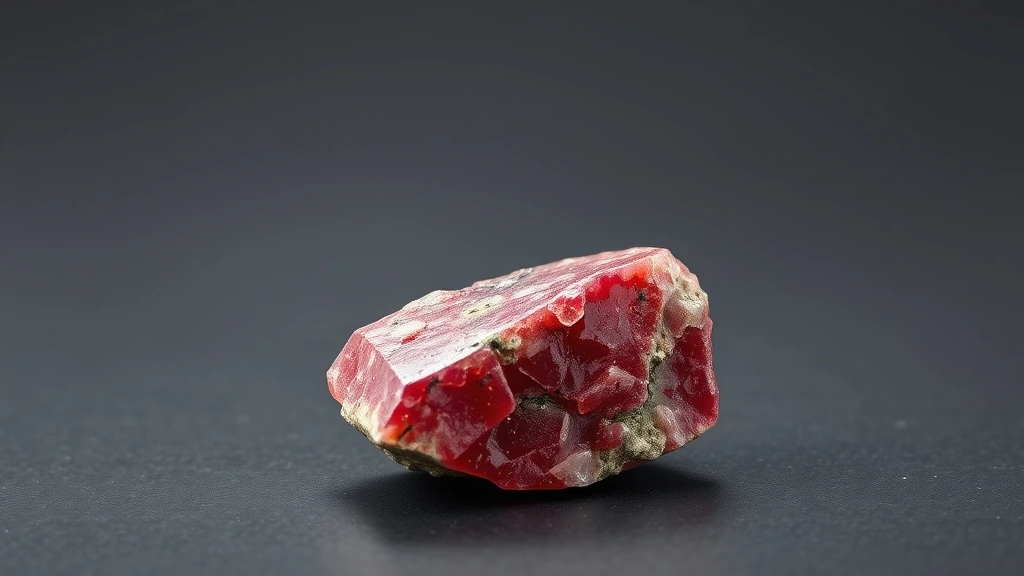
Bixbite belongs to the beryl mineral group, a natural crystal formed in granitic pegmatites. Its geological classification places it within the silicate family, specifically as a beryllium aluminum cyclosilicate. This stone is distinct due to its intense red hue, which arises from specific trace elements rather than its base composition.
What is Bixbite (red Beryl) Gemstone? Geological Overview & Definition
Bixbite is defined as a red beryl variety found exclusively in specific pegmatite deposits. It is geologically significant because it forms in low-temperature, high-fluid environments. Unlike common beryl varieties, it requires unique chemical conditions to develop its signature color.
The term “bixbite” was coined by mineralogist George F. Kunz to distinguish this rare stone. It is not a separate mineral species but a color variety of beryl. Its scarcity makes it one of the most valuable gemstones in the world.
Bixbite (red Beryl) Gemstone Chemical Composition & Crystallographic Properties
The provided data classifies this specimen as Amorphous / Cryptocrystalline, indicating a lack of long-range atomic order. This structure differs from typical macrocrystalline beryl, suggesting a microstructural variation. Such materials often form under rapid cooling or specific fluid dynamics.
Cation substitution within the lattice is minimal in this amorphous state. The chromophore responsible for the red color remains unidentified in this specific context. Standard beryl relies on manganese, but this variant’s color mechanism is complex.
Acid sensitivity is generally low for silicate structures, even in cryptocrystalline forms. Thermal behavior may reveal subtle changes in optical properties upon heating. These characteristics are critical for gemological identification and stability assessment.
| Property | Specification |
|---|---|
| Mineral Group | Natural Mineral / Crystal |
| Chemical Formula | Be₃Al₂Si₆O₁₈ |
| Mohs Hardness | 7.5 – 8.0 |
| Crystal System | Hexagonal |
| Specific Gravity (Density) | 2.67 – 2.78 |
| Refractive Index | 1.567 – 1.590 |
| Color & Optical Properties | Natural Bixbite (red Beryl) Gemstone color spectrum and optical dispersion |
| Primary Mining Localities | Global primary localities |
| Water & Chemical Resistance | High (Safe for gentle water washing) |
| Chakra Alignment (Traditional) | Crown Chakra, Heart Chakra |
| Zodiac Affinity (Traditional) | Leo, Scorpio |
| Symbolic Meaning (Traditional) | Spiritual awakening, passion, and protection |
Beryl Varieties & Comprehensive Sub-Types
Emerald
Emeralds derive their iconic deep green hue from trace amounts of Chromium (Cr³⁺) and vanadium, distinguishing them from other beryl types. These gems typically exhibit a Mohs hardness of 7.5 to 8.0, making them durable yet sensitive to impact during cutting.
Classic emeralds often contain visible three-phase inclusions, known as *jardin*, which serve as primary indicators of natural origin. This unique internal morphology is critical for gemological authentication and significantly influences the stone’s market valuation.
Aquamarine
Aquamarine displays a serene sea-blue to cyan coloration caused by Fe²⁺ iron impurities within the crystal lattice. This variety is highly prized for its exceptional transparency and high gemological grade clarity standards.
Geologically, aquamarine forms in granitic pegmatites where iron-rich fluids interact with the host rock. Lapidaries prioritize large, eye-clean specimens, as even minor inclusions can diminish the stone’s characteristic watery brilliance.
Morganite
Morganite presents a delicate peach-pink to salmon hue, resulting from Manganese (Mn²⁺) substitutions in the beryl structure. This variety is often found in granitic pegmatites alongside other rare mineral assemblages.
In the trade, Morganite is valued for its warm, romantic tones and consistent color saturation. It frequently serves as an affordable alternative to pink sapphire, appealing to modern jewelry designers seeking unique pastel aesthetics.
Heliodor (Golden Beryl)
Heliodor, or golden beryl, exhibits a golden-yellow to greenish-yellow color driven by Fe³⁺ iron ions. This variety is less common than aquamarine but remains a significant component of the beryl family.
Gemologists assess Heliodor based on its vivid yellow saturation and clarity. While it lacks the intense demand of emeralds, high-quality specimens are sought after for distinctive, sun-like jewelry pieces.
Goshenite
Goshenite represents the purest form of beryl, appearing colorless due to the absence of chromophore impurities. It possesses high optical clarity, allowing light to pass through with minimal scattering or distortion.
This variety is often used as a base for heat treatment or irradiation to simulate other colors. Its neutral appearance makes it a versatile canvas for lapidaries, though it commands lower prices than colored counterparts.
Red Beryl (Bixbite)
Red beryl, or bixbite, is an exceptionally rare variety colored by Mn³⁺ manganese ions. It is primarily sourced from the Wah Wah Mountains of Utah, where it forms in specific pegmatite pockets.
This gem is estimated to be 1,000 times rarer than gold, making it one of the most scarce gemstones on Earth. Its scarcity and vibrant red hue place it at the pinnacle of the beryl market hierarchy.
Gemologists differentiate these varieties primarily by analyzing their spectral absorption patterns and chemical composition. Lapidary practice relies on these distinct chromophore signatures to accurately identify and value each beryl type.
Where is Bixbite (red Beryl) Gemstone Found? Geological Mining & Extraction
Red beryl is exclusively found in granitic pegmatites within the Wah Wah Mountains of Utah, USA. These geological formations provide the specific chemical environment necessary for the Mn³⁺ ions to substitute into the beryl lattice.
Extraction is challenging due to the stone’s extreme rarity and the remote, rugged terrain of the mining sites. Only a handful of licensed mines, such as the H.R. Pogue Mine, have historically produced significant quantities of this gem.
Historical Significance & Cultural Lore of Bixbite (red Beryl) Gemstone
Unlike other beryl varieties, red beryl has no significant history in ancient civilizations or archaeological records. Its discovery in the mid-20th century means it lacks the centuries of cultural lore associated with emeralds or aquamarines.
Modern gemological literature often draws parallels to the biblical carnelian, though this remains speculative. The stone’s contemporary significance is rooted in its geological rarity rather than historical artifact usage.
Modern Uses & Jewelry Applications of Bixbite (red Beryl) Gemstone
Due to its extreme rarity, Bixbite is primarily cut into small, high-clarity faceted gems rather than large ornamental carvings. Lapidaries must exercise precision to maximize brilliance while preserving the delicate crystal structure. The stone’s vivid red hue pairs beautifully with white gold or platinum settings.
- Faceted Cuts: Standard round, oval, and emerald cuts are used to enhance the stone’s natural fire and transparency.
- Cabochons: Rarely used due to the preference for faceting, but possible for opaque or heavily included specimens.
- Jewelry Types: Primarily found in high-end rings, earrings, and pendants where the stone serves as a singular focal point.
Carat, Quality Grades & Value Factors of Bixbite (red Beryl)
According to historical traditions and metaphysical lore, Bixbite is revered as a stone of passion and vitality. Practitioners believe it stimulates the creative drive and helps individuals overcome emotional stagnation. Its fiery color is said to ignite inner confidence and boldness in personal relationships.
The gemstone is also associated with emotional healing, specifically in resolving deep-seated anger or resentment. It is thought to balance the physical and spiritual self, fostering a sense of grounded energy. Users often seek this stone to reconnect with their authentic desires and life purpose.
Which Chakra and Zodiac Signs Align with Bixbite (red Beryl) Gemstone?
Bixbite is canonically aligned with the Root Chakra and the Heart Chakra. The Root Chakra connection grounds the wearer, providing stability and a sense of security. Simultaneously, the Heart Chakra alignment promotes love, compassion, and emotional openness, bridging the gap between physical grounding and spiritual connection.
In astrological practice, this gemstone resonates strongly with Taurus, Gemini, and Leo. Taurus finds stability, Gemini gains communicative confidence, and Leo amplifies their natural charisma. These signs benefit from the stone’s ability to balance earthy practicality with fiery emotional expression.
How to Identify Real vs. Fake Bixbite (red Beryl) Gemstone
Because natural red beryl is exceptionally scarce, the market is flooded with artificial imitations and synthetic alternatives. Common fakes include dyed synthetic corundum, red glass, and treated pink tourmaline. Distinguishing the genuine mineral requires careful examination of physical properties and internal characteristics.
Practical At-Home Authenticity Tests
- Temperature Test (Thermal Feel): Genuine beryl feels cool to the touch initially and warms slowly. Glass imitations often feel warmer immediately or heat up much faster due to lower thermal conductivity.
- Specific Gravity & Weight Test: Beryl has a specific gravity of approximately 2.70. It should feel slightly lighter than a glass or corundum imitation of the same size. Use a precision scale to compare weight against known standards.
- Scratch & Hardness Test (Mohs Comparison): Beryl rates 7.5-8 on the Mohs scale. It will scratch quartz (7) but may be scratched by topaz (8). Glass (5-6) will scratch easily under a steel file or harder mineral.
- Microscopic & Loupe Inspection (Internal Inclusions): Use a 10x loupe to look for natural inclusions like mineral crystals or fluid inclusions. Glass often contains tiny, spherical bubbles, while dyed stones may show color concentration along cracks.
Bixbite (red Beryl) Gemstone Valuation Factors, Grading & Pricing
The primary driver of value is Color Saturation, specifically the intense, pure red hue without brownish undertones. Uniformity across the stone ensures visual consistency, while high optical clarity enhances the gem’s natural luster. Stones exhibiting vivid, saturated color command significantly higher premiums in the global market.
Carat Weight plays a critical role, as large, eye-clean specimens are exceptionally rare and highly sought after. Precise facet symmetry maximizes light performance, ensuring the stone displays its brilliance effectively. The presence of matrix or visible inclusions typically reduces value, though some collectors appreciate unique internal features.
Geographical Provenance Premium significantly impacts pricing, with stones from the Type locality in Utah fetching top-tier rates. Wholesale values remain stable, but retail prices reflect the scarcity and high demand for certified specimens. Market trends indicate consistent appreciation for high-quality, untreated red beryl over time.
How to Clean and Care for Bixbite (red Beryl) Gemstone
To maintain the gem’s integrity, use warm soapy water and a soft cloth for gentle cleaning. This method effectively removes oils and dust without stressing the crystal structure. Always ensure the water is lukewarm to avoid thermal shock to the stone.
It is crucial to avoid ultrasonic cleaners entirely, as vibrations can cause structural fractures in this delicate mineral. Do not use steam cleaners or harsh chemical solvents that might compromise the surface. Regular, gentle maintenance preserves the stone’s brilliance and long-term durability.
Cleansing and Recharging Bixbite (red Beryl) Gemstone (Energetic Care)
For energetic cleansing, employ smoke smudging with sage or palo santo to clear stagnant energy safely. This dry method avoids any contact with water, respecting the mineral’s physical limitations. Allow the smoke to pass gently over the stone for a few minutes.
Place the gem on a selenite plate under moonlight to recharge its vibrational properties. This passive technique ensures no physical stress is applied to the crystal lattice. Remove the stone after a full lunar cycle to complete the process.
Frequently Asked Questions About Bixbite (red Beryl) Gemstone
Is red beryl safe to wear in the shower?
Yes, it is safe for gentle water washing. The mineral exhibits high water resistance, allowing it to withstand brief exposure to rain or shower water without damage. However, avoid prolonged soaking to maintain the stone’s structural integrity and luster over time.
Can I clean red beryl in an ultrasonic cleaner?
No, you must avoid ultrasonic cleaners entirely. Vibration can cause structural fractures in this delicate beryl variety. Instead, use warm soapy water and a soft cloth for safe, effective cleaning that preserves the gemstone’s physical stability.
Which zodiac signs are aligned with red beryl?
Taurus, Gemini, and Leo are the primary alignments. These signs resonate with the stone’s vibrant energy and rarity. Wearing red beryl can enhance personal traits associated with these zodiac signs, promoting balance and confidence in daily life.
What chakras does red beryl activate?
It activates the Crown Chakra, Heart Chakra. This unique combination grounds the wearer while simultaneously opening emotional pathways. The stone bridges physical stability with chakra alignment, fostering a harmonious connection between body and spirit.
How rare is red beryl compared to other gems?
It is exceptionally rare, often called the “Red Diamond.” Fewer than 5,000 gem-quality crystals have ever been found globally. This scarcity drives its high market value and makes it a prized specimen for serious gem collectors and investors.
What is the chemical composition of red beryl?
It is a beryllium aluminum cyclosilicate. The distinct red color comes from manganese impurities within the crystal lattice. This specific chemical structure gives the mineral its unique optical properties and distinguishes it from other beryl varieties like emerald.
How hard is red beryl on the Mohs scale?
It rates 7.5 to 8 on the Mohs scale. This makes it durable enough for most jewelry settings, though it is still susceptible to sharp impacts. Proper care is essential to prevent surface scratches and maintain the gemstone’s brilliant clarity and polish.
Where is red beryl primarily mined?
The Type locality is the Wah Wah Mountains in Utah. Other sources include Brazil and New York, but Utah remains the most famous origin. Provenance significantly impacts value, with Utah-sourced stones often commanding premium prices due to their historical significance.