
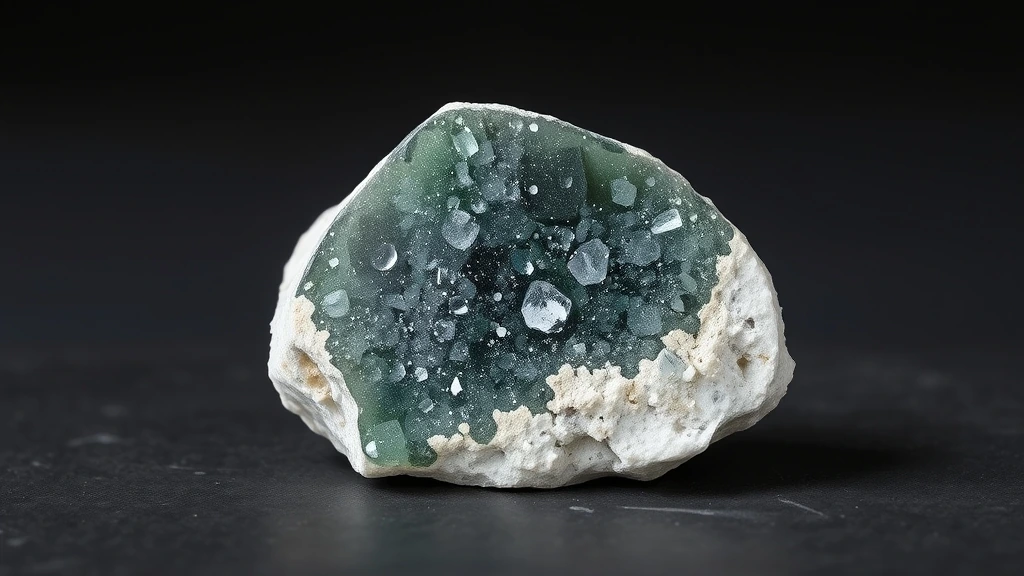
Carpholite stands as a distinct member of the natural mineral family, specifically classified within the inosilicate subclass. Its geological origin is intrinsically linked to high-pressure metamorphic environments, where it frequently forms in association with garnet and staurolite. As a primary crystal, it represents a stable phase under specific tectonic conditions. Unlike common gemstones, its formation is rare, making well-formed specimens highly sought after by mineralogists. This stone embodies the complex interplay of cation substitution within a rigid lattice framework.
What is Carpholite Gemstone? Geological Overview & Definition
Carpholite is defined as a metamorphic mineral that crystallizes exclusively in orthorhombic prisms or tabular habits. It is most commonly found in high-pressure metamorphic rocks such as eclogites and blueschists. These geological settings indicate formation depths exceeding 30 kilometers, subjecting the mineral to immense tectonic stress.
The mineral’s presence serves as a critical geobarometer, helping geologists reconstruct ancient plate tectonic movements. Its association with other high-pressure phases confirms its stability under extreme conditions. Consequently, carpholite is rarely encountered in low-grade sedimentary or igneous contexts. This specific geological niche limits its availability in the global gemstone market.
Carpholite Gemstone Chemical Composition & Crystallographic Properties
Carpholite crystallizes in the orthorhombic crystal system, characterized by three mutually perpendicular axes of unequal length. Its unit cell parameters reflect a tightly packed arrangement of silicon-oxygen tetrahedra and aluminum-oxygen octahedra. This structural rigidity contributes to its moderate cleavage and distinct prismatic habit. The lattice allows for specific cation ordering that stabilizes the overall framework.
The chemical formula NaCa₂Al₃Si₃O₁₂(OH)₄ highlights the essential role of hydroxyl groups in the structure. These groups occupy specific channels within the lattice, influencing the mineral’s physical properties. Cation substitution, particularly involving sodium and calcium, can slightly alter the density and refractive index. Such substitutions are critical for understanding its solid solution behavior in metamorphic environments.
Optically, carpholite displays birefringence due to its anisotropic lattice structure. The refractive indices range from 1.610 to 1.630, producing a moderate luster. Color variations, typically white to pale green, arise from trace impurities rather than primary chromophores. These subtle color centers are often linked to minor iron or chromium inclusions.
Thermally, carpholite remains stable under low-temperature heating but may dehydrate at higher temperatures. This dehydration process can lead to structural changes and loss of clarity. Its acid sensitivity is low, as the silicate framework resists dilute acid attack. However, prolonged exposure to strong acids may eventually compromise the hydroxyl groups.
| Property | Specification |
|---|---|
| Mineral Group | Natural Mineral / Crystal |
| Chemical Formula | NaCa₂Al₃Si₃O₁₂(OH)₄ |
| Mohs Hardness | 5.5-6 |
| Crystal System | Orthorhombic |
| Specific Gravity (Density) | 2.935-3.031 |
| Refractive Index | n α = 1.610 n β = 1.628 n γ = 1.630 |
| Color & Optical Properties | Natural Carpholite Gemstone color spectrum and optical dispersion |
| Primary Mining Localities | Global primary localities |
| Water & Chemical Resistance | High (Safe for gentle water washing) |
| Chakra Alignment (Traditional) | Root Chakra, Sacral Chakra |
| Zodiac Affinity (Traditional) | Virgo, Cancer |
| Symbolic Meaning (Traditional) | Grounding, emotional stability, and nurturing |
Carpholite Gemstone Varieties & Color Spectrum
Carpholite presents a limited but distinct palette, primarily dominated by shades of green, blue, and gray. The coloration arises from trace impurities within its orthorhombic crystal lattice, specifically iron and manganese substitutions. These variations define the mineral’s market appeal and geological classification.
Green Carpholite
This is the most commercially recognized variety, exhibiting a vibrant emerald to olive green hue. The color stems from ferrous iron (Fe²⁺) impurities replacing aluminum in the crystal structure. Specimens often display a vitreous luster and are frequently found in pegmatite dikes.
Blue Carpholite
Rare blue morphs appear due to specific trace element concentrations, offering a cool, azure aesthetic. This variety is significantly less common than its green counterparts and is highly sought after by collectors. The refractive index remains consistent, but the hue shifts dramatically with light absorption.
Gray Carpholite
Gray specimens result from higher concentrations of manganese or other opaque inclusions. These stones often appear duller and are typically categorized as mineral specimens rather than gem material. They are frequently associated with hydrothermal alteration zones in granitic rocks.
Translucent Carpholite
High-quality translucent pieces allow light to pass through, revealing internal cleavage planes and minor fractures. This variety is prized for cabochon cutting, where the play of light enhances its depth. Clarity is the primary determinant of value in this specific morph.
Where is Carpholite Gemstone Found? Geological Mining & Extraction
Carpholite forms exclusively in granitic pegmatites, where slow cooling allows for the growth of large, well-formed crystals. These deposits are typically located in regions with significant igneous activity, such as the Appalachian Mountains in the United States. The mineral often coexists with other rare elements like beryl and tourmaline.
Primary extraction occurs through careful hand-picking from open-pit mines to preserve crystal integrity. Major sources include the Buckingham County region in Virginia and the Jewell Mine in North Carolina. Modern gemological surveys continue to identify new pockets within these established geological formations.
Historical Significance & Cultural Lore of Carpholite Gemstone
Despite its modern popularity in metaphysical circles, carpholite lacks a documented history in ancient jewelry or royal artifacts. It was first scientifically described in the 19th century, limiting its presence in archaeological records compared to older gemstones. Early mineralogists recognized its unique orthorhombic symmetry before it gained traction in the collector market.
Contemporary lore associates the stone with grounding energies and emotional stability, linking it to the root and sacral chakras. These esoteric attributes have driven its popularity in alternative healing practices rather than traditional gemology. The stone’s cultural significance remains rooted in modern spiritual interpretation rather than historical precedent.
Modern Uses & Jewelry Applications of Carpholite Gemstone
Carpholite is primarily valued as a collector’s mineral rather than a high-end gemstone due to its moderate Mohs hardness of 5.5-6. This durability limit restricts its use in rings, where daily wear risks chipping or abrasion. Lapidaries typically cut this orthorhombic mineral into cabochons or simple faceted stones to showcase its subtle luster.
- Cabochon Cutting: Smooth, polished domes highlight the stone’s earthy green to brownish hues without risking facet chipping.
- Ornamental Carving: Skilled artisans use it for small pendants, beads, and decorative inlays in low-stress jewelry settings.
- Collector Specimens: High-quality crystals are often preserved as raw mineral specimens for display in geology collections.
Safety & Mineral Profile of Carpholite
Carpholite is a relatively soft mineral (Mohs hardness 2–3) that is chemically unstable in humid or acidic environments. The crystal structure contains a significant amount of phosphorus and sulfur, and the mineral can release phosphoric acid when exposed to moisture, potentially corroding surrounding materials. Dust generated from grinding or handling can be inhaled, posing a risk of respiratory irritation. Because of its softness, tendency to flake, and chemical reactivity, carpholite is best displayed as a collector specimen rather than fashioned into jewelry or functional objects. Proper handling requires gloves, dust masks, and storage in a dry, neutral‑pH environment to preserve the specimen’s integrity.
In museum collections, carpholite serves as an important reference for the study of phosphorite deposits and the geochemical pathways of phosphorus‑sulfur cycling in sedimentary basins. Its distinct crystal habit and association with other phosphate minerals make it a valuable educational tool for illustrating mineral paragenesis and the conditions that favor the formation of rare phosphate assemblages. Researchers also use carpholite to investigate the structural chemistry of layered silicates and the role of interlayer cations in stabilizing complex mineral frameworks.
Mineralogical Group and Planetary Lore of Carpholite
Historically, carpholite was first described in the early 20th century from phosphate‑rich deposits in the United States and Europe. Early mineralogists noted its resemblance to the mineral phosphorite, leading to its inclusion in the broader phosphate mineral group. The name derives from the Greek word *karphos*, meaning “crust” or “bark,” reflecting its flaky, crust‑like appearance when exposed to air.
According to early lapidary texts, carpholite was occasionally referenced as a “stone of the earth’s hidden veins,” though it never achieved widespread symbolic status in planetary lore. Modern mineralogical literature treats it primarily as a scientific specimen, with no documented association to celestial bodies or mythological narratives.
How to Identify Real vs. Fake Carpholite Gemstone
Artificial imitations of carpholite are rare but possible, often involving dyed quartz or synthetic glass designed to mimic its earthy tones. Synthetic glass may appear too perfect, lacking the natural inclusions found in genuine mineral specimens. Dyed replicas might show color concentration in fractures, a telltale sign of artificial enhancement.
Practical At-Home Authenticity Tests
- Temperature Test (Thermal Feel): Genuine carpholite feels cool to the touch initially but warms quickly in the hand, unlike glass which may retain heat differently.
- Specific Gravity & Weight Test: With a density of 2.935-3.031, the stone should feel noticeably heavier than similarly sized quartz or glass imitations.
- Scratch & Hardness Test (Mohs Comparison): Carpholite (Mohs 5.5-6) will scratch glass (Mohs 5.5) but may be scratched by a steel knife or topaz.
- Microscopic & Loupe Inspection (Internal Inclusions): Use a 10x loupe to look for natural mineral inclusions or fluid-filled fractures, which are absent in synthetic glass.
Carpholite Gemstone Valuation Factors, Grading & Pricing
Market value is primarily driven by Color Saturation and consistent tone uniformity across the stone. High-grade specimens exhibit a deep, even hue without zoning or color banding. Additionally, optical clarity and a distinct vitreous luster significantly enhance the gem’s visual appeal.
Carat Weight influences pricing, though large, clean carpholite crystals are relatively rare in the market. Facet symmetry and precision cutting are critical for maximizing light return and brilliance. The presence of matrix or internal inclusions can reduce value unless they create a unique, desirable aesthetic pattern.
Geographical Provenance Premium often elevates the price of stones from renowned localities with historical significance. Wholesale values remain modest, but retail prices rise for certified, high-quality specimens. Current market trends favor ethically sourced, transparently documented gems for long-term investment potential.
How to Clean and Care for Carpholite Gemstone
To maintain structural integrity, always use warm soapy water and a soft cloth for routine cleaning. Gently wipe the surface to remove oils and dust without applying excessive pressure. This method effectively restores luster while respecting the mineral’s physical limitations.
Strictly avoid ultrasonic cleaners and steam cleaners, as vibrations can cause structural fractures. Carpholite is sensitive to prolonged water soaking, so rinse briefly and dry immediately. Proper handling prevents micro-cracks that could compromise the gemstone’s durability over time.
Cleansing and Recharging Carpholite Gemstone (Energetic Care)
For energetic maintenance, utilize smoke smudging with sage or palo santo to clear stagnant energy. This dry method avoids moisture exposure, ensuring the crystal remains physically stable. Allow the smoke to pass gently over the stone for a brief duration.
Place the gemstone on a selenite plate under moonlight for overnight recharging. This practice aligns with its grounding properties while providing a safe, dry environment. Ensure the stone is fully dry before returning it to its storage location.
Frequently Asked Questions About Carpholite Gemstone
What is the chemical composition of carpholite?
Carpholite is a complex sodium-calcium aluminum silicate hydroxide. Its precise formula is NaCa₂Al₃Si₃O₁₂(OH)₄. This structure classifies it as a feldspathoid mineral. It forms in high-pressure metamorphic environments. Understanding this composition helps identify its unique physical properties.
How hard is carpholite on the Mohs scale?
It measures between 5.5 and 6 on the Mohs hardness scale. This places it slightly harder than apatite but softer than quartz. Consequently, it is susceptible to scratching by common dust particles. You should store it separately from harder gemstones to preserve its surface integrity.
Can I wear carpholite in the shower?
No, you should avoid prolonged water soaking. Carpholite is sensitive to extended moisture exposure. While brief contact is generally safe, long immersion can compromise its structural stability. Always dry the stone thoroughly after any accidental exposure to water.
Is it safe to use an ultrasonic cleaner?
Avoid ultrasonic cleaners entirely to prevent structural fractures. The vibrations can cause internal stress and damage the crystal lattice. Instead, use warm soapy water and a soft cloth for gentle cleaning. This method ensures the stone remains pristine without risking breakage.
Which zodiac signs are compatible with carpholite?
Virgo and Cancer are the primary aligned signs. These earth and water signs resonate with the stone’s energy. Virgos appreciate its grounding nature for practical stability. Cancers connect with its nurturing and emotional balancing qualities.
Which chakras does carpholite activate?
It primarily activates the Root Chakra and Sacral Chakra. The Root Chakra connection provides deep grounding and security. The Sacral Chakra alignment supports emotional stability and creativity. These two centers work together to foster a sense of well-being.
What is the crystal system of carpholite?
Carpholite crystallizes in the Orthorhombic system. This system is characterized by three unequal axes at right angles. Prisms and pinacoids are common crystal habits. Recognizing this geometry aids in accurate mineral identification and cutting.
How should I store my carpholite jewelry?
Store it in a soft pouch or lined box. This protects the stone from scratches and impacts. Keep it away from direct sunlight and extreme temperatures. Proper storage maintains its luster and prevents accidental damage during handling.