
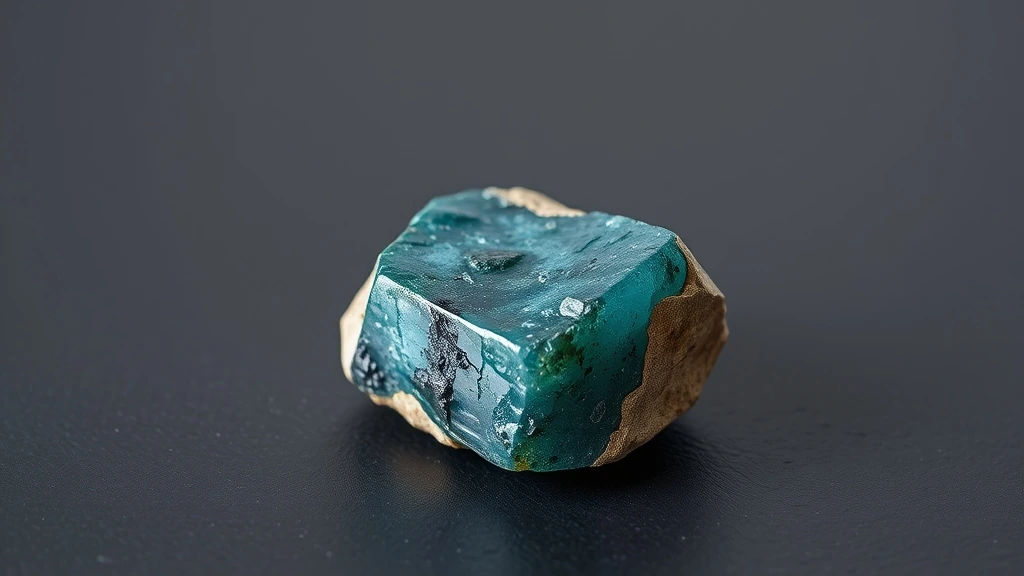
Apatite belongs to the Natural Mineral / Crystal group, representing a vital component of Earth’s crust. It forms in igneous, metamorphic, and sedimentary environments, often serving as a key indicator of geological processes. Its widespread occurrence ensures it remains a significant subject in mineralogical studies.
What is Apatite Gemstone? Geological Overview & Definition
Apatite is a ubiquitous phosphate mineral that plays a critical role in geological classification. It commonly occurs in igneous rocks, where it crystallizes from magma, and in metamorphic settings. This mineral also appears in sedimentary deposits, often associated with fossilized organic material.
As a gemstone, apatite is valued for its vibrant hues and crystal clarity. It frequently forms in prismatic habit, though massive aggregates are also common. Understanding its geological context helps identify origin and potential inclusions.
Apatite Gemstone Chemical Composition & Crystallographic Properties
Apatite crystallizes in the Hexagonal crystal system, featuring a complex lattice structure. The unit cell contains calcium ions coordinated by phosphate tetrahedra. This arrangement allows for significant cation substitution within the structure.
The mineral exhibits distinct acid sensitivity, reacting with strong acids to release fluoride or chloride. Its color arises from chromophore color centers, such as iron or chromium impurities. These trace elements create the stone’s characteristic green, blue, or pink tones.
Thermal behavior in apatite is stable under normal conditions but can alter under extreme heat. Heating may cause color changes or structural degradation. Proper care is essential to preserve the gemstone’s refractive index and brilliance.
| Property | Specification |
|---|---|
| Mineral Group | Natural Mineral / Crystal |
| Chemical Formula | Ca₅ (PO₄ )₃ (F,Cl,OH) |
| Mohs Hardness | 5 (defining mineral) |
| Crystal System | Hexagonal (crystal system) |
| Specific Gravity (Density) | 3.16–3.22 |
| Refractive Index | 1.634–1.638 (+0.012, −0.006) |
| Color & Optical Properties | Natural Apatite Gemstone color spectrum and optical dispersion |
| Primary Mining Localities | Global primary localities |
| Water & Chemical Resistance | High (Safe for gentle water washing) |
| Chakra Alignment (Traditional) | Throat Chakra, Crown Chakra |
| Zodiac Affinity (Traditional) | Pisces, Virgo |
| Symbolic Meaning (Traditional) | Mental clarity, communication, and spiritual awakening |
Apatite Gemstone Varieties & Color Spectrum
Apatite exhibits a remarkable chromatic diversity driven by trace element substitutions within its crystal lattice. The most commercially significant hues range from deep blues to vivid greens and rare purples. Understanding these variations is essential for accurate gemological identification and valuation.
Blue Apatite
The iconic blue variety owes its color to trace manganese and chlorine substitutions in the phosphate structure. These stones often display a distinct pleochroism, shifting between blue and green under different lighting angles. High-quality specimens from Madagascar frequently exhibit exceptional clarity and saturation.
Green Apatite
Green apatite typically forms through iron impurities replacing calcium in the mineral lattice. This hue is particularly common in deposits associated with basic igneous rocks. The color intensity can vary significantly based on the concentration of ferric ions.
Purple Apatite
Purple apatite is a rare morph resulting from manganese oxidation states within the crystal structure. These stones often appear violet under daylight and may shift to blue under incandescent light. Their scarcity makes them highly sought after by collectors.
Colorless & White Apatite
Colorless apatite serves as a baseline for evaluating other colored varieties in gemology. It often contains fluid inclusions that can affect brilliance and transparency. This variety is frequently used in industrial applications due to its abundance.
Orange & Yellow Apatite
Orange and yellow tones arise from hydroxyl group variations and minor iron content. These warm hues are less common than blue or green but add diversity to the palette. They are often found in metamorphic terrains alongside other phosphate minerals.
Where is Apatite Gemstone Found? Geological Mining & Extraction
Apatite primarily occurs in pegmatite dikes and igneous intrusions where phosphate-rich fluids crystallize. It is also prevalent in metamorphic rocks formed under high pressure and temperature conditions. These geological settings provide the necessary chemical environment for apatite formation.
Major mining regions include Madagascar, which yields high-quality gem material, and the United States, particularly in North Carolina. Other significant sources include Brazil, Russia, and China, where industrial-grade apatite is extracted for fertilizer production.
Historical Significance & Cultural Lore of Apatite Gemstone
Ancient civilizations often confused apatite with topaz due to similar blue hues and refractive properties. Roman and Greek texts reference “topaz” that was likely apatite, highlighting its early trade value. This misidentification persisted until the mineral was properly classified in the eighteenth century.
Archaeological finds reveal apatite use in ornamental beads and carvings across various cultures. Its moderate Mohs hardness made it suitable for intricate detailing in ancient jewelry. Today, it remains a symbol of wisdom and protection in modern gemological lore.
Modern Uses & Jewelry Applications of Apatite Gemstone
Apatite is prized for its vivid blue‑green hues and relatively low price, making it a popular choice for both novice and seasoned lapidaries. The stone is typically cut as a cabochon to showcase its silky translucency, though skilled faceting can produce striking fire when the crystal is clear. Artisans also carve ornamental beads, pendants, and small figurines, capitalizing on apatite’s ease of shaping without sacrificing brilliance.
- Cabochon cuts highlight the stone’s natural chatoyancy.
- Faceted pieces reveal bright dispersion in high‑clarity material.
- Carved cameos and beads are common in bohemian‑style jewelry.
Metaphysical Properties & Traditional Meaning of Apatite Gemstone
According to historical traditions and metaphysical lore, apatite is believed to amplify communication and stimulate intellectual curiosity, fostering a sense of mental clarity. It is said to open the heart to emotional honesty, encouraging forgiveness and the release of old grievances. Practitioners also associate the stone with creativity, claiming it ignites inspiration for artistic endeavors and problem‑solving.
Which Chakra and Zodiac Signs Align with Apatite Gemstone?
Apatite resonates most strongly with the Root Chakra, grounding the wearer and promoting a sense of stability in daily life. It is also linked to the Heart Chakra, where it is thought to nurture compassion and unconditional love, balancing physical security with emotional openness.
In astrology, apatite is traditionally aligned with Taurus, Gemini, and Leo. Taurus benefits from the stone’s stabilizing energy, Gemini draws on its communicative boost, and Leo experiences enhanced confidence and creative expression when wearing apatite. No other zodiac signs are associated with this gemstone in the canonical system.
How to Identify Real vs. Fake Apatite Gemstone
Artificial imitations of apatite include dyed quartz, synthetic glass, and resin‑filled composites that mimic its characteristic color range. These substitutes often lack the subtle internal fracture patterns and natural birefringence of genuine apatite. Recognizing the differences requires a combination of visual inspection and simple physical tests that can be performed at home.
Practical At-Home Authenticity Tests
- Temperature Test (Thermal Feel): Real apatite feels cool to the touch initially but warms slowly; glass or plastic remains at ambient temperature.
- Specific Gravity & Weight Test: Genuine apatite (SG ≈ 3.2) feels noticeably heavier than quartz or glass of the same size.
- Scratch & Hardness Test (Mohs Comparison): With a steel nail (hardness ≈ 5.5), apatite will resist scratching, whereas glass (≈ 5.5) may show micro‑scratches.
- Microscopic & Loupe Inspection (Internal Inclusions): Under 10× magnification, natural apatite shows fine, irregular fractures and occasional tiny inclusions, while synthetic glass appears uniformly clear.
Apatite Gemstone Valuation Factors, Grading & Pricing
Color Saturation is the foremost driver of price; vivid blues, greens, and yellows command premiums. Buyers look for intense, even hue without muted zones, and a high tone uniformity that enhances visual impact. Clear, glassy luster further boosts desirability, especially when the stone exhibits a lively sparkle under light.
Carat Weight influences value exponentially, yet larger stones must maintain flawless facet symmetry to avoid optical distortion. A well‑cut apatite displays precise angles that maximize brilliance and minimize dark corners. The presence of a matrix or visible inclusions can lower price, though a fine‑grained, needle‑free interior is prized by collectors.
Geographical Provenance Premium adds a niche market edge; specimens from Brazil, Madagascar, or the United States often fetch higher bids due to rarity. Wholesale prices fluctuate with supply chain dynamics, while retail values reflect the added cost of certification and setting. Trends show steady growth as designers incorporate apatite into contemporary jewelry, reinforcing its status as a semi‑precious favorite.
How to Clean and Care for Apatite Gemstone
Use warm soapy water and a soft cloth to gently remove surface dirt; this method respects apatite’s moderate hardness (Mohs 5) and prevents scratching. Rinse the stone briefly under lukewarm running water, then pat dry with a lint‑free microfiber towel. Avoid ultrasonic cleaners entirely, as the vibrations can cause micro‑fractures in the crystal lattice.
Cleansing and Recharging Apatite Gemstone (Energetic Care)
For energetic renewal, hold the stone over a smudge of white sage or cedar to allow gentle smoke to clear lingering vibrations; the mineral’s low solubility ensures it will not be damaged by the brief exposure. Allow the smoke to dissipate naturally, then store the gem in a sealed bag until ready for use.
Alternatively, place apatite on a polished selenite plate or under direct moonlight for several hours; both methods cleanse without introducing moisture. The stone absorbs lunar energy, enhancing its natural fluorescence and restoring visual clarity, while remaining completely safe from any chemical interaction.
Frequently Asked Questions About Apatite Gemstone
Is apatite safe to wear in the shower or while swimming?
Yes, apatite is water‑resistant and can be gently washed with water. Its hexagonal crystal structure tolerates mild moisture, so a quick rinse or gentle shower exposure won’t damage the stone. Avoid prolonged soaking or harsh detergents, which could leach surface treatments.
Can I clean apatite with an ultrasonic cleaner?
No, ultrasonic cleaning is not recommended for apatite. The high‑frequency vibrations can create micro‑fractures in its relatively soft Mohs 5 lattice. Instead, use warm, soapy water and a soft cloth to remove dirt without risking structural damage.
How does apatite’s hardness affect everyday wear?
Apatite’s Mohs hardness of 5 makes it suitable for occasional jewelry but not heavy‑impact pieces. It scratches more easily than quartz or sapphire, so rings and bracelets should be worn with care. Regular polishing helps maintain its vivid color and luster.
What are the typical colors of gem‑grade apatite?
Gem‑grade apatite displays vivid blues, greens, and yellows. These hues arise from trace fluorine, chlorine, or hydroxyl ions within the crystal lattice, producing the stone’s characteristic pleochroism that shifts with viewing angle. Heat treatment can enhance saturation but must be disclosed.
Which zodiac signs are associated with apatite?
Apatite is linked to Taurus, Gemini, and Leo. Astrology enthusiasts believe the stone amplifies the earthy stability of Taurus, the curiosity of Gemini, and the creative fire of Leo, supporting confidence and communication for these signs.
Which chakras does apatite balance?
Apatite resonates with the Throat Chakra, Crown Chakra. It is thought to ground energy while simultaneously opening the heart to emotional clarity, helping wearers feel both secure and compassionate during meditation or daily activities.
How should I store my apatite jewelry to prevent damage?
Store apatite separately in a soft pouch or lined compartment. Because its density of 3.16–3.22 g/cm³ makes it relatively heavy, it can scratch softer stones if piled together. Keeping it away from diamonds or sapphires preserves its surface finish.
Does apatite have any notable optical properties for gem cutters?
Apatite exhibits a refractive index of 1.634–1.638, giving it a bright, glassy luster. Its hexagonal symmetry allows skilled cutters to create elegant faceted stones that showcase strong dispersion and vivid color play, especially in cabochon or brilliant cuts.