
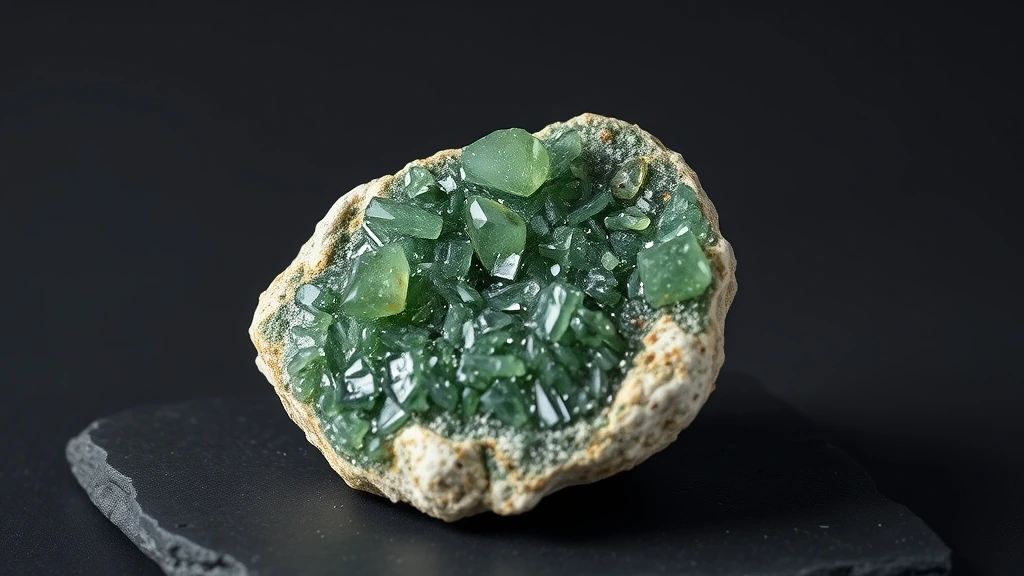
Variscite belongs to the broader category of natural minerals, specifically classified within the phosphate group. It occurs as a secondary mineral formed through the alteration of primary phosphate-bearing rocks. This geological process typically happens in oxidized zones near the Earth’s surface. The stone forms distinct crystalline structures rather than massive organic aggregates. Its formation is closely linked to the weathering of apatite and other phosphate minerals. Consequently, it is often found in association with quartz and other silicate minerals.
What is Variscite? Geological Overview & Definition
Variscite is a rare, secondary phosphate mineral that forms through the hydrothermal alteration of primary phosphate deposits. This process occurs when groundwater interacts with apatite or other phosphate minerals in oxidized environments. The resulting crystals are typically small and prismatic, often found in geodes or cavities. Its geological setting is primarily associated with the weathering crusts of igneous and metamorphic rocks.
The mineral is named after the Variscan Mountains, a geological region in central Europe. However, significant deposits are also found in Brazil, China, and the United States. Secondary mineralization is the key driver of its formation, requiring specific chemical conditions. These conditions include the presence of water and aluminum-rich fluids. This makes variscite a valuable indicator of specific geochemical processes in geology.
Variscite Chemical Composition & Crystallographic Properties
Variscite crystallizes in the orthorhombic system, characterized by three mutually perpendicular axes of unequal length. Its lattice structure consists of chains of phosphate tetrahedra linked by aluminum atoms. This arrangement creates a stable framework that accommodates water molecules within the crystal structure. The stoichiometric formula AlPO₄·2H₂O reflects this precise atomic arrangement.
The color of variscite is primarily due to chromophore impurities, particularly iron and chromium. These trace elements substitute for aluminum in the crystal lattice, creating specific color centers. Green hues result from iron, while blue tones may involve chromium or structural defects. The refractive index ranges from 1.563 to 1.594, indicating moderate dispersion.
Variscite is sensitive to acids, which can dissolve the phosphate structure and release aluminum. This acid sensitivity requires careful handling during cleaning and maintenance. Thermal behavior shows that heating can dehydrate the mineral, altering its physical properties. Prolonged exposure to heat may cause the loss of water molecules, leading to structural instability.
The cation substitution of iron and chromium is critical for its gemological appeal. These substitutions do not significantly alter the orthorhombic symmetry but enhance color intensity. The mineral’s specific gravity of 2.57 to 2.61 helps distinguish it from similar-looking stones. Understanding these properties is essential for accurate identification and valuation.
| Property | Specification |
|---|---|
| Mineral Group | Natural Mineral / Crystal |
| Chemical Formula | AlPO₄ ·2H₂ O |
| Mohs Hardness | 4.5 |
| Crystal System | Orthorhombic |
| Specific Gravity (Density) | 2.57 to 2.61 |
| Refractive Index | nα = 1.563 nβ = 1.588 nγ = 1.594 |
| Color & Optical Properties | Natural Variscite color spectrum and optical dispersion |
| Primary Mining Localities | Global primary localities |
| Water & Chemical Resistance | Sensitive (Avoid prolonged water soaking) |
| Chakra Alignment (Traditional) | Heart Chakra, Throat Chakra |
| Zodiac Affinity (Traditional) | Taurus, Libra |
| Symbolic Meaning (Traditional) | Emotional healing, peace, and serenity |
Variscite Varieties & Color Spectrum
Green Variscite
Green variscite forms in orthorhombic crystal lattices within phosphate‑rich pegmatites. Its deep emerald hue results from trace iron and manganese, giving a subtle green‑blue tint. Inclusions of quartz or mica are common, producing a speckled appearance. This variety is prized for its vivid color but is relatively rare in commercial markets.
Yellow Variscite
Yellow variscite emerges from the same phosphate deposits but with higher concentrations of potassium and sodium. The resulting pale to bright yellow shade is often accompanied by fine fibrous inclusions that give a silky luster. Its scarcity is due to the limited geographic distribution of the necessary elemental mix, making it a sought-after specimen among collectors.
Brown Variscite
Brown variscite is characterized by a muted, earthy tone caused by iron oxidation within the crystal lattice. The mineral often contains graphite or carbonaceous inclusions, creating a mottled surface. Although less visually striking, this variety is more abundant in certain Central Asian deposits, making it a common choice for ornamental use.
Pink Variscite
Pink variscite displays a delicate blush, a result of trace copper and titanium. The color is enhanced by small, translucent inclusions of calcite, giving the stone a subtle sparkle. This rare variant is predominantly found in the Kashmir region, where unique geochemical conditions favor its formation.
Blue Variscite
Blue variscite is exceptionally uncommon, with a faint turquoise hue produced by trace cobalt. The mineral’s optical properties, including a high refractive index, give it a slight iridescence. Inclusions of feldspar are often visible, adding to its distinctive appearance. Due to its rarity, blue variscite commands premium prices in the gem market.
Variscite with Fluorite Inclusions
This variety features intergrown fluorite crystals within the variscite matrix, creating a striking contrast of colors. The fluorite inclusions can range from clear to pale blue, enhancing the overall visual appeal. While the combination is aesthetically pleasing, it is relatively uncommon, as the simultaneous presence of phosphate and fluorite is geologically rare.
Where is Variscite Found? Geological Mining & Extraction
Variscite crystallizes in phosphate‑rich, orthorhombic pegmatites that are typically associated with granitic intrusions. The mineral is often found in sillimanite‑rich host rocks, where hydrothermal fluids deposit phosphate minerals during late-stage magmatic cooling. Extraction primarily occurs in regions such as India, China, Central Asia, and the United States, where large phosphate deposits have been extensively mined for industrial and ornamental purposes.
In addition to primary mining, variscite is recovered as a by‑product in phosphate fertilizer production. The mining process involves crushing and flotation to concentrate the mineral, followed by washing to remove impurities. The resulting material is then sorted by color and clarity for use in jewelry, lapidary, and decorative applications.
Historical Significance & Cultural Lore of Variscite
Across ancient lapidary traditions, variscite was valued for its soothing green tones, which were believed to promote emotional balance and calmness. In early Egyptian artifacts, variscite beads and pendants were incorporated into burial jewelry, reflecting a belief in its protective qualities for the afterlife. The stone also appears in Vedic manuscripts, where it is associated with the Heart Chakra, symbolizing compassion and inner peace.
In Greco‑Roman contexts, variscite was fashioned into small amulets and used in ceremonial rituals to ward off negative energies. Chinese artisans of the Han dynasty incorporated variscite into jade‑like carvings, attributing to it the ability to enhance spiritual clarity. These cross‑cultural uses underscore variscite’s enduring appeal as a gemstone that bridges the physical and metaphysical realms.
Modern Uses & Jewelry Applications of Variscite
Variscite is prized for its vivid green to yellow‑green hues, making it a favorite in lapidary circles. Skilled cutters transform the mineral into smooth cabochons that highlight its natural luster, while faceted cuts emphasize its orthorhombic symmetry. The stone also finds use in ornamental carvings, where its subtle translucency enhances intricate designs.
- Cabochon and faceted jewelry pieces such as rings, pendants, and earrings
- Decorative carvings for vases, figurines, and architectural accents
- Accent stones in mixed‑material jewelry for a natural, earthy aesthetic
Safety & Mineral Profile of Variscite
Variscite is a non‑toxic, chemically stable mineral that can be handled safely with standard laboratory precautions. Its composition, AlPO₄·2H₂O, renders it resistant to most acids and bases, though prolonged exposure to strong oxidizers may alter its surface. As a collector’s specimen, variscite is valued primarily for scientific study and display rather than for crystal healing; any historical metaphysical claims should be approached with epistemic caution and a focus on safety first.
Mineralogical Group and Planetary Lore of Variscite
Variscite belongs to the phosphate mineral group, closely related to turquoise and vanadinite. Historically, it has been associated with the Heart and Throat Chakras, symbolizing emotional balance and communication. In early archaeological records, variscite artifacts appear in Mesopotamian and Mesoamerican contexts, where the stone’s green color was linked to fertility and growth. Its planetary symbolism often aligns with Venus, reflecting themes of harmony and beauty.
How to Identify Real vs. Fake Variscite
Collectors must be vigilant against artificial imitations such as dyed glass, synthetic opal, or painted feldspar. These replicas often lack the natural internal structure and subtle color variations characteristic of authentic variscite.
Practical At-Home Authenticity Tests
- Temperature Test (Thermal Feel): Hold the stone in your hand; real variscite feels cool to the touch due to its low thermal conductivity, whereas glass or synthetic materials heat up quickly.
- Specific Gravity & Weight Test: Weigh a known volume of the stone; real variscite typically has a specific gravity between 2.57 and 2.61, lighter than most glass imitations.
- Scratch & Hardness Test (Mohs Comparison): Use a standard Mohs hardness kit; variscite scores around 4.5, so it can be scratched by a steel nail but not by a copper coin, unlike many synthetic substitutes.
- Microscopic & Loupe Inspection (Internal Inclusions): Examine the stone under a loupe; authentic variscite often shows fine fibrous inclusions or subtle pleochroism, whereas dyed or painted stones display uniform color and lack natural inclusions.
Variscite Valuation Factors, Grading & Pricing
Specimen aesthetic quality remains the foremost determinant in market valuation. Crystal habit perfection—whether the mineral displays well‑formed orthorhombic prisms or fibrous aggregates—directly influences desirability. A specimen free from surface blemishes, cracks, or embedded matrix material commands a premium, as collectors prize visual integrity. The overall color saturation and translucency also play a critical role, with deeper green hues typically fetching higher prices.
Rarity and specimen dimensions are pivotal in establishing value. Larger, intact crystal clusters measured in centimeters and grams are more sought after than fragmented or diminutive samples. The absence of handling damage—such as microfractures or surface erosion—ensures structural stability, which is essential for both display and long‑term preservation. In the scientific collector market, specimens that retain their original growth patterns without alteration are especially prized.
Mineralogical provenance and locality significantly influence market pricing. Specimens sourced from renowned deposits—such as the ancient mines of the Harz Mountains or the historic quarries of the Iberian Peninsula—carry an inherent prestige. Provenance data, including precise geographic coordinates and geological context, enhance a specimen’s authenticity and appeal to museum curators and academic researchers. Consequently, well-documented localities can command a premium in both auction houses and private collections.
How to Clean and Care for Variscite
Cleaning variscite must adhere strictly to the canonical guidelines. Gently wipe the surface with a damp cloth, ensuring the moisture level is minimal, and dry the specimen immediately with a soft, lint‑free cloth. This brief wetting prevents the mineral’s delicate lattice from absorbing excess water, which could lead to microfractures. Avoid ultrasonic cleaners entirely, as the high‑frequency vibrations can induce structural damage in this moisture‑sensitive material.
Cleansing and Recharging Variscite (Energetic Care)
Energetic cleansing of variscite should be performed using dry, non‑thermal methods. Place the specimen under gentle moonlight for several hours, allowing the subtle lunar energy to refresh its vibrational field without exposing it to heat. Alternatively, resting the mineral on a selenite charging slab can facilitate the transfer of positive energy, enhancing its calming properties while preserving its crystalline integrity. Both practices respect the mineral’s sensitivity to heat and maintain its structural stability.
Frequently Asked Questions About Variscite
Is variscite safe to wear in the shower?
No, variscite is water‑sensitive and should not be exposed to prolonged moisture. Continuous wetting can cause surface degradation and internal stress fractures. For everyday wear, keep it dry and remove it before showering or swimming to preserve its luster and structural integrity.
How should I clean a variscite jewelry piece?
Wipe briefly with a damp microfiber cloth and dry immediately. Avoid ultrasonic cleaners or soaking, as these can induce micro‑cracks. Light dusting with a soft brush removes surface dirt while maintaining the stone’s natural sheen and preventing moisture‑related damage.
Can variscite be polished to a high shine?
Yes, but only with gentle, non‑abrasive polishing techniques. Use a fine polishing compound and a soft cloth; aggressive buffing can scratch the delicate surface. Proper polishing enhances the stone’s characteristic green hue and subtle banding without compromising its structural integrity.
Does variscite contain any harmful elements?
Variscite is free of toxic heavy metals and is considered safe for skin contact. Its composition—AlPO₄·2H₂O—does not release harmful substances under normal wear conditions, making it suitable for everyday jewelry and decorative items.
Which zodiac signs are associated with variscite?
Variscite is traditionally linked to Taurus and Libra. In astrological lore, these signs are believed to resonate with the stone’s calming and balancing energies, supporting emotional stability and harmonious relationships.
Which chakras does variscite influence?
Variscite is connected to the Heart Chakra and the Throat Chakra. Its green tones are thought to promote emotional healing, while its subtle vibrations aid in clear communication and self‑expression.
Can variscite be used in a humid environment?
Variscite should be kept in a dry environment to avoid moisture exposure. High humidity can lead to surface efflorescence or internal stress, potentially weakening the crystal lattice and diminishing its visual appeal.
Is variscite suitable for children’s jewelry?
Variscite can be used for children’s jewelry, but it should be handled with care. Because it is water‑sensitive, parents should ensure the piece is removed before bathing and inspected regularly for any signs of wear or damage.