
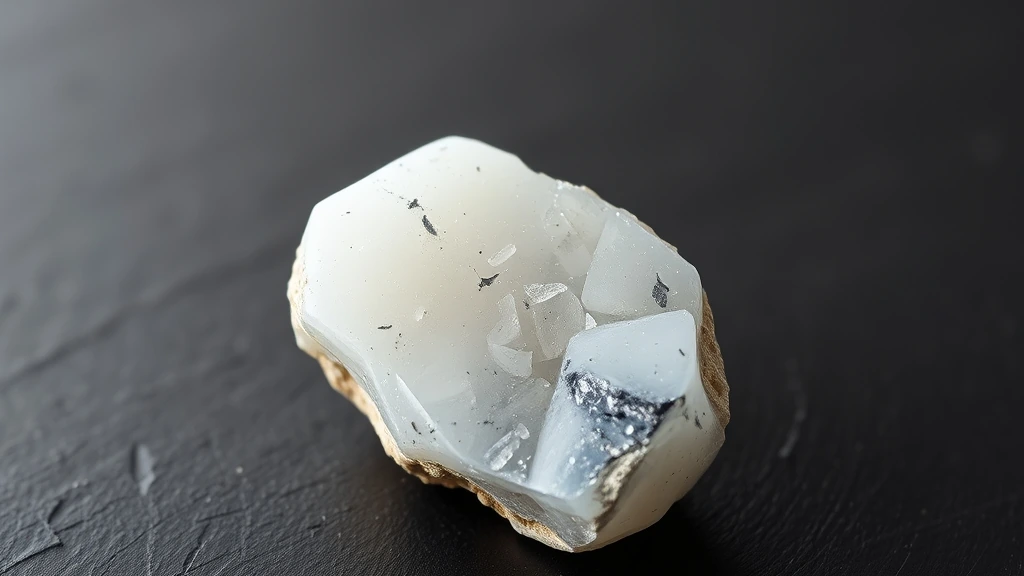
Moonstone belongs to the tectosilicate subgroup of the feldspar family, forming in granitic pegmatites and metamorphic schists where slow cooling allows intergrowth of orthoclase and albite layers. These perthitic lamellae create the characteristic light‑scattering planes that give the stone its ethereal glow, while its monoclinic symmetry reflects the ordered arrangement of K⁺ and Na⁺ cations within the crystal lattice.
What is Hecatolite (moonstone) Gemstone? Geological Overview & Definition
Hecatolite is the trade name for the monoclinic feldspar variant that exhibits the famed moon‑stone effect. It occurs as translucent to opaque masses, often in tabular or granular habit, and is prized for its ability to display a shifting sheen when viewed from different angles.
The gemstone’s formation is linked to perthitic intergrowth, where exsolution of albite lamellae from orthoclase during cooling creates microscopic strain fields. These strain fields act as diffraction planes, producing the soft, billowy glow that distinguishes genuine moonstone from other feldspar varieties.
Hecatolite (moonstone) Gemstone Chemical Composition & Crystallographic Properties
The ideal formula is (K,Na)AlSi₃O₈, reflecting a solid‑solution series between orthoclase (K‑rich) and albite (Na‑rich) end‑members. Cation substitution is governed by temperature, with potassium predominating at higher temperatures and sodium increasing as the crystal cools, resulting in the characteristic lamellar structure.
Crystallographically, Hecatolite crystallizes in the monoclinic system, specifically as orthoclase/albite perthitic lamellae that are oriented parallel to the (010) plane. This symmetry produces two unequal axes and a single oblique angle, a key identifier distinguishing it from truly triclinic feldspars.
The stone’s adularescence arises from light scattering at the nanoscale interfaces between the orthoclase matrix and albite exsolution layers, acting as chromophore color centers. These centers are sensitive to acidic environments; prolonged exposure to acids can dissolve the surface layers, dulling the optical effect.
Thermally, moonstone exhibits reversible changes: heating above ~400 °C can cause the albite lamellae to coalesce, diminishing the adular glow, while controlled annealing may enhance clarity by reducing internal strain. Rapid cooling, however, preserves the lamellar spacing, maintaining the gemstone’s signature luminous quality.
| Property | Specification |
|---|---|
| Mineral Group | Silicates (Tectosilicates / Feldspar Group) |
| Chemical Formula | KAlSi₃O₈ (Orthoclase / Albite feldspar) |
| Mohs Hardness | 6.0 – 6.5 |
| Crystal System | Monoclinic (Orthoclase / Albite perthitic lamellar) |
| Specific Gravity (Density) | 2.56 – 2.60 |
| Refractive Index | 1.518 – 1.526 |
| Color & Optical Properties | Natural Hecatolite (moonstone) Gemstone color spectrum and optical dispersion |
| Primary Mining Localities | Sri Lanka, India, Madagascar, Myanmar, Brazil |
| Water & Chemical Resistance | Moderate (Safe for brief lukewarm washing; avoid acids and thermal shocks) |
| Chakra Alignment (Traditional) | Crown Chakra and Third Eye Chakra |
| Zodiac Affinity (Traditional) | Cancer, Libra, Scorpio |
| Symbolic Meaning (Traditional) | Feminine intuition, inner harmony, new beginnings, and emotional balance |
Hecatolite (moonstone) Gemstone Varieties & Color Spectrum
Rainbow Moonstone
This prized variety exhibits a vibrant, multi-colored adularescence that shifts across the visible spectrum. The optical phenomenon arises from the periodic intergrowth of orthoclase and albite layers within the feldspar structure. Such intense color play is typically found in high-grade specimens from Madagascar.
Blue Moonstone
Characterized by a cool, ethereal blue glow, this type is highly sought after for its scintillation effect. The blue hue results from light scattering off microscopic inclusions and layer boundaries within the crystal lattice. It is distinct from the more common white or gray varieties in the trade.
White Moonstone
This classic variety displays a soft, milky white body with a subtle, silvery sheen. The opacity is caused by dense, microscopic fluid inclusions that scatter light uniformly throughout the stone. It remains the most accessible and affordable option for jewelry makers.
Gold Moonstone
Rare and striking, this variety features a warm, golden-yellow adularescence against a translucent background. The coloration is often attributed to trace elements or specific structural defects in the feldspar. It is significantly less common than its blue or white counterparts.
Peach Moonstone
This delicate variety showcases a soft, pinkish-orange glow that evokes the color of ripe fruit. The hue is produced by the interaction of light with fine, parallel lamellae in the mineral structure. It is valued for its gentle, romantic aesthetic in fine jewelry.
Gray Moonstone
Often considered a lower-grade variety, this type exhibits a muted, smoky gray appearance. The coloration stems from higher levels of iron impurities or radiation damage within the crystal. It is frequently used in mass-market jewelry due to its lower cost.
Where is Hecatolite (moonstone) Gemstone Found? Geological Mining & Extraction
Hecatolite primarily forms in alkaline pegmatite dikes and volcanic rocks, where slow cooling allows large crystals to develop. These geological settings provide the necessary chemical environment for the intergrowth of feldspar species. The presence of specific trace elements influences the final color and clarity of the gem.
Major commercial deposits are located in Madagascar, Sri Lanka, and India, which dominate the global supply chain. Mining operations typically involve open-pit extraction to access the large pegmatite bodies. Careful cutting is essential to maximize the visible adularescence in the final polished gemstone.
Historical Significance & Cultural Lore of Hecatolite (moonstone) Gemstone
Ancient civilizations revered this stone as a symbol of the moon, often associating it with divine feminine energy. Roman soldiers carried it for protection during night marches, believing it illuminated their path. In Indian culture, it is considered a sacred stone that enhances intuition and spiritual insight.
Archaeological findings reveal its use in ceremonial jewelry and amulets across various ancient cultures. The stone’s luminous quality led to myths about its ability to reflect moonlight and grant foresight. It remains a powerful symbol of emotional balance and new beginnings in modern esoteric practices.
Modern Uses & Jewelry Applications of Hecatolite (moonstone) Gemstone
Lapidaries primarily cut Hecatolite into cabochons to maximize its distinctive optical phenomenon, known as adularescence. This smooth, domed shape allows the blue or white sheen to float across the surface, creating a moonlight effect. Faceted cuts are rare because they often disrupt the light path necessary for this visual display.
- Cabochon Cutting: The standard industry practice to preserve the adularescence effect.
- Jewelry Settings: Commonly used in rings, pendants, and earrings with silver or white gold settings.
- Ornamental Carving: Occasionally carved into beads or small figurines for decorative purposes.
Metaphysical Properties & Traditional Meaning of Hecatolite (moonstone) Gemstone
According to historical traditions and metaphysical lore, Hecatolite is revered as a stone of feminine intuition and emotional clarity. Practitioners believe it enhances inner harmony and supports individuals during periods of significant life transitions. The gemstone is thought to bridge the gap between the conscious and subconscious mind.
This stone is associated with new beginnings and emotional balance, helping users navigate complex feelings with grace. It is often recommended for those seeking to strengthen their connection to their higher self. The gentle energy of the stone is said to promote a sense of calm and stability.
Which Chakra and Zodiac Signs Align with Hecatolite (moonstone) Gemstone?
In esoteric practice, Hecatolite is primarily aligned with the Crown Chakra and the Third Eye Chakra. These energy centers are associated with spiritual awareness, intuition, and higher consciousness. The stone’s luminous quality is believed to stimulate these upper chakras, enhancing one’s ability to perceive subtle energies.
Astrologically, this gemstone resonates strongly with the water and air signs of Cancer, Libra, and Scorpio. These signs are known for their emotional depth and intuitive nature, which aligns perfectly with the stone’s properties. Wearing Hecatolite is thought to amplify the natural strengths of these zodiac signs.
How to Identify Real vs. Fake Hecatolite (moonstone) Gemstone
Artificial imitations of Hecatolite are common, including synthetic glass, dyed quartz, and lab-created feldspar. These fakes often lack the natural inclusions and subtle color variations found in genuine stones. Understanding the physical properties of the real mineral is essential for accurate identification.
Practical At-Home Authenticity Tests
- Temperature Test (Thermal Feel): Genuine Hecatolite feels cool to the touch initially and warms up slowly. Glass imitations tend to warm up much faster due to their different thermal conductivity.
- Specific Gravity & Weight Test: Real Hecatolite has a specific gravity of approximately 2.6 to 2.7. It should feel slightly heavier than similarly sized glass or plastic replicas when held in the hand.
- Scratch & Hardness Test (Mohs Comparison): Hecatolite has a Mohs hardness of 6 to 6.5. It will not be scratched by a steel knife (hardness 5.5) but may be scratched by a quartz point (hardness 7).
- Microscopic & Loupe Inspection (Internal Inclusions): Use a 10x loupe to look for natural inclusions or lattice structures. Glass imitations often contain tiny, spherical bubbles, which are a clear sign of artificial origin.
Hecatolite (moonstone) Gemstone Valuation Factors, Grading & Pricing
Market value hinges primarily on Color Saturation and the intensity of the optical phenomenon. High-grade specimens display a deep, uniform blue or white sheen that shifts dynamically with light. Consistent tone uniformity across the stone’s surface significantly enhances its desirability among collectors.
Carat Weight directly influences pricing, as larger, flawless specimens are increasingly rare in the global market. Precise facet symmetry maximizes the visibility of the adularescence, a key optical property. The absence of visible matrix or inclusion clusters further elevates the gemstone’s overall aesthetic appeal.
Geographical Provenance Premium often dictates the final retail price for exceptional pieces. Stones from renowned mines in Sri Lanka or India command higher wholesale rates. Current market trends show steady appreciation for high-clarity, large-carat materials with distinct optical effects.
How to Clean and Care for Hecatolite (moonstone) Gemstone
Hecatolite is prone to cleavage splitting, making it vulnerable to mechanical stress and impact. You must clean it gently using only warm soapy water and a soft brush. Avoid harsh chemicals, acids, or thermal shocks that could compromise the stone’s structural integrity.
Ultrasonic cleaning is strictly prohibited for this gemstone due to its susceptibility to internal fracture. The vibrations can trigger hidden cleavage planes, resulting in permanent and irreversible damage. Always handle the stone with care to prevent accidental chipping or breakage.
Cleansing and Recharging Hecatolite (moonstone) Gemstone (Energetic Care)
For energetic maintenance, place the stone on a selenite plate overnight under natural moonlight. This dry method aligns with the mineral’s sensitivity to moisture and physical stress. It allows the gemstone to absorb lunar energy without risking surface etching or clouding.
Alternatively, use smoke smudging with sage or palo santo to clear stagnant energies. Keep the stone away from direct water exposure during this process. These dry techniques ensure the mineral remains physically intact while addressing its esoteric properties.
Frequently Asked Questions About Hecatolite (moonstone) Gemstone
What is the chemical composition of hecatolite?
Hecatolite is a variety of the feldspar mineral orthoclase (KAlSi₃O₈). It belongs to the alkali feldspar group, displaying the characteristic adularescence that creates a moon‑like glow. The crystal structure is triclinic, and trace amounts of titanium or iron can enhance its optical effect.
How should I care for hecatolite jewelry when cleaning it?
Clean hecatolite gently with warm, mildly soapy water and a soft brush. Because the stone is prone to cleavage splitting, avoid harsh chemicals, ultrasonic cleaners, or high‑pressure jets. Rinse thoroughly, pat dry with a lint‑free cloth, and store it separately from harder gems.
Is hecatolite safe to wear while washing dishes or showering?
Hecatolite has moderate water resistance and tolerates brief lukewarm washing. It can withstand occasional exposure to water, but you should avoid acids, hot water, and sudden thermal shocks that may cause micro‑fractures. Remove the piece before long baths or swimming.
Which zodiac signs are most closely associated with hecatolite?
The stone is traditionally linked to Cancer, Libra, and Scorpio. These signs are believed to benefit from the gem’s calming inner‑harmony energy, which supports emotional balance and intuitive insight. Wearing hecatolite is thought to amplify the positive traits of these astrological profiles.
Which chakras does hecatolite activate?
Hecatolite resonates with the Crown Chakra and the Third Eye Chakra. Activation of these energy centers is said to enhance spiritual awareness, feminine intuition, and mental clarity, helping the wearer connect with higher consciousness and inner guidance.
Can hecatolite be used in engagement rings despite its cleavage?
Yes, but only when set with protective settings such as bezel or low‑profile prongs. The stone’s cleavage planes make it vulnerable to impact, so a secure mounting reduces the risk of splitting. Regular inspections by a jeweler are recommended to maintain integrity.
Does hecatolite change color under different lighting?
The gem exhibits adularescence, a milky‑white to blue‑gray sheen that shifts with light angle. This optical phenomenon is caused by light scattering between thin lamellae within the crystal lattice. While the base color remains constant, the glow can appear more pronounced in daylight or under candlelight.
How does hecatolite differ from other moonstones?
Hecatolite is a specific orthoclase moonstone distinguished by its higher potassium content and pronounced adularescence. Compared with feldspar varieties like anhydrite or labradorite, hecatolite’s glow is typically softer and more pastel, and it is more susceptible to cleavage, requiring gentler handling.