
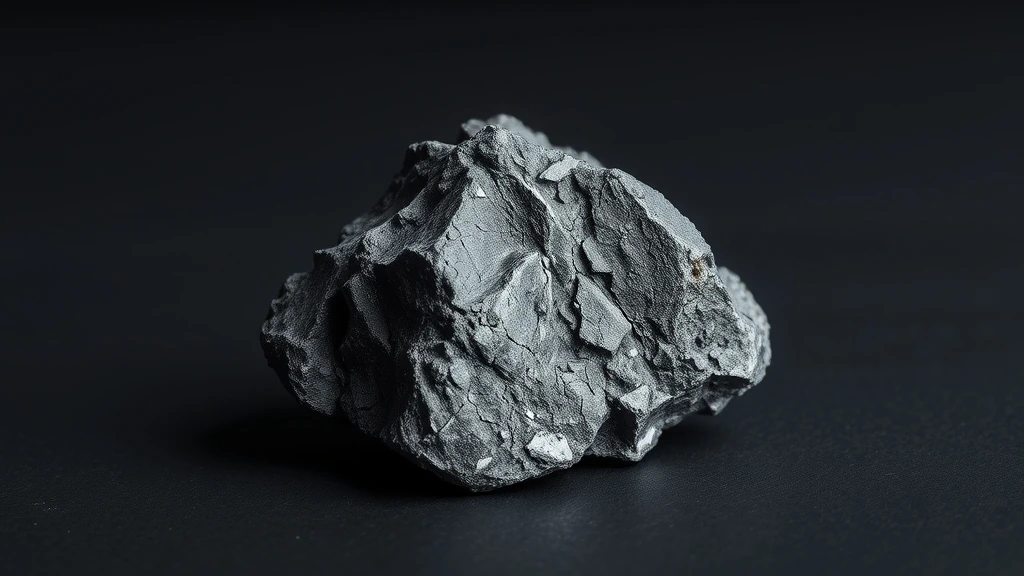
Galena belongs to the Natural Mineral / Crystal group and is the primary ore of lead worldwide. Its cubic symmetry produces perfect octahedral crystals that often occur in massive, tabular aggregates within hydrothermal veins and sedimentary deposits. The mineral’s high density (7.2–7.6 g/cm³) and distinctive cleavage planes have made it a staple in both industrial extraction and gemstone collections.
What is Galena Gemstone? Geological Overview & Definition
Galena is a lead sulfide (PbS) mineral that forms in the cubic crystal system, yielding isometric cubes and octahedra that sparkle with a metallic sheen. It commonly occurs in low‑temperature hydrothermal veins, sedimentary lead deposits, and as replacement rims around other sulfide minerals.
In gemological contexts, galena is prized for its high specific gravity and reflective surface, which produce a striking, mirror‑like appearance when polished. Though soft, its cleavage allows skilled cutters to fashion cabochons, beads, and inlay pieces that showcase its characteristic gray‑silver color and occasional iridescence.
Galena Gemstone Chemical Composition & Crystallographic Properties
The mineral’s formula PbS reflects a simple binary sulfide lattice where each lead cation is coordinated by six sulfide anions in a face‑centered cubic arrangement. This NaCl‑type structure imparts the perfect cubic symmetry that defines galena’s habit and cleavage on {100} planes.
Cation substitution is limited; trace amounts of silver, antimony, or zinc can replace lead, subtly altering density but rarely affecting the crystal habit. Because the lattice is highly ionic, galena is sensitive to strong acids, which can dissolve the sulfide and release hydrogen sulfide gas.
Color in galena arises from chromophore color centers created by lattice defects and minor impurities, producing its metallic gray to silver‑blue sheen. Heat treatment can anneal these defects, sometimes enhancing iridescent play of colors, though excessive temperatures may cause oxidation to lead oxide.
Thermally, galena remains stable up to ~1,100 °C, beyond which it decomposes to lead oxide and sulfur vapor. Its high specific gravity and low thermal expansion make it resistant to fracture under rapid temperature changes, a useful property for gemstone setting and industrial handling.
| Property | Specification |
|---|---|
| Mineral Group | Natural Mineral / Crystal |
| Chemical Formula | PbS |
| Mohs Hardness | 2.5 |
| Crystal System | Isometric |
| Specific Gravity (Density) | 7.4 – 7.6 |
| Refractive Index | 2.870 |
| Color & Optical Properties | Natural Galena Gemstone color spectrum and optical dispersion |
| Primary Mining Localities | Global primary localities |
| Water & Chemical Resistance | High (Safe for gentle water washing) |
| Chakra Alignment (Traditional) | Root Chakra |
| Zodiac Affinity (Traditional) | Capricorn, Virgo, Scorpio |
| Symbolic Meaning (Traditional) | Grounding, protection, and manifestation of material abundance |
Galena Gemstone Varieties & Color Spectrum
Galena exhibits a limited but distinct visual range, primarily defined by its metallic luster and cubic habit. While pure PbS appears as a deep, lead-gray metal, impurities and crystal defects create subtle variations. Collectors prize specimens with perfect cubic crystal faces and high reflectivity for their aesthetic appeal.
Classic Lead-Gray Galena
This is the most common form, characterized by its uniform, dark metallic gray appearance. It typically forms in large, well-defined cubes or octahedrons within quartz veins. The surface often displays striae on the cube faces, a diagnostic crystallographic feature. This variety is abundant in major mining districts worldwide.
Striated Cubic Galena
Distinguished by parallel grooves etched into its crystal faces, this variety highlights the isometric crystal system nature of the mineral. The striations result from growth patterns and mechanical abrasion during formation. Specimens with deep, sharp striae are highly sought after by mineral collectors for their textural complexity.
Galena with Quartz Inclusions
Often found intergrown with milky or clear quartz, this variety creates a striking visual contrast. The galena crystals appear embedded within the translucent silica matrix, enhancing their metallic sheen. This association is common in hydrothermal vein deposits and adds significant value to the specimen.
Galena with Pyrite Associations
Frequently co-occurring with pyrite, this variety features bright yellow-brass cubes alongside the dark galena. The juxtaposition of pyrite and galena creates a visually dynamic and complex mineral assemblage. Such specimens are prized for their diversity and the interplay of different metallic lusters.
Galena with Calcite Matrix
In some deposits, galena forms within a white or translucent calcite host rock. The calcite matrix provides a stark, bright background that accentuates the dark gray galena crystals. This combination is particularly notable in certain European mining regions and is popular among lapidaries.
Galena with Sphalerite Inclusions
Occasionally, galena is found with brownish or reddish sphalerite, adding warm tones to the specimen. The sphalerite inclusions can create a mottled appearance within the galena crystals. This variety is rarer and often indicates specific geochemical conditions during mineralization.
Where is Galena Gemstone Found? Geological Mining & Extraction
Galena primarily occurs in hydrothermal vein deposits associated with granitic intrusions and sedimentary basins. These veins often contain other sulfide minerals like sphalerite and chalcopyrite, indicating complex fluid-rock interactions. The mineral forms at relatively low temperatures, allowing for the development of well-formed crystals.
Major mining regions include the United States, particularly Missouri and Colorado, which have historically produced high-quality specimens. Europe, especially Germany and France, is renowned for its exceptional galena crystals from the Harz Mountains. These locations offer diverse geological settings that support the formation of varied and collectible galena types.
Historical Significance & Cultural Lore of Galena Gemstone
Ancient civilizations valued galena primarily as the principal ore for lead extraction, which was crucial for plumbing, coins, and pigments. The Romans extensively mined galena to produce lead, shaping their urban infrastructure and artistic capabilities. Archaeological evidence reveals galena artifacts used in early smelting processes across Europe and the Middle East.
In esoteric traditions, galena is associated with the Root Chakra, symbolizing grounding and protection. Its dense, heavy nature is believed to anchor energy and facilitate the manifestation of material abundance. This mineral continues to be respected in metaphysical practices for its stabilizing properties.
Modern Uses & Jewelry Applications of Galena Gemstone
Due to its extreme softness and susceptibility to tarnishing, galena is rarely cut into high-clarity faceted gems for daily wear. Instead, lapidaries typically polish it into smooth cabochons or carve it into ornamental beads and pendants. The stone’s metallic luster and distinct cubic cleavage make it a popular choice for collectors and those seeking unique, earthy aesthetic pieces.
- Cabochon Polishing: Smooth, dome-shaped cuts that highlight the stone’s lead-gray metallic sheen without risking fracture.
- Ornamental Carving: Detailed sculptures or beads that showcase the natural cubic crystal forms and cleavage planes.
- Collector Specimens: Unpolished or lightly polished crystals valued for their perfect geometric shape and weight.
Safety & Mineral Profile of Galena
Safe handling and physical characteristics
Galena is a lead sulfide mineral with a metallic luster and a characteristic cubic crystal habit. It is relatively soft (Mohs 2.5–3) and can be easily scratched or fractured, which makes it unsuitable for everyday wear in jewelry. The mineral contains lead, a heavy metal that poses health risks if ingested or inhaled as dust. When galena is ground or abraded, fine particles can become airborne; inhalation of lead‑laden dust can lead to lead poisoning. Additionally, galena can react with acids, producing hydrogen sulfide gas, which is toxic and corrosive. For these reasons, galena is best displayed as a collector specimen under controlled conditions—sealed in a protective case, handled with gloves, and stored away from strong acids or high‑temperature environments.
Scientific and educational value
In museum collections, galena serves as a key reference for the study of sulfide minerals and the geochemical cycling of lead. Its well‑defined cubic crystals and high density (7.5 g cm⁻³) make it an excellent teaching tool for illustrating crystal symmetry, mineral identification techniques, and the principles of density measurement. In mineralogical research, galena is frequently used as a source of lead for isotope studies, and its occurrence in hydrothermal veins provides insight into ore‑deposit formation processes. The mineral’s historical importance as the primary source of lead also makes it a valuable artifact for the history of mining and metallurgy.
Mineralogical Group and Planetary Lore of Galena
Historically, galena was classified within the sulfide group of minerals, distinguished by their anionic sulfide (S²⁻) component. Early mineralogists, such as René Just Haüy and James Dwight Dana, noted its cubic symmetry and metallic luster, placing it in the *Galena* family alongside related sulfides like sphalerite and pyrite. The name “galena” derives from the Greek word *galen*, meaning “lead,” reflecting its long association with the extraction of lead metal.
According to early lapidary texts, galena was sometimes referred to as “lead stone” and was believed to possess protective qualities against evil spirits, though such claims lack scientific basis. In planetary geology, galena has been identified on the Moon and Mars, where its presence indicates past hydrothermal activity and the availability of sulfur and lead in the regolith. These extraterrestrial findings underscore galena’s role as a marker of geological processes beyond Earth.
How to Identify Real vs. Fake Galena Gemstone
Artificial imitations of galena often involve synthetic glass, dyed minerals, or leaded glass designed to mimic the stone’s heavy feel and metallic luster. These fakes may lack the natural cubic crystal structure or the characteristic cleavage planes found in genuine specimens. Identifying real galena requires careful attention to its physical properties and surface characteristics.
Practical At-Home Authenticity Tests
- Temperature Test (Thermal Feel): Real galena feels significantly colder to the touch than glass or plastic due to its high thermal conductivity. Hold the stone in your palm for a minute; if it warms up quickly, it is likely a fake.
- Specific Gravity & Weight Test: Galena is exceptionally dense, with a specific gravity of 7.2–7.6. A genuine stone will feel much heavier than its size suggests, far surpassing the weight of similar-sized glass or quartz imitations.
- Scratch & Hardness Test (Mohs Comparison): With a Mohs hardness of only 2.5–2.75, galena is very soft. A steel nail (hardness ~5.5) will easily scratch the surface, leaving a dull mark. If the stone resists scratching, it is not galena.
- Microscopic & Loupe Inspection (Internal Inclusions): Use a 10x loupe to examine the surface. Real galena often shows cubic cleavage steps or natural crystal faces. Look for lack of bubbles, which are common in glass imitations, and check for the characteristic lead-gray color.
Galena Gemstone Valuation Factors, Grading & Pricing
Market value hinges primarily on Color Saturation and the intensity of the metallic luster. High-grade specimens exhibit a deep, uniform lead-gray tone without dulling or oxidation spots. Consistent optical clarity across the surface significantly enhances aesthetic appeal for collectors.
Carat Weight directly influences pricing, as larger, well-formed crystals are increasingly rare in global deposits. Facet symmetry is critical for cut stones, ensuring light reflection maximizes the mineral’s natural sheen. Minimal matrix or inclusion presence further elevates the specimen’s desirability among serious investors.
Geographical Provenance Premium often dictates final retail prices, with famous localities commanding higher premiums. Wholesale trends indicate steady demand for high-purity PbS specimens from established mining regions. Retail values fluctuate based on rarity, but quality remains the ultimate price driver.
How to Clean and Care for Galena Gemstone
Due to its low Mohs Hardness of 2.5–2.75, galena requires extremely gentle handling during maintenance. Always use warm soapy water and a soft cloth to remove surface dust and oils. This method safely preserves the delicate cubic crystal structure without causing abrasion.
Strictly avoid ultrasonic cleaners, as vibrations can induce structural fractures in this brittle mineral. Do not use harsh chemicals or abrasive brushes that might scratch the metallic surface. Regular, careful inspection helps prevent minor damage from becoming permanent structural failures.
Cleansing and Recharging Galena Gemstone (Energetic Care)
For energetic maintenance, utilize dry methods that respect the mineral’s physical fragility. Smoke smudging with sage or palo santo is an effective, non-invasive cleansing technique. This approach purifies the stone’s energy field without exposing it to moisture or heat.
Moonlight exposure serves as a gentle recharging method, aligning the stone with lunar cycles. Placing the galena on a selenite plate further amplifies its grounding properties safely. These dry techniques ensure the stone retains its integrity while restoring its metaphysical potency.
Frequently Asked Questions About Galena Gemstone
Is galena safe to wear in water or rain?
Yes, galena is water‑resistant for gentle washing. Its dense lead sulfide (PbS) structure tolerates brief exposure to water, so a light rinse or shower won’t damage the stone. However, prolonged soaking or harsh detergents can promote surface tarnish, so rinse with warm, soapy water and pat dry.
Can I clean galena with an ultrasonic cleaner?
No, avoid ultrasonic cleaning for galena. The stone’s cubic crystal lattice is brittle and can fracture under ultrasonic vibrations. Instead, use warm soapy water and a soft, lint‑free cloth to wipe the surface, preserving its high density (7.2–7.6 g/cm³) and luster.
What zodiac signs are associated with galena?
Capricorn, Virgo, and Scorpio are the aligned zodiac signs. These earth‑ and water‑sign energies are said to resonate with galena’s grounding properties, enhancing material abundance and protective fields for those born under these signs.
Which chakra does galena activate?
Galena is linked to the Root Chakra. This connection supports grounding and stability, helping wearers feel more secure in their physical environment. The stone’s heavy, metallic feel reinforces the earth element associated with the root energy center.
How hard is galena compared to other gemstones?
Galena rates 2.5–2.75 on the Mohs scale, making it relatively soft. Its low hardness means it scratches easily against harder minerals like quartz or quartzite. Handle it with care, store it separately, and avoid contact with jewelry pieces of higher Mohs hardness.
Is galena suitable for everyday jewelry?
It can be used in jewelry but requires protective settings. Because of its softness and susceptibility to fracture, galena is best set in bezel or protective mountings that shield the stone from impact and abrasion during daily wear.
Does galena have any notable optical properties?
Galena exhibits a metallic luster with a lead‑gray color. While it lacks a measurable refractive index, its high specific gravity gives it a heavy feel, and the cubic crystals often display perfect cleavage, creating shiny, reflective facets when polished.
What care routine prolongs the life of a galena gemstone?
Clean gently with warm, soapy water and a soft cloth, then store in a padded pouch. Avoid exposure to harsh chemicals, ultrasonic devices, or high‑impact activities. Maintaining a stable environment reduces the risk of surface oxidation and keeps its grounding energy intact.