
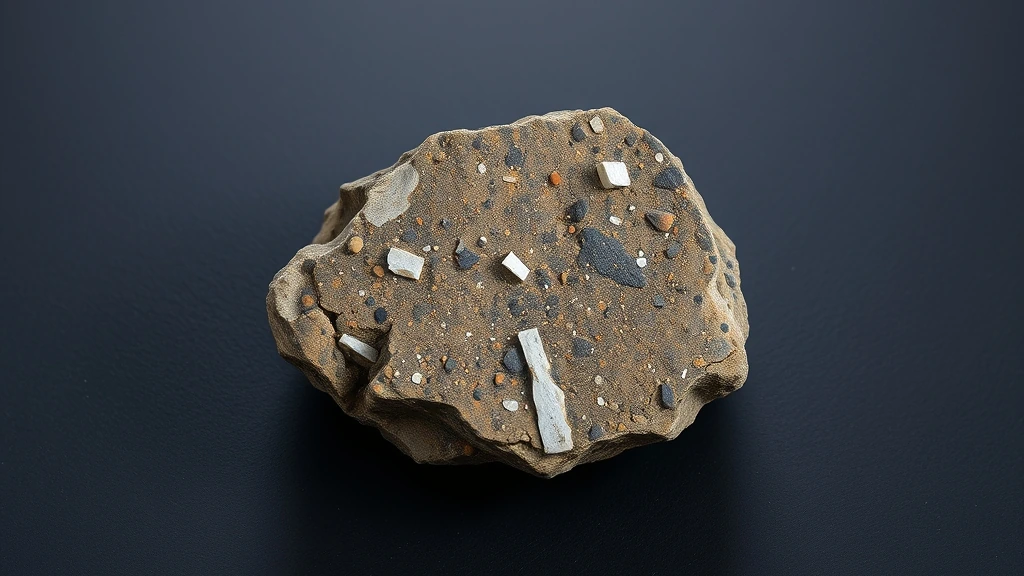
Villiaumite belongs to the Natural Mineral / Crystal group and is classified as a halide mineral. It crystallizes exclusively in the cubic crystal system, forming isometric cubes or octahedral aggregates that often appear as transparent to translucent crystals. Though rare, its vivid coloration and distinctive fluorescence have attracted collectors and metaphysical practitioners alike, while its extreme softness limits its use in conventional jewelry. Collectors who appreciate the vivid coloration and distinctive fluorescence of Villiaumite often compare its optical properties to those of Yellow Fluorite, another halide mineral renowned for its intense luminescence under ultraviolet light.
What is Villiaumite? Geological Overview & Definition
Villiaumite is a halide mineral composed of sodium and fluorine, occurring in highly alkaline volcanic environments such as nepheline syenite and carbonatite complexes. It typically forms as small, well‑developed cubes that can be found in pegmatitic veins or as sublimates in fumarolic deposits.
Across ancient lapidary traditions, the mineral’s bright yellow to orange tones were noted for their rarity, and early mineralogists recorded its occurrence in regions like Italy’s Monte Somma and the Kola Peninsula. Modern studies confirm that Villiaumite’s formation requires low‑temperature, fluorine‑rich fluids that precipitate the NaF compound directly from solution.
Villiaumite Chemical Composition & Crystallographic Properties
The definitive chemical formula NaF reflects a simple 1:1 stoichiometry of sodium cations and fluoride anions arranged on a face‑centered cubic lattice. This cubic crystal system yields a lattice parameter near 4.63 Å, with each ion occupying equivalent positions that confer the mineral’s high symmetry.
Villiaumite’s color originates from color centers—electron traps created by radiation damage that absorb specific wavelengths, producing its characteristic yellow to reddish hues. Substitutions are limited; however, trace amounts of potassium or calcium can replace sodium, subtly shifting the hue without altering the fundamental structure.
Chemically, Villiaumite is acid‑sensitive; exposure to dilute hydrochloric acid rapidly dissolves the mineral, releasing hydrogen fluoride gas. This reactivity underscores the need for careful handling in both laboratory and gem‑cutting contexts.
Thermally, Villiaumite is stable up to about 900 °C, beyond which it decomposes to sodium vapor and fluorine gas, often leaving a porous residue. Its low density of 2.79 g/cm³ and refractive index of 1.327–1.328 further distinguish it from other halide gems such as fluorite.
| Property | Specification |
|---|---|
| Mineral Group | Natural Mineral / Crystal |
| Chemical Formula | NaF |
| Mohs Hardness | 2 – 2.5 |
| Crystal System | Cubic crystal system |
| Specific Gravity (Density) | 2.79 |
| Refractive Index | n = 1.327–1.328 |
| Color & Optical Properties | Natural Villiaumite color spectrum and optical dispersion |
| Primary Mining Localities | Global primary localities |
| Water & Chemical Resistance | High (Safe for gentle water washing) |
| Chakra Alignment (Traditional) | Heart Chakra (Anahata) |
| Zodiac Affinity (Traditional) | Gemini, Virgo |
| Symbolic Meaning (Traditional) | Grounding, vitality and protection |
Villiaumite Varieties & Color Spectrum
Villiaumite is a rare sodium fluoride mineral that typically presents as a transparent to translucent white or colorless crystal. Its visual appeal is primarily derived from high clarity rather than vivid chromatic saturation, making optical purity the key grading factor.
Pure White Villiaumite
This variety appears as brilliant, glassy white crystals often found in well-formed cubic clusters. Optical clarity is the defining characteristic, allowing light to pass through with minimal scattering or internal distortion.
Slightly Tinted Villiaumite
Occasionally, trace impurities impart faint yellowish or greenish hues to the otherwise colorless structure. These subtle color shifts are rare and usually result from specific trace element substitutions within the crystal lattice.
Inclusive Villiaumite
Some specimens contain small fluid inclusions or minor mineral particles trapped during formation. These internal features can create a unique visual texture, though they generally reduce the gemological value of the stone.
Cubic Cluster Villiaumite
This form features multiple intergrown cubes that create a striking geometric aesthetic for collectors. The cubic crystal habit is a diagnostic feature that distinguishes it from other sodium-based minerals.
Where is Villiaumite Found? Geological Mining & Extraction
Villiaumite primarily forms in alkaline pegmatites and carbonatite deposits, where high concentrations of sodium and fluorine facilitate its crystallization. It is frequently associated with other rare minerals such as fluorite and apatite in these specialized geological environments.
The most significant historical source is the Ivittuut region in Greenland, where large, high-quality crystals were first identified in the early twentieth century. Modern extraction remains limited due to the mineral’s rarity and the challenging logistical conditions of its primary deposit sites.
Historical Significance & Cultural Lore of Villiaumite
Although not widely used in ancient jewelry, villiaumite has played a critical role in modern scientific history as a key component in optical research. Its discovery in Greenland in 1900 by a French geologist marked a significant milestone in the study of rare earth minerals and fluoride chemistry.
In historical metaphysical lore, the mineral is often associated with grounding and vitality, reflecting its stable cubic structure and protective energetic properties. Across ancient lapidary traditions, clear fluoride minerals were sometimes valued for their perceived ability to purify spiritual energy and enhance mental clarity.
Modern Uses & Jewelry Applications of Villiaumite
Due to its exceptionally low Mohs hardness of 2–2.5, villiaumite is too soft for durable faceted gemstones or heavy ornamental carving. Lapidaries primarily treat it as a delicate collector’s mineral, focusing on preserving its natural cubic crystal forms rather than aggressive cutting. Its cubic crystal system allows for precise geometric display, but any jewelry application requires robust protective settings to prevent immediate abrasion.
- Cabochon Polishing: Rarely polished into smooth domes due to rapid surface degradation from minor contact.
- Protective Settings: If set, it must be mounted in deep bezels or glass-domed pendants to shield the surface.
- Specimen Display: The primary use remains in mineral collections, where its optical properties are observed under magnification.
- Educational Models: Used in geology labs to demonstrate fluoride mineralogy and cubic symmetry principles.
Safety & Mineral Profile of Villiaumite
Handling villiaumite requires standard mineralogical precautions, as its chemical formula NaF indicates it is a sodium fluoride compound. While not highly toxic, it should be kept away from strong acids and moisture to prevent surface etching or dissolution. This mineral is valued strictly for scientific study and specimen display, not for therapeutic crystal healing.
Historical metaphysical lore is negligible for this species, given its modern discovery and industrial utility. Any esoteric associations are speculative and lack archaeological precedent. Safety and structural preservation of the specimen always take precedence over any non-scientific interpretations.
Mineralogical Group and Planetary Lore of Villiaumite
Villiaumite belongs to the fluoride mineral group, sharing its cubic symmetry with fluorite and other halides. It was first identified in 1949 in the salt deposits of the Orano region in Algeria, named after the French chemist Alfred Villiers. Its geological formation is intimately linked to evaporite environments, where sodium and fluoride ions precipitate from saline solutions.
Planetary lore for villiaumite is virtually nonexistent in traditional astrological texts due to its late identification. Modern associations with Gemini and Virgo are contemporary constructs, linking its earthy, grounding nature to these signs. It is often paired with the Heart Chakra (Anahata) in modern metaphysical circles, though this connection lacks historical validation.
How to Identify Real vs. Fake Villiaumite
Artificial imitations of villiaumite are rare due to its limited commercial appeal, but synthetic glass or dyed calcite may be passed off as the mineral. Refractive index measurements are the most reliable method for distinguishing authentic villiaumite from look-alikes. Visual inspection alone is insufficient, as its colorless to white appearance mimics many common minerals.
Practical At-Home Authenticity Tests
- Temperature Test (Thermal Feel): Place the stone on your tongue; villiaumite feels cool initially but warms quickly due to its low thermal conductivity, unlike glass which stays cool longer.
- Specific Gravity & Weight Test: Weigh the sample; with a density of 2.79, it feels lighter than quartz (2.65 is similar, but villiaumite is softer) and significantly lighter than lead glass.
- Scratch & Hardness Test (Mohs Comparison): Attempt to scratch the stone with a copper coin (Mohs 3.5); villiaumite (Mohs 2–2.5) will be scratched, while glass or quartz will not.
- Microscopic & Loupe Inspection (Internal Inclusions): Examine under a 10x loupe; authentic villiaumite often shows clean, cubic cleavage planes, whereas glass may contain tiny bubbles or flow lines.
Villiaumite Valuation Factors, Grading & Pricing
Market value hinges primarily on Specimen Aesthetic Quality, specifically the clarity and luster of the crystal faces. Collectors prize specimens exhibiting high transparency and a distinct vitreous luster, free from internal inclusions or cloudiness. The presence of well-formed, geometrically perfect cubic terminations significantly elevates the desirability of any given specimen.
Rarity & Specimen Dimensions play a crucial role in determining final auction prices for scientific collectors. Large, intact crystal clusters measuring several centimeters in length command premium valuations compared to small, fragmented pieces. The absence of handling damage, such as chipped edges or surface scratches, is essential for maintaining structural integrity and market appeal.
Mineralogical Provenance & Locality Value heavily influences pricing within museum and institutional collector markets. Specimens originating from historically significant deposits, such as the original French localities, often carry higher prestige and financial worth. Documented origin certificates further authenticate the sample, ensuring its place in curated geological collections.
How to Clean and Care for Villiaumite
Due to its low Mohs hardness of 2 to 2.5, villiaumite requires meticulous handling to prevent surface abrasion and structural compromise. Gently clean the specimen using a soft cloth dampened with warm soapy water, ensuring no excess moisture remains on the surface. Avoid using ultrasonic cleaners, as the vibrations can induce structural fractures in the delicate cubic lattice.
After cleaning, immediately dry the mineral with a lint-free microfiber cloth to prevent any residual moisture from affecting its surface. Store the specimen in a padded, dry container to protect it from accidental impacts or dust accumulation. Regular inspection for minor chips or cracks will help preserve the long-term aesthetic and scientific value of the crystal.
Cleansing and Recharging Villiaumite (Energetic Care)
Holistic practitioners often recommend gentle moonlight exposure to restore the energetic balance of villiaumite specimens. Placing the crystal on a windowsill under the soft glow of the full moon allows for a slow, non-invasive recharge process. This method avoids the thermal stress that direct sunlight might impose on the sensitive crystal structure.
Alternatively, resting the mineral on a selenite charging slab provides a stable, dry surface for energetic renewal. Selenite is known for its purifying properties, which complement the grounding nature of villiaumite without introducing moisture or heat. This dry, passive approach ensures the physical integrity of the specimen remains completely intact during the ritual.
Frequently Asked Questions About Villiaumite
Villiaumite displays distinct mineralogical characteristics across its geological varieties and structural habits. Gemologists evaluate these natural varieties based on crystal habit, trace chromophore concentrations, and visual luster.
Primary Natural Villiaumite
The benchmark natural variety exhibiting diagnostic color saturation and classic crystallographic symmetry.
Distinct Geological Morphs of Villiaumite
Secondary regional and structural varieties formed under localized geological temperature and pressure conditions.
Is villiaumite safe to wear in water or the shower?
Yes, it tolerates gentle water exposure. Villiaumite’s cubic NaF composition gives it a relatively high water resistance, allowing brief washing with warm, soapy water. Prolonged immersion or harsh detergents can still promote surface etching, so rinse and pat dry promptly.
How should I clean a villiaumite?
Clean with warm soapy water and a soft cloth, avoiding ultrasonic devices. The mineral’s low Mohs hardness (2–2.5) makes it vulnerable to micro‑fractures; a mild detergent solution and a lint‑free cloth remove grime without stressing the crystal lattice. Ultrasonic vibrations can cause internal cleavage.
Can ultrasonic cleaners be used on villiaumite jewelry?
No, ultrasonic cleaning is not recommended. The rapid cavitation forces can exceed the fracture toughness of villiaumite, leading to invisible cracks that compromise the stone’s integrity. Manual cleaning with a soft cloth preserves its delicate cubic habit.
What is the typical hardness of villiaumite and how does it affect wearability?
Villiaumite ranks 2–2.5 on the Mohs scale. This softness means it scratches easily against harder minerals and should be worn in settings that protect the surface, such as bezel or pendant designs. Daily wear is possible, but care should be taken to avoid contact with harder gemstones.
Which zodiac signs are traditionally associated with villiaumite?
Gemini and Virgo are the aligned zodiac signs. In astrological gem lore, these air and earth signs are thought to benefit from villiaumite’s grounding energy, enhancing mental clarity for Gemini and practical focus for Virgo. The association is rooted in historic lapidary traditions.
Which chakra does villiaumite correspond to in metaphysical practice?
It is linked to the Heart Chakra (Anahata). Practitioners claim the stone promotes emotional balance and vitality, helping to open the heart center for compassion. Placement on the chest during meditation is said to amplify these effects.
Is villiaumite suitable for everyday jewelry despite its low density?
Yes, its density of 2.79 g/cm³ makes it lightweight for daily wear. The low specific gravity provides comfort in pendants and earrings, but the softness demands protective settings. Pairing with harder metals reduces the risk of accidental abrasion.
What are the key optical properties that identify villiaumite?
Its refractive index ranges from 1.327 to 1.328, and it is typically colorless to pale yellow. These values, combined with its cubic crystal system, produce a subtle brilliance distinct from more common halide minerals. Gemologists use these optical cues alongside chemical formula NaF for accurate identification.