
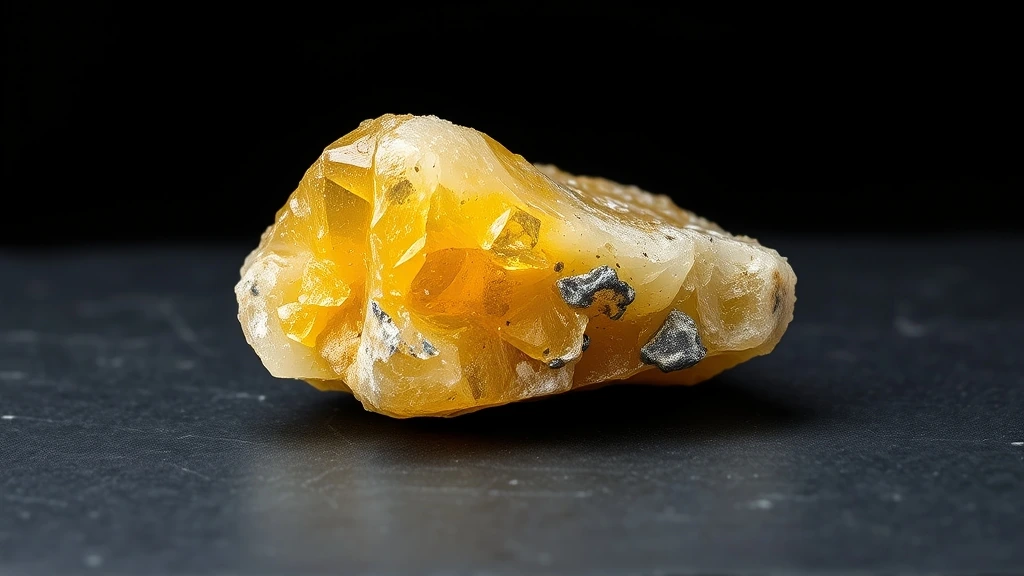
Fluorite belongs to the Halide mineral group, characterized by the presence of halogen anions bonded to cations. This specific variety is geologically significant as the primary ore of fluorine, a highly reactive non-metal. Its formation typically occurs in hydrothermal veins, where calcium-rich fluids interact with fluorine-bearing solutions. The mineral’s widespread occurrence makes it a key indicator in understanding regional metamorphic and igneous geological histories.
What is Yellow Fluorite? Geological Overview & Definition
Yellow fluorite forms primarily in hydrothermal veins associated with limestone or granite intrusions. These geological settings provide the necessary chemical environment for calcium and fluorine to precipitate into stable crystal structures. The mineral often coexists with quartz, calcite, and barite, creating complex mineral assemblages in ore deposits.
The yellow hue results from color centers within the crystal lattice, often induced by natural radiation. This phenomenon, known as radiation-induced coloration, alters the electronic structure of the mineral. Unlike surface staining, this internal coloration is permanent unless exposed to intense heat. Understanding these formation processes helps gemologists distinguish natural stones from artificially irradiated specimens.
Yellow Fluorite Chemical Composition & Crystallographic Properties
Fluorite crystallizes in the Isometric system, exhibiting perfect octahedral cleavage along the {111} planes. Its lattice structure consists of alternating calcium and fluoride ions in a face-centered cubic arrangement. This geometric precision allows crystals to form distinct cubes and octahedrons, defining its characteristic shape. The refractive index of 1.433 ensures a glassy luster and moderate brilliance.
The CaF₂ formula represents a stoichiometric balance between calcium cations and fluoride anions. Minor cation substitutions, such as strontium or lead, can occur without disrupting the primary lattice. These substitutions may slightly alter the specific gravity, which typically ranges from 3.175 to 3.20. Such variations are critical for accurate mineral identification in laboratory settings.
Fluorite is chemically sensitive to strong acids, particularly hydrofluoric acid, which dissolves its structure. This reactivity underscores the importance of proper handling and storage for collectors. Thermal behavior is also significant, as high temperatures can bleach the yellow color by destroying color centers. Consequently, heat treatment is a common method for altering fluorite’s appearance.
The chromophore responsible for yellow coloration involves electron traps within the lattice. These defects absorb specific wavelengths of visible light, reflecting yellow tones to the observer. Natural radiation from surrounding rocks often creates these F-centers, stabilizing the color over geological time. This intrinsic coloration distinguishes natural yellow fluorite from dyed or irradiated alternatives.
| Property | Specification |
|---|---|
| Mineral Group | Halides (Calcium Fluoride) |
| Chemical Formula | CaF₂ (Calcium Fluoride) |
| Mohs Hardness | 4.0 |
| Crystal System | Isometric / Cubic (Cubic and octahedral crystals) |
| Specific Gravity (Density) | 3.175 – 3.20 |
| Refractive Index | 1.433 – 1.435 |
| Color & Optical Properties | Natural Yellow Fluorite color spectrum and optical dispersion |
| Primary Mining Localities | China, United Kingdom (Derbyshire), Mexico, Germany, USA |
| Water & Chemical Resistance | Moderate (Brief lukewarm water contact is safe; avoid hot water and acids) |
| Chakra Alignment (Traditional) | Third Eye Chakra and Crown Chakra |
| Zodiac Affinity (Traditional) | Capricorn, Pisces, Aquarius |
| Symbolic Meaning (Traditional) | Mental order, focus, auric cleansing, and learning facilitation |
Yellow Fluorite Varieties & Color Spectrum
Yellow Fluorite displays distinct mineralogical characteristics across its geological varieties and structural habits. Gemologists evaluate these natural varieties based on crystal habit, trace chromophore concentrations, and visual luster.
Primary Natural Yellow Fluorite
The benchmark natural variety exhibiting diagnostic color saturation and classic crystallographic symmetry.
Distinct Geological Morphs of Yellow Fluorite
Secondary regional and structural varieties formed under localized geological temperature and pressure conditions.
Lemon‑Bright Fluorite
Formed in low‑temperature hydrothermal veins, Lemon‑Bright Fluorite displays a vivid pale yellow that deepens to a buttery hue where iron impurities concentrate. Inclusions of quartz and calcite often create a milky translucency, while the cubic habit remains crisp. This variety is most common in the United Kingdom’s Derbyshire mines and is considered moderately abundant.
Golden‑Sun Fluorite (Mongolian Sunstone)
Golden‑Sun Fluorite crystallizes within granitic pegmatites of eastern Mongolia, where trace rare‑earth elements impart a warm golden‑yellow glow. The stones frequently exhibit internal banding of fluorescent phosphorescence, visible under UV light, and may contain minute pyrite specks that enhance their sparkle. Its rarity is heightened by limited open‑pit operations and strict export controls.
Canary‑Flame Fluorite (Mexican Canario)
Discovered in the veins of the Zacatecas region, Canary‑Flame Fluorite shows a saturated canary yellow with occasional orange undertones caused by manganese substitution. The crystals often grow as well‑formed octahedra, displaying a characteristic adamantine luster. Because the deposits are small and heavily mined for industrial fluorine, gem‑quality stones are scarce and highly prized by collectors.
Sun‑Kissed Fluorite (Chinese Sunlit)
Sun‑Kissed Fluorite originates from the Yunnan province, where it precipitates in limestone cavities enriched by carbonate fluids. The mineral’s bright lemon‑yellow color is intensified by microscopic calcite inclusions that produce a subtle opalescent sheen. Though the region yields abundant material, gem‑grade pieces with flawless clarity are relatively rare.
Desert‑Gold Fluorite (Namibian Sun)
In the arid basins of Namibia, Desert‑Gold Fluorite forms in evaporite sequences where calcium‑rich brines evaporate under intense solar heating. The resulting golden‑yellow crystals often contain halite and gypsum inclusions that create a distinctive speckled appearance. This variety is prized for its large, well‑developed cubic crystals, yet mining logistics limit its market supply.
Alpine‑Glow Fluorite (Swiss Alpine)
Alpine‑Glow Fluorite is harvested from the Alpine fissure veins of Switzerland, where low‑temperature metamorphic fluids deposit soft yellow fluorite alongside mica and feldspar. The stones are noted for their delicate fluorescent response under daylight, shifting to a pale greenish hue in sunlight. Their limited extraction zones and strict environmental regulations render them among the most exclusive yellow fluorites.
Where is Yellow Fluorite Found? Geological Mining & Extraction
Yellow fluorite typically occurs in hydrothermal veins and granite‑related pegmatites, where calcium‑rich fluids interact with fluorine‑bearing gases. The mineral crystallizes as cubic or octahedral forms within host rocks such as limestone, dolomite, and quartzite, often accompanied by barite, calcite, and galena as accessory phases.
Major mining districts include the United Kingdom’s Derbyshire, China’s Yunnan, Mexico’s Zacatecas, Mongolia’s Gobi region, and Namibia’s Otjozondjupa basin. Extraction employs selective hand‑picking for gem‑quality crystals, while larger industrial operations use open‑pit methods to harvest bulk fluorite for chemical processing, balancing economic demand with environmental stewardship.
Historical Significance & Cultural Lore of Yellow Fluorite
Across ancient lapidary traditions, yellow fluorite was prized by the Greco‑Roman world for its purported ability to sharpen intellect and protect against deceit, often set into signet rings for officials. In Egyptian tombs, small yellow fluorite beads have been recovered, suggesting use as amulets to promote mental clarity and safeguard the afterlife journey.
In early Chinese alchemy, yellow fluorite—known as “huang shui yan”—was incorporated into talismans intended to cleanse the aura and enhance scholarly pursuits, a practice echoed in Vedic texts that associate the stone with the Third Eye Chakra for heightened perception. These cross‑cultural attributions underscore the gemstone’s enduring role as a conduit for focus, learning, and spiritual purification.
Modern Uses & Jewelry Applications of Yellow Fluorite
Yellow fluorite is prized for its vibrant hue and relative softness, making it ideal for lapidary work. Artisans cut the stone into smooth cabochons for rings, pendants, and earrings, while more elaborate faceting showcases its refractive brilliance. The mineral’s cubic symmetry also lends itself to ornamental carving, producing geometric sculptures and decorative panels.
- Cabochon and faceted jewelry pieces
- Geometric ornamental carvings
- Decorative panels for interior design
Metaphysical Properties & Traditional Meaning of Yellow Fluorite
According to historical traditions and metaphysical lore, yellow fluorite is believed to enhance mental clarity and foster focus. Across ancient Mediterranean and Vedic lapidary practices, the stone is associated with the Third Eye Chakra, encouraging insight and intuition. In general metaphysical circles, it is thought to cleanse the aura, promote learning, and support spiritual growth.
Which Chakra and Zodiac Signs Align with Yellow Fluorite?
Yellow fluorite aligns with the Third Eye Chakra, the center of intuition and perception, and the Crown Chakra, the gateway to higher consciousness. Its energetic influence is said to stimulate mental order and facilitate learning.
The gemstone is traditionally linked to the zodiac signs Capricorn, Pisces, and Aquarius. These signs are associated with discipline, empathy, and innovation, qualities that resonate with the stone’s reputed ability to sharpen focus and inspire creative thinking.
How to Identify Real vs. Fake Yellow Fluorite
Artificial imitations of yellow fluorite often consist of dyed glass, synthetic quartz, or polymer composites. These replicas may mimic the color but lack the characteristic optical and physical properties of genuine calcium fluoride.
Practical At-Home Authenticity Tests
- Temperature Test (Thermal Feel): Hold the stone; real fluorite feels noticeably cool to the touch, reflecting its low thermal conductivity.
- Specific Gravity & Weight Test: Weigh the stone against a known mass; authentic yellow fluorite should be heavier than glass of similar size, reflecting its density of 3.175–3.20 g/cm³.
- Scratch & Hardness Test (Mohs Comparison): Use a standard Mohs hardness kit; fluorite should scratch glass (Mohs 5.5) but be scratched by a steel file (Mohs 6.5).
- Microscopic & Loupe Inspection (Internal Inclusions): Examine under a loupe; genuine fluorite often shows subtle internal crystals or pleochroic streaks, whereas synthetic versions tend to be uniformly clear.
Yellow Fluorite Valuation Factors, Grading & Pricing
The primary driver of price is color saturation; a vivid, lemon‑bright hue without gray or brown undertones commands the highest premiums. Collectors prize specimens that display a uniform glow across the surface, as the natural energetic luster of yellow fluorite is most pronounced when the hue is deep and consistent. Subtle zoning or surface weathering can lower the visual impact and thus the market value.
Secondary considerations involve crystal size & weight (grams), with larger, well‑formed cubes or octahedra fetching higher bids than small fragments. Raw, unpolished material is typically priced per gram, while tumbled pieces with a smooth polish receive a modest uplift for the labor involved. Natural matrix inclusions such as quartz or calcite can add character, but excessive veining may be viewed as a defect and reduce the price.
A growing niche market rewards ethical sourcing & locality premium, especially when specimens originate from historically renowned deposits in China’s Hunan province or Mexico’s Oaxaca region. Buyers increasingly verify that mining practices respect environmental standards and local labor rights, adding a moral premium to the stone’s price. Provenance documentation and fair‑trade certification can therefore elevate a specimen’s desirability among both holistic practitioners and serious collectors.
How to Clean and Care for Yellow Fluorite
Yellow fluorite’s low hardness (Mohs 4) and perfect cleavage make it fragile, so cleaning must be gentle and dry. Use a completely dry, soft microfiber cloth or a camel‑hair brush to remove dust, moving in a single direction to avoid scratching the surface. Store the stone in a low‑humidity environment, preferably in a sealed soft pouch, to protect it from moisture and accidental contact with liquids. Avoid any ultrasonic cleaning devices, as the vibration can cause micro‑fractures in the crystal lattice.
Cleansing and Recharging Yellow Fluorite (Energetic Care)
For energetic maintenance, a brief session of herbal smudging with sage or cedar can clear residual fields without exposing the mineral to heat or moisture; hold the stone at a safe distance while the smoke passes over it. Alternatively, place the fluorite on a clean selenite charging slab for several hours, allowing the neutral selenite to gently replenish its vibrational clarity.
Moonlight exposure offers a natural, non‑thermal method to revitalize the stone’s subtle aura; position the specimen on a windowsill or outdoor tray during a clear night, ensuring it is protected from dew. A short period of gentle lunar illumination—typically 2–4 hours—can restore the stone’s perceived mental‑order properties without compromising its structural integrity.
Frequently Asked Questions About Yellow Fluorite
Yellow Fluorite displays distinct mineralogical characteristics across its geological varieties and structural habits. Gemologists evaluate these natural varieties based on crystal habit, trace chromophore concentrations, and visual luster.
Primary Natural Yellow Fluorite
The benchmark natural variety exhibiting diagnostic color saturation and classic crystallographic symmetry.
Distinct Geological Morphs of Yellow Fluorite
Secondary regional and structural varieties formed under localized geological temperature and pressure conditions.
Is yellow fluorite safe to wear in the shower?
Yes, brief lukewarm water exposure is safe. Prolonged contact with hot water or acidic soaps can etch the surface because fluorite’s Mohs hardness of 4 makes it vulnerable to chemical attack. Rinse quickly, pat dry with a soft cloth, and avoid steam‑filled environments to preserve its vibrant hue.
How should I clean yellow fluorite jewelry?
Clean with a dry microfiber cloth or a soft brush only. The mineral’s perfect octahedral cleavage and low hardness mean ultrasonic vibrations or abrasive cleaners can cause chips. Gently dust away debris, and if needed, a barely damp cloth (room‑temperature water) can be used, then immediately dried.
Can yellow fluorite be used in everyday rings?
It is best suited for occasional wear rather than daily use. While its density of ~3.18 g/cm³ gives a pleasant weight, the 4‑on‑Mohs scale makes it prone to scratches from harder gemstones or metals. Protective settings and careful handling extend its lifespan.
Does yellow fluorite have any metaphysical properties?
It is associated with mental order, focus, and auric cleansing. Practitioners believe the stone enhances learning facilitation and supports the Third Eye and Crown chakras, helping to clear mental fog and promote spiritual insight during meditation or study.
Which zodiac signs are linked to yellow fluorite?
Capricorn, Pisces, and Aquarius are the aligned signs. In astrological tradition, these earth‑ and water‑signs are thought to benefit from fluorite’s stabilizing energy, aiding ambition, intuition, and emotional balance when the stone is worn or meditated upon.
What is the typical crystal habit of yellow fluorite?
It commonly forms cubic and octahedral crystals in the isometric system. These well‑defined shapes result from the mineral’s CaF₂ composition, producing transparent to translucent cubes that often display a bright, buttery yellow when free of inclusions.
Is yellow fluorite prone to fluorescence under UV light?
Yes, it often exhibits a bright blue‑white fluorescence. When exposed to ultraviolet radiation, the calcium fluoride lattice absorbs energy and re‑emits it as visible light, a characteristic that collectors use to verify authenticity and enhance display appeal.
How does yellow fluorite compare to other fluorite colors in durability?
All fluorite varieties share the same hardness and cleavage, regardless of hue. The yellow variety is no more or less fragile than its purple or green counterparts; therefore, the same care guidelines—avoiding harsh chemicals, ultrasonic cleaners, and impact—apply uniformly.