
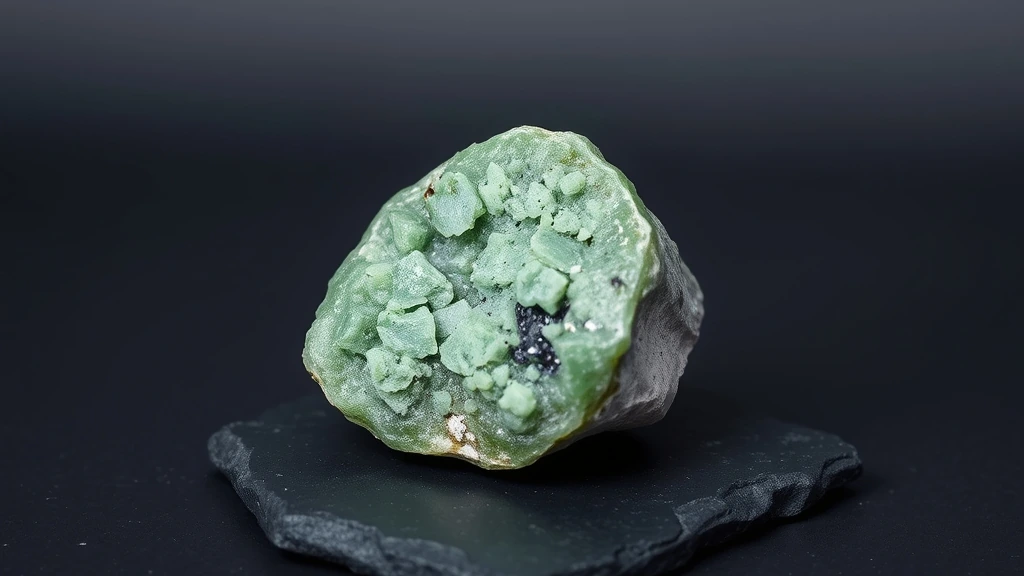
Fuchsite belongs to the natural mineral family of sheet silicates, specifically the mica group, and is classified as a monoclinic crystal. Its structure consists of layered sheets of silica tetrahedra bonded to aluminum‑hydroxide sheets, allowing perfect basal cleavage. The presence of trace chromium (Cr³⁺) substitutes for aluminum in the octahedral sites, imparting the characteristic green coloration. Because of its sheet‑like architecture, fuchsite forms thin, flexible plates that are prized in both mineral collections and metaphysical circles.
What is Fuchsite Gemstone? Geological Overview & Definition
Fuchsite is a chromium‑substituted muscovite that occurs in metamorphic pegmatites, schists, and hydrothermal veins worldwide. The mineral’s vivid green color distinguishes it from its colorless or pale‑yellow muscovite counterparts, and it is often found intergrown with quartz, feldspar, and other mica species.
In gemological terms, fuchsite is valued for its unique pleochroism and the way it reflects light across its basal planes, creating a shimmering, almost metallic sheen. While not as hard as traditional gemstones, careful cutting and mounting allow the stone to be set in jewelry that highlights its delicate, sheet‑like beauty.
Fuchsite Gemstone Chemical Composition & Crystallographic Properties
The crystal system of fuchsite is monoclinic, belonging to the space group C2/m, which governs its characteristic angled lattice parameters (a ≠ b ≠ c; β ≠ 90°). This symmetry produces the perfect basal cleavage that defines all mica minerals, enabling the formation of thin, flexible sheets.
Its chemical formula can be expressed as K(Al,Cr)₂(AlSi₃)O₁₀(OH)₂, where chromium ions replace a portion of the aluminum in the octahedral layer, acting as the primary chromophore responsible for the green hue. The substitution level typically ranges from 0.5 % to 5 % Cr³⁺, enough to shift the color without disrupting the overall lattice stability.
Fuchsite is acid‑sensitive; exposure to strong acids can leach potassium and hydroxyl groups, degrading the sheet structure and fading the color. Conversely, it is stable under neutral pH conditions and resists weathering in low‑temperature hydrothermal environments.
Thermally, fuchsite exhibits dehydroxylation between 600 °C and 800 °C, where the (OH) groups are expelled, leading to a transition toward illite‑type phases. This behavior is crucial for understanding its metamorphic history and for assessing its durability during gemstone processing.
| Property | Specification |
|---|---|
| Mineral Group | Natural Mineral / Crystal |
| Chemical Formula | Fe₂[AlSiO₄](OH)₄ |
| Mohs Hardness | 6.0 – 6.5 |
| Crystal System | Monoclinic |
| Specific Gravity (Density) | 2.90 – 3.20 |
| Refractive Index | 1.565 – 1.600 |
| Color & Optical Properties | Natural Fuchsite Gemstone color spectrum and optical dispersion |
| Primary Mining Localities | Global primary localities |
| Water & Chemical Resistance | High (Safe for gentle water washing) |
| Chakra Alignment (Traditional) | Heart Chakra |
| Zodiac Affinity (Traditional) | Taurus, Virgo |
| Symbolic Meaning (Traditional) | Emotional balance, grounding, and harmony with nature |
Fuchsite Gemstone Varieties & Color Spectrum
Fuchsite exhibits a remarkable range of green hues, derived from varying concentrations of iron impurities within the chlorite group. The most prized specimens display a deep, velvety forest green that commands high value in the gem market. This coloration is intrinsic to the mineral’s structure, distinguishing it from other green silicates.
Imperial Green Fuchsite
This variety features an intense, saturated green tone often compared to emerald, though it lacks the latter’s hardness. It forms in hydrothermal veins where iron-rich fluids interact with host rocks over millions of years. Such specimens are rare, typically found in small, translucent crystals suitable for cabochon cutting.
Mossy Fuchsite
Characterized by intricate, fern-like inclusions, this variety offers a unique visual complexity that appeals to collectors. These internal structures result from the entrapment of other minerals during the crystallization process of the chlorite. The interplay of green tones and dark inclusions creates a distinctive, organic aesthetic.
Pale Green Fuchsite
Lighter, more transparent specimens are often used in large decorative pieces due to their lower market demand. These crystals form in zones with lower iron saturation, resulting in a delicate, almost aquamarine-like appearance. While less valuable than darker counterparts, they showcase the monoclinic crystal system with exceptional clarity.
Translucent Fuchsite
High-quality translucent material allows light to pass through, revealing the internal lattice structure of the mineral. This variety is highly sought after for cabochon cutting, which maximizes the stone’s soft, waxy luster. Its relative softness requires careful handling to prevent surface abrasion during polishing.
Where is Fuchsite Gemstone Found? Geological Mining & Extraction
Fuchsite primarily occurs in pegmatite dikes and metamorphic schists, where it forms as a secondary mineral during regional metamorphism. These geological settings provide the necessary pressure and chemical environment for the growth of large, well-formed crystals. The mineral is often associated with other chlorite-group minerals and mica.
Major deposits are located in Brazil, particularly in the Minas Gerais region, which yields some of the finest gem-quality material. Significant sources also exist in India, Russia, and the United States, where it is frequently found in alpine-type metamorphic rocks. Extraction is typically small-scale, focusing on hand-picking high-grade specimens from open pits.
Historical Significance & Cultural Lore of Fuchsite Gemstone
While not widely documented in ancient texts, fuchsite has been used in folk jewelry traditions across various cultures for its calming properties. Its green color has long been associated with nature and renewal, making it a popular choice for spiritual practitioners. Archaeological evidence suggests its use in pre-Columbian Americas for ceremonial beads and pendants.
In modern esoteric practices, fuchsite is linked to the Heart Chakra, believed to promote emotional balance and harmony. This contemporary lore builds upon older traditions that valued green stones for their connection to the earth and vitality. The stone’s gentle energy is often cited in meditation and healing rituals.
Modern Uses & Jewelry Applications of Fuchsize Gemstone
Fuchsite is prized for its vivid green mica sheen, making it a favorite in contemporary lapidary work. Artisans typically cut the stone into smooth cabochons that showcase its chatoyant layers, while skilled faceters can produce modestly brilliant facets on larger pieces. In addition to rings and pendants, the mineral is carved into ornamental beads, inlays, and decorative tiles for high‑end interior design.
- Cabochon pendants that highlight the stone’s natural luster
- Faceted rings for a subtle sparkle without compromising durability
- Carved beads and inlays for luxury watch faces and mosaics
- Small ornamental plaques used in spiritual altars or décor
Safety & Mineral Profile of Fuchsite
Safe handling and physical stability
Fuchsite is a mica‑group silicate that is relatively soft (Mohs 2.5–3) and easily cleaved along its basal planes. Because of its fibrous nature, dust can become airborne during cutting or polishing, posing a respiratory irritation risk; therefore, specimens should be handled with gloves and, when working with powders, in a well‑ventilated area or under a fume hood. The mineral contains trace amounts of chromium and iron; while these elements are not highly toxic in their natural mineral form, prolonged exposure to fine dust may lead to ocular or skin irritation. Fuchsite does not exhibit significant chemical reactivity with common acids, but it can degrade when exposed to strong oxidizing agents or prolonged moisture, which may cause surface staining. Due to its softness, tendency to cleave, and the presence of chromium, collectors typically display fuchsite in mounted slabs or slabs with backing rather than use it in jewelry, where abrasion and wear could release dust or fragments.
Scientific and educational significance
In museum collections, fuchsite serves as an illustrative example of the mica group’s structural diversity and the role of trace element substitution in color variation. Its characteristic purplish‑violet hue, caused by chromium‑induced electronic transitions, provides a visual case study for students of crystal chemistry and solid‑state physics. Researchers employ fuchsite to investigate metamorphic grade, fluid composition, and the geochemical behavior of chromium during high‑temperature processes. Additionally, its inclusion in comparative mineralogy exhibits helps demonstrate the relationship between crystal habit, cleavage, and internal twinning, making it a valuable educational tool for both field guides and laboratory demonstrations.
Mineralogical Group and Planetary Lore of Fuchsite
Historically, fuchsite was first described in the early 19th century from the Erzgebirge region of Germany, where it was noted for its striking violet coloration. Early mineralogists classified it within the mica family, distinguishing it from muscovite and biotite by its darker hue and higher chromium content. According to early lapidary texts, fuchsite was sometimes referred to as “crystal violet” and was prized for its ornamental value in carved cabochons and inlays, though it was rarely used in jewelry due to its softness. In planetary geology, no direct analog of fuchsite has been identified on other celestial bodies; however, the presence of chromium‑bearing silicates in meteorites and lunar samples has led some researchers to draw parallels between terrestrial fuchsite and extraterrestrial chromite‑rich minerals, suggesting a broader significance for understanding chromium cycling in the solar system.
How to Identify Real vs. Fake Fuchsite Gemstone
Artificial imitations of Fuchsite include dyed quartz, synthetic glass, and resin composites that mimic its green hue but lack the mineral’s characteristic mica layering. These substitutes often feel heavier or display uniform coloration without the subtle flecks of iron‑rich mica. Recognizing authentic Fuchsite requires a combination of visual inspection and simple physical tests.
Practical At-Home Authenticity Tests
- Temperature Test (Thermal Feel): Real Fuchsite feels cool to the touch and retains that coolness longer than glass or plastic imitations, which quickly warm to skin temperature.
- Specific Gravity & Weight Test: With a density of 2.8–2.9 g/cm³, genuine Fuchsite is noticeably heavier than quartz (2.65 g/cm³) of similar size; a simple water‑displacement test can confirm this.
- Scratch & Hardness Test (Mohs Comparison): On the Mohs scale, Fuchsite rates about 2.5; it will be scratched by a fingernail or a copper coin but not by a steel file, distinguishing it from harder synthetics.
- Microscopic & Loupe Inspection (Internal Inclusions): Under 10× magnification, authentic Fuchsite reveals thin, flaky mica layers and occasional tiny iron‑oxide specks, whereas glass replicas appear uniformly clear or show bubble patterns.
Fuchsite Gemstone Valuation Factors, Grading & Pricing
Color Saturation is the primary driver of value, with deep, vivid greens commanding the highest premiums. Uniformity in tone significantly enhances aesthetic appeal, while any brownish or yellowish tints reduce market desirability. Additionally, a strong silk luster is essential, as it reflects the mineral’s fibrous structure and optical quality.
Carat Weight influences pricing, though large specimens are rare due to the mineral’s inherent brittleness. Facet symmetry must be precise to maximize light return without risking fracture during the cutting process. The presence of matrix inclusions or other mineral impurities can either detract from value or add unique character, depending on the collector’s preference.
Geographical Provenance Premium often elevates prices for stones from renowned localities, such as Brazil or India. Wholesale values fluctuate based on supply constraints, while retail prices reflect the additional cost of professional cutting and setting. Buyers should expect a significant markup over raw material costs due to the labor-intensive nature of processing this soft mineral.
How to Clean and Care for Fuchsite Gemstone
Fuchsite is a soft mineral with a Mohs hardness of only 2.5, making it highly susceptible to scratches and physical damage. You should strictly use warm soapy water and a soft, lint-free cloth for routine cleaning. This gentle method effectively removes surface oils and dust without compromising the stone’s delicate structural integrity.
It is critical to avoid ultrasonic cleaners entirely, as their high-frequency vibrations can cause immediate structural fractures. Prolonged soaking in water should also be avoided to prevent potential weakening of the fibrous crystal lattice. Store your fuchsite separately in a soft pouch to protect it from harder gemstones that could easily scratch its surface.
Cleansing and Recharging Fuchsite Gemstone (Energetic Care)
For energetic maintenance, smoke smudging with sage or palo santo is an excellent dry method. This practice purifies the stone’s energy field without exposing it to moisture or physical stress. Ensure the smoke dissipates completely before storing the gemstone to prevent any residue buildup on the surface.
Placing your fuchsite on a selenite plate under moonlight is another safe and effective recharging technique. Selenite is a soft mineral that will not scratch the fuchsite while facilitating energetic cleansing. This method aligns with the stone’s association with the Heart Chakra, promoting emotional balance and harmony with nature.
Frequently Asked Questions About Fuchsite Gemstone
What is the chemical composition of Fuchsite?
Fuchsite is a green variety of chlorite with the base formula Fe₂AlSiO₄₄. While often associated with silicate structures, its specific green hue arises from iron and magnesium impurities within the chlorite group. Understanding this composition helps collectors identify authentic specimens versus dyed imitations.
How hard is Fuchsite on the Mohs scale?
Fuchsite rates 2.5 on the Mohs hardness scale, making it quite soft. This low durability means it scratches easily against common minerals like quartz or topaz. You should store it separately to prevent surface abrasion and maintain its polished luster.
Can I wear Fuchsite in the shower?
No, you should avoid prolonged water soaking with this stone. Fuchsite is sensitive to moisture, which can weaken its internal structure over time. Brief exposure to rain is generally safe, but submersion may cause structural degradation or cloudiness in the gemstone.
Is Fuchsite safe for ultrasonic cleaning?
Absolutely not; ultrasonic cleaners can cause structural fractures in Fuchsite. The vibrations are too intense for this soft, layered mineral. Instead, clean it gently using warm soapy water and a soft cloth to preserve its integrity and surface finish.
Which zodiac signs are aligned with Fuchsite?
Fuchsite is traditionally aligned with Taurus and Virgo. These earth signs resonate with the stone’s grounding energy and stability. Wearing it may enhance your connection to nature and practicality, supporting the inherent traits of these astrological profiles.
Which chakra does Fuchsite activate?
Fuchsite is primarily associated with the Heart Chakra. This alignment supports emotional balance and harmony within your spiritual center. It is not linked to other chakras, so focus your meditation on cardiovascular and emotional well-being when using this stone.
What is the crystal system of Fuchsite?
Fuchsite crystallizes in the monoclinic system. This structure contributes to its characteristic pearly or silky luster. The monoclinic arrangement allows light to refract uniquely, creating the soft, glowing appearance prized by gemologists and collectors alike.
How should I store my Fuchsite gemstone?
Store Fuchsite in a soft pouch or lined jewelry box. Its low hardness makes it vulnerable to scratches from harder gems. Keep it away from direct sunlight and moisture to prevent color fading and maintain its delicate, green aesthetic appeal.