
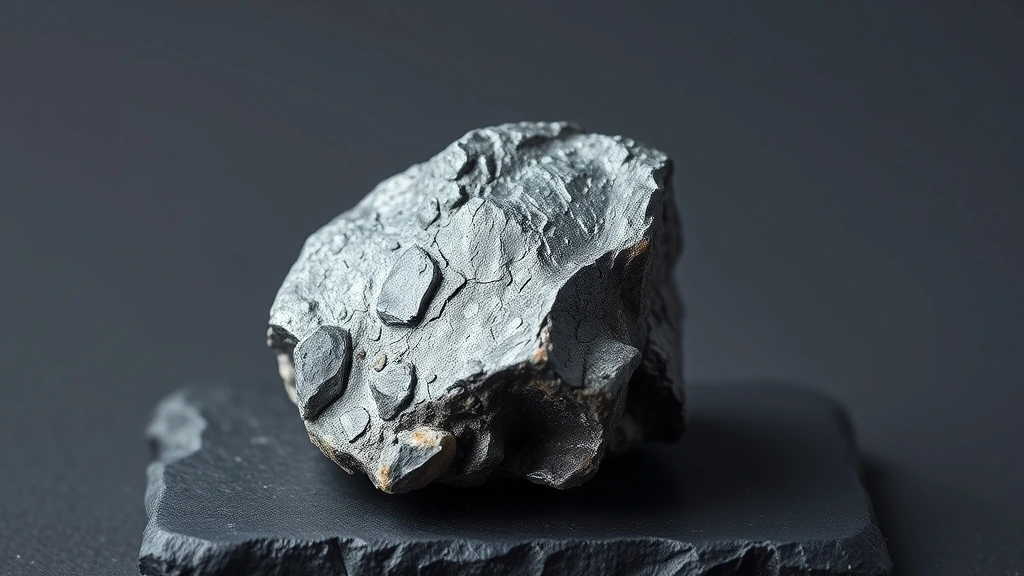
Chromite belongs to the natural mineral family of oxides and is classified as a crystalline mineral rather than a rock or organic aggregate. Its primary occurrence is in ultramafic igneous complexes where it crystallizes from magma, and it is the chief ore of chromium worldwide. As a member of the cubic crystal system, its crystals exhibit perfect isometric symmetry, a hallmark of its robust lattice.
What is Chromite Gemstone? Geological Overview & Definition
Chromite is the primary chromium‑bearing mineral found in layered mafic intrusions such as the Bushveld Complex and the Stillwater Complex. It forms octahedral or dodecahedral crystals that can be faceted for gemstone use, though most gem‑quality material is cut from massive, granular aggregates.
In gemological terms, chromite is prized for its deep, earthy coloration and high refractive index (n = 2.08–2.16), which imparts a striking brilliance when polished. Its rarity as a gemstone stems from limited transparent specimens, but when available, it is used in cabochons and beads for its grounding metaphysical properties.
Chromite Gemstone Chemical Composition & Crystallographic Properties
The ideal formula FeCr₂O₄ reflects a spinel‑type structure where Fe²⁺ occupies tetrahedral sites and Cr³⁺ fills octahedral positions within an oxygen framework. This cubic spinel lattice yields a unit cell that is highly symmetrical, contributing to the mineral’s isotropic optical behavior.
Cation substitution is common; magnesium, aluminum, or manganese can replace Fe or Cr, subtly shifting density (4.5–4.8 g/cm³) and color. Such solid‑solution variations are recorded in the lattice parameter, yet the overall crystal system remains cubic, never deviating to trigonal or orthorhombic forms.
Chromite is acid‑sensitive; concentrated hydrochloric or sulfuric acids can leach chromium, altering surface luster. However, it is resistant to dilute acids and weathering, which explains its persistence in lateritic soils and placer deposits.
Thermally, chromite is stable up to about 1,100 °C before undergoing a spinel‑to‑perovskite transition, a behavior exploited in high‑temperature refractory applications. Its chromophore color centers arise from Cr³⁺ electronic transitions, producing the characteristic dark brown to black hues prized by gem cutters.
| Property | Specification |
|---|---|
| Mineral Group | Natural Mineral / Crystal |
| Chemical Formula | FeCr₂O₄ |
| Mohs Hardness | 5.5 |
| Crystal System | Cubic crystal system |
| Specific Gravity (Density) | 4.5–4.8 |
| Refractive Index | n = 2.08–2.16 |
| Color & Optical Properties | Natural Chromite Gemstone color spectrum and optical dispersion |
| Primary Mining Localities | Global primary localities |
| Water & Chemical Resistance | High (Safe for gentle water washing) |
| Chakra Alignment (Traditional) | Root Chakra |
| Zodiac Affinity (Traditional) | Taurus, Virgo, Capricorn |
| Symbolic Meaning (Traditional) | Grounding, stability, and protection |
Chromite Gemstone Varieties & Color Spectrum
Imperial Chromite
Imperial chromite forms in high‑temperature magmatic veins where Fe‑rich spinel crystals grow alongside olivine and pyroxene. The stones display a deep, metallic golden‑bronze hue with occasional iridescent flashes caused by internal strain reflections. Found chiefly in the Bushveld Complex of South Africa, this variety is prized for its rarity and strong luster, making it a collector’s favorite.
Black‑Metallic Chromite
Black‑metallic chromite crystallizes in ultramafic peridotite bodies, often as massive aggregates rather than isolated gems. Its surface is a uniform, opaque jet black with a subtle metallic sheen that deepens under angled light. The mineral’s high density (≈4.6 g/cm³) and frequent magnetite inclusions give it a distinctive weight, and fine specimens from the Kola Peninsula are especially sought after.
Green‑Tinted Chromite (Chromian Spinel)
In rare oxidizing environments, trace chromium substitutes for iron, producing a greenish‑olive tint that can range to a vivid emerald shade. These gems are typically recovered from lateritic nickel‑chromium deposits in the Philippines and New Caledonia, where weathering concentrates the element. The green hue is often accompanied by fine rutile needles that create a silk‑like internal glow, enhancing its appeal to high‑end designers.
Pink‑Saffron Chromite
Pink‑saffron chromite emerges when minor manganese replaces iron within the spinel lattice, yielding a warm salmon‑pink coloration. This variety is most common in the chromite seams of the Ural Mountains, where low‑temperature hydrothermal fluids promote Mn‑enrichment. Its translucency and occasional fluid‑inclusion bubbles give it a gem‑like sparkle, though only a handful of gem‑quality stones have entered the market.
Blue‑Sheen Chromite
Blue‑sheen chromite is a photonic anomaly caused by microscopic exsolution lamellae of Cr‑rich spinel that diffract light into a soft blue sheen. These stones are exclusively reported from the Stillwater Complex in Montana, USA, where rapid cooling traps the lamellae in a fine‑grained matrix. The effect is subtle, best seen under direct illumination, and the rarity of the optical phenomenon commands premium prices among collectors.
Red‑Brown Chromite (Terra Cotta)
Red‑brown chromite develops in oxidized zones where iron oxidizes to hematite micro‑inclusions, imparting a warm terra‑cotta tone. This variety is typical of the chromite seams in the Kiruna district of Sweden, where glacial grinding exposes fresh surfaces. The stones often exhibit a conchoidal fracture and a faint metallic luster, making them popular for artisanal jewelry despite their modest scarcity.
Where is Chromite Gemstone Found? Geological Mining & Extraction
Chromite gemstones are hosted primarily in mafic to ultramafic igneous complexes, where the mineral crystallizes as part of spinel‑group assemblages within layered intrusions. In these settings, chromite occurs as massive lenses or tabular pods embedded in gabbro, norite, and peridotite host rocks, often intersected by lateritic weathering profiles that concentrate the ore near the surface.
Major extraction zones include South Africa’s Bushveld Complex, the Siberian Kola Peninsula, the Ural Mountains of Russia, and the Stillwater Complex in Montana, USA. Mining operations typically employ selective open‑pit or underground methods, followed by crushing and dense‑media separation to isolate the high‑density chromite crystals before they are cut and polished for gem use.
Historical Significance & Cultural Lore of Chromite Gemstone
Ancient Sumerians and Egyptians valued chromite for its metallic sheen, using small polished chips as amulets to invoke protection and grounding energies. Archaeological digs in the Zagros Mountains have uncovered chromite beads in Bronze‑Age burial caches, suggesting the stone’s role in status display and ritual offerings to earth deities.
In traditional Turkish folklore, the Kök Çakrası (Root Chakra) stone was believed to anchor the wearer’s vitality, a belief that migrated into Ottoman jewelry where chromite pendants were gifted to warriors for stability in battle. Across the zodiac, Taurus, Virgo, and Capricorn adherents still wear chromite talismans to enhance perseverance, echoing millennia‑old esoteric practices.
Modern Uses & Jewelry Applications of Chromite Gemstone
Chromite is primarily valued for its metallic luster and deep black color, making it a niche but distinct choice in ornamental jewelry. Due to its moderate Mohs hardness of 5.5, it is best suited for pieces that do not endure heavy daily abrasion. Lapidaries often cut chromite into smooth cabochons to maximize its reflective surface, though faceted versions exist for collectors seeking geometric precision.
- Cabochon Cutting: The most common cut, highlighting the stone’s opaque, metallic sheen.
- Faceted Jewelry: Rarely used, but possible for earrings or pendants where impact risk is low.
- Ornamental Carving: Used in small carvings or inlays due to its cubic crystal system and durability.
- Industrial Byproduct: Often repurposed from mining waste, offering an affordable, earthy aesthetic.
Safety & Mineral Profile of Chromite
Chromite is a dense, hard mineral with a typical density of 4.7–5.0 g cm⁻³ and a Mohs hardness of 5.5–6.5. It is chemically stable in neutral to mildly acidic environments but can release fine dust that contains trace amounts of chromium and iron. Inhalation of airborne dust may irritate the respiratory tract, and prolonged exposure to high concentrations of chromium compounds can pose health risks. Because of its relatively high density and the potential for dust generation, collectors typically handle chromite with gloves and eye protection, and it is usually displayed in a secure mounting rather than fashioned into jewelry. The mineral’s hardness and brittleness also make it susceptible to chipping or fracturing when subjected to mechanical stress, further discouraging its use in wearable items.
In scientific and educational contexts, chromite is invaluable for understanding the magmatic differentiation of mafic and ultramafic rocks, as well as the formation of Earth’s lower mantle. Its high iron and chromium content makes it a key component in the study of magnetic properties and geothermometry. Museums often exhibit chromite specimens to illustrate the composition of peridotite and serpentinite suites, and researchers analyze its crystal chemistry to trace the history of mantle plumes and continental crust formation.
Mineralogical Group and Planetary Lore of Chromite
Chromite belongs to the spinel group of oxides, characterized by the general formula AB₂O₄, where A and B are divalent and trivalent cations, respectively. Historically, the mineral was first described by the German mineralogist Johann Friedrich von Eschscholtz in the early 19th century, who noted its black, metallic luster and high density. According to early mineralogists, chromite was often associated with magmatic sulfide deposits and was considered a marker of ultramafic intrusions. In lapidary literature, chromite has occasionally been referenced as a “black spinel,” though its use as a gemstone is limited due to its hardness and tendency to fracture. In planetary geology, chromite has been detected in lunar and Martian meteorites, where it serves as an indicator of high‑temperature crystallization processes in extraterrestrial magmas.
How to Identify Real vs. Fake Chromite Gemstone
Identifying genuine chromite requires distinguishing it from artificial imitations such as synthetic glass or dyed replicas. While real chromite exhibits a distinct metallic luster, fakes often display a glassy or plastic-like sheen. Understanding the mineral’s specific physical properties is crucial for avoiding misidentification in the gem market.
Practical At-Home Authenticity Tests
- Temperature Test (Thermal Feel): Genuine chromite feels noticeably cool to the touch initially due to its high thermal conductivity. Synthetic glass or plastic imitations warm up much faster when held in the hand.
- Specific Gravity & Weight Test: With a density of 4.5–4.8, real chromite feels significantly heavier than its size suggests. Glass imitations, which are less dense, will feel lighter when compared side-by-side.
- Scratch & Hardness Test (Mohs Comparison): Chromite has a Mohs hardness of 5.5, meaning it can scratch glass (hardness 5.5) but can be scratched by quartz (hardness 7). Be cautious, as this test is destructive.
- Microscopic & Loupe Inspection (Internal Inclusions): Use a 10x loupe to check for natural cubic crystal remnants or mineral inclusions. Synthetic glass often contains tiny, spherical bubbles or swirls that are absent in natural chromite.
Chromite Gemstone Valuation Factors, Grading & Pricing
The primary driver of value is Color Saturation, where deep, uniform black tones command higher prices. Gemologists assess the stone’s metallic luster and optical clarity, ensuring no dull patches exist. Consistent tone across the entire crystal surface significantly enhances its aesthetic appeal for collectors.
Carat Weight influences pricing, though large specimens remain rare due to the mineral’s typical small crystal size. Facet symmetry is critical for cut stones, as chromite’s Mohs hardness of 5.5 limits complex polishing. Matrix presence and visible inclusions often reduce value, as they interrupt the stone’s dense, opaque structure.
Geographical Provenance Premium applies to stones from renowned deposits like South Africa or Zimbabwe. Wholesale prices remain modest, but retail values rise for certified, high-quality specimens. Market trends favor untreated, naturally formed crystals over synthetic alternatives for investment purposes.
How to Clean and Care for Chromite Gemstone
Always use warm soapy water and a soft cloth to gently remove surface dust and oils. This gentle approach preserves the stone’s integrity without risking chemical or mechanical damage. Avoid harsh detergents that might degrade the metallic luster over time.
Strictly avoid ultrasonic cleaners, as vibrations can cause structural fractures in this moderately hard mineral. Prolonged water soaking is also discouraged, given the stone’s sensitivity to extended moisture exposure. Store chromite separately to prevent scratches from harder gemstones.
Cleansing and Recharging Chromite Gemstone (Energetic Care)
For energetic maintenance, use smoke smudging with sage or palo santo to clear stagnant energy. This dry method respects the mineral’s physical limitations while addressing metaphysical needs. Ensure the smoke dissipates fully before handling the stone again.
Place the gemstone on a selenite plate or under moonlight for overnight recharging. These methods avoid direct water contact, aligning with the stone’s care requirements. This gentle approach supports the chromite’s association with grounding and stability.
Frequently Asked Questions About Chromite Gemstone
Is chromite safe to wear in the shower?
Chromite is water-sensitive and should not be exposed to prolonged soaking. While brief contact with rain or splashes is generally harmless, extended immersion can compromise the stone’s structural integrity. Always remove jewelry before bathing to maintain its luster and prevent potential micro-fractures from developing over time.
Can I clean chromite in an ultrasonic cleaner?
No, you must avoid ultrasonic cleaners to prevent structural fractures. The high-frequency vibrations can exploit natural cleavage planes within the cubic crystal system, causing irreversible damage. Instead, gently clean the gem using warm soapy water and a soft cloth to preserve its surface finish.
What is the chemical composition of chromite?
Chromite is defined by the chemical formula FeCr₂O₄. This spinel-group mineral consists primarily of iron and chromium combined with oxygen. Its unique composition gives it a distinctive metallic sheen and high density, ranging from 4.5 to 4.8 g/cm³, which distinguishes it from other opaque minerals.
Which zodiac signs are aligned with chromite?
Chromite is traditionally associated with Taurus, Virgo, and Capricorn. These earth signs resonate with the stone’s inherent qualities of stability and practicality. Wearing chromite is believed to enhance the natural grounded energy of these zodiac signs, supporting their focus on material security and long-term goals.
Which chakra does chromite correspond to?
Chromite aligns exclusively with the Root Chakra. This energy center governs feelings of safety, survival, and physical connection to the earth. The stone’s heavy, metallic nature supports grounding practices, helping to anchor spiritual energy and promote a sense of physical stability.
How hard is chromite on the Mohs scale?
Chromite registers a hardness of 5.5 on the Mohs scale. This moderate durability means it is susceptible to scratching by harder minerals like quartz or topaz. For daily wear, handle the gem with care to avoid abrasion that could dull its characteristic metallic luster and surface texture.
What is the refractive index of chromite?
Chromite exhibits a high refractive index of n = 2.08–2.16. This optical property contributes to its strong, mirror-like metallic luster rather than traditional gemstone brilliance. The high density and reflection make it visually distinct from transparent or translucent gemstones used in jewelry.
Is chromite suitable for everyday jewelry?
Yes, but it requires careful handling due to its moderate hardness. With a Mohs hardness of 5.5, it can scratch if exposed to harder materials. Choose protective settings and avoid impact to ensure the stone retains its integrity and distinctive dark, metallic appearance over time.