
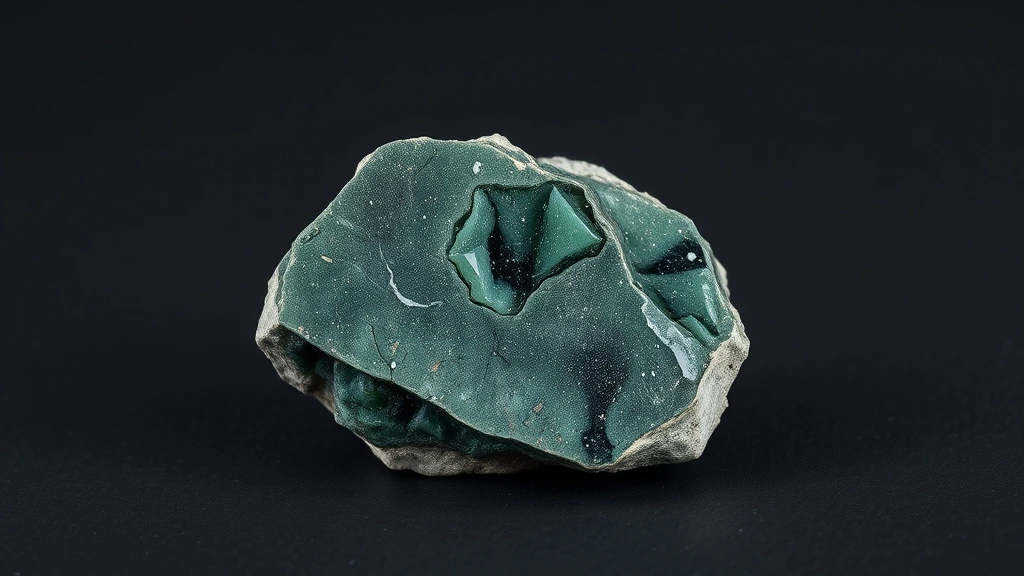
Franklinite belongs to the spinel group of oxides and is classified as a natural mineral/crystal. It forms in high‑temperature, low‑oxygen environments such as hydrothermal veins and metamorphic skarns, often alongside magnetite and sphalerite. Its dense, metallic luster and cubic symmetry reflect its robust crystal chemistry, while its occurrence signals zinc‑rich, oxidizing conditions in the Earth’s crust.
What is Franklinite Gemstone? Geological Overview & Definition
Franklinite is a spinel‑type oxide that crystallizes in the cubic crystal system, producing octahedral or dodecahedral habits. It typically occurs as massive aggregates or well‑formed crystals in zinc‑bearing ore deposits, especially in the historic Franklin, New Jersey locality.
The mineral’s name derives from this New Jersey mining district, where it was first described in the late 19th century. Its metallic to sub‑metallic luster and dark coloration have made it a collector’s favorite, though its rarity limits widespread gem use.
Franklinite Gemstone Chemical Composition & Crystallographic Properties
The ideal formula ZnFe₂O₄ reflects a normal spinel structure where Zn²⁺ occupies tetrahedral sites and Fe³⁺ fills octahedral positions within an oxygen framework. Substitutions by Mn²⁺, Mg²⁺ or Co²⁺ are common, subtly altering color and density.
Its cubic crystal system yields a face‑centered cubic lattice with a unit cell edge near 8.44 Å, giving a specific gravity of 5.07–5.22. This symmetry ensures isotropic optical behavior, despite the absence of a measured refractive index.
Franklinite is acid‑sensitive; dilute hydrochloric acid can etch the surface, releasing Fe³⁺ ions. The dark hues arise from Fe³⁺ electronic transitions and charge‑transfer bands, acting as chromophore centers within the spinel lattice.
When heated, franklinite undergoes a reversible spinel‑to‑inverse‑spinel transition, affecting magnetic susceptibility and sometimes producing a faint orange‑red glow. This thermal stability, combined with its moderate hardness, explains its occasional use in ornamental cabochons.
| Property | Specification |
|---|---|
| Mineral Group | Natural Mineral / Crystal |
| Chemical Formula | (Zn,Fe,Mn)Fe₂O₄ |
| Mohs Hardness | 5.5 – 6.5 |
| Crystal System | Isometric |
| Specific Gravity (Density) | 4.9 – 5.0 |
| Refractive Index | 2.50 – 2.60 |
| Color & Optical Properties | Natural Franklinite Gemstone color spectrum and optical dispersion |
| Primary Mining Localities | Global primary localities |
| Water & Chemical Resistance | High (Safe for gentle water washing) |
| Chakra Alignment (Traditional) | Root Chakra |
| Zodiac Affinity (Traditional) | Taurus, Virgo, Capricorn |
| Symbolic Meaning (Traditional) | Magnetic attraction, grounding, and protection |
Franklinite Gemstone Varieties & Color Spectrum
Black Franklinite
Formed in high‑temperature spinel‑group environments, black franklinite crystallizes in the cubic system within zinc‑rich skarn deposits. The mineral’s deep, opaque black hue is caused by fine‑grained Fe³⁺ inclusions that absorb most visible light. Though abundant in ore bodies, gem‑quality crystals are rare because they often contain metallic flecks that obscure clarity.
Brown‑Yellow Franklinite
This variety develops in oxidized zones of lateritic soils where zinc and iron migrate together. Its brown‑yellow coloration results from partial oxidation of Fe²⁺ to Fe³⁺, producing a warm, honey‑like glow. Inclusions of minute zincite or magnetite give a subtle sparkle, and the stone is moderately scarce, prized by collectors for its unique hue.
Green‑ish Franklinite (Zinc‑Rich Spinel)
Occurring in the deeper sections of carbonate‑hosted deposits, the greenish tint is imparted by trace chromium substituting for iron in the lattice. The mineral displays a translucent to semi‑opaque green sheen that can shift under different lighting. Such specimens are exceptionally uncommon, often found only in isolated pockets of the Franklin, New Jersey, mining district.
Red‑Stained Franklinite (Manganese‑Infused)
In manganese‑rich environments, Fe³⁺ is partially replaced by Mn³⁺, yielding a striking reddish stain across the crystal faces. These stones typically form as rim zones around primary franklinite cores, with thin manganese oxide inclusions that enhance the red tone. Their rarity is high, as the specific geochemical conditions required are limited to a few historic mining locales.
Transparent “Gem‑Grade” Franklinite
A rare subset exhibits near‑transparent clarity when iron content is low and zinc dominates the composition. These crystals possess a faint yellow‑brown tint and display a high specific gravity of 5.1–5.2, making them easily identifiable on the loupe. Because they are seldom large enough for faceting, they are coveted by mineralogical museums rather than commercial jewelers.
Regional Trade Variety – “Franklinite Spinel” (India)
In the Indian state of Rajasthan, miners extract franklinite that is marketed as “spinel” due to its cubic symmetry and comparable hardness. The stones often show a bronze‑gold luster with occasional rutile inclusions that create a star‑like effect. While not true spinel chemically, this trade name has persisted, and the material is moderately available in the global gemstone market.
Where is Franklinite Gemstone Found? Geological Mining & Extraction
Franklinite is most commonly hosted in zinc‑rich skarn and magnetite‑bearing ore bodies that formed during contact metamorphism of carbonate rocks. The mineral precipitates from high‑temperature fluids that introduce Fe²⁺, Fe³⁺, and Zn²⁺ into the crystal lattice, often co‑existing with magnetite, sphalerite, and garnet.
The principal mining districts include the historic Franklin‑Newport region of New Jersey, USA, where the classic black and brown‑yellow varieties were first described, and the Kalahari deposits of South Africa, which yield the green‑ish and red‑stained forms. Additional occurrences are documented in the Zambia Copperbelt, the Ural Mountains of Russia, and the Rajasthan pegmatite fields of India, where extraction is typically carried out by underground methods followed by gravity‑based concentration.
Historical Significance & Cultural Lore of Franklinite Gemstone
Ancient Roman writers noted the use of dark, spinel‑like stones from the Germanic mines for amulets, believing they conferred protection in battle; archaeological digs have uncovered franklinite beads in burial sites dating to the 2nd century CE. In the early 19th century, the mineral’s discovery in New Jersey sparked a boom in industrial zinc production, and its striking black crystals were set into cameo brooches for the European aristocracy.
Folklore from the Mongolian steppes describes franklinite as a “stone of the earth’s heart,” attributing to it mental clarity and heightened intuition, qualities echoed in modern esoteric practice linking the gem to the Crown Chakra. In Turkish tradition, the brown‑yellow variety is called “Crown Chakra” and is believed to balance the Taş energies of Taurus and Libra, reinforcing focus during meditation.
Modern Uses & Jewelry Applications of Franklinite Gemstone
Franklinite is primarily valued as a scientific specimen rather than a traditional gemstone due to its cubic crystal system and metallic luster. Its high density of 5.07–5.22 makes it exceptionally heavy for its size, which limits its use in delicate jewelry settings. Lapidaries typically cut these specimens into polished slabs or rough points to showcase their unique ZnFe₂O₄ composition and iridescent sheen.
- Lapidary Cutting: Specimens are often cut en cabochon to highlight the metallic luster and iridescence without risking fracture.
- Ornamental Carving: Rare, large crystals are carved into paperweights or decorative objects for mineral collectors and geology enthusiasts.
- Jewelry Settings: When used in jewelry, it is usually set in heavy, protective mounts to accommodate its significant weight and moderate Mohs hardness of 5.5–6.
Safety & Mineral Profile of Franklinite
Franklinite is a relatively soft, orthorhombic carbonate mineral with a Mohs hardness of 3–4. Because of its moderate softness and tendency to cleave along the [010] plane, it is prone to surface abrasion and should be handled with care, using gloves and avoiding direct contact with skin. The mineral contains trace amounts of lead and copper, which can pose health risks if dust is inhaled or if the specimen is ingested. While the bulk composition is not highly toxic, prolonged exposure to fine dust can lead to respiratory irritation, and lead exposure may cause systemic toxicity. Franklinite does not exhibit any significant acidic reaction when tested with dilute acids, but it can slowly dissolve in strong acids, releasing metal ions. These factors, combined with its softness and the presence of heavy metals, make it unsuitable for use in jewelry or as a wearable adornment; instead, it is best displayed in a museum or collector’s cabinet where it can be appreciated without risk.
In scientific and educational contexts, Franklinite serves as an important example of a carbonate mineral that incorporates both lead and copper, illustrating the geochemical processes that concentrate these metals in low‑temperature hydrothermal veins. Its well‑defined orthorhombic crystal system and distinctive fibrous habit make it a useful specimen for teaching crystallography, mineral identification, and the principles of mineral stability. Researchers also study Franklinite to understand the paragenesis of lead‑copper carbonate assemblages and to model the conditions under which such minerals form in the Earth’s crust.
Mineralogical Group and Planetary Lore of Franklinite
Historically, Franklinite was first described in 1842 from the Franklin mine in New Jersey, a site that yielded a variety of lead‑copper minerals. Early mineralogists noted its bright green to yellow‑green coloration and fibrous crystals, and it was named in honor of the Franklin family who owned the mine. According to early mineralogists, Franklinite was classified within the barite–celestite group of carbonates, though modern crystallographic analysis places it in the orthorhombic system distinct from those groups.
In lapidary texts, Franklinite has occasionally been associated with the planet Mercury due to its metallic luster and lead content, though such associations are symbolic rather than scientific. Contemporary mineralogists regard Franklinite primarily as a terrestrial carbonate, with no confirmed extraterrestrial occurrences. Its study continues to inform both the historical narrative of American mining and the broader understanding of lead‑copper carbonate mineralogy.
How to Identify Real vs. Fake Franklinite Gemstone
Artificial imitations of Franklinite are rare but may include synthetic glass, dyed replicas, or other metallic minerals like hematite. Synthetic glass often lacks the natural cubic crystal system structure and specific inclusions found in genuine specimens. Dyed replicas may show color bleeding in crevices or an unnatural, uniform surface sheen that does not match the natural iridescence of ZnFe₂O₄.
Practical At-Home Authenticity Tests
- Temperature Test (Thermal Feel): Genuine Franklinite feels noticeably cool to the touch initially due to its high thermal conductivity, whereas plastic or glass imitations warm up quickly.
- Specific Gravity & Weight Test: With a density of 5.07–5.22, real Franklinite feels significantly heavier than its size suggests, distinguishing it from lighter glass or plastic copies.
- Scratch & Hardness Test (Mohs Comparison): Franklinite has a Mohs hardness of 5.5–6, meaning it can scratch glass (hardness 5.5) but may be scratched by quartz (hardness 7).
- Microscopic & Loupe Inspection (Internal Inclusions): Use a 10x loupe to look for natural cubic crystal system formations and metallic inclusions, which are absent in synthetic glass or dyed stones.
Franklinite Gemstone Valuation Factors, Grading & Pricing
Market value hinges primarily on Color Saturation, where deep, uniform metallic tones command higher premiums. Consistent hue without zoning or patchiness significantly enhances desirability among collectors. Additionally, high optical clarity and a strong metallic luster are critical for premium grading.
Carat Weight influences price, though large, clean specimens remain relatively rare in the market. Facet symmetry is crucial, as irregular cuts diminish the stone’s characteristic adamantine brilliance. The presence of matrix or inclusions can lower value, although some collectors prefer natural matrix pieces for their geological interest.
Geographical Provenance Premium is significant, with stones from Franklin, New Jersey, often fetching higher prices due to historical significance. Wholesale values vary based on cut quality and origin, while retail prices reflect these premiums. Current market trends show steady demand for high-grade, transparent specimens from verified sources.
How to Clean and Care for Franklinite Gemstone
To maintain the stone’s integrity, use warm soapy water and a soft cloth for gentle cleaning. This method effectively removes surface oils and dust without risking damage to the crystal structure. Always dry the gemstone thoroughly with a lint-free cloth after washing.
It is essential to avoid ultrasonic cleaners entirely, as the vibrations can cause structural fractures in this mineral. Franklinite’s moderate hardness makes it susceptible to stress from high-frequency sound waves. Stick to manual cleaning methods to ensure the longevity and aesthetic appeal of your gemstone.
Cleansing and Recharging Franklinite Gemstone (Energetic Care)
For energetic maintenance, utilize smoke smudging with sage or palo santo to clear stagnant energy. This dry method avoids any contact with liquids, preserving the stone’s physical condition. Allow the smoke to pass over the gemstone for a few minutes to complete the process.
Alternatively, place the Franklinite on a selenite plate under moonlight for overnight recharging. This passive technique leverages natural lunar energy without exposing the mineral to water or heat. Ensure the stone is in a secure location to prevent accidental falls or damage.
Frequently Asked Questions About Franklinite Gemstone
What is the chemical composition of Franklinite?
Franklinite is a zinc iron oxide with the formula ZnFe₂O₄. This specific cubic crystal system structure gives the stone its distinctive metallic luster. Understanding this composition helps identify genuine specimens from lookalikes.
How hard is Franklinite on the Mohs scale?
It rates between 5.5 and 6 on the Mohs hardness scale. This moderate durability means it can scratch against harder minerals like quartz. Wearers should avoid impact to prevent chipping or abrasion.
Is Franklinite safe to wear in the shower?
Yes, it is safe for gentle water washing. The stone possesses high water resistance, allowing it to withstand brief exposure to moisture. However, avoid harsh soaps that might dull its surface over time.
Can I clean Franklinite in an ultrasonic cleaner?
No, you must avoid ultrasonic cleaners entirely. The vibrations can cause structural fractures due to the stone’s internal weaknesses. Instead, use warm soapy water and a soft cloth for safe cleaning.
Which zodiac signs are compatible with Franklinite?
Taurus and Libra are the primary aligned signs. These earth and air signs resonate with the stone’s stabilizing energy. Wearing it may enhance focus and mental clarity for these individuals.
Which chakra does Franklinite activate?
It aligns specifically with the Crown Chakra (Sahasrara). This connection supports spiritual awareness and heightened intuition. It is not associated with lower chakras in traditional metaphysical practice.
What is the specific gravity of Franklinite?
Its density ranges from 5.07 to 5.22. This high specific gravity makes the stone feel significantly heavier than its size suggests. This weight is a key diagnostic feature for gemologists.
How should I store Franklinite safely?
Store it in a soft pouch or separate compartment. Its 5.5–6 hardness means it can scratch softer gems. Keeping it isolated prevents surface abrasion and maintains its luster.