
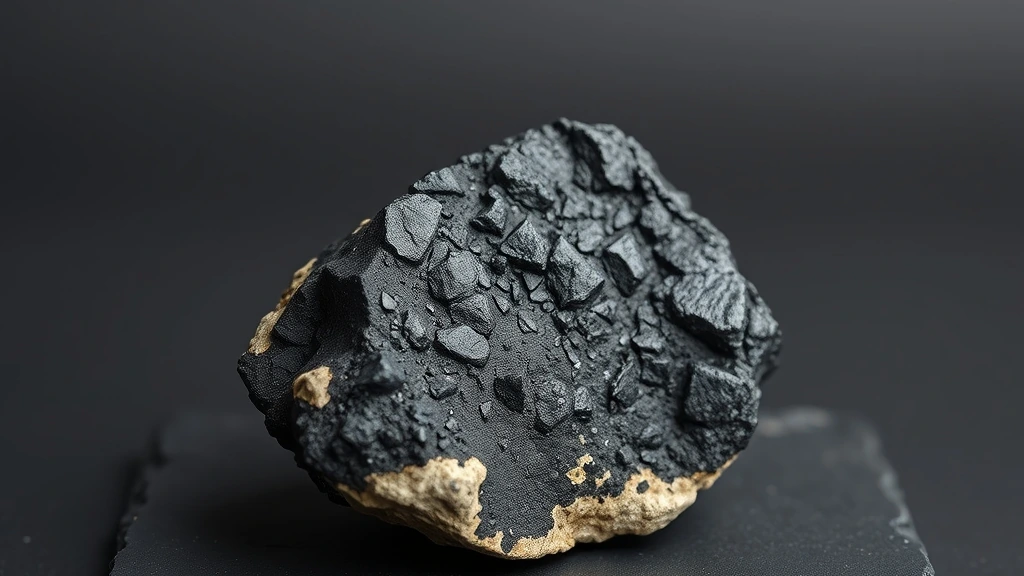
Uraninite belongs to the natural mineral/crystal category and is classified as a primary ore mineral of uranium. Its formation occurs in hydrothermal veins, granitic pegmatites, and as a secondary product of weathering, where it crystallizes from uranium‑bearing fluids. The mineral’s isometric symmetry yields well‑developed cubic or octahedral habits, making it a distinctive component of the Earth’s radiogenic suite. In comparative mineralogical collections, practitioners and geologists frequently study Almandine Garnet alongside this crystal to appreciate their subtle energetic and structural differences.
What is Uraninite (pitchblende)? Geological Overview & Definition
Uraninite is the most abundant uranium oxide mineral, occurring as massive aggregates or well‑formed crystals in uranium‑rich geological environments. It is the principal source of uranium for nuclear fuel, and its high density (6.5–7.07 g/cm³) reflects the heavy actinide element within its lattice. While uraninite’s dense, metallic sheen highlights its role in nuclear fuel, the contrasting translucent glow of Blueberry Fluorite offers a striking visual counterpoint in uranium‑rich formations.
The mineral is typically black, with a greasy to vitreous luster, and may display a faint yellowish fluorescence under short‑wave UV light. Its isometric crystal system gives rise to cubic, octahedral, or dodecahedral forms, though massive habits are more common in ore deposits. While Uraninite’s isometric crystal system produces cubic or octahedral forms, it stands in stark contrast to the orthorhombic habit of rare earth minerals like Villiaumite, which typically crystallizes in elongated prisms.
Uraninite (pitchblende) Chemical Composition & Crystallographic Properties
Uraninite’s ideal composition is UO₂, but natural specimens frequently incorporate minor amounts of thorium, lead, and rare‑earth elements through cation substitution. These trace constituents create solid‑solution series that can alter physical properties such as specific gravity and radioactivity.
The mineral crystallizes in the isometric system, adopting a fluorite‑type lattice where uranium atoms occupy the corners and face centers of a cubic cell, while oxygen occupies the tetrahedral sites. This highly symmetric arrangement accounts for the uniform refractive index range of 2.25–2.30.
Uraninite is chemically stable in neutral to mildly acidic conditions but dissolves slowly in strong acids, releasing uranyl ions (UO₂²⁺) that dominate its aqueous speciation. The color of the mineral is governed by color centers formed by radiation‑induced defects, which absorb visible light and produce its characteristic black hue.
Upon heating above 1,100 °C, uranium dioxide undergoes a phase transition to a higher‑symmetry cubic form, accompanied by a slight volume reduction and increased electrical conductivity. This thermal behavior is crucial for understanding its performance in nuclear fuel fabrication and waste form stability.
| Property | Specification |
|---|---|
| Mineral Group | Natural Mineral / Crystal |
| Chemical Formula | UO₂ |
| Mohs Hardness | 5.0 – 6.5 |
| Crystal System | Isometric |
| Specific Gravity (Density) | 6.5 – 7.07 |
| Refractive Index | 2.25 – 2.30 |
| Color & Optical Properties | Natural Uraninite (pitchblende) color spectrum and optical dispersion |
| Primary Mining Localities | Global primary localities |
| Water & Chemical Resistance | Sensitive (Avoid prolonged water soaking) |
| Chakra Alignment (Traditional) | Root Chakra |
| Zodiac Affinity (Traditional) | Capricorn, Scorpio |
| Symbolic Meaning (Traditional) | Grounding, transformation, and connection to the earth’s core |
Uraninite (pitchblende) Varieties & Color Spectrum
Uraninite exhibits a diverse range of morphologies driven by varying oxidation states and impurities. The most common form is the cubic crystal habit, which reflects its underlying isometric crystal system. These specimens often display a metallic luster that transitions to a dull, earthy appearance upon weathering.
Classic Pitchblende
This trade name refers to the dense, massive form of uranium oxide found in high-grade ore deposits. It typically presents as a jet-black aggregate with a sub-metallic luster and high specific gravity. The variety is characterized by its hexagonal cleavage and frequent intergrowth with other uraninite phases.
Cobaltite Uraninite
This rare variety forms when cobalt substitutes for uranium within the crystal lattice structure. It displays a distinct reddish-brown to purplish hue that distinguishes it from standard black specimens. Such coloration results from isomorphous replacement during hydrothermal mineralization events.
Autunite Association
While autunite is a distinct phosphate mineral, it frequently occurs in intimate association with uraniuminite. This paragenetic relationship creates visually striking yellow-green fluorescence under ultraviolet light. Collectors prize these specimens for their radioluminescent properties and complex mineralogical zoning.
Weathered Uraninite
Exposure to atmospheric oxygen transforms the pristine black core into a brownish-yellow oxidized crust. This alteration process creates a patina that obscures the original metallic luster and crystal faces. The outer layer often contains secondary uranium minerals like uranophane or carnotite.
Crystaline Uraninite
High-quality specimens exhibit well-formed octahedral or cubic crystals with sharp edges and flat faces. These formations indicate slow growth in stable hydrothermal environments with minimal turbulence. The refractive index of these crystals contributes to their intense internal reflection and brilliance.
Where is Uraninite (pitchblende) Found? Geological Mining & Extraction
Uraninite primarily occurs in pegmatite dikes and alkaline igneous complexes where uranium-rich fluids precipitated. These deposits are often associated with granite intrusions and volcanic activity in stable continental crust regions. The mineral frequently coexists with zircon, monazite, and other rare earth elements.
Major extraction sites include the Congo Basin in Africa, the Athabasca Basin in Canada, and the Ural Mountains in Russia. These regions host some of the world’s richest uranium ore bodies with significant economic value. Mining operations focus on both high-grade primary deposits and secondary alluvial accumulations for gem-quality specimens.
Historical Significance & Cultural Lore of Uraninite (pitchblende)
Ancient civilizations utilized uranium-bearing minerals primarily for their vibrant yellow pigments in pottery and wall paintings. The Egyptian and Roman artisans valued these materials for their durability and distinct aesthetic appeal. Archaeological evidence reveals traces of uranium in funerary artifacts and decorative objects from these eras.
Modern scientific recognition began when Hermann von Emmerling discovered uranium in pitchblende in 1789. This breakthrough paved the way for Marie Curie’s pioneering research on radioactivity and nuclear physics. The mineral’s legacy remains deeply intertwined with the development of atomic energy and modern geological science.
Modern Uses & Jewelry Applications of Uranine (pitchblende)
Uraninite is rarely set in mainstream jewelry because of its radioactivity, yet skilled lapidaries occasionally cut it into cabochons or modestly faceted stones for specialist collectors. The isometric crystal habit lends itself to smooth, rounded shapes that showcase its high refractive index and metallic luster. Ornamental carving—often small pendants or inlay pieces—remains the most common artistic use, always accompanied by protective encapsulation.
- Cabochon cuts emphasize the stone’s deep black‑green hue and subtle iridescence.
- Faceted pieces are limited to low‑grade cuts to reduce surface exposure.
- Carved ornamental objects are typically sealed in resin or set behind glass.
Safety & Mineral Profile of Uraninite (pitchblende)
Handling uraninite demands strict radiation safety: wear gloves, store in lead‑lined containers, and limit exposure time to comply with regulatory dose limits. Chemically, the mineral is UO₂, a stable oxide that does not readily dissolve in water, but prolonged contact can release radon gas and alpha particles. Identification relies on its high density (6.5–7.07 g/cm³), isometric crystal system, and characteristic black‑gray color with a metallic sheen.
Uraninite is primarily a collector mineral valued for scientific study and specimen display, not for crystal‑healing practices. Historical esoteric lore occasionally linked it to grounding and transformation, but modern gemology stresses that safety supersedes any metaphysical claim.
Mineralogical Group and Planetary Lore of Uraninite (pitchblende)
Uraninite belongs to the oxide mineral group, sharing structural features with other high‑density oxides such as coffinite and brannerite. Its isometric symmetry produces cubic crystals that can form massive aggregates, often displaying radiating fracture surfaces that intrigue mineralogists.
In planetary lore, uraninite has been associated with the planet Uranus due to its uranium content, symbolizing deep‑earth energy and the “core” of transformation. Traditional symbolism aligns the stone with the Root Chakra, linking it to grounding, yet this association remains purely cultural and lacks scientific validation.
How to Identify Real vs. Fake Uraninite (pitchblende)
Artificial imitations of uraninite include dense glass, leaded ceramics, and dyed basalt that mimic its dark luster. Synthetic replicas may be polished to a high shine, but they lack the characteristic radioactivity and specific gravity of genuine uraninite. Careful visual and physical testing can separate authentic specimens from these substitutes.
Practical At-Home Authenticity Tests
- Temperature Test (Thermal Feel): Genuine uraninite feels noticeably cooler to the touch than glass or resin because of its higher thermal conductivity.
- Specific Gravity & Weight Test: A real sample will feel substantially heavier for its size; a simple water displacement test can confirm a density near 6.5–7.0 g/cm³.
- Scratch & Hardness Test (Mohs Comparison): Using a steel nail (≈5.5 on Mohs) should leave a faint scratch on uraninite, whereas glass (≈5.5–6) may not.
- Microscopic & Loupe Inspection (Internal Inclusions): Under 10× magnification, authentic uraninite shows microscopic radiating fracture patterns and occasional tiny uranium‑oxide inclusions, which are absent in glass imitations.
Uraninite (pitchblende) Valuation Factors, Grading & Pricing
Market valuation primarily hinges on Specimen Aesthetic Quality, where lustrous, metallic-black surfaces command premium prices. Collectors seek crystals with perfect octahedral habit and sharp, unchipped edges that reflect light uniformly. Any surface pitting, oxidation, or dullness significantly reduces the specimen’s desirability in high-end auctions.
Rarity & Specimen Dimensions (Centimeters/Grams) directly correlate with price, as large, intact crystal clusters are exceptionally scarce in nature. A single, well-formed crystal exceeding five centimeters in length is considered a major find for serious collectors. The absence of handling damage, such as broken tips or base fractures, preserves the specimen’s scientific integrity and market value.
Mineralogical Provenance & Locality Value plays a critical role in determining the final sale price for museum-grade pieces. Specimens from historically significant sites, such as the Great Bear Lake in Canada, carry substantial prestige. Documentation of origin enhances credibility and appeals to institutional buyers seeking scientifically verified material.
How to Clean and Care for Uraninite (pitchblende)
Proper maintenance requires gentle handling to preserve the delicate UO₂ crystal structure and prevent surface degradation. Wipe the specimen briefly with a damp cloth to remove loose dust, then dry it immediately with a soft, lint-free towel. This quick moisture exposure minimizes the risk of water-induced alteration or staining on the mineral surface.
Ultrasonic cleaners must be strictly avoided, as high-frequency vibrations can induce structural fractures within the brittle isometric lattice. Store the specimen in a dry, stable environment to prevent long-term humidity exposure. Regular inspection ensures that any minor surface changes are addressed before they compromise the specimen’s overall condition.
Cleansing and Recharging Uraninite (pitchblende) (Energetic Care)
Holistic practitioners often recommend herbal smudging with sage or palo santo to clear energetic stagnation from the stone. The smoke should be allowed to drift gently over the specimen without direct contact or excessive heat. This method is safe because it avoids physical abrasion and thermal stress on the mineral surface.
For recharging, place the stone on a selenite charging slab or expose it to gentle moonlight overnight. These methods align with the mineral’s grounding properties while ensuring the crystal lattice remains thermally stable. Avoid direct sunlight or heat sources, as intense radiation can cause discoloration or structural instability in uranium-bearing minerals.
Frequently Asked Questions About Uraninite (pitchblende)
Is uraninite safe to wear in water or the shower?
No, it is water‑sensitive and should not be soaked for extended periods. Prolonged exposure to moisture can promote surface oxidation and weaken the crystal lattice, leading to discoloration or micro‑fractures. A brief wipe with a damp cloth followed by immediate drying is the safest approach for occasional contact.
How should I clean a uraninite?
Clean only with a lightly dampened microfiber cloth, then dry immediately. Ultrasonic baths and harsh detergents can cause micro‑cracks in the isometric crystal structure, especially where natural radiation has altered the lattice. Gentle dusting with a soft brush is also acceptable for routine maintenance.
Can I use an ultrasonic cleaner on uraninite jewelry?
Avoid ultrasonic cleaners; they can induce structural fractures. The high‑frequency vibrations may exploit existing cleavage planes in the UO₂ lattice, leading to chip formation or loss of surface polish. Manual wiping remains the recommended method to preserve integrity.
What is the typical hardness of uraninite, and can it be set in rings?
Uraninite rates 5.0–6.5 on the Mohs scale, making it moderately hard but still prone to scratching. While it can be set in protective bezels, everyday wear—especially on rings—exposes it to abrasion from daily activities. Protective settings and careful handling extend its lifespan.
Which zodiac signs are associated with uraninite?
Capricorn and Scorpio are the traditional astrological correspondences. Practitioners believe the stone amplifies the grounded, transformative energies of these signs, aligning with the mineral’s radioactive nature and its deep connection to Earth’s inner layers.
Which chakra does uraninite resonate with?
Root Chakra is the sole energetic alignment for uraninite. This association reflects the stone’s reputed ability to foster grounding and a sense of stability, mirroring its origin deep within the planet’s crust and its dense, heavy character.
Is uraninite radioactive, and does it pose health risks?
Yes, uraninite contains uranium and emits low‑level ionizing radiation. Handling should be limited, and prolonged skin contact is discouraged. Store the mineral in lead‑lined containers and avoid inhaling dust; protective gloves are advisable during cleaning or setting.
What are the key optical properties that distinguish uraninite as a?
Uraninite exhibits a high refractive index of 2.25–2.30 and a metallic to glassy luster. Its isometric crystal habit often forms octahedral aggregates, and the dense, black‑green coloration can display subtle fluorescence under UV light, making it visually striking yet demanding careful care.